


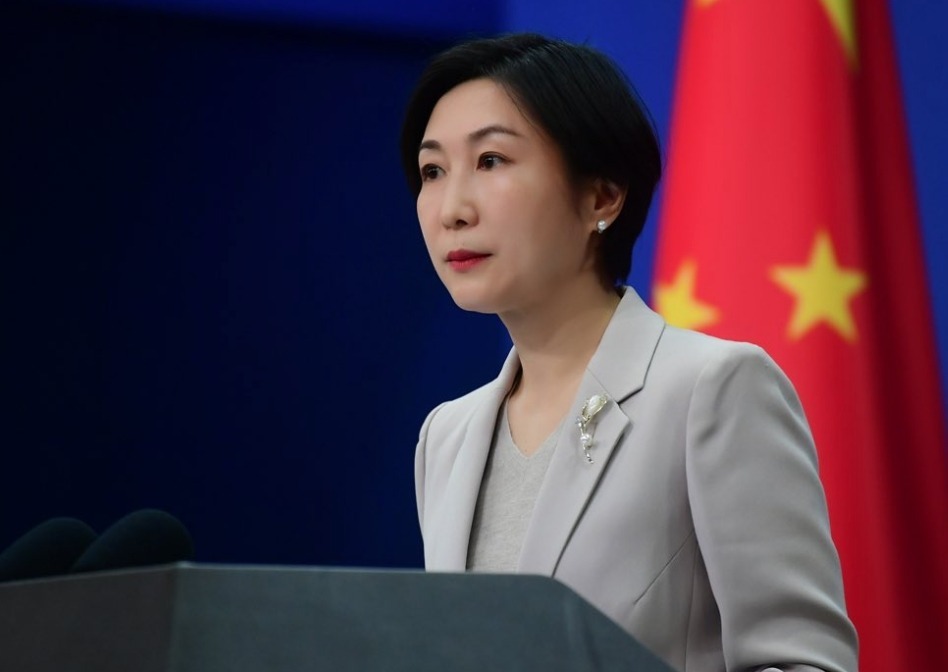
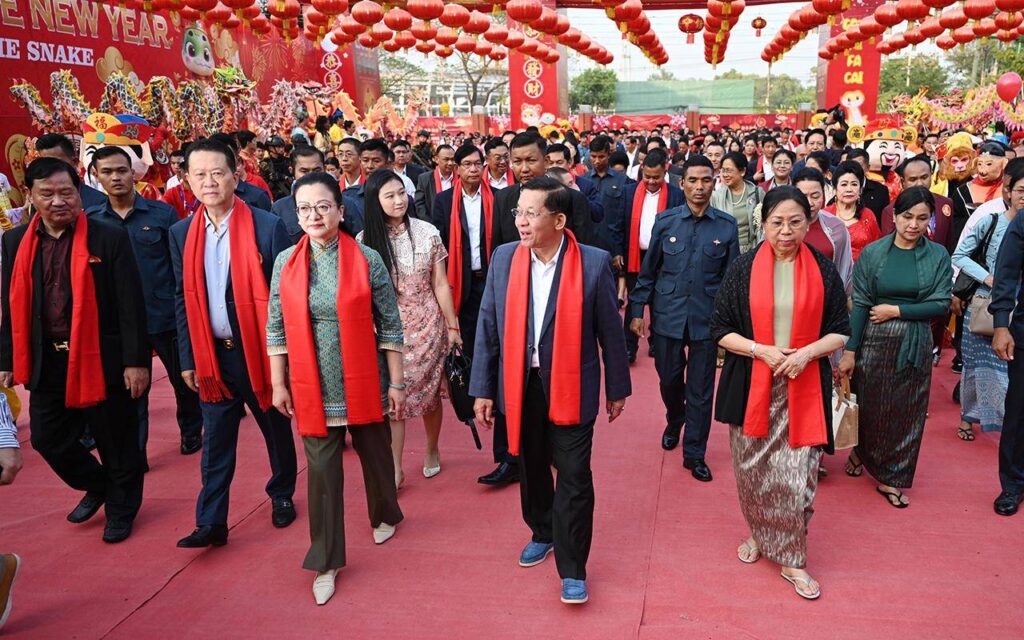
The Myanmar National Democratic Alliance Army (MNDAA) or Kokang and military junta or State Administration Council (SAC) signed a formal ceasefire agreement, and stopped fighting at 12 am on January 18, Beijing time. The two sides thanked China for facilitating the results of this round of peace talks, Chinese Foreign Ministry spokesperson Mao Ning said in a routine press conference on Monday, January 20.
The strange thing about it is that the concerned two parties didn’t mentioned anything in details publicly, although Mao Ning emphasized: “China and Myanmar are friendly neighbors, and we firmly oppose wars and turbulence in Myanmar. We hope that all parties will maintain the momentum of ceasefire and peace talks, earnestly implement existing common understandings, take the initiative in deescalating the situation on the ground, and further negotiate and settle relevant issues through dialogue.”
Rumors said that MNDAA will eventually withdraw from Lashio which it captured but the Kokang sources denied that there were any such agreement. Moreover, news were making the rounds that Ta’ang National Liberation Army (TNLA) and SAC will also be meeting due to the insistence of China as a mediator. Currently, China lifted border-trading gates closure of MNDAA, United Wa State Army (UWSA) and National Democratic Alliance Army (NDAA) or Mongla already due to the ceasefire agreement between the junta and MNDAA, which have loosen a lot of problems for the people in the region. However, the border gate at Muse controlled by TNLA is still being closed. Arakan Army (AA) would also eventually meet the SAC, if it is according to China’s insistence, it has been speculated.

According to Ye Myo Hein of United States Institute of Peace (USIP) in his recent interview with the BBC said China as a super power will try to have its way in managing the conflict in Myanmar. It is an international “strategic blind-spot” and also an important “strategic underbelly” of China. Thus, the reality that China will try to mold the situation outcome the way it sees fit, according to its national interest is something which has to be understood and can’t be ruled out.
This means China’s interest against the aspirations of the people Myanmar cannot be in tune, unless the former changes its mindset of propping up the SAC as a central power and potential winning horse. When in reality, the SAC isn’t even a central power any more and much less a winning horse, which begs the question of why China is risking everything to bet on the junta solely, argued Ye Myo Hein correctly.
But let us look briefly at the political trends, political alliances, platforms and military trend report compiled by United States Institute of Peace (USIP) published in November 2024, which is quite factual and comprehensive, in a slightly condensed version.
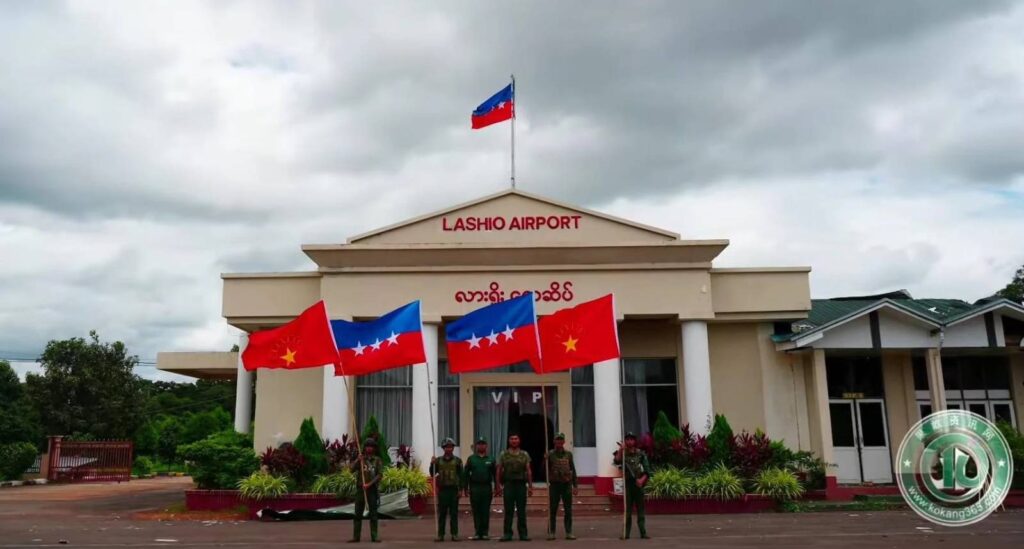
Political Positions
- The first political position focuses on maintaining the military’s dominant role under the political
system of the 2008 Constitution. This is pursued by the Myanmar Military, its junta regime (SAC) and some of its proxies (Union Solidarity and Development Party, Border Guard Forces, Pyithu Sit militias). (Its goal is to hold an election as a political way out, and consolidate power through administrative apparatus, using violence and coercive measures.) - The second political position is led by many members of the National Unity Government (NUG) and the CRPH (Committee Representing Pyidaungsu Hluttaw), and seeks a top-down federal democratic union. Its rejects the 2008 Constitution and seeks a new political system that is not dominated by the military. The NUG seeks a governance system that is led at the Union level by an authority that democratically succeeds the NUG, with Ethnic Resistance Organizations (EROs) and elected members of parliament leading subnational governance structures.
- The third political position seeks a bottom-up federal democratic union, which builds on the
consolidation of ethnic resistance power within ethnic states. This approach is supported by various influential resistance EROs (KNU, KIO, KNPP and other Karenni resistance actors, CNF and other Chin resistance actors, PNLO, and NMSP-AD) and some members of the NUG and CRPH. These stakeholders seek to form a federal democratic union through a process in which sub-national units voluntarily come together to form a union. In this model, authority flows from the sub-national to the national. (Karen National Union, Kachin Independence Organization, Karenni National Progressive Party, Chin Nation Front, Pa-O National Liberation Organization, New Mon State Party – Anti-Dictatorship). - A fourth political position is supported by those who seek a bottom-up federal democratic union, but have not engaged in anti-SAC armed resistance. This position is currently pursued only by the SSPP (Shan State Progress Party), which continues to fight the RCSS (Restoration Council of Shan State) but has not fought SAC forces. The SSPP refers to the 1947 Panglong Agreement as its basis for power. The SSPP, which maintains close ties with the SNLD (Shan Nationalities League for Democracy) political party, has a history of thoughtful political engagement, but remains somewhat isolated now. {RCSS, somehow is hooked to the Nationwide Ceasefire Agreement (NCA) and prefer negotiated settlement with the junta or SAC.}
- A fifth political position, primarily championed by the Three Brotherhood Alliance (ULA/AA,
PSLF/TNLA, and MNTJP/MNDAA) aims to form a confederation of states consisting of autonomous political units with self-determination.(United League of Arakan, Palaung State Liberation Front, Myanmar National Truth and Justice Party) - The sixth political position is supported by a diverse range of stakeholders, including some adversaries, and aims to maximize power by expanding autonomy within a pre-coup framework such as the Nationwide Ceasefire Agreement or a modified 2008 Constitution, and consolidating administrative and economic control. Actors holding this position include the RCSS, NMSP (New Mon State Party), DKBA (Democratic Karen Buddhist Army), KNU-PC (Karen National Union-Peace Council), NDAA, LDU (Lahu Democratic Union), and, possibly, the UWSA. Groups 2, 3, and 5 are the most powerful stakeholders and will likely dictate the trajectory of Burma’s political arrangement. If most or all of these groups agree to a political arrangement, it could form a critical mass of political and military power that is capable of uprooting the SAC and charting a new political path.
Political Alliances & Platforms
Major national-level alliances and platforms include the NUG and K3C EROs (KNU, KNPP, KIO, and CNF); the NUCC; the Federal Political Negotiation and Consultative Committee (FPNCC); the People’s Representative Committee for Federalism (PRCF); and the 7 EAOs Alliance.
The NUG and K3C EROs have formalized their relationship in a position statement of agreed objectives and roadmap on January 31, 2024. Although the KIO agrees with this position statement and participated in its development, it was not publicly named due to pressure from China. The position statement included shared political objectives, agreements related to political dialogue, and plans for a transition to a federal democratic union. Its core positions are (1) ensuring civilian oversight of a future security structure, (2) replacing the 2008 Constitution with one that embodies federalism and democracy, and (3) implementing a system of transitional justice.
The NUCC is the broadest political coalition in Burma’s history. It is made up of elected MPs, political parties, Ethnic Political Consultative Councils, EROs, strikes committees, Civil Disobedience Movement (CDM) representatives, and civil society organizations (CSOs). Its mandate is somewhat unclear, but involves policymaking, coalition building, national visioning, and policy implementation responsibilities. It operates through consensus – one reason why it has struggled to keep up with the pace of the resistance. (Despite ambitious program its membership count failed to cover the majority of the EROs. For example, its Ethnic Political Consultative Councils, two from Shan State Ta’ang and Pa-O; one each from Chin, Mon and Karenni are members. The rest which are Kachin, Karen, Arakan or Rakhine and most importantly the Shan ethnicity as a whole are not members. Besides, only one political party, Democratic Party for a New Soceity, is a member.)
The FPNCC is a coalition made up of Ethnic Armed Organizations (EAOs) with a presence in northern Burma and Rakhine State (KIA, MNDAA, NDAA, TNLA, SSPP, UWSA, AA). Collectively, it has the greatest military strength among all alliances. As with the other alliances, the FPNCC is not monolithic. Its members can be found in four of the six political position groups outlined above. The FPNCC is chaired by the UWSP with the KIO as the vice chair—two organizations that are not ideologically aligned, and which have vastly different approaches to China and the broader resistance movement. Within the FPNCC,there are multiple military alliances, notably the Three-Brotherhood Alliance and the Northern Alliance.
The PRCF is an alliance of ethnic minority political parties, including members of the SNLD-led United Nationalities Alliance which have long advocated for a federal political system. Members of the PRCF, most notably the SNLD, led the drafting of Part I of the Federal Democracy Charter
(FDC) but left the NUCC because of disagreements on FDC Part II, among other reasons. The SNLD is influential with some EAOs, especially the SSPP. The PRCF has remained distant from the armed resistance movement, while discreetly engaging with many resistance actors, including the K3C and resistance-affiliated CSOs. The PRCF published a draft “Constitution of Federal Democratic Union” in February 2024.
The 7 EAOs Alliance was formed by some signatories of the 2015 Nationwide Ceasefire Agreement who have not joined the resistance movement. The group is led by the RCSS, the largest member, although many of the members have withdrawn, distanced from the group, or internally fractured since the coup. This group seeks to remain relevant by engaging the SAC and resistance groups, but is political marginalized and weak.
At the state/region level, ethnic and state/region-based consultative councils have been established to coordinate state/region-level political dialogue and link with Union-level structures such as the NUCC. In some cases, these groups have developed interim arrangements, governance structures, and political roadmaps.
Key Actors
The Myanmar Military and its proxies
The Myanmar military is considerably smaller than previously thought. The total number of troops across all forces and proxies is estimated to be around 190,000.
The military depends heavily on proxies to slow the advance of resistance actors in strategic areas. This is a key factor with the Pa-O National Organization (PNO) in southern Shan and Karenni States, the Karen National Army (KNA, formerly Karen BGF) in Karen State, and the Shanni National Army in Sagaing and Kachin states. These proxies are unpredictable, disconnected from the ‘center’ and are not strategically aligned with the junta.
The Myanmar military has lost public support nationwide, but most notably in the Bamar heartlands. This has greatly diminished the regime’s ability to replenish its troops and establish stable areas from which to stage counter attacks. The SAC’s apparatus of population control through GAD offices and light infantry positions has also been decimated, challenging efforts to retake and hold territory or weaken resistance activity at the community level.
People’s Defense Forces & Local Defense Forces
Numerous People’s and Local Defense Forces formed to protect communities against regime attacks following the coup. They have evolved into a broad armed resistance movement. Most have joined the NUG and allied EROs’ command and control structures. In total, these troops number roughly 130,000.
Although many of these troops operate in the central Anyar region, the NUG’s primary strategy has been to deploy these troops to ERO areas to build ERO buy-in to the conflict, strengthen PDF capacity, achieve rapid military gains, and facilitate access to weapons. The next phase of the war is likely to see more focus on the Anyar region.
Ethnic Resistance/Armed Organizations
ERO/EAOs have become an increasingly important stakeholder in the armed conflict in Burma. New relationships among EROs/EAOs and between EROs/EAOs and PDFs/LDFs have enabled the resistance to achieve historic gains. There are three sub-groupings of EAOs to consider: (1) those actively fighting against the regime, (2) those hedging their position, and (3) those who collaborate with the military.
Group 1: Ethnic Resistance Organizations who are actively fighting against the regime.
The estimated troop levels for Ethnic Resistance Organizations fighting against the regime is 107,500 troops. This group has the most influence on the overall military trajectory. This group includes the Three Brotherhood Alliance (the ULA/AA, PSLF/TNLA and MNTJP/MNDAA), the K3C EROs (KIO/KIA, KNU/KNLA, KNPP/KA and CNF/CNA), allies in Chin (Chin Brotherhood) and Karenni (KNDF, KNPLF) and breakaway factions of the PNLO/PNLA and the NMSP.
Group 2: Ethnic Armed Organizations that are hedging their position
The second group engages with both the Myanmar military and resistance groups. These groups
collectively field an estimated 43,500 troops. This group includes the country’s strongest EAO, the
UWSP/UWSA, as well as the SSPP/SSA-North and RCSS/SSA-South, and includes a number of small EAOs (NMSP/MNLA, LDU, DKBA, and KNU/KNLA-PC) that aim to resurrect the defunct Nationwide Ceasefire Agreement process.
Group 3: Ethnic Armed Organizations who collaborate with the Myanmar military.
The third group of organizations collaborate with the Myanmar military and largely operate as ethnic militias (Pyithu Sit) or border guard forces (BGFs). Their total troop strength is estimated at 15,000 troops. The key groups here include the PNO/PNA (Pyithu Sit militia and former ceasefire group that has representatives working within the SAC administration), the KNA (formerly Karen BGF) and the SNA (Shanni Pyithu Sit militia). There are other defunct groups, including Ting Ying’s Kachin BGF, which had been active stakeholders but are now functionally irrelevant.
Analysis
No doubt, China is going to help the SAC with its election plan as China’s Foreign Ministry spokesperson Mao Ning again reiterated in her statement recently support of election emphasizing the military-drafted 2008 constitution as a basis.
Foreign Ministry Spokesperson Mao Ning’s Regular Press Conference on January 20, 2025 outlined
China’s position saying: “China’s mediation and effort to drive progress, the Myanmar government and Myanmar National Democratic Alliance Army held the seventh round of peace talks in Kunming, Yunnan. The two sides reached and signed a formal ceasefire agreement, and stopped fighting at 12 a.m. on January 18, 2025, Beijing time. The two sides thanked China for facilitating the results of this round of peace talks.”
She moreover emphasized China’s commitment to SAC position as the following during the Press Conference: “China firmly supports Myanmar in safeguarding independence, sovereignty, national unity and territorial integrity, firmly supports Myanmar’s effort to keep the country peaceful and stable and grow its economy, and firmly supports Myanmar in realizing political reconciliation at an early date and advancing its domestic political agenda under the framework of the constitution. China stands ready to actively promote talks for peace and provide support and help for the peace process in northern Myanmar.”
Its pressures on TNLA and probably AA to accept ceasefire are still being pursued by China. Thus, China will tread it self-drawn road map to prop up the SAC by all means, even if it knows the population hated the junta and wanted to uproot its military dictatorship system, once and for all.
In same stubborn mode, the anti-junta ethnic-democratic forces will fight on to dislodge the junta.
The question is if China can stop the revolutionary high tide, by betting on the losing horse, which isn’t even the central authority which China assumed the junta to be one. The real picture is a various power centers emerging, especially in ethnic states like Kachin, Chin, Karenni, Karen, Rakhine and even some parts of the Anyar Region.
The reality on the ground is the revolutionary waves are surging and gaining momentum with AA penetrating into Ayeyawaddy and Magwe regions. The junta is unable to launch counteroffensive except airstrikes and long range artillery bombardment. The reinforcement of its troops could only be done through airdrops, which often falls into the hands of anti-junta forces.
In such a situation, the increased cooperation and coordination militarily and politically may heightened the possibility of anti.junta forces replacing the junta sooner than later.
Moreover, the trend is moving towards united front type of unison among the anti-junta ethnic-democratic forces.
Politically the Federal Law Academy combined Federal Constitution is in place for the ethnic-democratic forces to ponder, discuss, make use and comes into common agreement.
Militarily, the K3C/NUG is already in operation. The AA, even though not a formal ally yet is already fighting along side with KIA, Chin Brotherhood, various local PDF and PDF, including with Bamar revolutionary groups in Burma’s heartland. All indicators are pointing towards increased cooperation and coordination. They now need to show solidarity and form an official kind of united front, either as a transitional revolutionary government or anything along the line of a collective political entity for domestic and international understanding of the people’s aspirations to establish a federal democratic union in place of the tyrannical military dictatorship system.
In general, the NUG, EROs actively fighting the SAC, and the Three Brotherhood Alliance (AA,MNDAA and TNLA) will be the forces that will be able to deliver or further the people’s revolutionary goals, with UWSA defying China’s heavy-handedness by delivering military hardwares to the anti-junta groups and MNDAA not exactly giving in to all demands of the junta and Chinese, including TNLA throwing its weight on the side of the people’s revolution.
However, if the pieces desired will all fall into place soon is something we all will have to wait and see.
For now, it is a bit too early to speculate whether the coercive, pushy Chinese trend will win over the people’s revolutionary struggle in Burma or Myanmar or eventually change its mindset to be in tune with the people’s aspirations.


Leave a Comments