




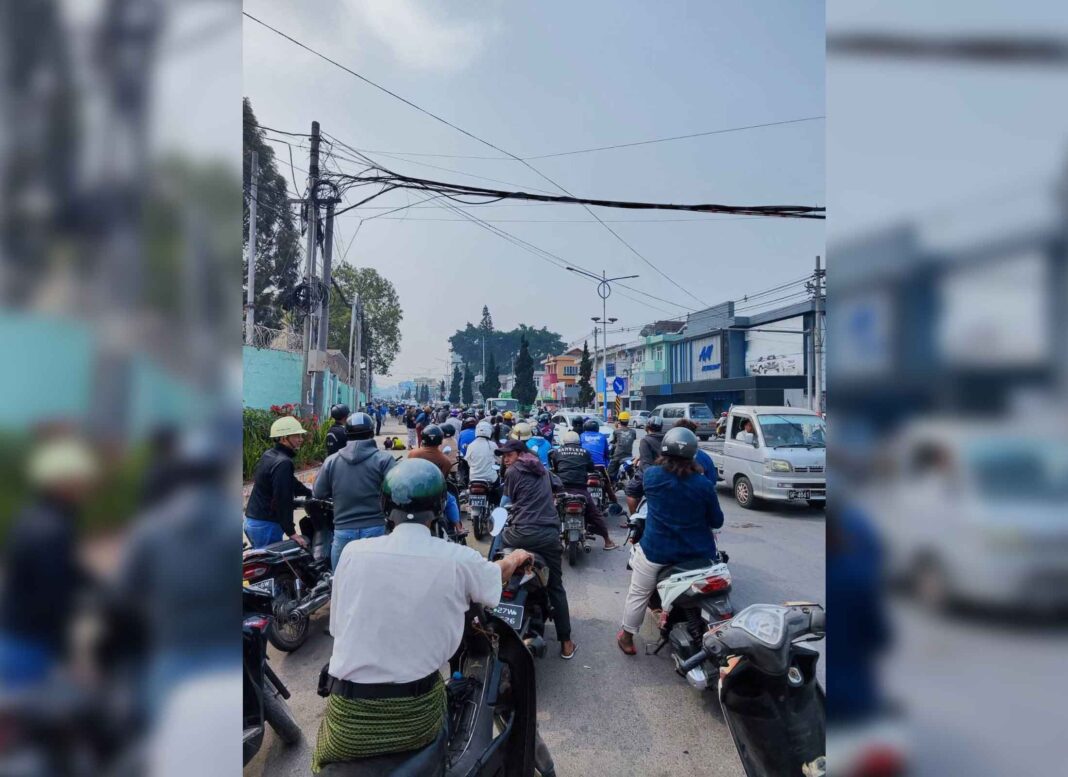
A fuel-buying frenzy has erupted in Taunggyi, the capital of Shan State, with some residents reportedly paying up to 30,000 kyats to hire people to stand in line at petrol stations—even though fuel itself sells for around 4,000 kyats per liter.
Since Thailand suspended fuel exports on March 1, panic buying has spread across Taunggyi and other parts of Myanmar. Long queues at fuel stations have forced many residents to spend hours waiting, prompting some to hire others to wait in line on their behalf.
“A single trip to the gas station can take half a day, sometimes the entire day. Even then, some people go home empty-handed,” a woman from Taunggyi told SHAN.
“No one has that kind of time, so we have to hire people. It costs 30,000 kyats a day. If it’s someone you know well, you might get away with paying 10,000 kyats to have them wait for you.”
The shortage has also fueled a growing informal market. Some individuals are reportedly hoarding fuel in small one-liter plastic bottles and reselling it through social media for more than 5,000 kyats per liter.
Fuel prices have become increasingly unstable across the region. In Taunggyi, petrol currently sells for between 3,600 and 4,000 kyats per liter, while in Ywangan Township prices have reportedly climbed as high as 8,000 kyats per liter. Some fuel stations in Ywangan have also begun limiting sales to 5,000 kyats worth of fuel per motorcycle.
As petrol becomes scarce and more expensive, residents are searching for alternatives. Local dealers report a noticeable increase in sales of electric cars and e-bikes, though many households say the broader economic impact of the fuel shortage is worsening daily life.
“With the fuel shortage, electric cars and motorcycles are selling much better,” a local man said.
“Gas stations are taking advantage of this time to hike prices and rake in huge profits. Meanwhile, the cost of general goods has nearly doubled. It’s becoming impossible to make a living.”
Residents warn that if fuel shortages continue, transportation costs and commodity prices are likely to rise further, placing additional strain on already struggling households.











Leave a Comments