


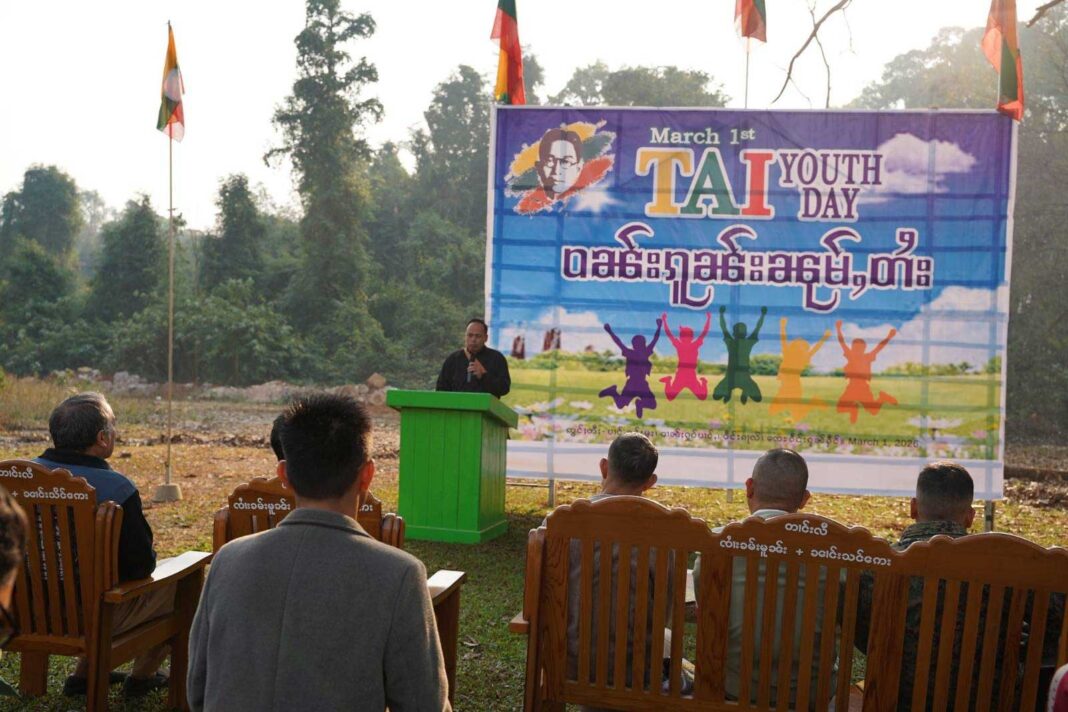
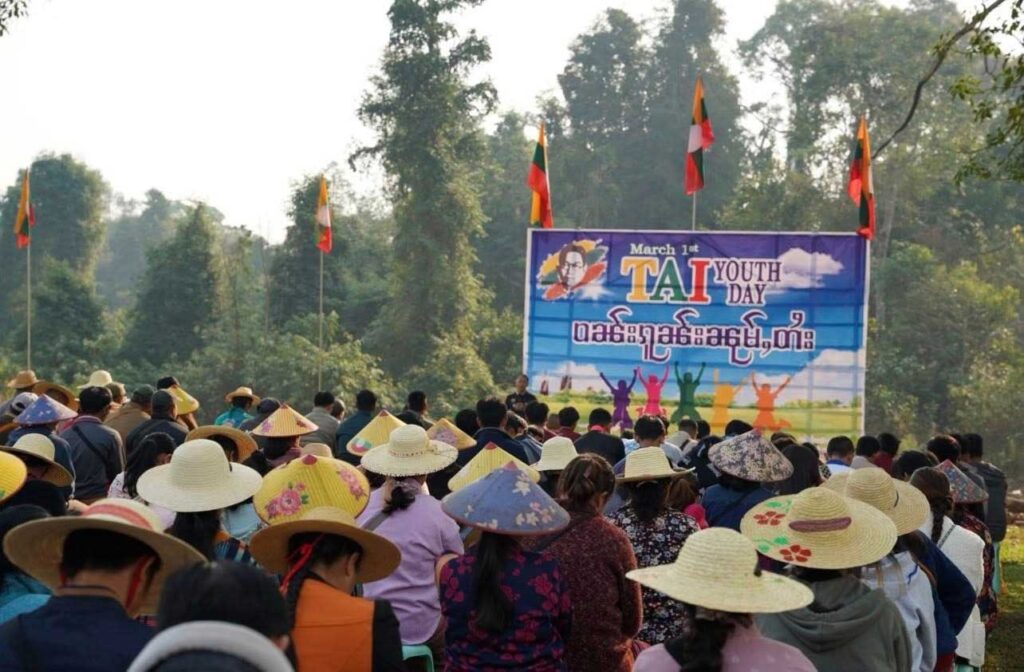
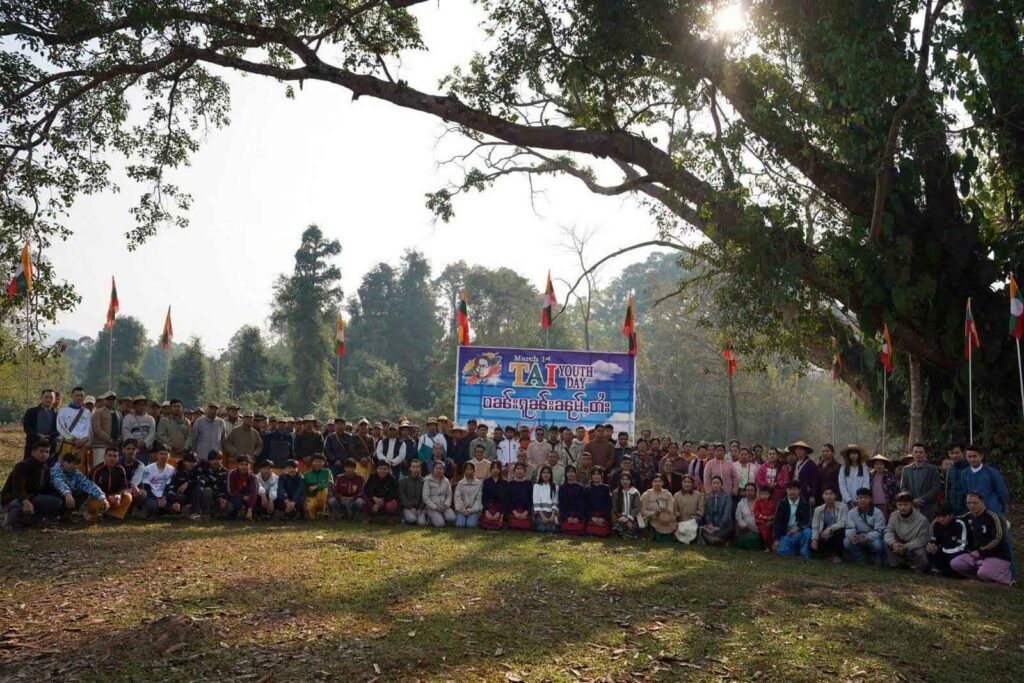
Various Shan youth organizations have issued a joint statement urging armed groups and political parties to take action amid the ongoing suffering of the Shan people. This statement was released on Shan Youth Day, March 1, 2026, highlighting the failure of these groups to protect the community during violent conflicts, particularly following the 2021 military coup and during the “Operation 1027” in northern Shan State.
The statement emphasizes that the Shan people are experiencing severe human rights
violations, including forced recruitment, human trafficking, and displacement. It criticizes armed groups for not fulfilling their responsibility to ensure the security and self-determination of the Shan people, asserting that failure to do so is unacceptable.
Additionally, the youth groups condemn Shan political parties for their silence amid the ongoing crisis, calling on them to step up and support the community. They noted that youth in Shan State are losing their future, facing issues like arbitrary arrests, oppression, and drug-related problems, leading to a decline in education and socio-economic conditions.
The statement also calls on Shan monks and cultural organizations to unite in protecting the people and preserving their culture, while emphasizing the need for collective action against injustice. Shan Youth Day, established in 2017 to honor Dr. Ba Nyan, is particularly poignant this year due to the ongoing political and military turmoil.
In this respect let us shed some more light on who Dr. Ba Nyan was for the sake of the Shan younger generations.
Dr. Ba Nyan
Dr. Ba Nyan was a prominent Shan intellectual and political leader in Myanmar, renowned for his pivotal role in the mid-20th century ethnic federalism movement. Born into a distinguished Shan family, he pursued higher education and earned the “Medical Doctor” title. He later received the national honor of Thiripyanchi for his service.
Unlike traditional hereditary rulers, Dr. Ba Nyan represented a new generation of educated Shan leaders. He held high office in the Shan State Government during Myanmar’s parliamentary democracy (1948–1962). He became a leading architect of the 1961 Shan Federal Proposal, which sought to transform Myanmar’s centralized system into a genuine federation, addressing ethnic grievances over the 1947 Constitution.
In June 1961, he played a central role at the All States Conference in Taunggyi, uniting leaders from Shan, Kachin, Karenni, Chin, Mon, and Rakhine communities to demand equal rights and decentralized governance. This collective push for federalism was seen as a direct challenge to central authority.
Following General Ne Win’s military coup in 1962—ostensibly to prevent national disintegration—Dr. Ba Nyan was arrested alongside other federalist leaders. His advocacy laid the intellectual foundation for constitutional ethnic rights, bridged divisions among minority groups, and established him as a lasting symbol of peaceful resistance and federal reform in Myanmar.
His advocacy for decentralized power was viewed as a threat by the central military command. Following General Ne Win’s 1962 military coup—which was explicitly justified as a move to prevent the “disintegration” of the Union caused by the federal proposal—Dr. Ba Nyan was arrested along with other key Shan figures. He passed away in 1970.
SSPP and RCSS striving for unity again?
Now let us look into the prospect of Shan unity, which has been a hard nut to crack since the end of 2015, until today.
On February 26, the two Shan armies, Shan State Progressive Party (SSPP) and Restoration Council of Shan State (RCSS), which have been at loggerheads and at times engaged in armed conflict starting from the end of 2015 and 2016, when RCSS penetrated with its forces into norther Shan State, following the October 2015 Nationwide Ceasefire Agreement (NCA), which it has been a party during President Thein Sein era.
However, RCSS was evicted from northern Shan State in the late 2021 and early 2022 following a coordinated offensive by a combined force of the SSPP, Ta’ang National Liberation Army (TNLA), and support from the United Wa State Army (UWSA).
SSPP has been part of the 7-member Federal Political Negotiation and Consultative Committee (FPNCC), a political alliance rather than military one, headed by the United Wa State Army (UWSA). The rest of the FPNCC members are Kachin Independence Army (KIA), Myanmar National Democratic Alliance Army (MNDAA) or Kokang, National Democratic Alliance Army (NDAA) or Mongla and Arakan Army (AA).
Following the Operation 1027 in 2023 led by the Three Brotherhood Alliance (3BHA), MDAA,TNLA and AA captured territories in northern Shan State from the Junta’s Burma Army, which they considered to be entitled to keep them and integrated into their respective areas of control and administration.
So much so that the frictions between the TNLA, MNDAA, SSPP and KIA have become a daily routine which sometimes erupted into brawls and at times shootings, with no sign of resolving it anytime soon.
SSPP’s row with the TNLA has also escalated into shootings and as well evictions of SSPP troops by the TNLA in Namhkam Township.
On May 27, 2024, the TNLA after beefing up its troops blocked, disarmed the SSPP troops stationed in villages along the Shweli River and forcefully transported them to Muse, according to the Shan News report of May 31, 2024.
Since then, the SSPP and TNLA have never treated each other as allies and instead more with animosity and suspicion. In other words, it might have dawn on the SSPP that alliance with its own kind like the RCSS would be a better option than sticking to the FPNCC alliance.
The SSPP and RCSS have been forging some sort of good will gestures in a variety of ways since about a year and the latest meeting in Wan Na Taw Village, Kengkham, Kunheng Township, between them on February 26 might be an act of heightening the cooperation, since the short-lived ceasefire agreement signed on November 29, 2023, followed by on and off armed clashes.
The recent meeting on February 26 was attended by Sao Yawd Serk leader of RCSS and Sao Perng Fah Deputy 3rd Chairman of SSPP, who is a confident of the Chairman Sao Parng Fah.
Shan National Conference
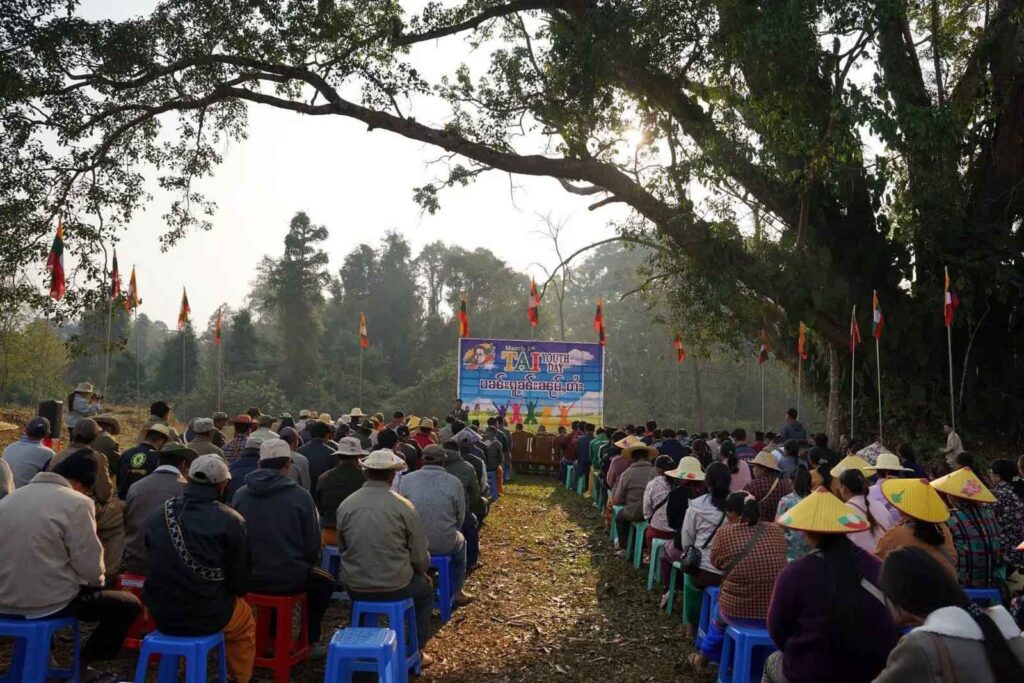
At the same time, prior to the 7th February 2026, Shan National Day, a four-day consultation meeting was held among some 105 representatives of various Shan organizations that produced a four-point statement of the First Shan National Conference, on 6th February.
The statement mentioned that the 33 basic federal principles and 38 basic rights for the Shan State Constitution have been discussed and approved. The Shan State Federal Affairs Steering Team was formed to implement these principles and rights. And it invites all organizations and people in Shan State to participate in the Shan State National Conference to promote peaceful coexistence among ethnic groups, establish lasting peace, achieve self-determination and equal rights, and develop a constitution and political representation for Shan State.
In short, the aim and object of the Shan National Conference is similar to the CSSU Manifesto of February 7, 2022, which Shan armies, political parties and CSOs were also participants.
The CSSU Declaration writes:
“We, the Committee for Shan State Unity, recognize and respect the identities of all nationalities residing in the State.
We shall work towards properly recognizing the rights to representation of individuals who are the original owners of the State’s sovereignty.
We shall equally value and recognize all the nationalities residing in the State and cooperate with them on matters that are mutually beneficial.
We shall take approaches that are going to bring about free and peaceful living conditions that encourages war-free, conflict-free competition.
We shall work with all respective organizations/stakeholders to be able to collectively design and adopt constitution of our State that guarantees basic human rights, democratic rights, equality and rights to self-determination, ethnic, religious, and cultural rights for all the people of the state.”
Analysis
In summary, the Shan Youth Day Statement clearly articulates expectations for various stakeholders, including Shan armies, political parties, cultural organizations, the Sangha, and all civil society organizations, in their roles to protect the people and sovereignty of Shan State.
Recent developments indicate a shift in this direction, as Shan armies appear to recognize the necessity of unity—not only among the Shan/Tai majority but also across the diverse ethnic groups within Shan State.
The ongoing power struggle in northern Shan State, involving the EAOs such as TNLA, MNDAA, KIA, SSPP, and UWSA, exemplifies this situation. This internal conflict threatens to escalate into inter-ethnic discord fueled by identity politics and narrow ethnonationalism, compounded by territorial expansionism. Addressing these issues requires a commitment to civilized and peaceful coexistence.
Achieving consensus on a common national identity is essential while embracing the concept of “unity in diversity.” This model can be likened to Switzerland’s federalism, where each ethnic identity, language, and culture is mutually respected and legally protected.
If the people of Shan State can first achieve agreement on this common national identity, then matters like the demarcation of administrative units can be resolved peacefully through constitutional laws and established criteria. The notion of “might is right” in territorial disputes would become irrelevant, giving way to the consent of the electorate.
However, it is crucial that this holistic approach to defining a common national identity is accepted and discussed openly. There is no alternative path.

Leave a Comments