




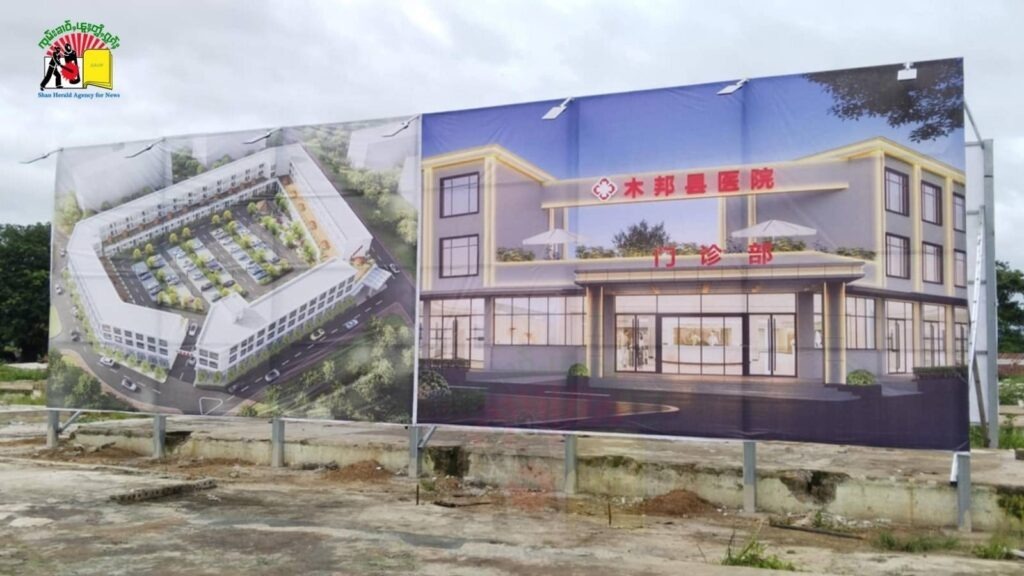
“Entering Hsenwi now doesn’t feel the same as before; it feels like arriving in a small Chinese border town,” says Sai Leng (pseudonym), a traveler, speaking with a deep sense of loss.
Located along a critical China–Myanmar trade corridor in northern Shan State, Hsenwi has undergone a dramatic transformation in the two years since Operation 1027. What was once a quiet town of historical significance to the Shan people now resembles a bustling Chinese commercial outpost.
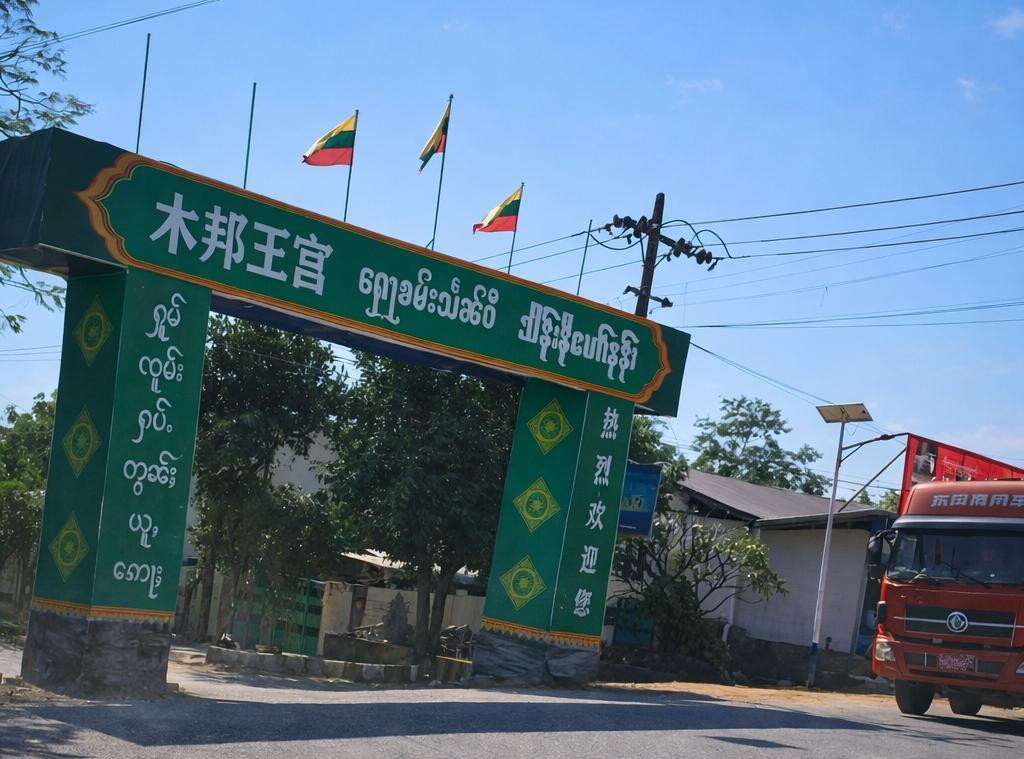
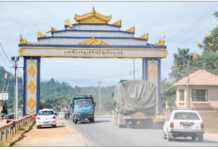
Upon entering Hsenwi, the solemn presence of the historic Haw of Hsenwi Saopha Hkun Sang Tone Hung (the Saopha’s palace) is overshadowed by crowded streets filled with unfamiliar faces and storefronts dominated by Chinese characters. The shift has been so stark that even long-time residents say the town no longer feels like their own.
Sai Leng describes today’s Hsenwi as more akin to a Chinese border settlement than a traditional Shan town. For many locals, this raises an unsettling question: is this merely an administrative change, or the gradual erasure of a centuries-old culture?
Locals Fear the Disappearance of Shan Identity
Since the Myanmar National Democratic Alliance Army (MNDAA), also known as the Kokang Army, seized control of Hsenwi, language has become the most visible marker of change.
Beginning in early April 2025, the MNDAA banned Shan- and English-only signage, requiring all shop signs to include Chinese. Even at the entrance to the historic Hsenwi Haw, Chinese inscriptions now dominate.
Under MNDAA administration, the town’s name “Hsenwi” is increasingly replaced by its Chinese name, “Mupang (木邦),” in official offices and public spaces.
“As you can see, even the entrance to the Hsenwi Haw is now written in Chinese. At ward and township offices, where both Chinese and Burmese are used, the town’s name appears as Mupang instead of Hsenwi,” Sai Leng explains.
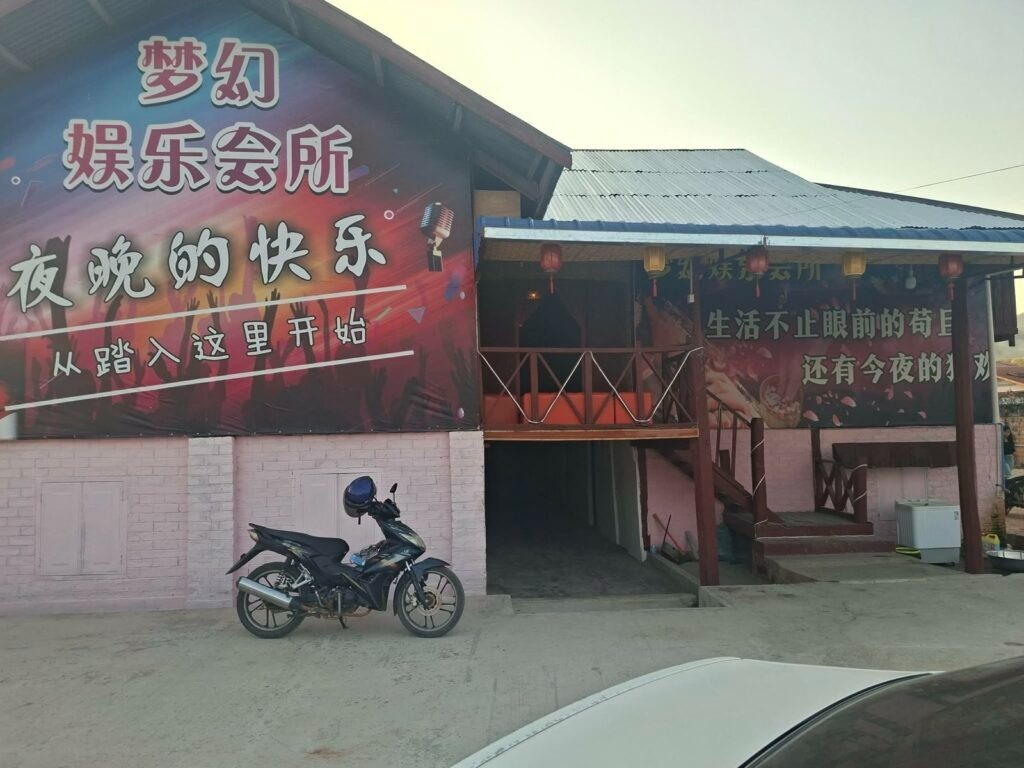
Invited by the MNDAA, numerous Chinese entrepreneurs have settled in Hsenwi, opening grocery stores, hardware shops, pharmacies, and restaurants. Many pre-existing local businesses have been compelled to add Chinese signage, accelerating the town’s visual and economic transformation.
“Many shops are now owned by Chinese nationals. Even local businesses had to add Chinese signs. Almost every shop feels Chinese now,” Sai Leng adds.
Residents also report that Chinese investors are renting houses, shopfronts, and abandoned farmland, often at inflated prices. Vehicles bearing Chinese license plates have become a daily sight.
Some locals allege that MNDAA officials are facilitating land leases to Chinese businessmen for large-scale commercial farming, including tissue-culture bananas, sugarcane, and watermelons.
“When I step outside, it feels like I’m in China. Our space in our own land is shrinking,” says Nang Nyunt (pseudonym), a Hsenwi resident, visibly distressed.
Push for New Kokang Identification
Since late November 2025, the MNDAA has rapidly issued Special Region (1) local identification cards and household registration documents in Hsenwi.
In urban wards, around 200 people per day are reportedly being registered, each charged between 20,000 and 25,000 kyats for an ID card.
The MNDAA has also introduced monthly trash-collection fees of 15,000 kyats and shop-licensing fees based on business size—clear signs of an increasingly institutionalized administration.
Border traders say these MNDAA-issued IDs allow travel as far as Mansi in China via the Mongkoe and Chinshwehaw border gates, with approval from Chinese authorities. However, many residents fear that registration could make them targets for forced recruitment.
There is also widespread concern that these documents are not recognized in junta-controlled areas such as Lashio and Muse, potentially placing holders at risk of arrest.
Hsenwi: A Saopha Town Under Sinicization
The name “Hsenwi” originates from the Shan term Sean Wi. During the Burma Socialist Programme Party era, it was Burmanized as “Theinni.” Now, under MNDAA rule, the Chinese name “Mupang” has been reinstated.
Political analysts warn that Hsenwi is undergoing Sinicization—the gradual infusion of Chinese language, culture, and identity into a historically Shan space.
“If Burmanization meant forcing non-Burmans to adopt a Burman identity, Sinicization reshapes non-Chinese people into a Chinese identity. In Hsenwi today, the MNDAA is pushing Shan people toward Chinese assimilation,” Shan political analyst Sai Wansai tells SHAN.
The clearest signs include the dominance of Chinese in signage and administration, as well as the increasing use of the Chinese yuan in local commerce.
For decades, ethnic communities resisted Burmanization by the central government. Now, northern Shan State faces a new form of cultural pressure—Sinicization.
Critics argue that the Shan State Progress Party/Shan State Army (SSPP/SSA) and other Shan organizations must respond, as MNDAA policies threaten not only cultural heritage but also long-term demographic change.
“This is unacceptable. If this continues, Hsenwi will lose its identity. Shan organizations must act before it is too late,” Sai Wansai warns.
SHAN attempted to contact MNDAA officials for comment on allegations of land leasing and demographic shifts but received no response.
Although both the MNDAA and SSPP are members of the Federal Political Negotiation and Consultative Committee (FPNCC), tensions remain high due to overlapping territorial claims following Operation 1027. On January 29, 2024, the SSPP publicly condemned what it described as “narrow nationalism and expansionism.”
Operation 1027 and China’s Strategic Ambitions
Hsenwi lies approximately 70 miles south of Muse and 70 miles west of Chinshwehaw, placing it at the heart of China’s Belt and Road Initiative (BRI) ambitions in Myanmar.
The Mandalay–Lashio–Muse highway—running through Nawnghkio, Kyaukme, Hsipaw, Lashio, Hsenwi, Kutkai, and Muse—is northern Shan State’s main trade artery. Since Operation 1027, control of this route has shifted to the Three Brotherhood Alliance (MNDAA, TNLA, and AA).
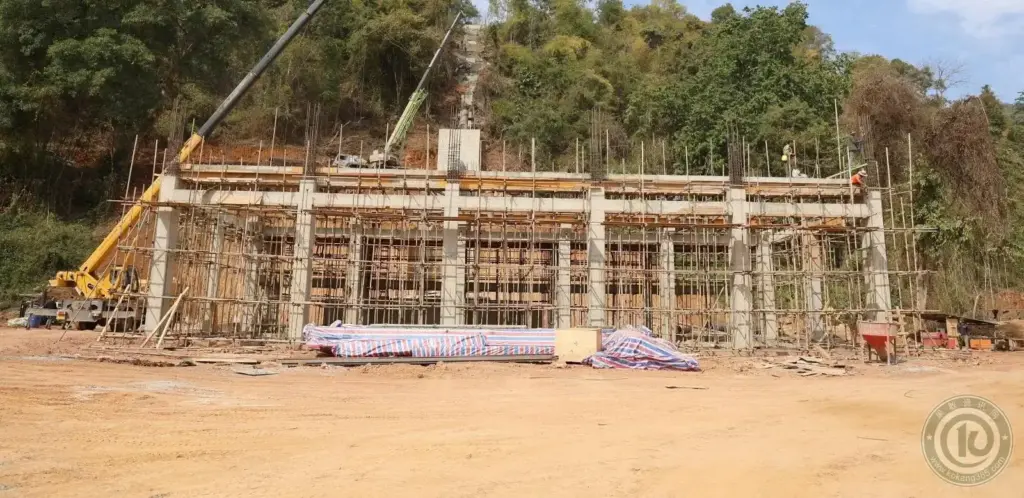
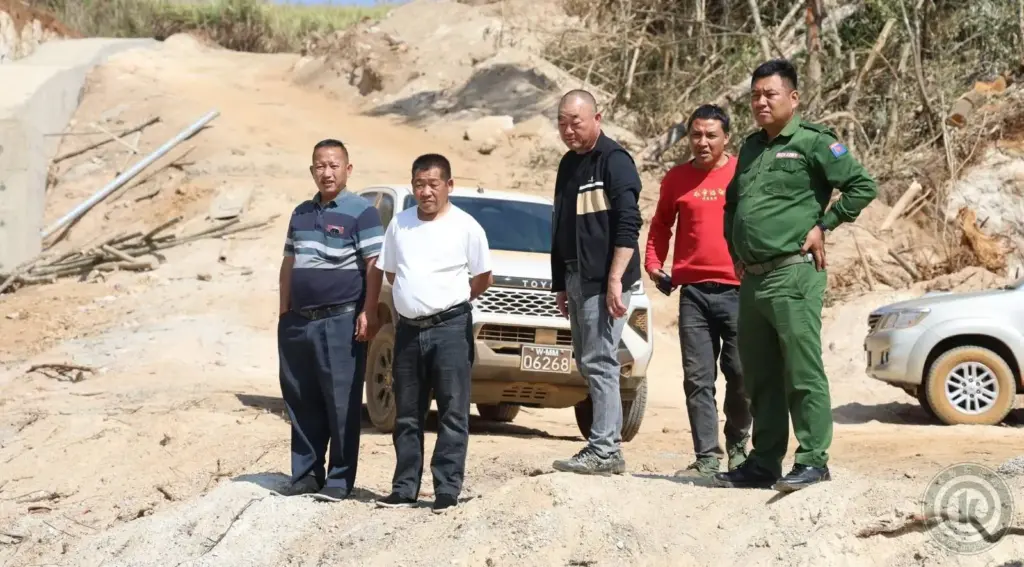
In January 2025, the Kokang news network announced construction of the Laukkaing–Chinshwehaw “Secondary Road,” a 30-kilometer project widely viewed as part of China’s long-term regional strategy.
Recent reports from Lincang suggest that a new China–Myanmar multimodal trade route—linking sea, land, and rail—may soon open. Under this plan, goods from the Indian Ocean would arrive at Yangon Port, move overland to Chinshwehaw, and then connect to China via the Lincang railway.
Analysts say this would provide China with its shortest land route to the Indian Ocean, dramatically reducing transport time and costs.
Many observers believe Operation 1027 was not only aimed at dismantling online scam operations but also at clearing obstacles to the China–Myanmar Economic Corridor (CMEC).
With MNDAA control over Hsenwi and Kunlong, and the newly completed Kunlong Bridge serving as a key gateway, China’s footprint in northern Shan State is now undeniable.
A Town Losing Its Soul
Behind new roads, trade routes, and investment lie land dispossession, cultural erosion, and shrinking local sovereignty.
For many Shan residents, Hsenwi’s transformation serves as a warning not only for northern Shan State but for Myanmar as a whole.
If current trends continue, analysts warn that Hsenwi may cease to exist as a historic Saopha town, becoming a transit corridor for China’s access to the Indian Ocean.
“It’s not just about one heritage site—it’s about blanketing an entire town in a Chinese identity,” Sai Leng concludes quietly.
Note* The names of residents quoted in this report have been changed to protect their security.





Leave a Comments