



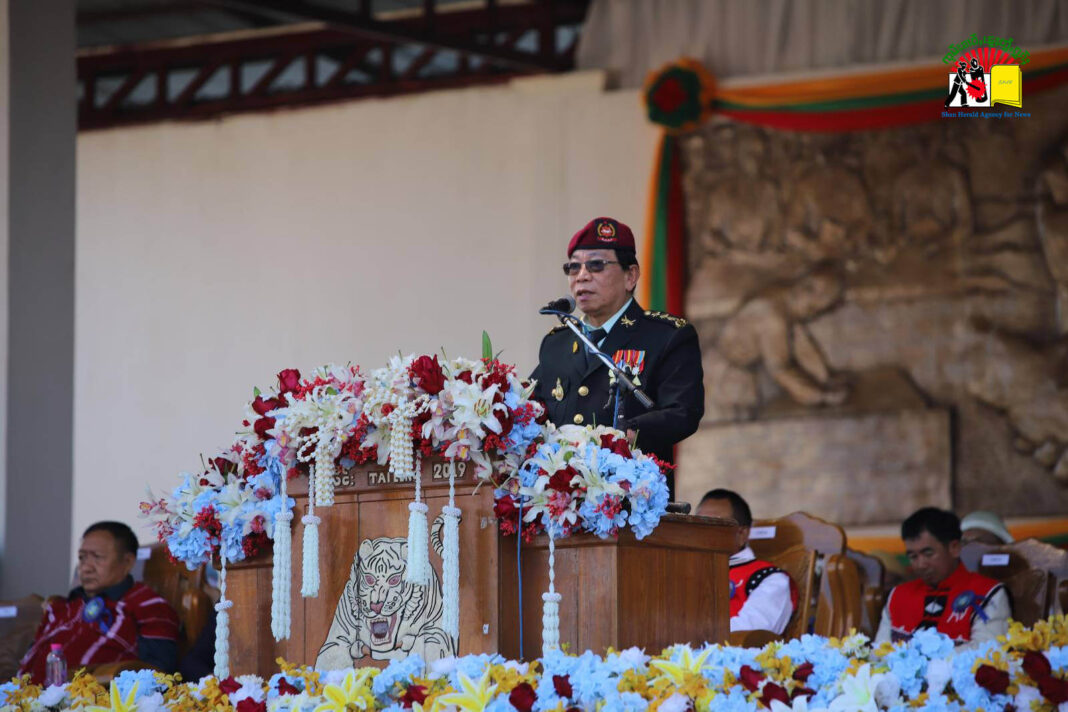
On the occasion of 79th Shan National Day, General Yawd Serk made known his vision of on how to restart reconciliation process to end the ongoing civil war, which seems to be no end in sight.
In the meantime, prior to the 7th February 2026, Shan National Day, a four-day consultation meeting was held among some 105 representatives of various Shan organizations that produced a four-point statement of the First Shan National Conference, on 6th February.
- The First Shan State National Conference was held at the headquarters of the Restoration Council of Shan State (RCSS) Loi Tai Leng from February 2 to 4, 2026. A total of (105) representatives including monks, armed resistance organizations, political parties, political groups, civil society organizations, youth groups, and representatives of various townships in Shan State attended the conference.
- The (33) basic (Federal) principles and (38) basic rights for the drafting of the Shan State Constitution were discussed and approved.
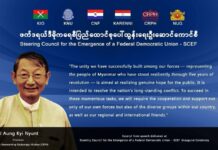
- The Shan State Federal Affairs Steering Team was initially formed to implement the (33) basic principles and (38) basic rights approved and carry out future work.
- We hereby announce that we invite all organizations and peoples in Shan State to participate in the Shan State National Conference for the peaceful coexistence of ethnic groups in Shan State, the establishment of a lasting peace, the realization of self-determination and equal rights, the emergence of a constitution, and the emergence of a political body representing Shan State.
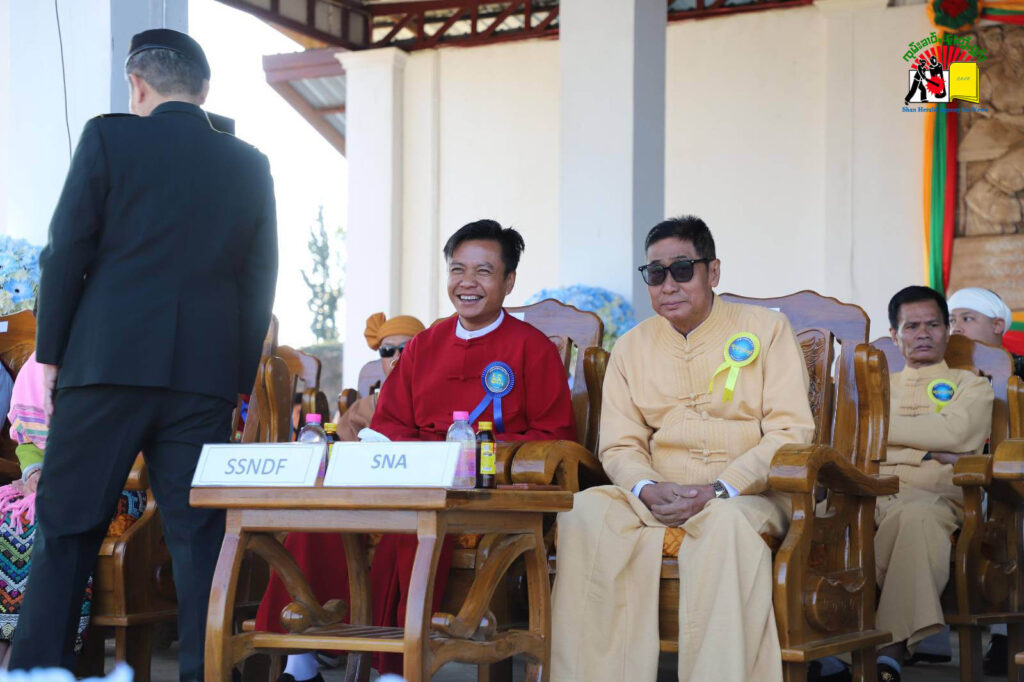
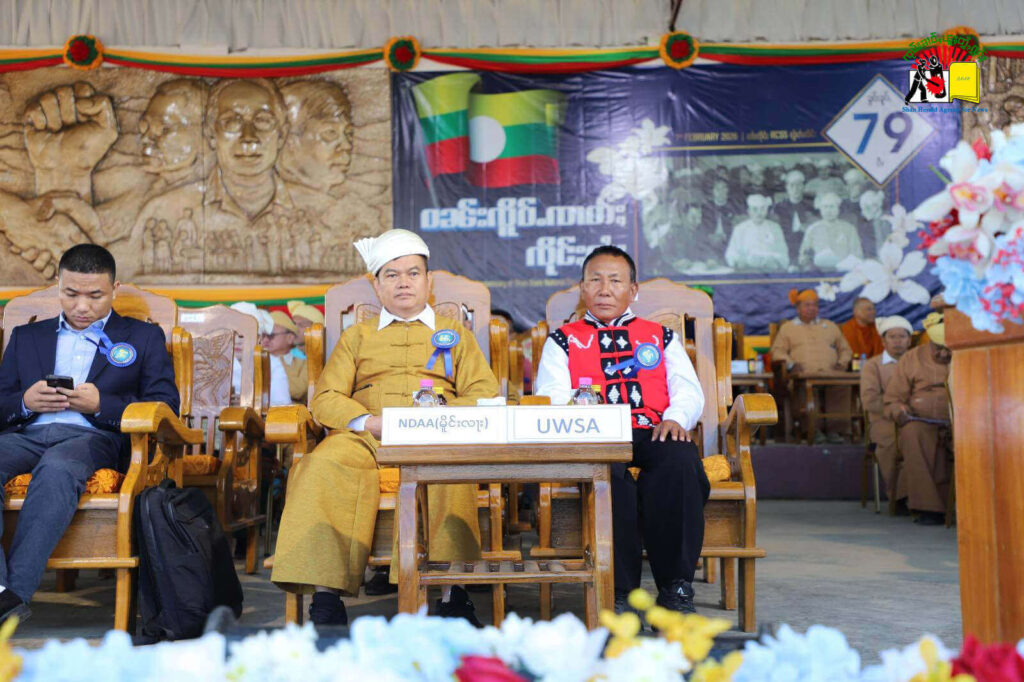
Reportedly, the Shan State Progress Party (SSPP), Shan and Nationalities Development Party (SNDP), Shan South National Defense Force (SSNDF), Shanni National Army (SNA), Pa-O National Army (PNO), Lahu Democratic Union (LDU), Democratic Karen Benevolent Army (DKBA) and Chin National Front (CNF) also attended the 79th “Shan National Day” held in Loi Tai Leng.
Shan State Federal Principles
The Shan State Federal Principles (SSFP) consist of 33 key points, which emphasize:
- Acceptance of a multi-ethnic state
- A multi-party system
- Sovereignty belonging to the people
- Residual power residing with the people
- Local-level administration following a subsidiary principle, with a direct mandate style
- Establishment of two legislative bodies: the Nationalities Parliament and the People’s Parliament
- Formation of two types of governments: State Government and Local Governments
- Election of the State leader by the State Parliament
- Establishment of the State Supreme Court as the highest authority in the judiciary, alongside various levels of courts
- Election of the Supreme Judge and Judges in accordance with the State Constitution
- Protection of ethnic and sub-ethnic rights, allowing customary laws to be practiced without infringing on basic human rights
- Freedom of worship for all
- Rights over land and natural resources, ensuring respect for biodiversity and the environment
- Ensuring that the state population benefits from land and natural resources, including socioeconomic development funded by the Budget
- Allowing border trade with taxation in border regions
- Recognition of all ethnic languages
- Encouragement of learning the official language
- Support for the development and preservation of ethnic languages
- Rights to learn and teach ethnic languages and promote further development
- Rights to education, choice of profession, and compulsory primary education
- Allowing private sector educational institutions such as schools, colleges, and universities
- Rights to cultural development for all ethnic groups
- Provision of basic healthcare for all state citizens
- Formation of a State Guard Force and Police Force, both under the State Government
- Adoption of a market economy
- Establishment of banks and a banking system
These principles aim to provide a framework for governance that respects the diverse cultural and ethnic composition of Shan State, ensuring equitable access to rights and resources for all citizens.
Basic Rights
The 38 basic rights encompass a wide range of individual and collective entitlements, including:
- Individual rights
- State citizenship and political rights
- Rights to form associations
- Socioeconomic rights
- Cultural and literary rights
- Children’s rights
- Labor and farmers’ rights
- Media consumption rights
- Social rights
Additionally, these rights include protections enforced by human rights commissions, constitutional provisions, and state government, as well as the application of international norms and laws by the state judiciary.
General Yawd Serk’s Outlook
RCSS Chairman General Yawd Serk on his 79th Shan National Day message made a four-point suggestion, which reads:
“Although the country has been independent for 78 years, it has not progressed like its neighboring countries. This stagnation is largely due to the leaders being out of touch with the middle way, (as taught by Buddha with the concept of “mizzima padi pada,” meaning the middle path—not too harsh and not too lenient). To address the issues facing the Union of Burma, or Myanmar, I would like to propose the following suggestions:
- Modern Bamar leaders and ethnic leaders must learn from past mistakes and prepare for the future by acknowledging their own shortcomings rather than blaming others.
- Trust-building among all parties is essential, along with the realization of the Panglong commitment.
- Instead of resorting to conquest, oppression, and restrictions, both sides should prioritize face-to-face negotiations to find mutually beneficial solutions.
- For the sake of national security and defense, establishing a federal army should be seriously considered.”
In an interview with Reuters on February 10, Yawd Serk criticized the international community for its failure to halt the Myanmar military junta’s airstrikes on civilians. He also condemned the junta’s leader, General Min Aung Hlaing, for being inconsiderate and driven solely by personal ambition.
The leader of Myanmar’s influential ethnic army, General Yawd Serk of the Restoration Council of Shan State (RCSS), criticized world leaders for neglecting the military junta’s increase in deadly airstrikes on civilians, claiming that only China is actively intervening. Speaking to media for the first time in years following a controversial election that solidified military control, he highlighted the suffering of civilians amid intensified bombing campaigns, which have reportedly targeted over 1,000 civilian locations in just 15 months.
Since the military coup in 2021 that ousted Aung San Suu Kyi’s government, Myanmar has descended into conflict. Air attacks have killed at least 1,728 civilians since late 2024, impairing pro-democracy forces that lack an air force. Although the junta argues it is combating terrorism, Yawd Serk emphasized the need for trust-building among armed factions and political dialogue with the military to resolve the ongoing conflict.
A military-backed party recently declared victory in elections that the UN and human rights organizations criticized as efforts to entrench military power. Yawd Serk, who maintains a ceasefire with the junta, blamed the country’s turmoil on a leadership driven by “ego, pride, and greed” and expressed a preference for political solutions rather than renewed fighting.
He noted the complex dynamics in Shan State, a hub for both legal and illegal businesses, exacerbated by the coup. China has acted as a power broker in the region, supporting some factions while urging stability for its Belt and Road initiatives. Yawd Serk stated that only China is intervening in Myanmar’s affairs.
At a recent event, he outlined efforts to build trust among various ethnic groups in Shan State and mentioned that they had agreed on principles for a future federal state, a demand vital to opposing forces.
The intended vehicle for reconciliation
General Yawd Serk’s intention to utilize the Shan State Federal Affairs Steering Team as a means to achieve peace in Shan State, as well as throughout the entire union, is quite clear. The objective is to unify the various factions and organizations within Shan State into a cohesive political entity that represents all its people. This initiative aims to eliminate inter-ethnic conflict and strengthen the different ethnic armed organizations (EAOs), ethnic representative organizations (EROs), and political parties within the region.
In fact, the Committee for Shan State Unity (CSSU) made an attempt a few years ago, but it ultimately failed for various reasons, particularly since the Restoration Council of Shan State (RCSS) and the Shan State Progress Party (SSPP) were at odds and often clashed. However, there is hope that this time will be different, even though engaging the Ta’ang National Liberation Army (TNLA) and the Myanmar National Democratic Alliance Army (MNDAA) may prove challenging. Nevertheless, striving to find common ground among all multi-ethnic groups within Shan State is far more beneficial than continuing to fight against one another.
Analysis
Yawd Serk’s dissatisfaction, as reported by the media, can be summarized through his four-point suggestions in his Shan National Day message. He criticized the international community for its indifference to the military junta’s airstrikes against civilians, compared the governance of the National League for Democracy (NLD) and the Union Solidarity and Development Party (USDP), addressed China’s interference in Myanmar’s politics, and called for an end to the civil war through a peace negotiation process.
In his suggestions, he urged all stakeholders to learn from past mistakes and recognize their own shortcomings rather than shifting blame onto others. This reflects the necessity for deep self-reflection and a transformative change in mindset.
Additionally, he emphasized the importance of trust-building, the realization of the Panglong Commitment and Agreement, prioritizing face-to-face negotiations to discover mutually beneficial solutions, and the establishment of a federal army for the country. He criticized the international community for its indifference and the lack of mechanisms to prevent the military junta’s airstrikes against civilians, which claimed over 1,700 lives in 2024 alone.
In a recent interview with Reuters, he stated, “The civilians are suffering, and I want the international community not to ignore it,” adding, “Nowadays, we can’t even think about whom we can rely on.” His group controls strategic territory between China and Thailand, and he made these remarks from his headquarters at Loi Tai Leng, located just across the Thai border.
According to Reuters, Yawd Serk stated that the world has failed to halt the turmoil as the military intensifies its bombing campaigns across the country. He referenced data from the Myanmar Peace Monitor, highlighting that airstrikes have targeted over 1,000 civilian locations in the past 15 months.
His comparison of the governance styles of the National League for Democracy (NLD) and the Union Solidarity and Development Party (USDP) indicates a distancing from the junta-led National Ceasefire Agreement (NCA) process. Although he may have some reservations, he has not completely abandoned it. This is evident in his recent decision to send a Restoration Council of Shan State (RCSS) delegation to meet with the junta in Naypyitaw, where the seven Ethnic Armed Organization (EAO) Alliance also convened with junta representatives.
He praised the ousted administration of Aung San Suu Kyi and criticized military leader Min Aung Hlaing, attributing Myanmar’s turmoil to a “leadership driven by excessive ego, pride, and greed—placing the will of one individual above the desires of the public,” as reported by Reuters.
His straightforward allegation that China is the sole agent interfering in Myanmar, particularly in the politics of northern Shan State, may stem from a sense of revenge for being driven out of the region as directed by China. This action has been carried out by the Ta’ang National Liberation Army (TNLA), Shan State Progress Party (SSPP), and the United Wa State Army (UWSA). China views the Restoration Council of Shan State (RCSS) as aligned with Thailand and perceives it as a Western influence.
According to Reuters, this approach has resulted in a “fractured landscape” that risks deepening grievances and destabilizing a region crucial to Myanmar’s future, as noted by the International Crisis Group in November. Yawd Serk remarked to Reuters, “There is one country that intervenes in Myanmar, and it is China—only China,” but he declined to elaborate further.
China has “long played a constructive role in the domestic peace and reconciliation process, earning recognition from all sectors of the Myanmar society and the international community” its foreign ministry said in a statement.
This may be perceived as self-aggrandizement on China’s part, while most of the Myanmar population views it as a pursuit of China’s national interests at the expense of Myanmar.
Ultimately, Yawd Serk remains committed to a stance of peaceful negotiation rather than pursuing an all-out war with a win-lose outcome. His call for self-reflection among all stakeholders, learning from past mistakes, and transforming self-centered political supremacy may, by all accounts, be a daunting task. However, it is certainly better than making no effort to end the ongoing civil war.
For Yawd Serk, the success of his approach will depend on how effectively he utilizes the newly created Shan State Federal Affairs Steering Team as a platform to unify the Shan armies, engage the Shan people, and foster trust among all multi-ethnic groups within Shan State. Connecting this initiative with the broader anti-junta alliance will be essential to mitigate the ongoing tragedy of the civil war.
For now, it may be too early to speculate whether Yawd Serk’s efforts and aspirations will be realized or if they will merely become suggestions that fade over time.


Leave a Comments