



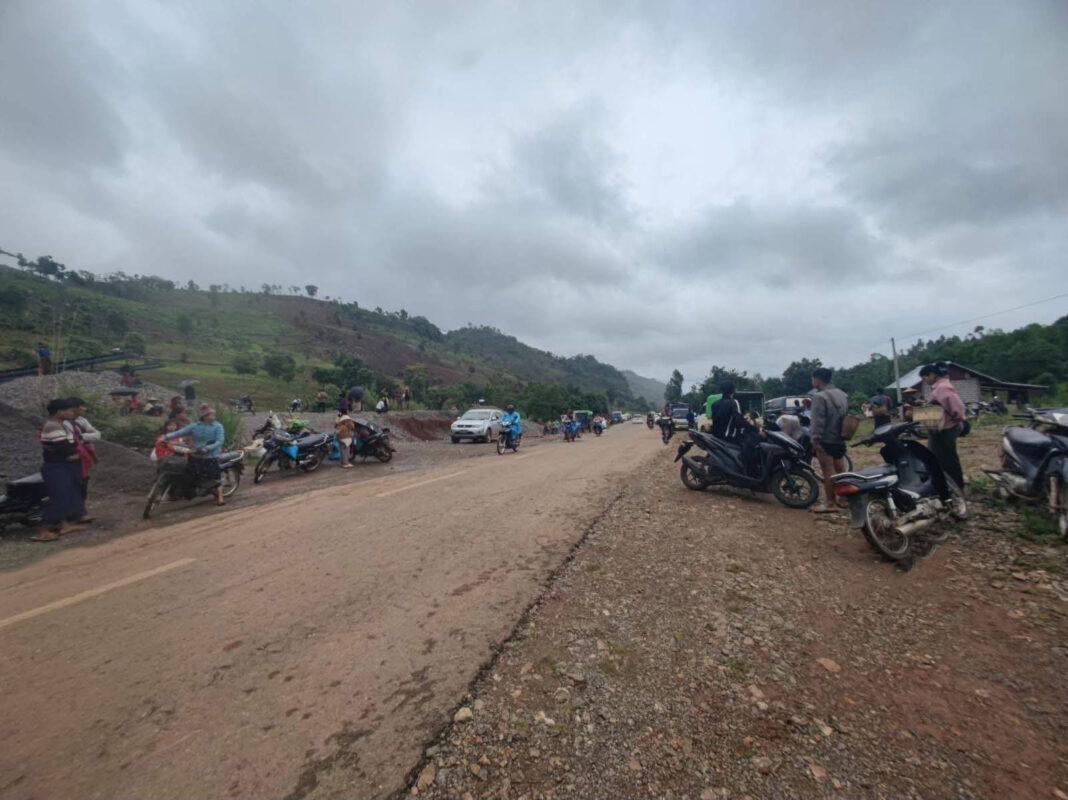
As Myanmar’s military intensifies its offensive in southern Shan State, clashes have surged in Hsihseng, Nyaung Shwe, and Panglong (ပၢင်လွင်း Pinlaung) townships, a strategic push to reclaim control of the critical Loikaw–Mong Pai (Mobye)–Pai Khun (Pekon) road, a vital supply route into Kayah (Karenni) State.
Karenni resistance forces are mounting a fierce defense, particularly around Mong Pai and Pai Khun, key entry points to their territory. The violence escalated on May 17 when Karenni fighters attacked junta and Pa-O National Organization (PNO) troops stationed near Hswang Pyaung village in Panglong Township.
To shed light on the humanitarian crisis unfolding in the conflict zone, SHAN News reporter Sai Harn Lin spoke with Ko Chan (name changed for safety), a local aid worker assisting displaced communities in Panglong.
Q: Can you describe the current situation in Panglong and how civilians are being affected by the conflict?
A: Heavy fighting raged in Hswang Pyaung until May 23. During a brief lull, some residents returned home, only to find their houses looted. I can’t confirm who was responsible, but every home was ransacked. Everything was taken. It’s devastating.
Q: Why is Hswang Pyaung village strategically important, and what has happened there recently?
A: The military council established a checkpoint there, and three major battles have erupted nearby. Hswang Pyaung is a large village, home to over 4,000 people and nearly 1,000 houses. Now, everyone has fled. Most are sheltering in surrounding villages and have been unable to return since May 17.
Q: Where are most displaced families taking shelter, and what challenges are they facing in these temporary locations?
A: Many are in Pin Khun village; others reached Panglong town or are staying with relatives. But those without resources are stranded in rural areas, relying on local aid groups. Shelters in Panglong are at capacity. The needs are urgent, food, shelter materials like bamboo, basic supplies. Some fled at dawn with nothing but the clothes on their backs. Without vehicles, they walked for hours.
Q: With the early rains and colder weather, what are the most urgent needs for displaced families?
A: Warm clothing and blankets. Panglong is already cold and wet, and the rains arrived earlier than usual. Some are sleeping outdoors, completely exposed. The conditions are dire.
Q: This is the third displacement for many people here. How has the prolonged conflict impacted civilians?
A: Shelter, bamboo, and food, especially rice, oil, and salt are the top priorities. Families risk returning during pauses in fighting to salvage belongings, but they live in constant fear: not just of losing homes, but of long-term starvation.
Q: Are there any aid organizations still able to reach Panglong? What are the main obstacles to delivering assistance?
A: Only a small local group remains active. Initially, there was more support, but now roads are destroyed, and military checkpoints block access. Even willing aid groups can’t get through, as the risk of detention is too high. Assistance has dried up.
Q: For many, this is the third time being displaced. How is the ongoing conflict affecting people’s mental and physical well-being?
A: Yes. In Ban Mauk village (Pai Khun Township), people are completely trapped. Not by active combat, but because roads are sealed, possibly by the military or resistance; we don’t know. The Loikaw–Mongpai–Pai Khun–Panglong Union Road is shut down, and gunfire echoes daily. I fear for those still stuck there.
Q: Thank you for speaking with us.
A: Thank you for highlighting this crisis.




Leave a Comments