



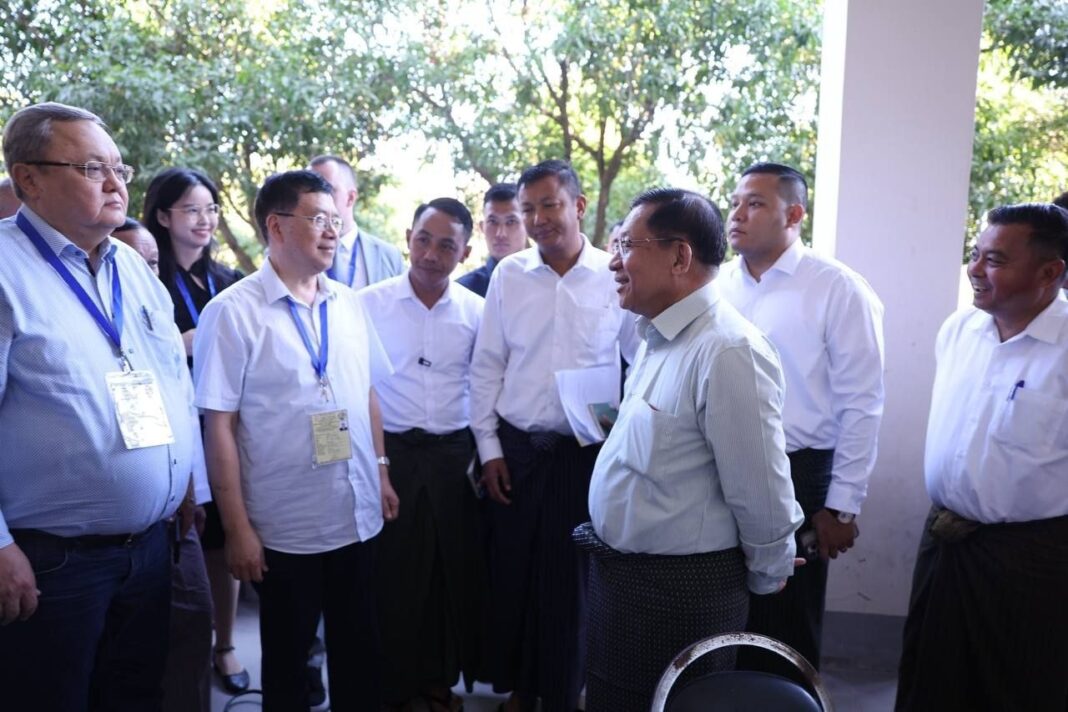
Myanmar’s military regime is preparing to form what it calls a transitional “new government” in the coming months following its recently completed elections. Yet for many observers and political analysts, the process represents little more than a carefully staged maneuver to prolong military rule.
Rather than signaling a genuine political transition, critics argue that the election is a strategic move designed to legitimize the junta while accommodating the geopolitical interests of neighboring China. For much of the population, it remains a hollow turning point—an event devoid of meaningful democratic substance.
A Staged Electoral Process
Seeking political legitimacy after the February 1, 2021 coup, the junta’s Union Election Commission (UEC) organized elections in three phases between 2025 and early 2026.
Out of Myanmar’s 330 townships, voting took place in only 263. The first phase covered 102 townships, the second 100, and the third 61, while elections could not be held in the remaining 67 townships due to ongoing conflict and instability.
In Shan State alone, which contains 55 townships, the UEC conducted elections in 38 townships, while 17 saw no voting at all.
Election observers say the process unfolded amid widespread armed resistance against military rule. Reports of intimidation, advance-vote manipulation, and technical irregularities led critics to characterize the process as a “sham election” rather than a credible democratic exercise.
Electronic Voting Machines and Transparency Concerns
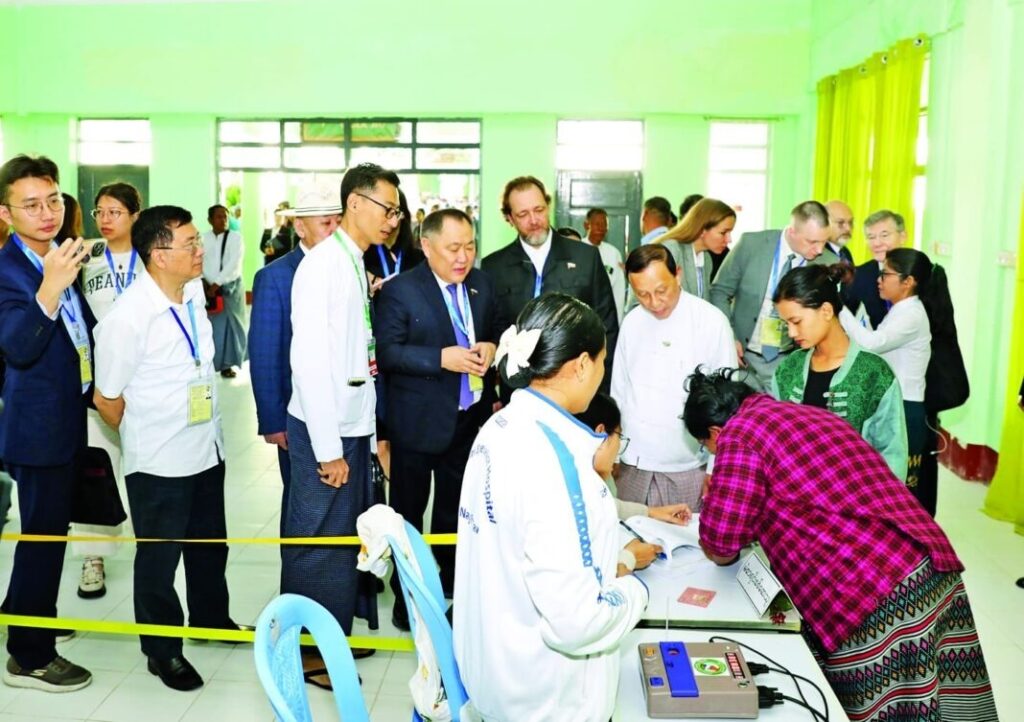
For the first time in Myanmar’s electoral history, the regime introduced Myanmar Electronic Voting Machines (MEVMs). However, the technology quickly became a source of controversy.
Observers reported technical malfunctions during voting and raised concerns about the lack of transparency surrounding the system’s software, data security, and verification mechanisms.
Ko Htin Kyaw Aye, an election observer, warned that the machines could expose voters to surveillance.
“The military group is in a position to know who voted at which station, or even what they voted for. There is no guarantee that this military group, which has oppressed and arrested the public for five years, won’t use such data for intelligence purposes.”
He argued that the absence of clear protections for voter privacy created an atmosphere of fear that discouraged genuine political participation.
Concerns deepened after the military-controlled National Standards Council certified the voting machines only days before the election in November 2025. Independent observers were given little access to examine the system.
Ko Myint Zaw, Chief Operating Officer of Democratic Voice of Burma (DVB) News, also questioned the integrity of the technology.
“The problem with these machines is who developed the software and the lack of a ‘paper trail.’ A paper trail is something that voters themselves can verify. Another issue is the absence of independent observers. The process is done quickly, but the results are not credible. That is why machine results can never be 100% accurate.”
Under normal electoral standards, a paper trail allows voters and auditors to confirm that electronic votes match physical records. However, in Myanmar’s system, the verification slip reportedly dropped directly into the machine after the button was pressed, preventing voters from checking their selections.
Ko Htin Kyaw Aye further noted that physical ballots were rarely cross-checked with electronic tallies.
“In most instances, they simply accepted the figures generated by the machine as final. We observed very few cases where those results were cross-checked against the physical ballot slips inside the boxes. This reflects a lack of guarantees regarding how accurately these voting machines actually performed the count.”
Voters Under Pressure
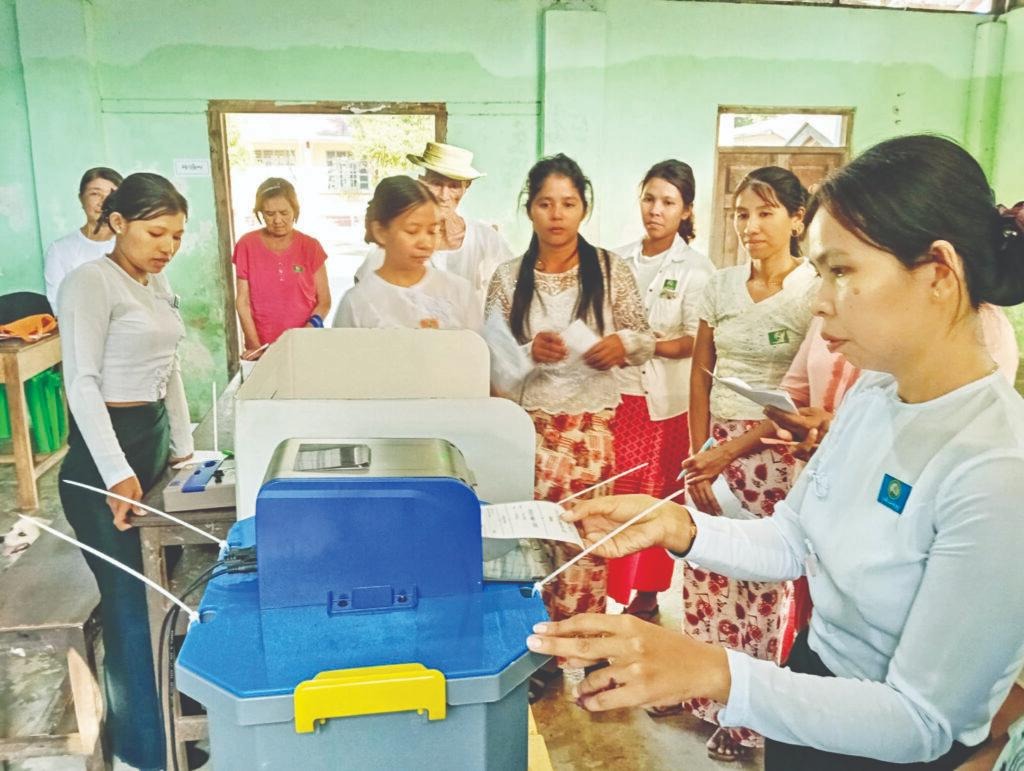
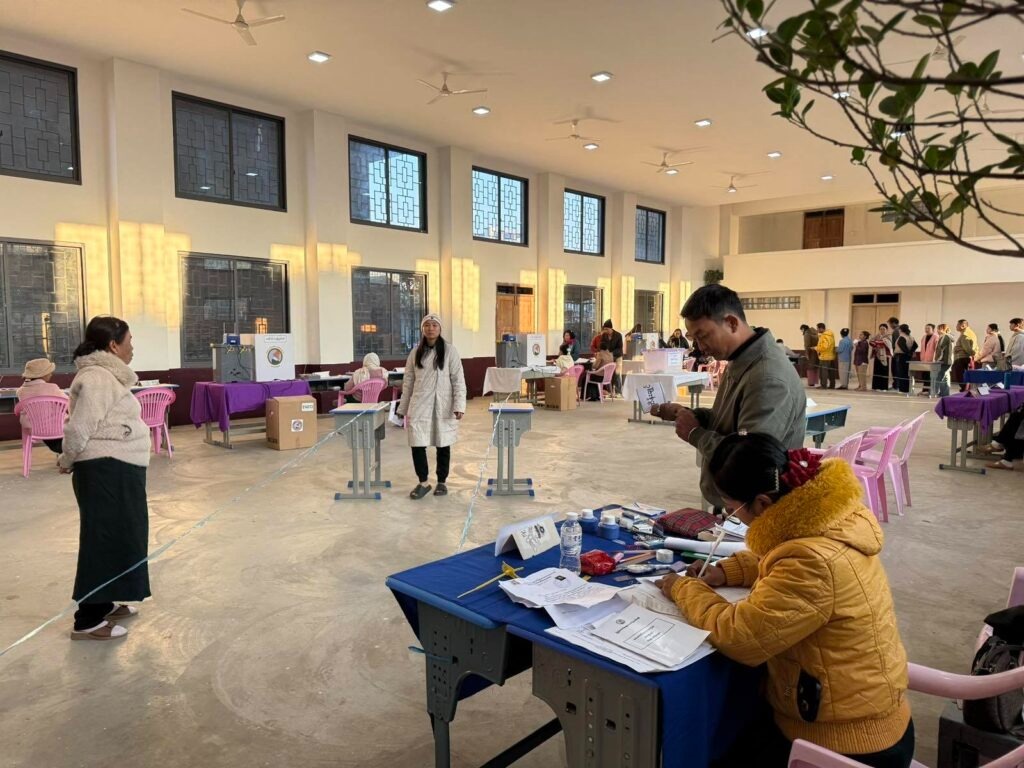
The introduction of electronic voting also created practical difficulties for many voters, particularly elderly citizens unfamiliar with the technology.
In Langkho Township, residents reported that polling staff rushed voters through the process.
“The staff at the polling station were in such a hurry that I didn’t even know which party I voted for. Some people didn’t understand it; they just went because they were told to. Because they were rushing us, people didn’t have time to look carefully,” said an elderly woman who voted in Langkho.
In Mong Hsat, residents said party logos displayed on the voting machines were too small for many elderly voters to see clearly, leading some to press buttons without knowing which candidate they had selected.
Advance Votes and Electoral Manipulation
Across the three phases of the election, the widespread use of advance votes became one of the most controversial issues.
Opposition parties and independent observers say these votes were heavily used to secure victories for the military-backed Union Solidarity and Development Party (USDP).
Ko Myint Zaw described how the system functioned.
“Because people don’t trust the organizers, don’t know where the advance votes come from, and there is no transparency, these advance votes have essentially become a system used to ensure victory. We’ve seen many instances where the USDP won specifically because of them.”
In Muse Township, for example, the Shan and Nationalities Democratic Party (SNDP), commonly known as the White Tiger Party, reportedly won 17 out of 18 polling stations before losing the entire township due to advance votes counted at the final station.
SNDP Chairman Sai Aik Pao expressed frustration.
“Think about it. We, the White Tiger Party, were winning 17 out of 18 polling stations. Then, at the very last station, these advance votes were brought in—you could say that is completely dishonest.”
Despite considering a legal challenge, the party ultimately abandoned the effort due to financial constraints.
Similar complaints emerged from Mawkmai, Mong Yawng, Mong Yang, and Kalaw townships.
In Kalaw, the Danu National Democracy Party (DNDP) lost despite strong polling-station results after the USDP received more than 5,000 advance votes compared to DNDP’s 74.
DNDP Chairman U Min Lwin Oo wrote on social media:
“If military polling stations like those in Ywangan and Pindaya weren’t included, the Danu party would have won both seats in Kalaw. What’s surprising is finding many Danu votes cast for Pa-O. This happened because a seat was vacant in the Pyithu Hluttaw, and voters might have been confused.”
Threats and Coercion
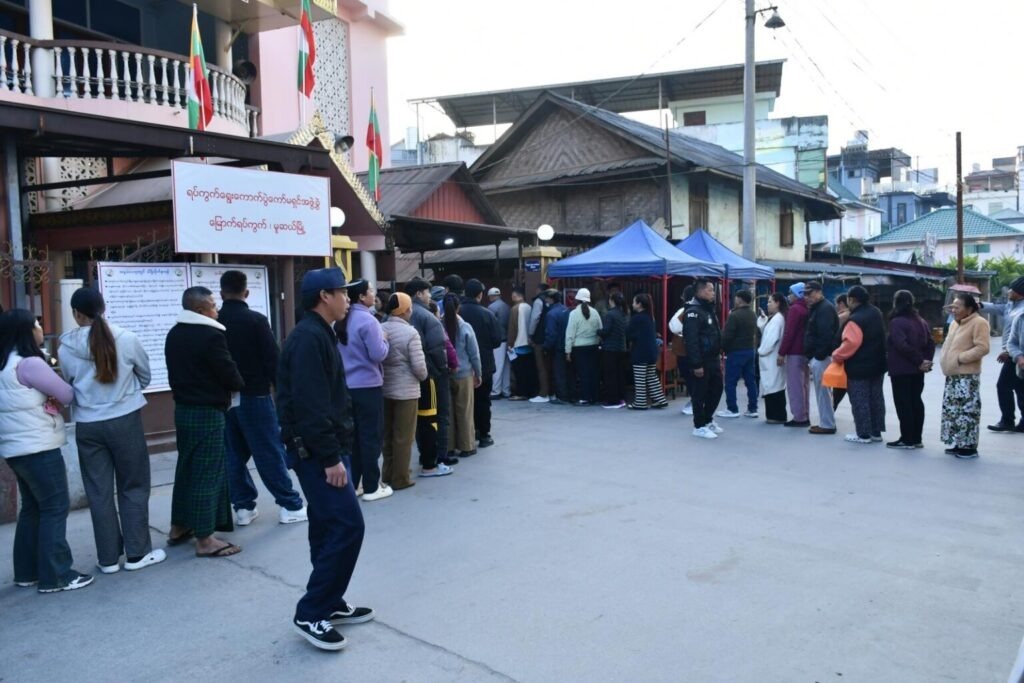
Reports from multiple townships suggest that many citizens were pressured to vote.
In Tangyan and Mong Hsu, administrators reportedly used loudspeakers to warn residents that those who failed to vote could face restrictions on travel, removal from household registration lists, or even forced conscription.
In Mong Yawng, residents said they were told they would be fined if they did not participate.
A local woman described the pressure:
“Everyone had to go vote. The administrator threatened that if we didn’t, we’d be fined, removed from the household list, and barred from traveling. Plus, every house had to pay 5,000 kyats as a ‘polling station fee.’ If you don’t vote, they’ll collect even more as a fine.”
In Ywangan Township, where the military and the Pa-O National Organization (PNO) militia maintained a heavy armed presence, voters reported intense security pressure.
“We were told to go early because we were worried about bombs. There were soldiers everywhere—about 20 per station. Many people went, but they only went because they were afraid. You have to sign three times according to your list number; people went because they feared the consequences.”
The Limits of the PR System
The Union Election Commission promoted the introduction of a Proportional Representation (PR) system as a way to increase ethnic representation in parliament.
However, the final results showed the military-backed USDP dominating the legislature with 739 seats, far ahead of ethnic and smaller parties.
Ko Htin Kyaw Aye questioned whether such representation would carry real political weight.
“Though these representatives will enter parliament claiming to represent their townships, their representation will be weak. Local people won’t support them, and local armed groups won’t recognize them. Political forces won’t recognize them either.”
China’s Influence and International Reactions
While Western governments and international democratic organizations rejected the election’s legitimacy, China took a markedly different position.
Beijing described the process as having “concluded peacefully and stably,” and the Chinese Special Envoy visited Naypyidaw during the first phase of voting.
Observers believe the election was closely tied to Beijing’s strategic interest in maintaining stability for its Belt and Road Initiative (BRI) projects in Myanmar.
Ko Myint Zaw offered a blunt assessment of China’s role.
“Since this is an election made by China, an election based solely on their interests is not ideal. Just because another country comes and arranges an election for us, it is merely ‘for show’ and is not conducive to the long-term path of democracy. An election made by China is unlikely to achieve our true democracy.”
Meanwhile, the European Union, Japan, and several ASEAN members—including Singapore, Malaysia, and the Philippines—have refused to recognize the election results.
The United Nations and international democracy organizations also stated that the process failed to meet basic standards for free and fair elections.
A Government Without Legitimacy
For many voters, participation itself carried psychological pressure.
Ko Myint Zaw described the emotional impact on citizens forced to vote.
“Since it is an election held at gunpoint, everyone feels they have no choice but to go. However, they feel insecure in their hearts, and this is even worse in areas with active fighting. Even in places without combat, those who go to vote feel ‘guilty’—the sense that they had to participate in something they shouldn’t have. I think more people are experiencing that psychological insecurity.”
Observers also noted that major opposition parties—including the National League for Democracy (NLD) and the Shan Nationalities League for Democracy (SNLD)—were systematically excluded from the electoral process.
A Hollow Turning Point
Analysts say the election does little to resolve Myanmar’s political crisis.
Instead, it represents what critics describe as a form of “political theater,” designed to create the appearance of civilian governance while preserving military dominance.
A representative elected in the 2020 vote summarized the situation bluntly:
“No matter how much the regime proclaims success, a new government and election results obtained through absolute pressure and threats cannot represent the support of the people.”
For many citizens in Shan State and across Myanmar, the promised political transition remains distant.
Rather than marking a step toward democracy or federalism, the 2025–2026 election may ultimately be remembered as a moment of political emptiness—a turning point in name, but not in substance.
Note:
The article was originally written by Sai Khwang Murng and contributed to by Sai Harn Lin in the Burmese Section. It was translated into English by Eugene.




Leave a Comments