

While many are fixed on the uprooting of military dictatorship system and establishment of the federal democratic union, not many are keen to delve on the issues in a pragmatic, realpolitik and critical sense on how they are being interpreted and implemented on the ground.
Although there is no argument that the military dictatorship system can’t be accepted in any future building of a genuine federal democratic union, not many pondered on how to go about the resolving of inter-ethnic conflict in a civilized, democratic manner, so that living together under the notion of “unity in diversity ” will be practically implementable in a federal democratic union we all envisage.
The concern of this piece is only to highlight the need of correct thinking in resolving glitches or removing the hurdles that might be hindering our way to reach the goal of federal democratic union. As such, uprooting the military issue won’t be discussed at length, but taken as a necessary basic fact to realize the aspirations of a democratic, pluralistic multi-ethnic state.
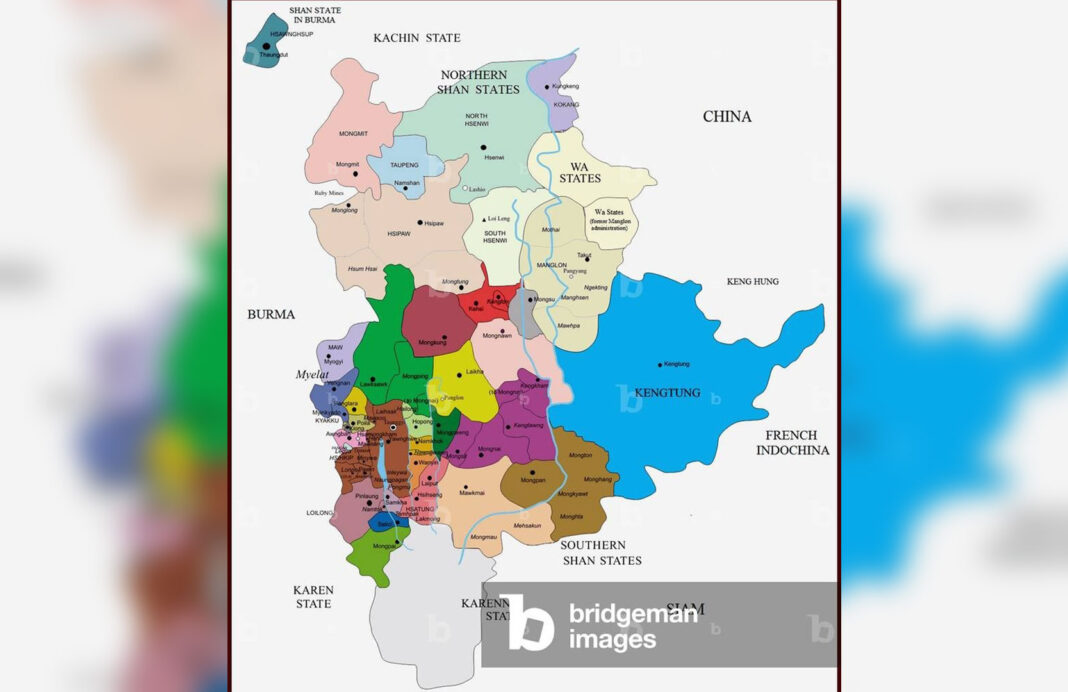
When thinking about ethnic harmony and ethnic conflict, including inter-ethnic conflict and minority protection issues, Shan State offers the best experience in which we all can look at as exclusive unfolding examples, although other states like Kachin, Arakan and Chin also have their fair share of problems on a lesser scale.
A mosaic of ethnic demographic pattern
To start with the people of Shan State may be divided into ten primary ethnic groups namely the Shan (Tai), Pa-O, Intha, Lahu, Lisu, Taungyo, Danu, Palaung, Ahka, and Kachin (Jingpo).
The Shan people who are mostly Buddhists inhabited the valleys and tableland and are mainly engaged in agriculture.
The hills are inhabited by various peoples notably the Wa in the north and along the Chinese border.
The Palaung people are numerous in the Northern Shan State, in the townships of Namkham, Muse, Namhpaka, Kutkai, and Lashio along the China-Myanmar border, and in the middle of Shan State, in the townships of Namhsan, Kyaukme, and Hsipaw. Some of the Palaung people can also be found in Kalaw Township in the Southern Shan State.
Very often than not the ethnic groups in Shan State mingled with one another and it is in no way a neatly divided pattern, but mostly overlapping kind of settlement patterns.
In general, it is fair to say that Shan State diverse ethnic groups have lived together quite peacefully during the pre-colonial, colonial and post-colonial eras, until after a few years of independence from the British in 1948.
EAOs in Shan State
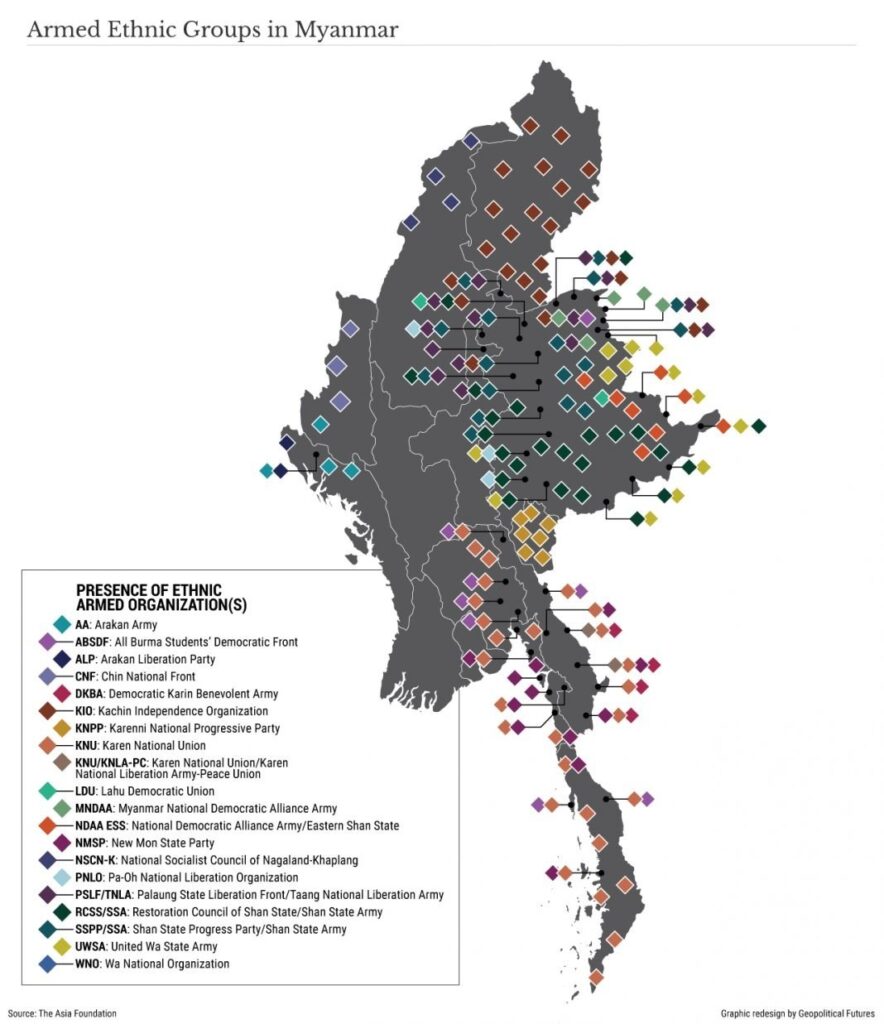
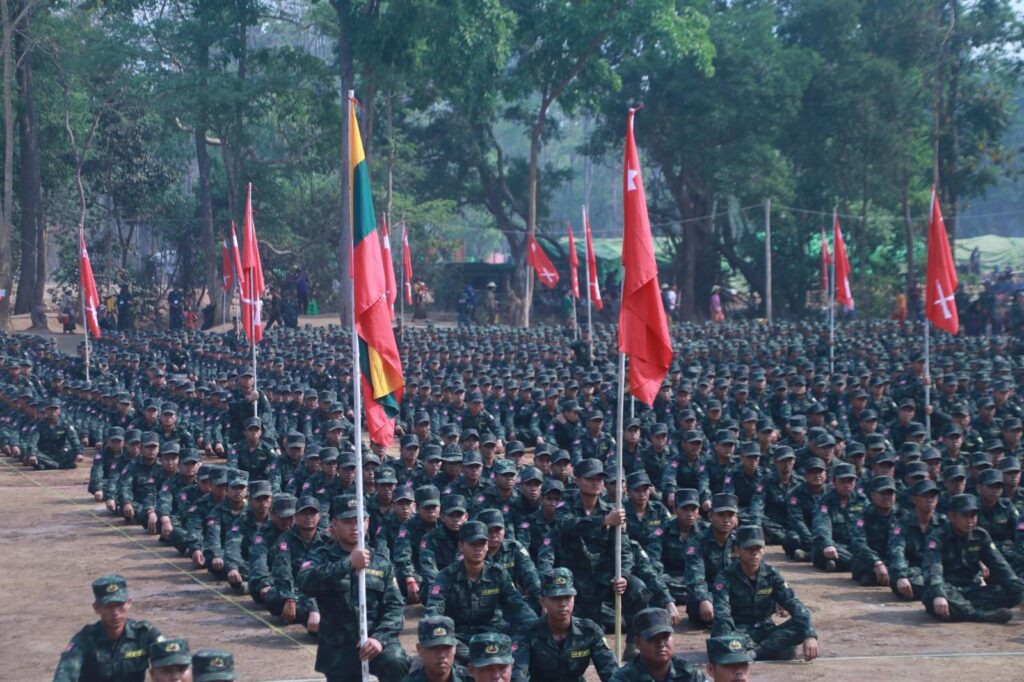
While there are some ten ethnic groups within Shan State only a handful of ethnic armed organizations (EAOs) are active and try to assert their influence in Shan State politics through armed resistance.
They are United Wa State Army (UWSA), Ta’ang National Liberation Army (TNLA), Myanmar National Democratic Alliance Army (MNDAA), Kachin Independence Army (KIA) in northern Shan State and Pa-O National Liberation Organization (PNLO), Pa-O National Organization (PNO), and lately, the Danu People Liberation Army (DPLA), including the UWSA in southern Shan State.
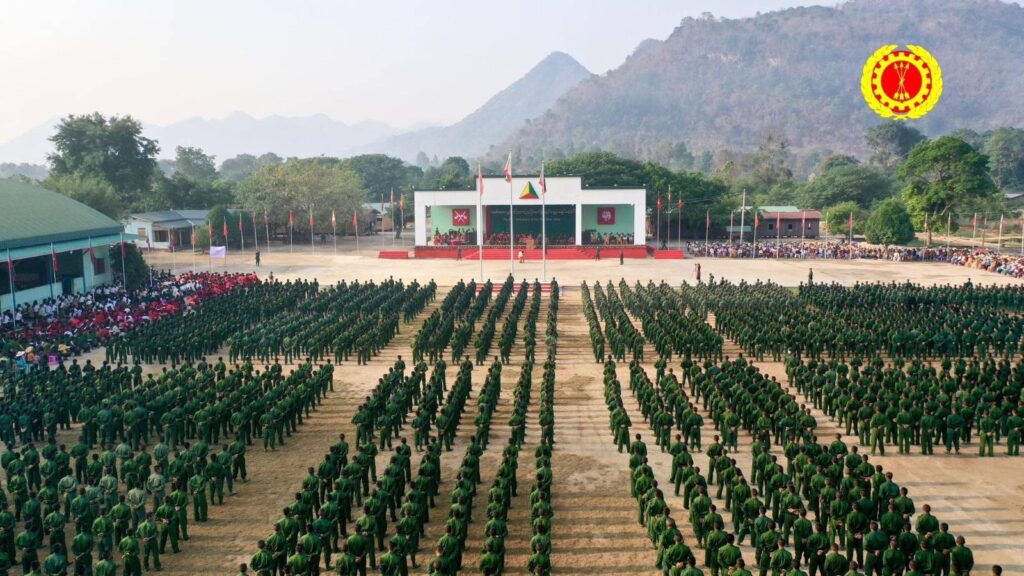
The two Shan armies of which the Shan State Progress Army (SSPP) is active in the north and the Restoration Council of Shan State (RCSS) in the south of Shan State often overlapped their deployment and clashes time and again between themselves, although both are not engaged in fighting with the military junta, to the dissatisfaction of the Shan people and the whole countrywide population in general. But they don’t seem to bother much with the public opinion.
The EAOs that have state-level administration ambition, just like the now existing 7 ethnic states, are the Wa, Palaung or Ta’ang, and Pa-O. The MNDAA or Kokang just wanted more territories in its self-administered zone and recognition of the MNDAA as it’s local government.
EAOs’ rivalry in Shan State
From the outset, Operation 1027 led by the Three Brotherhood Alliance (3BHA) battle cry has been the uprooting of military dictatorship system and establishment of the genuine federal democratic union to fulfill the aspirations of the people countrywide, at the end of 2023.
The 3BHA is made up of Arakan Army (AA), TNLA and MNDAA. Of the three only AA isn’t an ethnic group from Shan State, but fought as allies with a few hundred troops in Shan State during the first phase of Operation 1027, although not in the second phase, as it is busy trying to evict the junta’s troops from Rakhein State quite successfully, from its original stomping ground and homeland.
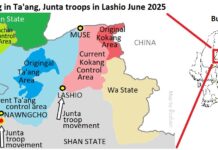
Shortly after MNDAA and TNLA captured almost all the military camps, in mid-2024, including Lashio the junta’s North Eastern Command, numerous frictions and at time armed clashes occurred between the EAOs operating in the northern Shan State because of territorial control disputes. And this is an ongoing, unresolved problem that won’t go away easily.
The recent planned negotiation between the junta and MNDAA and TNLA mediated by China may also centered on territorial ownership bargaining,where the two EAOs would ask for more but the junta may not entertain such demand. And China will be powerless at such upcoming scenario of bargaining.
Quite recently, the news of Royal Thai Third Army demand that the UWSA to withdrew from all its military garrisons along with Thai border across Maehongson Province hit the headlines, which the UWSA said that it won’t comply to. This is also a clear example of the UWSA territorial expansionism coming down from the Chinese border in the north to southern Shan State against the will of original residents of the areas, which were pushed out.
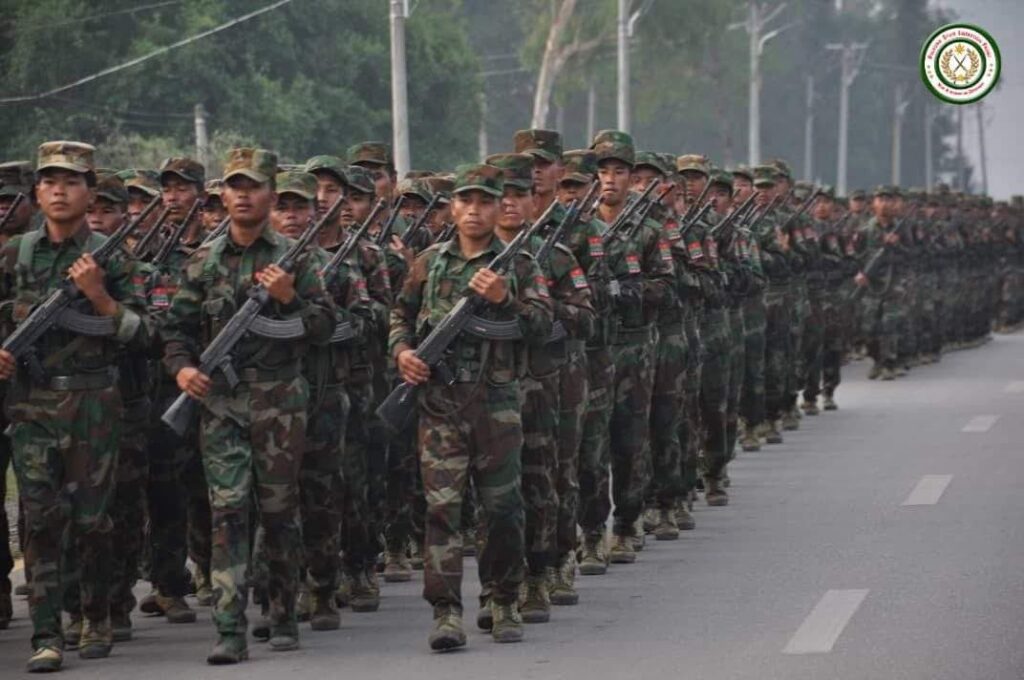
The TNLA, MNDAA, UWSA and PNLO all want a neatly demarcated broader ethnic states, at the expense of the original residents and Shan majority.
Redrawing of political map
There is no denying that the future federal democratic union will need adjustment and redrawing of political map, including creation of new constituent units and even more decentralization if needed.
But trying to define political map or redrawing by employing might is right may not be an appropriate approach and even run contrary to the common goal of establishing federal democratic union aspirations for all ethnic groups.
Because it promotes narrow ethnonationalism embedded in territorial expansionism and fuel animosity among different ethnic groups, rather than harmony and living together under the motto of “unity in diversity “.
In short, the problems of redrawing new political map will need an agreed criteria, procedure, and constitutional guidelines according to the consent of the people, as the country’s sovereignty belongs to the people.
Recent development and future outlook
According to recent development the two trends of fighting and negotiation seems to be running parallel in Shan State as a whole.
To be exact, in northern Shan State the MNDAA and TNLA are on the course of negotiation with the junta either because of the Chinese pressure or out of necessity. But to date no public response has been heard from the junta’s side so far. Nevertheless, the junta is said to scale back its airstrikes and the two EAOs refraining from fighting the junta except for occasional clashes between the TNLA and junta in Nwanghkio area.
The friction concerning territorial and demarcation disputes between the MNDAA, TNLA, UWSA and KIA, including the SSPP among the EAOs were reported very often in the past few months, following the defeat of the junta in northern Shan State, haven’t been reported for sometime now. This may be due to the Chinese sanctions or five-cuts policy against the northern EAOs, to pressure them to stop offensive against the junta and pushing them to agree to peace negotiation with the junta.
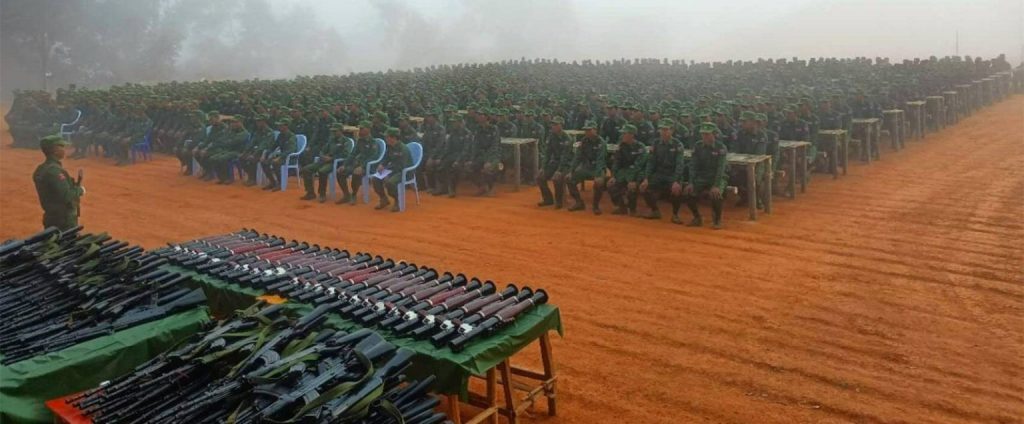
Meanwhile, the KIA was invited by Beijing authorities on December 8, after the former took over of Kachin Special Region 1 from the junta’s Kachin militias, followed by the both border gates closures of KIA and China.
However, no news or agreement on the meeting has been made public, except for that some border gates will be open soon in Kachin State.
Reportedly, China have met with the UWSA, KIA, AA and TNLA separately in Yunan but nothing was made public about the meeting. In addition the Chinese brokered peace negotiation between the junta and the MNDAA in Kunming. China on December 15, which may well centered on the issue of withdrawal from North Eastern Military Command of Lashio that MNDAA has captured a few months ago.
AA reportedly met Chinese authorities on December 1, in Tengchong, Yunan province. The discussion details were not made public but speculations are that it will involve projects in Kyaukphyu and employing Chinese security personnel to guard them. Moreover, AA and TNLA may also meet the junta soon according to the recent RFA report .
A source close to the military council, who spoke on condition of anonymity for security reasons, told RFA that the talks with MNDAA included Lt. Gen. Ko Ko U and a brigadier general. “Today, talks with the Kokang Army (MNDAA) began. The military council has Lt. Gen. Ko Ko U and a brigadier general. We understand that talks with the TNLA and AA may continue in the coming days.”
The motivation of China is to restore peace and resume cross-border trades including the the implementation of Belt and Road Initiative (BRI) and China-Myanmar Economic Corridor (CMEC). But for the northern EAOs like TNLA and MNDAA, achieving state-level administration and self‐administered zone with incorporation of recently conquered territories will be the deal, while the Naypyitaw might be thinking just the opposite that they withdraw from all captured territories.
With this incompatible goals it is hard to imagine that the deal can be reached, even with the Chinese pressure. And besides, the junta hardly have the legitimacy to make decision on such redrawing of the political map, as an illegitimate regime and coup maker against the elected government.
But the point here is to raise the issue of narrow and aggressive ethnonationalism and territorial expansion urge of northern EAOs as a whole, which runs counter to the spirit of forming a genuine federal democratic union. Because they are convinced that what they have achieved through military might by pushing out the military junta now rightly belongs to them, when in fact they have to be decided democratically by the consent of people residing within the territories they claimed to be theirs.
Thus, to cap the closing message argument, first and foremost, the aspirations of wanting to establish a genuine federal democratic union may have to be redefined. In other words, the might is right dictum to redraw political map or creation of new political constituent units and administrative entities, without the consent of the people forcefully, within the country would have to be replaced with the consent of the people according to the agreed criteria and constitutional norms and democratic principles. And of course, under the future federal democratic union government of the people, by the people and for the people. Otherwise, wanting to establish a genuine federal democratic union may only be an illusion and unrealistic dreams because it contradicts all democratic norms and most importantly, the notion of “unity in diversity”.

Leave a Comments