



As Myanmar’s military-appointed Union Election Commission (UEC) pushes forward with plans for elections in late 2025 or early 2026, over 50 political parties have registered, and 21 more are in the process of forming. Yet one of the country’s most prominent ethnic parties, the Shan Nationalities League for Democracy (SNLD), remains firm in its refusal to register under the junta’s authority.
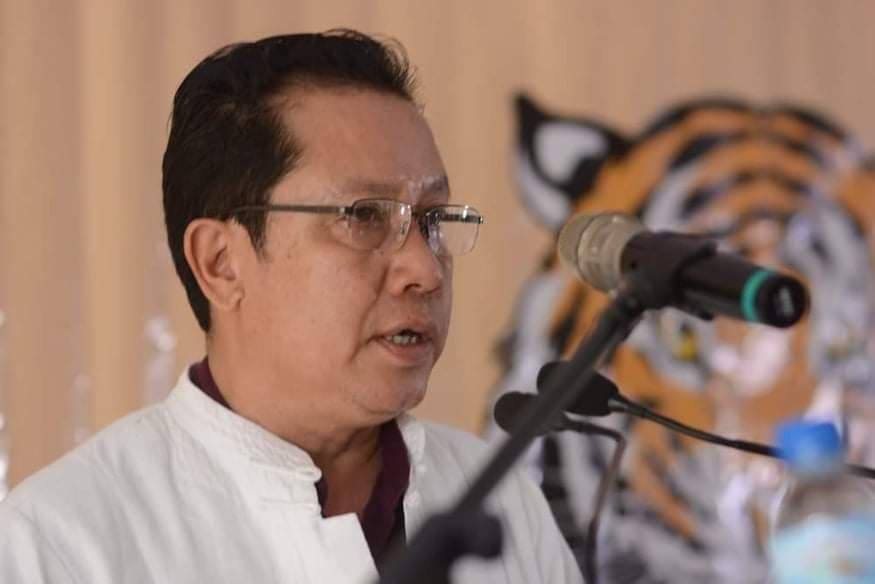
SHAN News reporter Sai Khwan Murng spoke with SNLD Spokesperson Sai Leik to discuss the party’s position, international perceptions, and the wider implications for Shan State and Myanmar’s political future.
Q: Earlier this month, the SNLD revisited the issue of registration with the junta’s UEC. What was the outcome?
Sai Leik: To be clear, the SNLD has not entered any new discussions about registering with the UEC. It simply wasn’t on our agenda. As we stated in our March 17, 2023 announcement, we have already made the decision not to register under the State Administration Council (SAC). Right now, we are only reviewing that decision to determine whether it still fits today’s political and military realities.
Q: If the military proceeds with its planned elections, what impact do you foresee for the country, and for the SNLD if it remains unregistered?
Sai Leik: The junta has talked about holding elections in December 2025, but we’ve seen no concrete steps, no clear timeline or actionable plan. A new UEC Vice Chair was appointed, and he claims elections will happen, but so far, it’s all talk.
Without transparency or credibility, it’s impossible to evaluate the actual impact. Right now, this election narrative is more about rhetoric than reality.
Q: There are reports that China has encouraged the SNLD to register and participate. Has the party faced any pressure from Beijing?
Sai Leik: No, we have not received any official pressure from the Chinese government. There’s been no formal request or proposal.
That said, we do maintain regular contact with Chinese Embassy officials. In those conversations, they’ve suggested that registration might open doors to more political dialogue. But whether or not we register, our relationship with them will continue. If the Chinese government wants to engage more deeply, it can extend a formal invitation. Until then, we don’t consider their remarks as pressure.
Q: Does the SNLD still believe that a political agreement must precede any elections?
Sai Leik: Absolutely. That remains our position. A meaningful political dialogue and agreement must come first, regardless of who organizes the elections or when they happen.
Without addressing the root causes of conflict, elections will only perpetuate the crisis. We need a truly federal democratic union, genuine self-determination, and a constitution accepted by all. Elections based solely on the junta’s laws cannot deliver real change or peace.
Q: Senior General Min Aung Hlaing recently reaffirmed his election plans in meetings with Russian and Chinese leaders. Do you see this as a strategy for political legitimacy, despite ASEAN’s objections?
Sai Leik: That’s exactly what it appears to be, a way to legitimize the junta’s rule. But history speaks for itself.
Back in 2021, ASEAN proposed a Five-Point Consensus that included a ceasefire and inclusive dialogue. None of those commitments have been honored. Instead, the junta holds closed-door discussions with a few allied parties, excluding key stakeholders.
Whether it’s at BIMSTEC or during visits to Russia or Belarus, the same vague promise of elections is repeated, without dates, legal frameworks, or credible processes. Even if an election is held, it will serve only the junta’s interests, not the people’s, not the country’s stability, and certainly not the creation of a federal democratic union.
Q: A different Shan political party has recently registered with the UEC. Could this shift the balance of power in Shan State if SNLD remains unregistered?
Sai Leik: I don’t believe it will have a major impact. The core issue in Shan State is not party competition, it’s the absence of a political solution and the failure to implement a genuine federal union.
Armed resistance in Shan State dates back to 1958, when the Panglong Agreement was abandoned. We tried working within the limits of the 2008 Constitution, but the military never made meaningful compromises. Now, with the SAC being an unelected authority, the problem runs deeper than whether a party registers or not. People see through the façade. They know this isn’t real democracy, it’s military rule in disguise.
Q: Is there anything else you’d like to share?
Sai Leik: For over 70 years, Myanmar’s politics have been shaped by military boots. It’s time to move beyond that. We need real politics, genuine nationalism not dictated by guns and uniforms. That’s the path forward.
Q: Thank you for your time and insight.
Sai Leik: Thank you.







Leave a Comments