




Analyzing the geopolitical landscape through the lens of Min Thayt’s insights
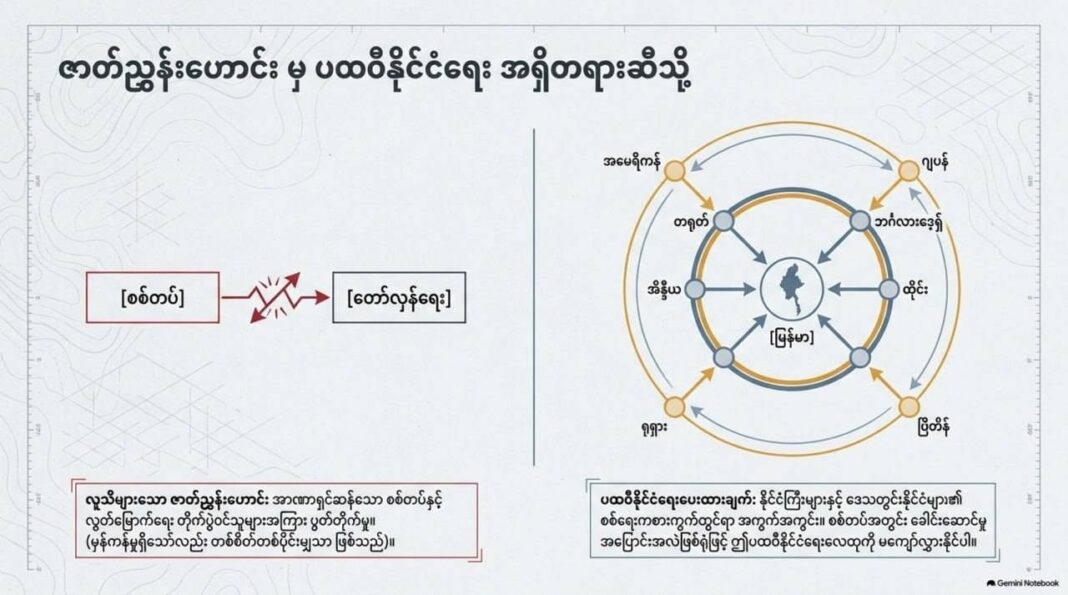
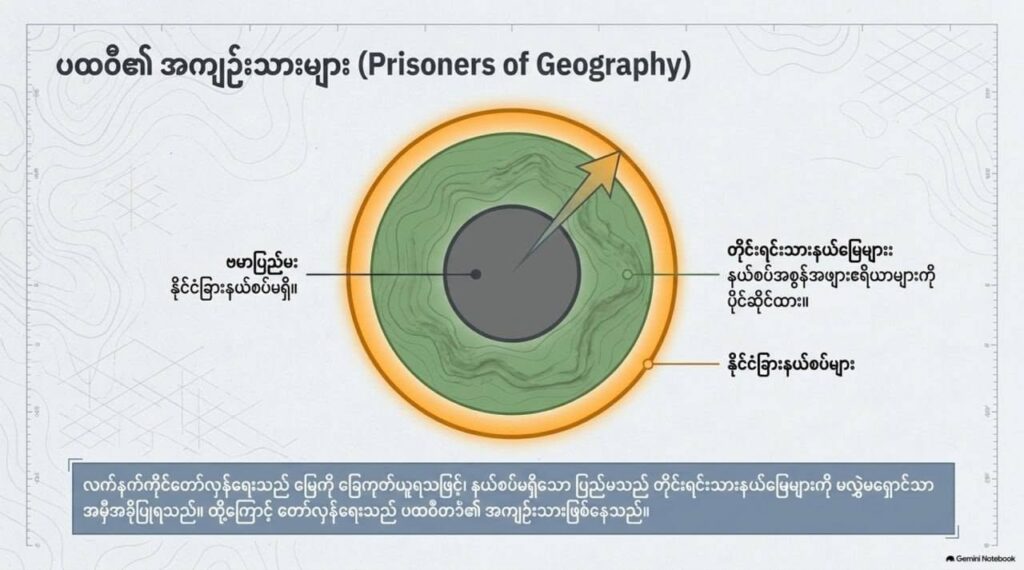
The narrative of Myanmar’s civil war has long been oversimplified in Western media, often framed as a binary struggle between a military junta and its democratic opponents. However, this view captures only a fraction of the reality. The conflict is, fundamentally, a geopolitical chessboard where the Myanmar military junta, the State Administration Council, now styled as quasi-civilian government through fake elections headed by Min Aung Hlaing, and the Ethnic Resistance Organizations (EROs) are all players in a game dictated by the national interests of neighboring giants: China, India, Thailand, and Bangladesh. As the junta styles itself as an elected government and launches a diplomatic offensive visiting key allies like China, Russia, Belarus, Laos, and Thailand, the battle for legitimacy is intensifying. With the UN Credentials Committee set to decide on the legitimacy of Myanmar’s representation this September, the stakes have never been higher. For the EROs to succeed in their goal of establishing a genuine Federal Democratic Union (FDU), they cannot rely solely on military victories or moral arguments. They must navigate the treacherous waters of geopolitical realpolitik, recognizing that they are “prisoners of geography” but also holding the key to regional stability.
The formation of the Steering Council for the Emergence of a Federal Democratic Union (SCEF) represents a significant step forward, acting as a nascent united front that is already lobbying internationally in the West, ASEAN, and Japan. While this is a crucial development, the initiative must evolve to become even more inclusive to truly represent the diverse ethnic landscape of Myanmar. The EROs must move beyond a simple military alliance to a comprehensive political and economic coalition that speaks with one voice. This requires them to stop viewing their neighbors as mere bystanders or enemies and start seeing them as essential stakeholders. By aligning their goals with the national interests of China, India, Thailand, and Bangladesh, offering stability, economic opportunity, and security, the EROs can transform their geographical constraints into a strategic advantage. The revolution will not be won by bullets alone, but by those who can convince the world that a federal Myanmar is the only way to secure peace in Southeast Asia.
The Diplomatic Chessboard: SCEF vs. The Junta’s Offensive
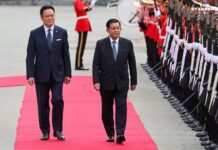
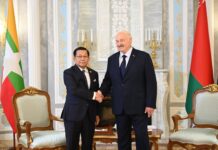
The current diplomatic landscape is a fierce contest for legitimacy between the resistance and the junta. The junta’s styling itself as an elected government and its subsequent diplomatic tour of China, Russia, Belarus, Laos, and Thailand is a calculated move to secure international immunity and prevent isolation. By securing the backing of these powers, the junta aims to dominate the upcoming UN Credentials Committee vote in September, hoping to maintain its seat and legitimacy on the world stage. This offensive is designed to portray the resistance as destabilizing elements rather than legitimate political actors, leveraging the geopolitical interests of its allies to shield itself from international pressure.
In response, the SCEF’s diplomatic efforts in the West, ASEAN, and Japan are a necessary countermeasure, yet they face an uphill battle against the junta’s entrenched alliances. The SCEF must not only lobby for recognition but also proactively present a viable alternative to the international community. The competition at the UN is not just about a seat at the table; it is a battle for the narrative of Myanmar’s future. If the SCEF fails to secure a strong position, the junta’s claim to legitimacy could gain traction, complicating the path to a federal union. The EROs must therefore intensify their diplomatic outreach, ensuring that the international community understands that the junta’s “elections” are a sham and that the SCEF represents the true will of the people. This requires a unified front that can effectively counter the junta’s propaganda and highlight the EROs’ commitment to democracy and federalism.
Decoding the Neighbors: From Stability to Strategic Partnership
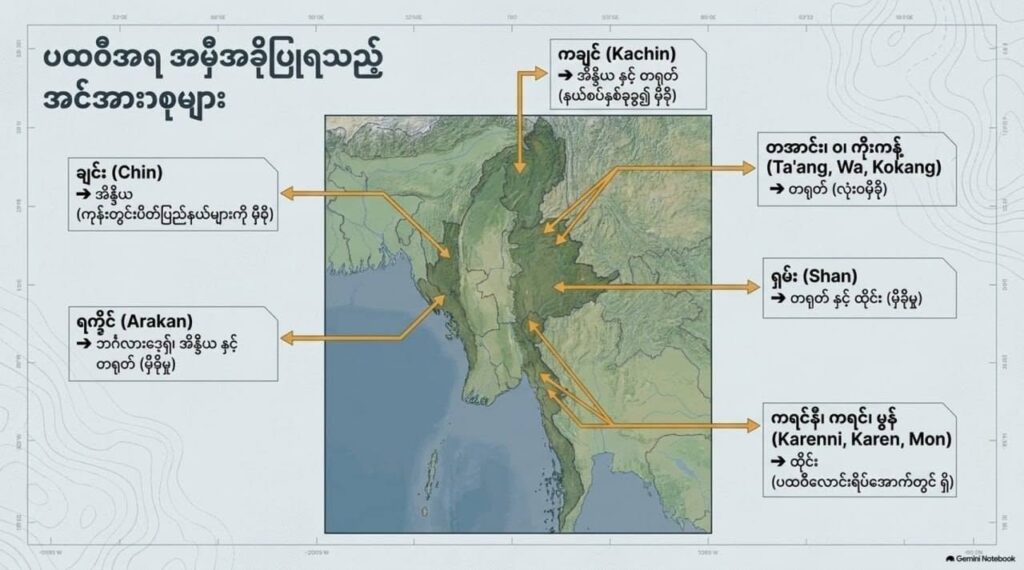
To navigate this complex environment, the EROs must understand the distinct “red lines” of their neighbors. The strategy must be tailored to the specific interests of each country, moving beyond generic appeals to concrete security and economic benefits. China, for instance, is primarily concerned with stability and connectivity. Beijing views Myanmar as a critical corridor for the Belt and Road Initiative and fears border instability, drug trafficking, and the spillover of conflict into Yunnan. Historically, China has often supported the central government to maintain this stability, but it is pragmatic enough to deal with local warlords if it serves its interests. The EROs’ opportunity lies in positioning themselves not as “anti-China” rebels, but as stability guarantors who can secure the border and curb illicit trade, thereby protecting Chinese investments. The narrative must shift from “fighting the junta” to “securing the border for regional prosperity.”
India’s interest is twofold: counter-terrorism and containing Chinese influence. New Delhi is deeply concerned about insurgencies in its own Northeast bordering Myanmar and fears that a chaotic Myanmar will become a haven for groups attacking India. Simultaneously, India seeks to prevent China from dominating the region entirely. EROs in the North and Northeast, particularly the Kachin and Chin EROs, must assure India that their struggle will not threaten Indian security and offer India a role as a security partner and a trade alternative to China. A federal Myanmar that respects India’s security concerns and keeps the border quiet is a strategic asset for New Delhi, potentially unlocking Indian diplomatic and economic support. Thailand’s interest is national security and refugee management, fearing a collapse of the Myanmar state that would flood its borders with refugees and criminals. The Shan, Karen, Karenni and Mon EROs must prove that a federal arrangement offers the best guarantee of peace for Thailand, making themselves indispensable to Bangkok’s security by effectively managing the border and curbing drug trafficking.
The Path to Inclusion: Expanding the SCEF Framework
The SCEF’s current lobbying efforts are a strong foundation, but the road to a Federal Democratic Union requires a more inclusive and representative framework. The EROs must ensure that the SCEF evolves into a true coalition that encompasses all ethnic groups, including those currently marginalized or not fully integrated into the resistance movement. This inclusivity is crucial for building a legitimate political entity that can speak for all of Myanmar, not just a subset of its people. The SCEF must actively engage with smaller EROs, civil society organizations, and community leaders to ensure that their voices are heard and their concerns addressed. This process of inclusion is not just a moral imperative but a strategic necessity, as a fragmented resistance is vulnerable to division and co-option by external powers.
The challenge lies in balancing the diverse interests of various EROs while maintaining a unified front. The SCEF must establish clear mechanisms for decision-making that respect the autonomy of member groups while ensuring a common strategy. This requires a delicate diplomatic dance where all neighbors feel they have a stake in the outcome, and all ethnic groups feel represented. The EROs must also address the internal divisions that have historically plagued the resistance, fostering a culture of trust and cooperation. By doing so, they can present a cohesive and compelling alternative to the international community, one that is ready to govern and build a federal union.
Security Guarantees and Economic Integration as Leverage
The EROs must move beyond a purely military strategy and embrace a comprehensive approach that leverages economic integration and security guarantees. The strategy must pivot from “liberation” to “development,” proposing cross-border economic zones that benefit neighbors immediately. For example, a Shan ERO could propose a trade corridor with China that bypasses the junta, offering China a tangible economic win for supporting the resistance. Similarly, EROs in the north could offer India assurances against cross-border insurgency while promoting trade and connectivity. Each ERO must offer specific security guarantees to its neighbor, demonstrating that a federal arrangement will effectively curb illicit trade, manage refugees, and secure the border.
This approach requires the EROs to act as effective local administrators, delivering immediate services such as healthcare, education, and infrastructure to the local population and neighbors. By proving that a federal system works better than the current chaos, they can build a base of support that extends beyond their own ethnic groups. The EROs must also create “pilot zones” where federal governance is tested, showcasing their ability to govern and manage complex issues. These zones should focus on delivering tangible benefits to the local population and neighbors, proving that a federal arrangement is not just an ideal but a practical reality. This strategy of “Mutually Assured Stability” can help the EROs gain the trust and support of their neighbors, turning the border from a frontline into a zone of economic cooperation.
Grassroots Feedback and the Future of Federalism
A federal democracy cannot be imposed from the top down. It requires constant feedback from the people to ensure that the “Federal Democratic Union” is truly representative and not just an elite project. The EROs must institutionalize regular town halls and community assemblies where ordinary citizens, including women and minorities, can voice their concerns. This ensures that the federal vision is grounded in the needs and aspirations of the people. To build trust, EROs should also invite neutral international observers or local civil society groups to monitor their governance and human rights records. This transparency is crucial for gaining legitimacy both domestically and internationally.
The strategy must be flexible and iterative, allowing for adjustments based on feedback and changing circumstances. If a policy fails to deliver results or causes friction with a neighbor, the ERO leadership must be willing to adapt and seek criticism without defensiveness. This openness to feedback and continuous improvement is essential for building a resilient and inclusive federal system. The EROs must also address the internal divisions that have historically plagued the resistance, fostering a culture of trust and cooperation. By doing so, they can present a cohesive and compelling alternative to the international community, one that is ready to govern and build a federal union. The road to a Federal Democratic Union in Myanmar is not a straight line of military conquest. It is a complex negotiation of geography, economics, and security. The EROs must stop viewing their neighbors as mere bystanders or enemies and start seeing them as essential stakeholders. By aligning their goals with the national interests of China, India, Thailand, and Bangladesh, offering stability, economic opportunity, and security, the EROs can transform their “geographical prison” into a strategic advantage. The revolution will not be won by bullets alone. It will be won by those who can convince the world that a federal Myanmar is the only way to secure peace in Southeast Asia.






Leave a Comments