


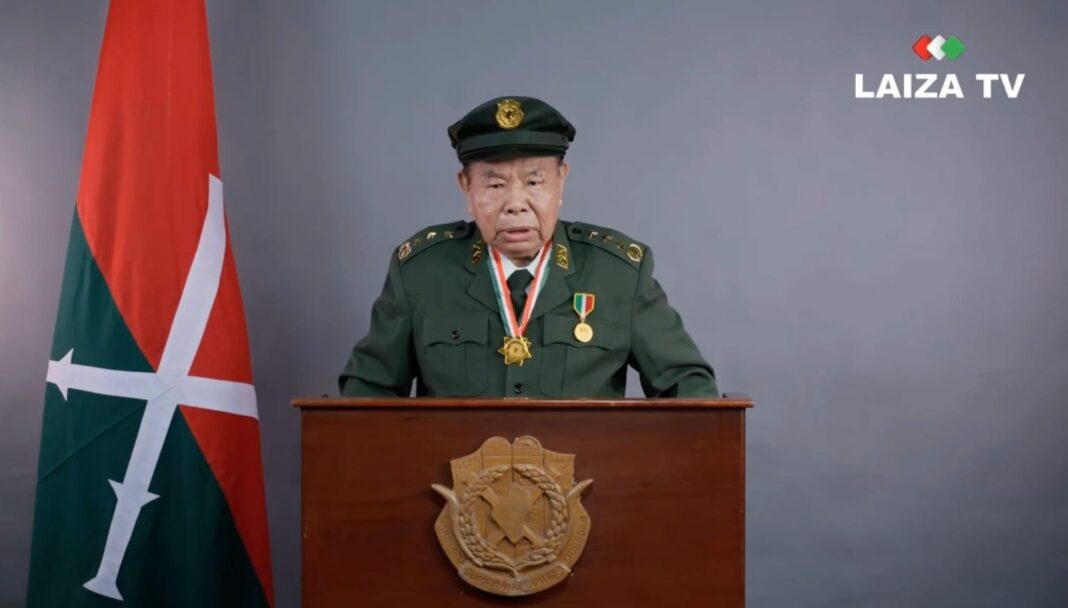
The political and military landscape of Myanmar as of August 2026 is defined by a deepening and rigid stalemate where neither the military junta nor the resistance movement possesses the capacity to achieve a total victory, yet neither is willing to accept the other’s fundamental terms. The country has effectively fractured into two distinct spheres of influence: the military regime retains control over the urban centers and the central heartland, while the opposition coalition, unified under the Steering Council for the Emergence of a Federal Democratic Union (SCEF), commands the borderlands and vast rural territories. This division has created a situation where the military’s strategy of divide and rule through bilateral peace initiatives is increasingly being countered by the resistance’s strategy of unified military and political coordination. The junta’s recent “100-Day Peace Initiative” has failed to break the resistance’s unity; instead, it has highlighted the regime’s desperation to fragment the opposition by offering territorial concessions to specific ethnic armed organizations that are willing to negotiate, while simultaneously escalating its aerial bombardment of civilians to maintain pressure. Conversely, the resistance has moved beyond ad-hoc alliances to form a cohesive command structure that integrates the military capabilities of ethnic groups like the Kachin Independence Army and the Karen National Liberation Army with the political legitimacy of the National Unity Government. This fusion has hardened the resistance’s stance, making it clear that they will not compromise on the core demand of dismantling the military’s political power or accepting a federal system that leaves the army as a dominant political force.
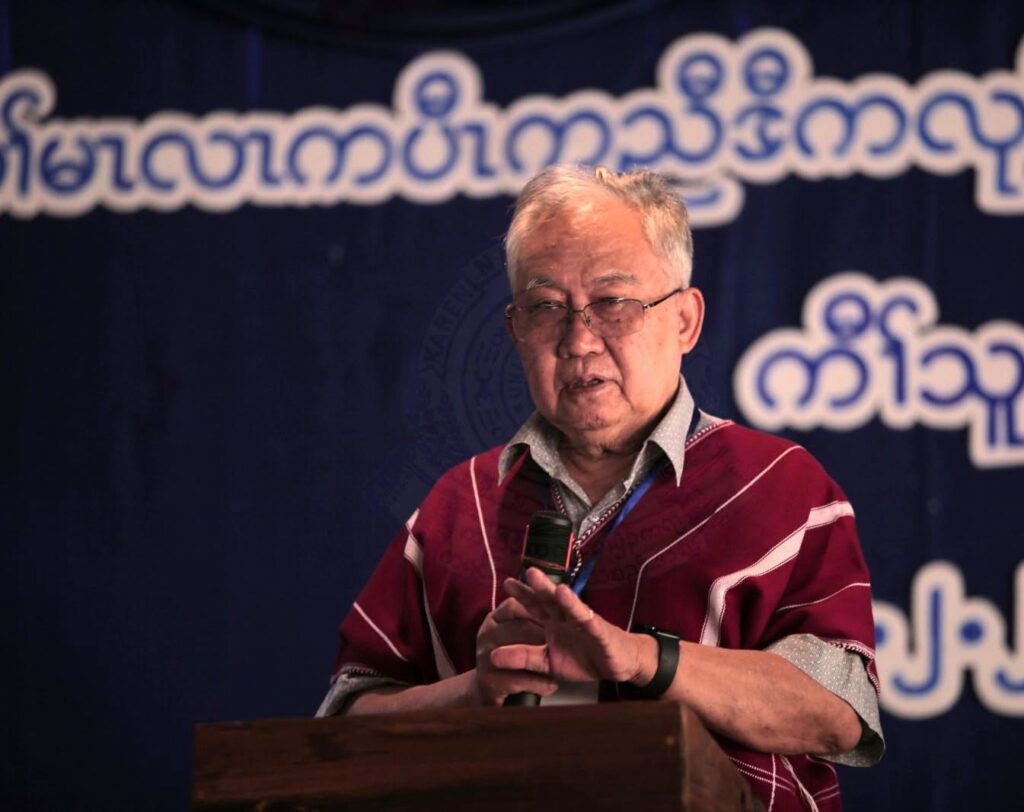
The Illusion of the Junta’s Peace Initiative
The military regime’s approach to peace in 2026 is best understood not as a genuine search for resolution but as a calculated political strategy designed to manufacture legitimacy and fracture the opposition. By engaging in bilateral talks with various ethnic armed organizations outside the unified resistance front, the junta aims to create a patchwork of separate ceasefires that isolate the most powerful factions like the Arakan Army and the Kachin Independence Organization. The promise of upgrading certain groups from self-administered zones to full ethnic states serves as a bait to entice these groups into a transactional relationship with the military, effectively pitting them against the broader democratic movement. However, this approach has proven flawed because it fails to address the underlying political grievances that sparked the conflict in the first place. The resistance has recognized this tactic for what it is, issuing stern warnings that any collaboration with the junta to prolong the regime’s survival will be viewed as a betrayal of the martyrs and a crime under international law. Furthermore, the military’s simultaneous escalation of aerial attacks on schools, hospitals, and displacement camps using drones and paramotors has demonstrated that their primary goal remains the survival of their political power through force rather than any genuine desire for a negotiated settlement. This dual strategy of offering carrots to some while wielding the stick of violence against others has only deepened the distrust and made a unified political solution more difficult to achieve.
The Humanitarian Crisis as a Catalyst for Accountability
The humanitarian situation has reached a tipping point where the military’s actions have crossed into the realm of criminality, creating a barrier to negotiation that cannot be ignored by the international community. The findings of the Independent Investigative Mechanism for Myanmar regarding deliberate airstrikes on civilians and systematic torture in detention facilities mean that the military leadership is now facing the very real prospect of international prosecution. This legal reality eliminates the possibility of a simple political compromise where the military steps down in exchange for total immunity. The regime’s leadership is trapped in a corner where their only perceived exits are total military victory or total collapse, as they cannot envision a future where they face accountability for war crimes. The resistance, in turn, has been galvanized by these atrocities, with leaders like the KIO chairman explicitly calling for the military to observe the laws of armed conflict and warning that the time for compromise on human rights is over. The cycle of violence has become self-perpetuating, with every aerial attack fueling further recruitment and determination among the resistance, and every victory by the resistance prompting harsher retaliation from the military. This dynamic ensures that any attempt at negotiation must be grounded in a framework that addresses these atrocities directly, rather than sweeping them under the rug in the name of stability.
The Necessity of a Hybrid and Conditional Mediation Framework
Given the depth of the divide and the criminal nature of the conflict, traditional mediation models that rely on mutual trust and good faith are no longer viable. The only path forward is a new form of third-party intervention that combines the security guarantees of international peacekeeping with a conditional political framework that separates the issue of criminal accountability from the process of political transition. This mediation must be led by a hybrid body that includes trusted regional actors like Indonesia or Malaysia, working in tandem with the United Nations to ensure both regional buy-in and international legal oversight. The mediator must possess the authority to enforce a strict ceasefire immediately, utilizing international monitoring forces to halt the aerial bombardment and protect civilian areas, as the resistance will not negotiate while their cities are being destroyed. Without such a guarantee, any talks would be seen as a stalling tactic by the military to regroup and rearm. The mediation process must also be structured to offer the military leadership a pathway to safe exile or conditional amnesty, but only in exchange for a complete transfer of power and a commitment to disband their political apparatus. This offer must be explicit: the soldiers may be spared, but the commanders responsible for war crimes cannot walk free. This distinction is crucial to reassure the resistance that justice will not be sacrificed for peace, while simultaneously giving the military leadership a face-saving way out that does not require them to fight to the death.
Securing the Future of a Federal Union
For the mediation to succeed in the long term, it must address the fragmentation of the ethnic landscape that the military has tried to exploit. The process must include mechanisms to neutralize the role of the junta’s proxy groups, ensuring that any territorial concessions or statehood agreements are made through a democratic process rather than through coercion by the military. The international community must make it clear that the upgrade of certain groups to full state status is only valid if it is part of a broader, inclusive federal constitution that guarantees autonomy and equality for all ethnicities, rather than a tool for the military to maintain its influence. The mediation must bring these proxy groups into the fold not as allies of the junta, but as independent stakeholders in the future of the nation, offering them a clear path to join a federal union that respects their rights without requiring them to submit to military rule. This approach would isolate the junta’s hardliners and create a broad coalition of ethnic and democratic forces that can support a transition. The ultimate goal of this mediation is not merely to stop the fighting but to lay the foundation for a genuine federal democratic union that addresses the root causes of the conflict. This requires a commitment from all parties to a shared vision of the future, where power is shared, and the military is subordinated to civilian democratic control.
The High Stakes of Inaction
If the international community fails to push for this specific type of conditional mediation, Myanmar faces a future of protracted state collapse and endless suffering. The current trajectory leads to a scenario where the country becomes a failed state, with warlords controlling different regions and the economy in ruins, while millions more are displaced and the humanitarian crisis deepens. The military’s grip on power is already weakening, and without a structured transition, the inevitable power vacuum could lead to chaotic infighting among various armed groups, further complicating the path to peace. The resistance is determined to continue the fight until the military is removed, and the military is determined to hold on as long as possible, creating a deadlock that only external intervention can break. The window for a negotiated settlement is narrowing as the military’s war crimes become more egregious and the resistance’s demand for total victory becomes more entrenched. The only outlet available to prevent the total destruction of the nation is a bold, decisive, and comprehensive mediation effort that is willing to enforce its terms and hold all parties accountable. Failure to act now will mean that the only resolution left will be a bloody and chaotic victory for one side, leaving the other side to suffer the consequences, and the nation to pay the price for decades to come.


Leave a Comments