



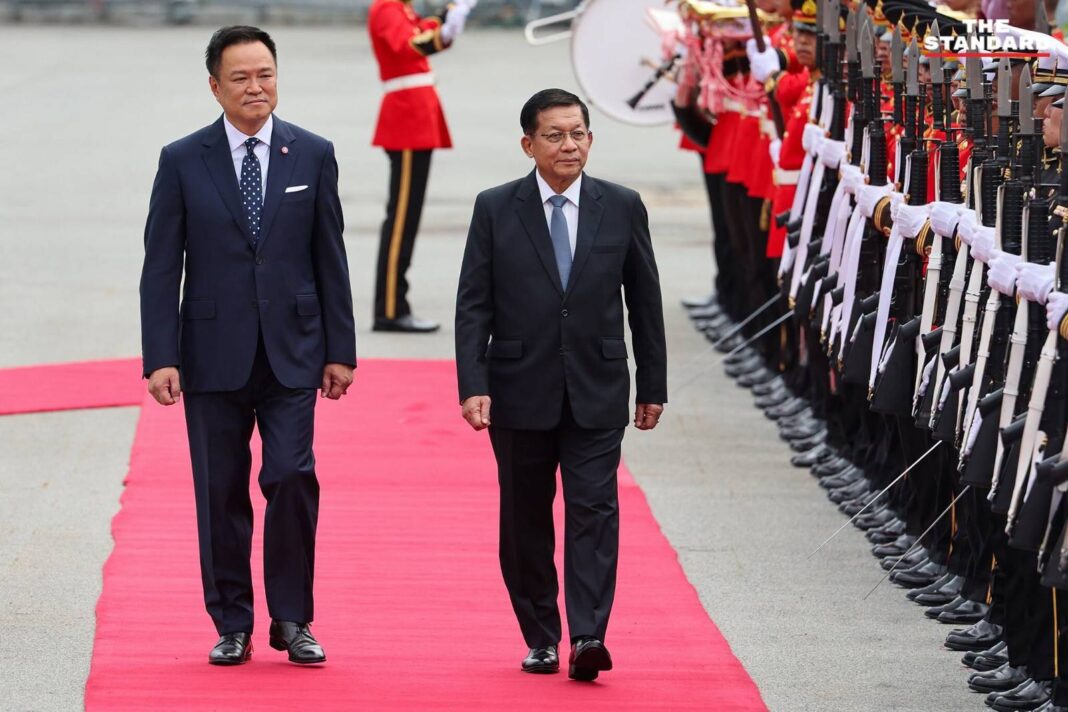
The August 6–7 visit of Myanmar’s self-declared President Min Aung Hlaing to Bangkok marks a pivotal shift in regional diplomacy. Thailand has moved from passive waiting to active “calibrated re-engagement,” prioritizing practical stability over rigid adherence to the stalled ASEAN Five-Point Consensus. While the red-carpet reception and new bilateral accords signal a thaw, the visit exposes deep fractures in ASEAN unity and raises critical questions about the legitimacy of the Myanmar junta.
Thailand’s recent hosting of Myanmar’s leader Min Aung Hlaing represents a decisive pivot from diplomatic isolation to active, albeit risky, engagement. By prioritizing immediate stability over rigid adherence to stalled regional frameworks, Bangkok is attempting to solve the intractable Myanmar crisis through bilateral pragmatism rather than multilateral consensus. This shift raises profound questions about the efficacy of the ASEAN Five-Point Consensus, the fine line between diplomacy and endorsement, and the future cohesion of the regional bloc.
The Efficacy of Engagement Without the Five-Point Consensus
The core of Thailand’s strategy, described as calibrated re-engagement, relies on the belief that direct dialogue yields more results than public repetition of unmet conditions. By omitting explicit references to the Five-Point Consensus in the joint statement, Thailand signals a willingness to work with the reality on the ground rather than the idealized roadmap that Naypyitaw has largely ignored. While this approach allows for immediate practical cooperation on border security and trade, its success in achieving genuine peace remains uncertain. Min Aung Hlaing’s continued escalation of military offensives suggests that the junta views Thailand’s hospitality as a validation of its rule rather than a lever to force compliance. Without the threat of collective isolation or the promise of tangible rewards tied strictly to peace milestones, Thailand’s backchannel diplomacy risks becoming a mechanism for the regime to buy time and economic relief without making meaningful political concessions.
From Diplomatic Protocol to Implicit Endorsement
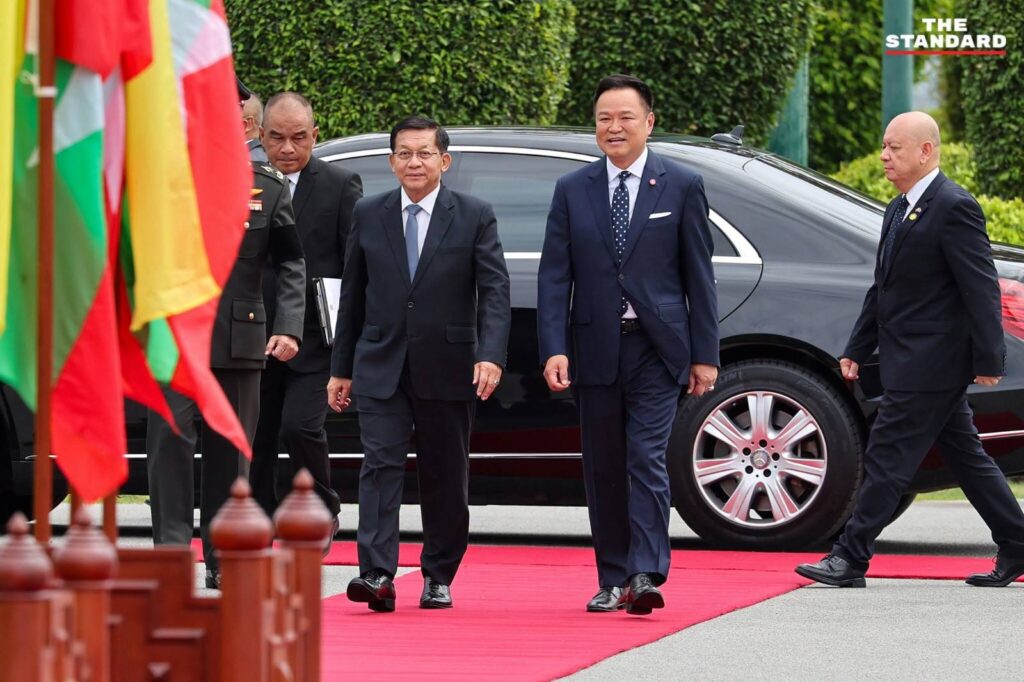
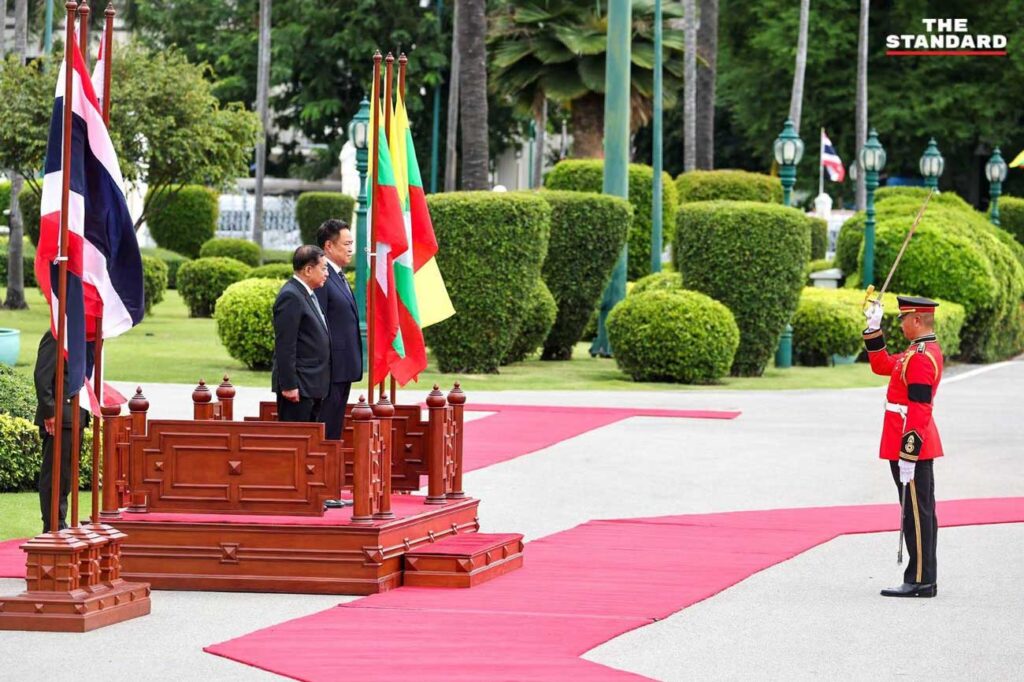
The ceremonial nature of the visit, featuring national anthems and an honor guard, has inevitably blurred the distinction between engaging a neighbor and endorsing a regime. The red-carpet treatment confers a level of international legitimacy that the military leader has been denied by the West and many ASEAN members since the 2021 coup. This shift from conditional engagement to unconditional hospitality creates a dangerous precedent where the junta’s claim to power is normalized through state-to-state protocol. As economic interests in infrastructure projects and trade routes drive the agenda, the diplomatic warmth risks evolving into a de facto recognition of the military government’s legitimacy. The danger lies in the perception that Thailand is validating the outcome of a contested election and a violent crackdown, potentially undermining the moral standing of the broader ASEAN community which has long withheld such recognition.
The Marginalization of Democratic and Ethnic Stakeholders
Despite repeated rhetorical commitments to a Myanmar-led process involving all stakeholders, the current diplomatic trajectory heavily favors the military leadership while pushing anti-military forces to the periphery. The absence of representatives from the National Unity Government or Ethnic Revolutionary Organizations from the high-level talks in Bangkok underscores this imbalance. While Thai policymakers may maintain covert channels with opposition groups, the public face of this engagement is exclusively with the junta. This one-sided approach inadvertently strengthens the military’s position by treating it as the sole legitimate authority, thereby weakening the leverage of the democratic and ethnic forces that control significant border territories. Without the visible inclusion of these groups, the prospect of a comprehensive political settlement remains distant, as any agreement reached solely with the military is unlikely to hold without the buy-in of the forces currently fighting it.
Implications for ASEAN Unity and Regional Centrality
Thailand’s unilateral initiative challenges the cohesion of ASEAN by introducing a divergent path that prioritizes bilateral interests over collective consensus. This creates a potential fracture within the bloc, where some members may follow Thailand’s lead in normalizing relations while others insist on maintaining strict adherence to the Five-Point Consensus. Such divergence threatens to erode ASEAN’s centrality in the Myanmar crisis, as the bloc’s unified voice is replaced by a patchwork of national strategies. However, this fragmentation could also serve as a catalyst for a more realistic regional approach if the collective deadlock has proven unbreakable. If Thailand can demonstrate that engagement yields tangible peace and stability benefits, it may force a reevaluation of ASEAN’s rigid stance, potentially leading to a new, more flexible consensus that acknowledges the complexity of the conflict rather than relying on a failed formula.
Future Trajectories for Myanmar and the Regional Order
The long-term outlook suggests a period of pragmatic instability where economic cooperation advances alongside ongoing conflict. For Myanmar, the influx of Thai investment and the reopening of border trade routes will provide the junta with crucial economic lifelines, potentially allowing it to sustain its military campaigns longer. For the region, the success or failure of Thailand’s experiment will define the future of ASEAN’s approach to internal crises. If the engagement fails to produce peace and merely legitimizes a brutal regime, the regional bloc will face a crisis of credibility. Conversely, if this pragmatic approach eventually opens the door to genuine dialogue and a reduction in violence, it may be remembered as the necessary evolution of ASEAN diplomacy. The ultimate test lies in whether Thailand can leverage its economic and geographic influence to transform the junta’s behavior or if it will simply become a facilitator of the status quo.





Leave a Comments