




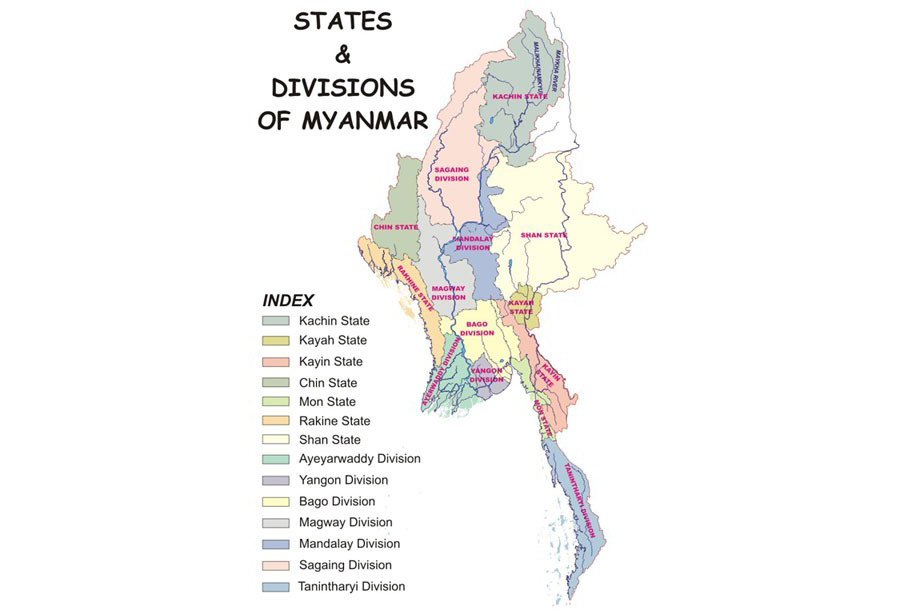
The recent decision by the federal constituent units of Sagaing, Mandalay, and the anticipated inclusion of Magwe to join the Steering Council for the Emergence of a Federal Democratic Union (SCEF) marks a pivotal moment in Myanmar’s struggle for democracy. This move signals an urgent need to confront the long-overdue question of creating a “Bamar State”. While the National Unity Government (NUG) has integrated these regions into its federal framework, the absence of a concrete, publicly articulated plan for a Bamar State creates a dangerous vacuum. Without clarity, the revolutionary movement risks perpetuating the very asymmetries it seeks to dismantle.
The Core Contradiction: Equality vs. Dominance
The creation of a Bamar State is not merely an administrative adjustment; it is a fundamental restructuring of the Union’s power dynamics. Historically, the Bamar majority has been conflated with the central state, allowing them to dominate the political center while ethnic minorities were relegated to “States” on the periphery. As NUG Justice Minister U Thein Oo has articulated, this structure is inherently unfair. By designating Sagaing, Mandalay, Magwe, and Bago as a single Bamar State, the Bamar people would become “one constituent unit among many,” rather than the default rulers of the Union.
This shift is critical for two reasons:
- Structural Parity: It places the Bamar on an equal legal footing with the seven existing ethnic states (Chin, Kachin, Karen, Kayah, Mon, Rakhine, Shan), dismantling the “master-servant” dynamic that fueled decades of conflict.
- Dismantling Supremacy: It forces a psychological and political break from the military’s doctrine of “Burmanization,” proving that the pro-democracy movement is serious about “ethnic equality”.
However, the path is murky. The NUG’s current Federal Democracy Charter (FDC) acknowledges the need for adjustment but remains vague on the specifics. As U Thein Oo warns, unilateral demarcation by the Bamar or any ethnic group will lead to conflict. The process requires a “Principle Agreement” (on the why and what) and an “Operational Agreement” (on the how and boundaries), both of which must be forged through consensus.
The Blueprint: An Ethno-Terrorial Hybrid
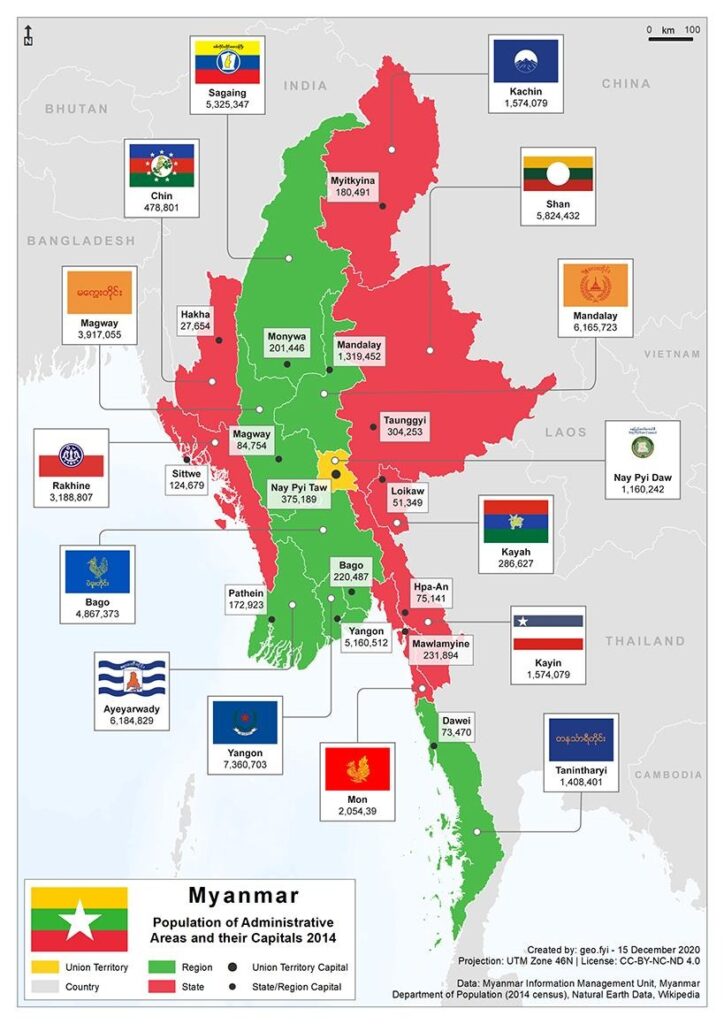
The most viable path forward, championed by U Thein Oo and supported by emerging Bamar revolutionary factions like the “Bamar People’s Liberation Army (BPLA)”, is a “hybrid ethno-territorial model”. This approach rejects the military’s purely territorial unitary state and the rigid ethnic exclusivity that could disenfranchise minorities.
Under this vision:
- The Bamar State would comprise the contiguous heartland of Sagaing, Mandalay, Magwe, and Bago.
- The Nationalities’ States would be formed in diverse, multi-ethnic hubs like Yangon, Ayeyarwady, and Tanintharyi. These would function as multicultural units where citizenship is civic, and rights are protected regardless of ethnicity.
- The Existing Ethnic States remain the foundational units, but their internal diversity (e.g., sub-ethnic groups in Shan State like the Ta’ang, Wa, and Pa-O) have already been addressed through “Self-Administered Zones & Division,” but their aspirations to upgrade their administrative structue must also be tackled once the future constitutional of the Federal Union is in place, stable and fully accepted by all stakeholders.
This model aligns with the 1947 Panglong Agreement’s spirit of “unity in diversity,” ensuring that the Union is a “coming together” of sovereign equals, not a forced assimilation.
The Urgency of Open Dialogue
The delay in officially agreeing on the Bamar State within the NUG framework is problematic. As the Sagaing Forum and other revolutionary bodies have demonstrated, the demand for a Bamar State is already gaining momentum on the ground. The BPLA leader Maung Saung Kha correctly notes that excluding non-Bamar voices from this conversation is “narrow-minded,” as the Bamar State is a “Union issue”, not just a Bamar one.
The Federal Transitional Arrangement (AFTA) Section 5 currently offers only general acceptance of tentative constituent units. This ambiguity must be resolved. The NUG must spell out a concrete roadmap that:
- Validates the Bamar State as a necessary component of federal equality.
- Establishes clear, consensus-based criteria for boundary demarcation to avoid future territorial disputes.
- Guarantees the rights of minorities within the proposed Bamar State and the multi-ethnic “Nationalities’ States.”
A Dual Strategy for the Future
To succeed, the movement must adopt a “dual approach”:
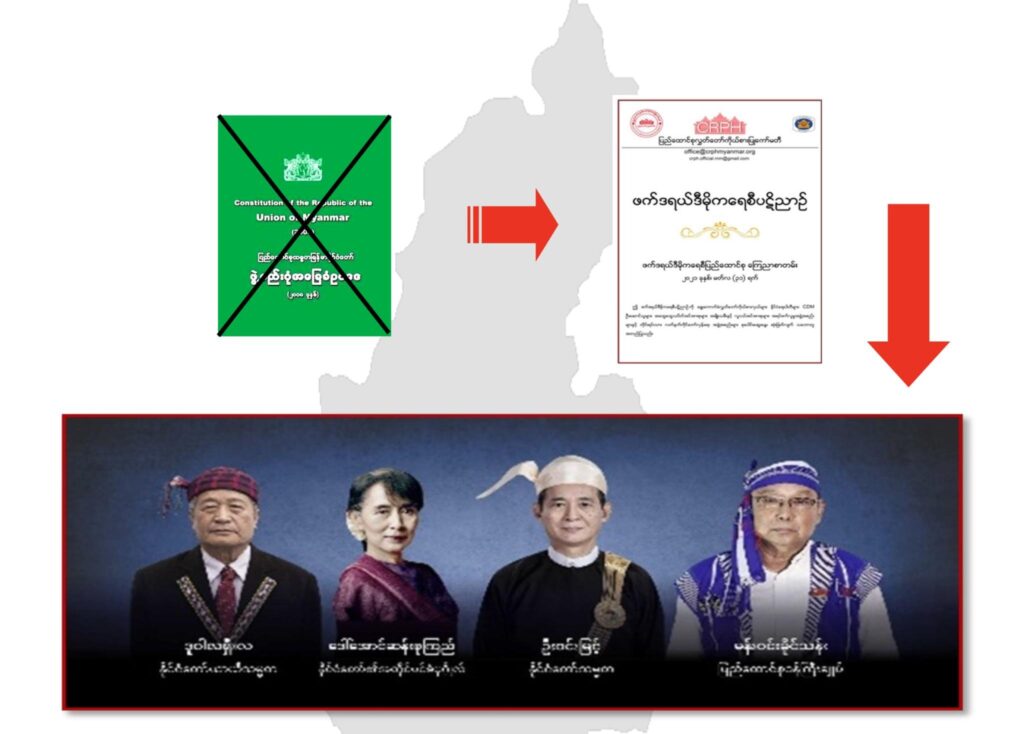
- Top-Down: The NUG and leadership must codify the ethno-territorial compromise in interim drafts and institutionalize a curriculum on federalism and civic rights in liberated zones.
- Bottom-Up: Grassroots forums must engage local communities in deliberative dialogues, addressing fears and building trust across ethnic lines. This is essential for the new generation of activists who have bonded across ethnic divides during the revolution but need a clear political vision to sustain their solidarity.
Conclusion
The formation of a Bamar State is not a concession; it is a “strategic necessity” for a durable Federal Democratic Union. It is the only way to ensure that the Bamar majority does not inadvertently replicate the military’s centralized dominance. By embracing this transformation, the NUG can strengthen its broad vision, complement the SCEF, and offer a credible alternative to the military dictatorship.
The time for vague promises is over. The “Bamar State” must be openly discussed, rigorously planned, and collectively agreed upon as a cornerstone of the forthcoming Federal Democratic Union Constitution. Only then can Myanmar truly move from a fractured history to a united future.





Leave a Comments