



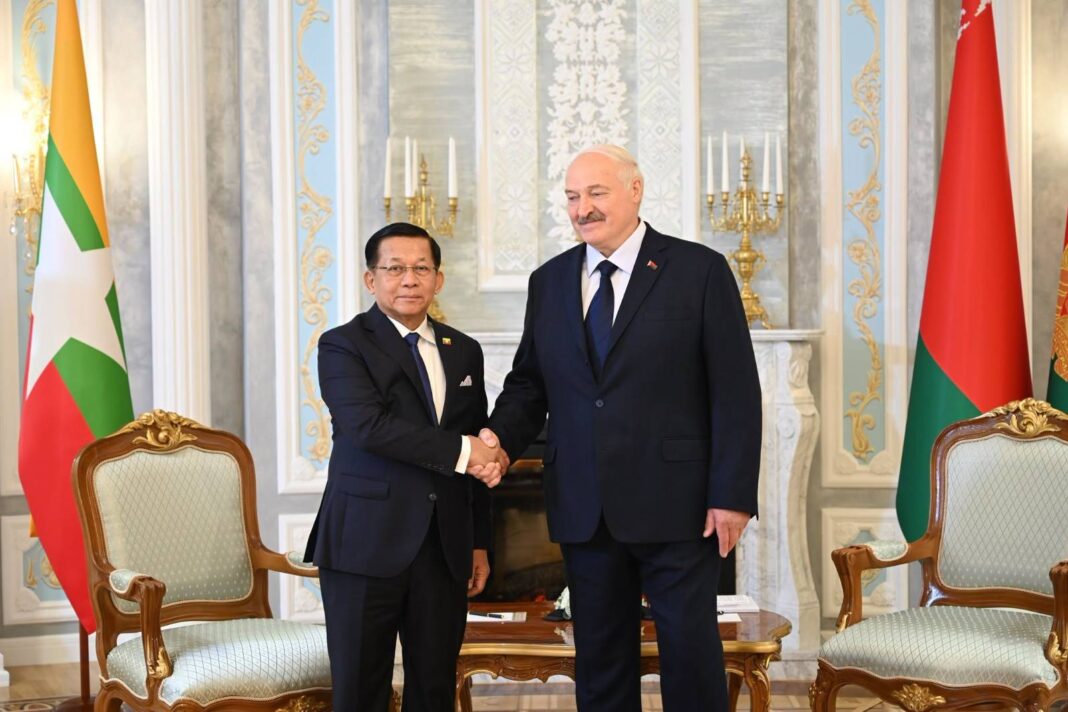
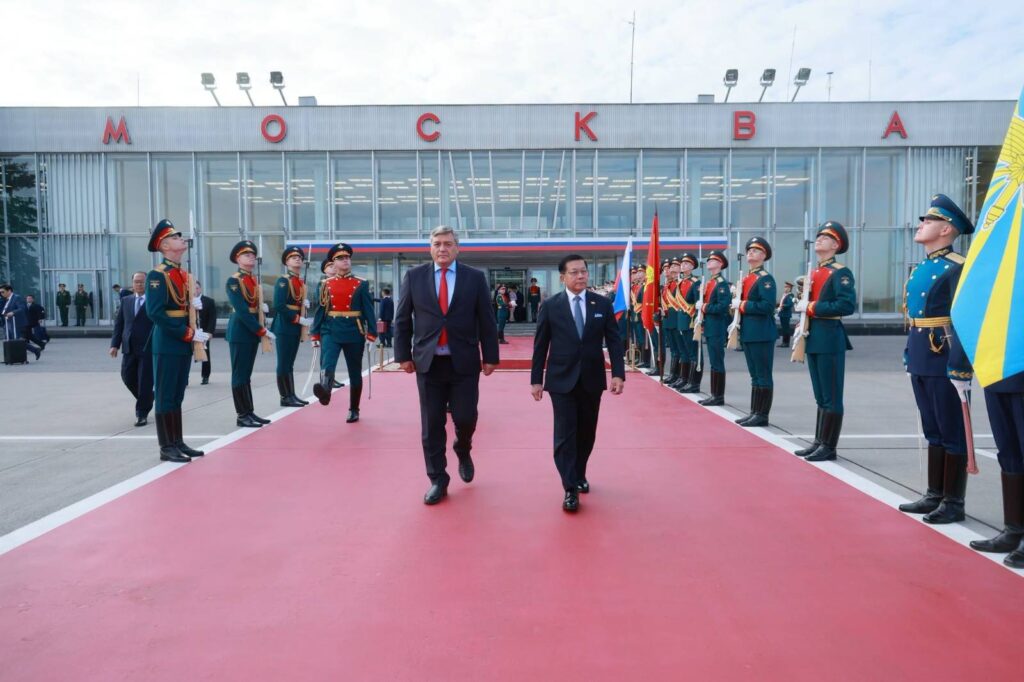
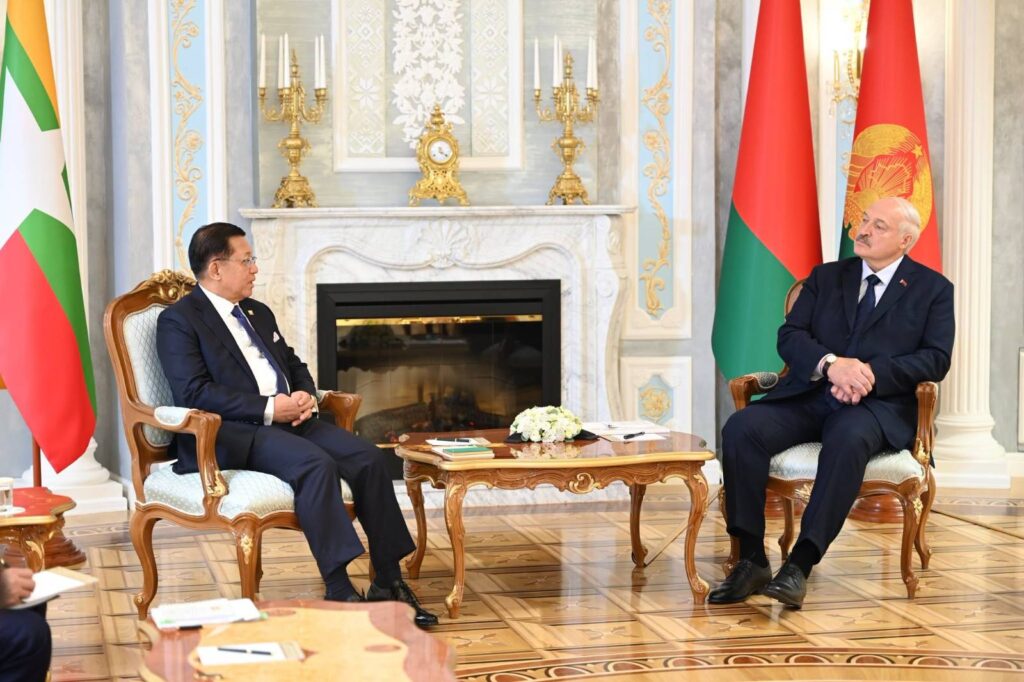
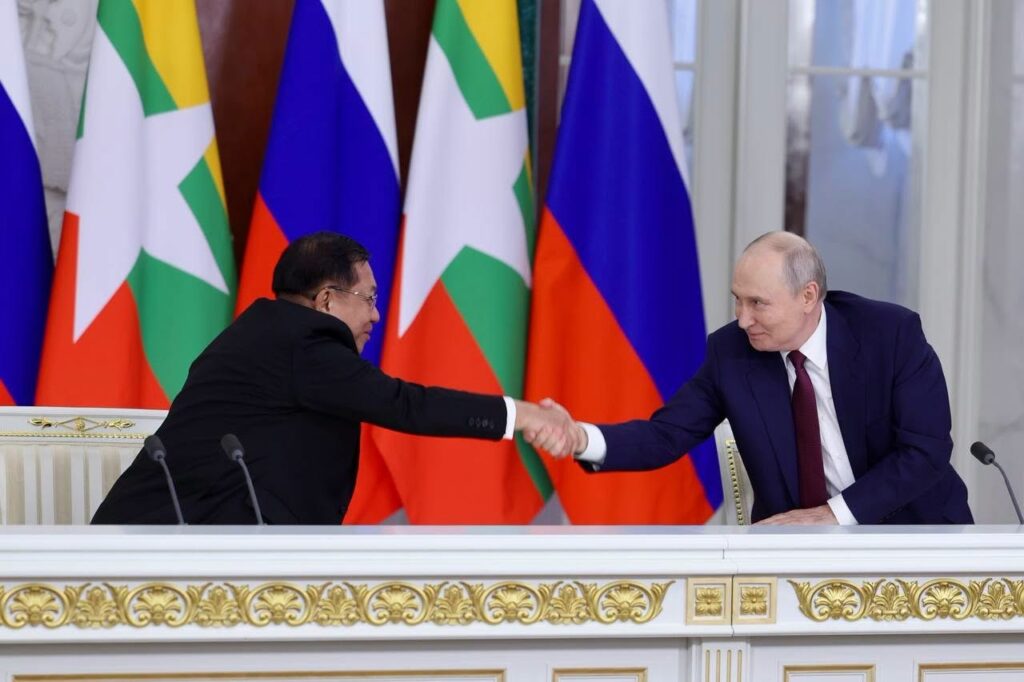
Min Aung Hlaing’s recent diplomatic tour to Moscow and Minsk represents a critical pivot toward a sanctions-evasion axis, yet it fails to deliver the international legitimacy the regime desperately seeks. While the visit successfully secured high-level recognition from Russia and Belarus, forged deep military-industrial ties, and established a formal pact to counter Western sanctions, these gains are largely hollow in the broader geopolitical arena. The trip reinforces the junta’s survival capabilities through a “war economy” alliance with two pariah states, but it does little to shift the diplomatic consensus in the United Nations, ASEAN, or among the Global South. Ultimately, this maneuver trades long-term isolation for short-term regime endurance, leaving the Spring Revolution as the primary casualty of a deepening authoritarian entrenchment.
The Illusion of Diplomatic Restoration
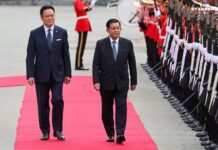
The primary objective of Min Aung Hlaing’s trip was to project an image of normalized statehood to the world, but the outcome revealed the limits of such posturing. The presence of Vladimir Putin and Alexander Lukashenko, the world’s only remaining autocratic leaders, provided a stage for symbolic unity rather than genuine diplomatic rehabilitation. The erection of the golden Shwezigon Pagoda replica on July 22, 2022 about 74 Kilometers away from Moscow, funded by junta crony U Aung Ko Win and attended by top Russian military officials, according to Myanmar Now recent report, served as a potent visual narrative of the junta’s resilience. However, this spectacle was confined to the inner circles of the “sanctioned axis” and failed to resonate with the broader international community.
No major power outside the Russia-Belarus-China triangle has moved to recognize the regime, and the United Nations remains firmly opposed to any legitimization of the coup. The upgrade of Myanmar’s mission in Belarus from a legation to an embassy is a minor procedural shift that carries no weight in global governance. The joint declaration to “counter, mitigate, and redress” unilateral coercive measures is a declaration of defiance rather than a bridge to the international community. It signals that the junta is aligning itself with states that are themselves under heavy isolation, creating a closed loop of mutual protection that excludes rather than includes Myanmar in global affairs. This strategy cements the regime’s status as a pariah, offering only the comfort of like-minded dictators rather than the acceptance of sovereign peers.
The Military-Industrial Symbiosis and Sanctions Evasion
Beyond diplomacy, the trip delivered tangible, albeit illicit, benefits that directly sustain the junta’s war machine. The defense cooperation between Myanmar, Russia, and Belarus is no longer just about the sale of weapons; it has evolved into a comprehensive logistical and technological partnership designed to bypass Western sanctions. Reports indicate that Belarus is moving to supply the Myanmar military with its domestically produced VSK-100B combat drones, a critical asset for the conflict-ridden landscape. These drones, manufactured by the Belarusian firm Kidma Tech, offer the junta a low-cost, high-volume aerial capability that is difficult to intercept and can be deployed without reliance on Western supply chains.
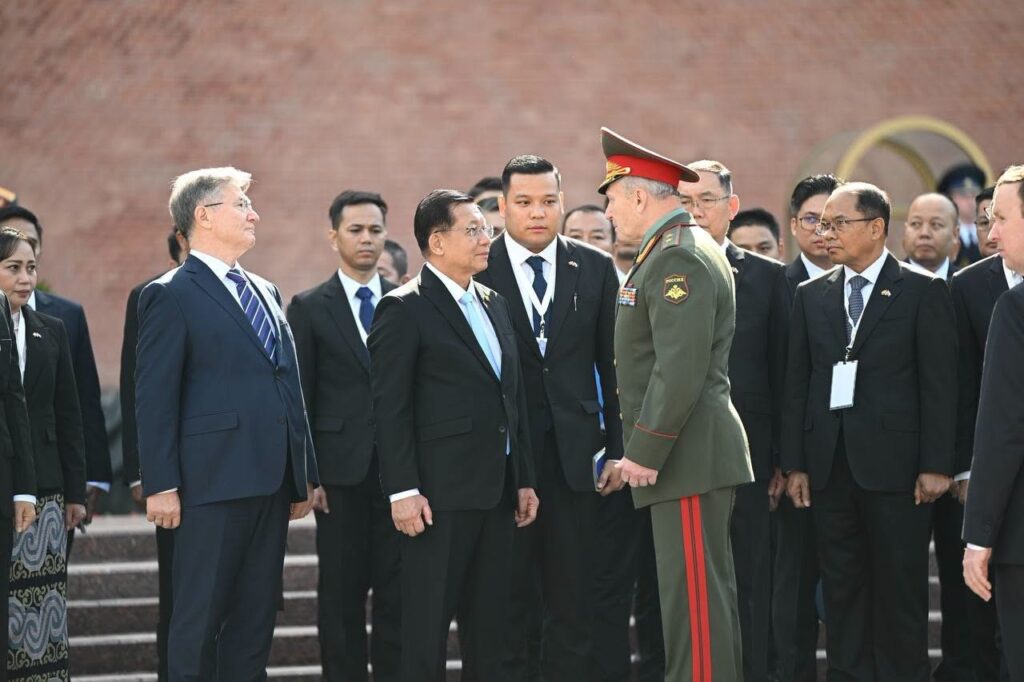
Russia continues to be the primary source of advanced air defense systems and spare parts, while the two nations have established a financial framework to facilitate trade outside the US dollar system. This “sanctions-busting ecosystem” allows the junta to procure military hardware and essential goods despite international embargoes. The involvement of Colonel General Alexander Fomin, a key figure in Russia’s military-industrial complex, underscores the strategic nature of this partnership. His long-standing relationship with Min Aung Hlaing, dating back to the pre-coup era, ensures a level of trust and continuity that Western arms suppliers cannot match. This symbiotic relationship effectively neutralizes the impact of sanctions on the ground, allowing the military to continue its offensive operations with renewed vigor.
Economic Entanglements and Resource Extraction
The economic agreements signed during the visit highlight a shift from purely military aid to deep structural integration of the Myanmar economy with the Russian and Belarusian spheres. The centerpiece of these talks is the construction of small modular nuclear reactors (SMRs) by Russia’s state nuclear corporation, ROSATOM. With a projected capacity of 110 to 330 megawatts, these reactors are marketed as a solution to Myanmar’s chronic energy shortages. However, the deal also serves as a long-term lever of control, tying Myanmar’s energy infrastructure to Russian technology and maintenance. The involvement of state-backed entities ensures that the junta remains dependent on Moscow for critical infrastructure development, creating a debt- and technology-based dependency that could last for decades.
Beyond energy, the junta has secured Russian interest in the extraction of natural resources, including oil, gas, and minerals, which are vital for funding the war effort. The discussions on deep-sea ports, such as the Thilawa port project, further illustrate the intent to integrate Myanmar into Russian trade routes that circumvent Western-controlled shipping lanes. While the immediate economic impact may be limited by Russia’s own economic strain and the logistical challenges of the region, these agreements signal a strategic realignment. The junta is effectively swapping its sovereignty for survival, trading access to its strategic resources and ports for the political and military backing of an isolated but powerful state.
The Strategic Paradox: Survival at the Cost of Isolation
The visit to Russia and Belarus has created a strategic paradox for Min Aung Hlaing: while it secures the immediate survival of the regime, it simultaneously accelerates its long-term isolation. The alliance with Putin and Lukashenko provides a shield against immediate collapse, but it also ensures that the junta will remain a pariah in the eyes of the global community. The “sanctions-busting” pact, rather than breaking the isolation, reinforces it by demonstrating the regime’s willingness to align with states that are actively defying the international order. This alignment makes it politically impossible for Western nations or even neutral powers to engage with the junta without facing severe diplomatic repercussions.
For the region, the deepening of this axis poses a significant challenge. The flow of Russian and Belarusian arms into Myanmar could destabilize the broader Southeast Asian security architecture, encouraging a regional arms race and further complicating ASEAN’s efforts to mediate the conflict. The presence of these weapons, particularly drones and air defense systems, could prolong the conflict by giving the military a temporary technological edge over the resistance forces. However, this temporary advantage is likely to be short-lived, as the international community responds with stricter sanctions and a renewed focus on supporting the democratic movement.
The Impact on the Spring Revolution and Civil Resistance
The military and diplomatic gains of the junta are measured in the continued suffering of the Myanmar people. The influx of advanced weaponry and the establishment of a sanctions-evasion network mean that the Spring Revolution will face a more resilient and better-equipped adversary in the coming months. The junta’s ability to sustain its war effort without external funding or weapons imports is a significant development that could extend the duration of the conflict. However, this resilience comes at a high cost to the regime’s legitimacy and the morale of its supporters.
The international community’s reaction to the visit has been one of condemnation rather than capitulation. Groups like Justice For Myanmar have called for new sanctions on the junta and its Russian enablers, signaling a unified global stance against the regime’s actions. This external pressure, combined with the internal resistance of the National Unity Government and the People’s Defense Forces, suggests that the junta’s legitimacy is shrinking, not growing. The Spring Revolution has evolved into a global cause, with the junta’s alignment with Russia and Belarus serving as a rallying point for those who oppose authoritarianism and human rights abuses.
Conclusion: A Dead End for Legitimacy
In conclusion, Min Aung Hlaing’s visit to Russia and Belarus is a tactical success for regime survival but a strategic failure for legitimacy. The trip has secured the military hardware, energy infrastructure, and financial pathways necessary to prolong the junta’s rule, but it has done nothing to restore its standing in the international community. The alliance with Moscow and Minsk is a marriage of convenience between two isolated regimes, offering no path to diplomatic normalization or regional acceptance. As the junta doubles down on its authoritarian alliances, it risks further entrenching itself in a cycle of isolation and conflict. The Spring Revolution, bolstered by global solidarity and the junta’s own desperation, remains the only viable path toward a political resolution, even as the military machine continues to fight with renewed, albeit isolated, backing.


Leave a Comments