

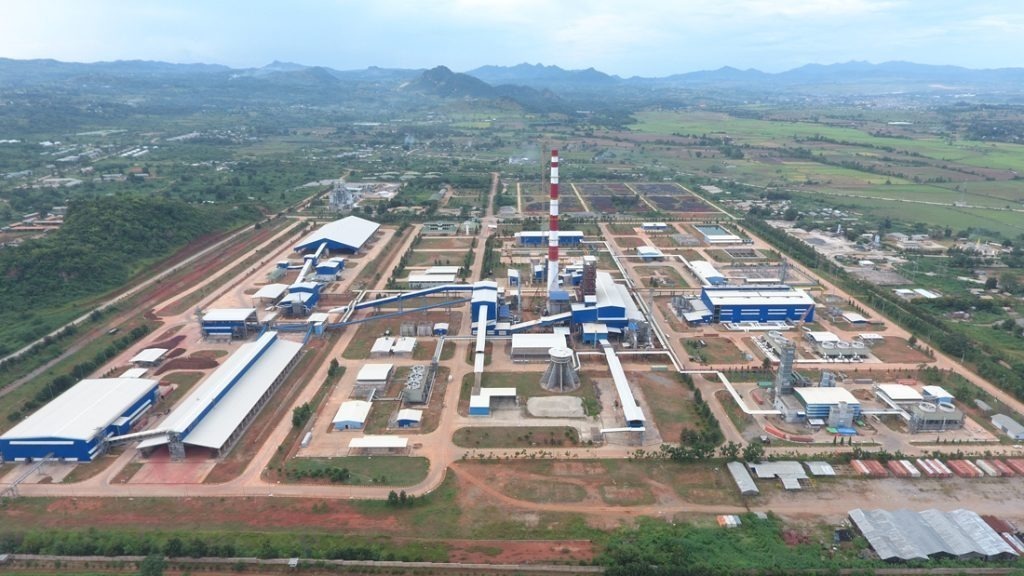
With assistance from Russian technicians, the Myanmar military regime is making renewed efforts to restart the loss-plagued No. (2) Steel Mill–Pang Pet (Pinpet) project, which covers more than 5,000 acres near Taunggyi, according to local sources.
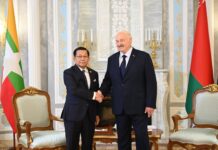
During a recent visit to Russia, junta leader Min Aung Hlaing met with the Russian prime minister to discuss expediting the project’s completion, according to state media.
Following the visit, on August 22, the regime’s Deputy Minister for Industry, U Thwin Aung, inspected the facility and instructed officials to ensure that work proceeds according to schedule.
However, as preparations to restart the plant move forward, local residents report that industrial waste and wastewater from the facility are being discharged improperly into the Pong Inn area, affecting local agriculture and raising concerns about public health.
“We can see them restarting the factory. There is a creek used to discharge the factory’s waste. It’s not that the waste wasn’t entering the Pong Inn area before, but now they’ve dug it out with backhoes, causing the wastewater to flow directly and heavily into Pong Inn,” a resident of the Pong Inn area told SHAN.
The resident said the area already experiences seasonal flooding and that the additional wastewater has polluted Namhtabat Creek. Residents have subsequently experienced skin irritation and rashes, the resident said.
“Lately, the water isn’t clean anymore, and people are getting skin rashes. If the factory keeps discharging waste continuously, the farmland won’t produce as well, and rice yields will decline. We think it’s because of this wastewater,” the resident said.
Residents also reported a mass die-off of ducks at a livestock facility within the factory compound. They said the carcasses were dumped into the creek, prompting disputes between local residents and factory management.
A 2023 report by the Pa-O Youth Organization (PYO) documented a history of wastewater being discharged directly from the plant into Namhtabat Creek, affecting more than 100 villages that depend on the waterway.
The Pang Pet project was initially launched in 2004 through agreements between the military-owned Myanmar Economic Corporation (MEC) and the Russian state-owned company TPE. The National League for Democracy (NLD) government suspended the project in 2017 amid mounting losses reportedly amounting to billions of dollars. Following the 2021 military coup, the regime has sought to revive the project with Russian backing.
Local residents said Russian workers stationed at the plant frequently travel to Taunggyi to purchase supplies.
“We see Russians working at the factory coming to Taunggyi to buy medicine or potatoes. They don’t speak English either,” a Taunggyi resident told SHAN.
The PYO has identified VO Tyazhpromexport, the primary Russian state-owned enterprise involved in the project, as a subsidiary of Rostec, a state-owned conglomerate that supplies military equipment to Myanmar’s armed forces.
According to the Shan State Frontline Investment Monitor (SSFIM), plans are in place to supply the factory with nearly 1,500 tons of coal per day from Kyethi Township. The regime also plans to transport raw pig iron produced at Pang Pet to a steel mill in Myingyan via the Shwe Nyaung–Taunggyi–Nawnghkar–Pang Pet railway line, which was personally inaugurated by the regime leader.
While the military regime is reportedly paying Russian technicians more than €10 million to help bring the plant into full operation, local communities continue to face the immediate consequences of industrial wastewater discharge and the project’s environmental and resource impacts.

Leave a Comments