

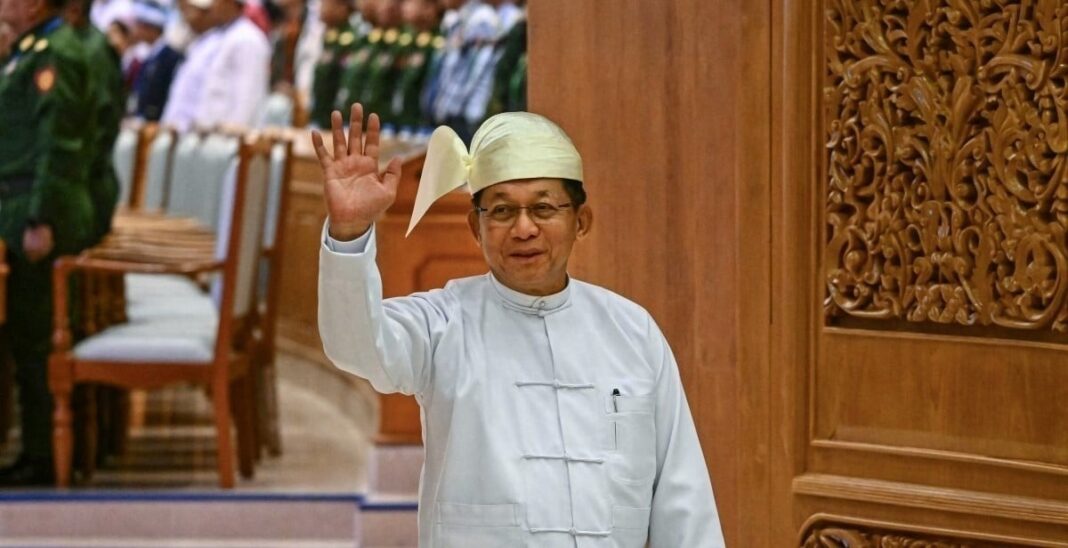
The first 100 days of General Min Aung Hlaing’s presidency, marking his transition from coup leader to the head of a self-proclaimed civilian government, have been defined not by the peace and normalcy he promised, but by a deepening crisis of legitimacy and escalating violence. As reported by The Irrawaddy and confirmed by the junta’s own State of the Union address on July 31, 2026, the regime’s “100-Day Plan” has yielded soaring food prices, a worsening humanitarian situation, and a rejection of the very international consensus needed to stabilize the country. While Min Aung Hlaing claims to keep the “door to peace open forever,” his actions reveal a strategy of survival rather than reconciliation, driven by an insincere approach that prioritizes the military’s dominance over the genuine aspirations of the Myanmar people.
The Rhetoric of Realism vs. The Reality of Control
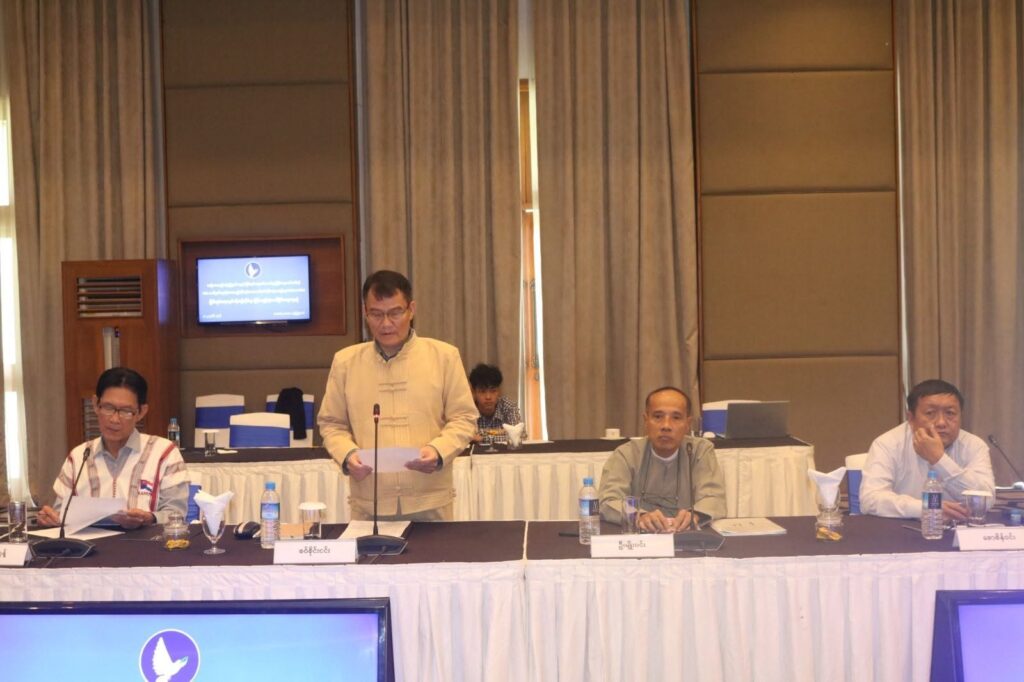
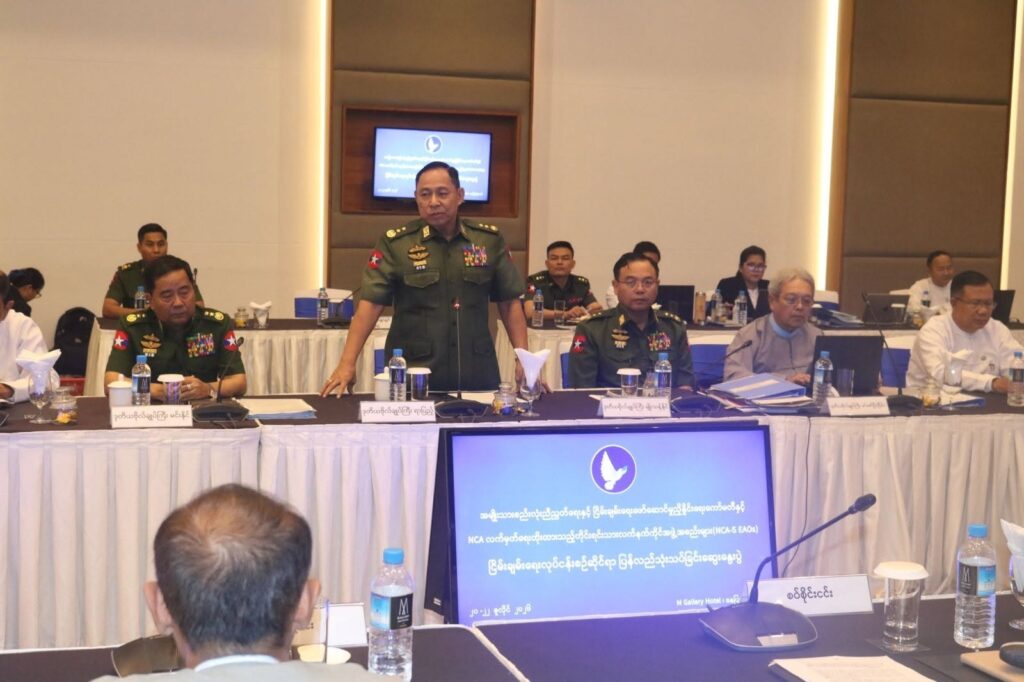
During his address to the Union Parliament, Min Aung Hlaing highlighted talks with 13 Ethnic Armed Organizations (EAOs), including the Shanni Nationalities Army (SNA), Shan State Progress Party (SSPP), the National Democratic Alliance Army (NDAA), the United Wa State Army (UWSA), the Ta’ang National Liberation Army (TNLA), the Chin National Organization (CNO), and the National Socialist Council of Nagaland-Khaplang/Ang Mai (NSCN-K/AM), besides 7 EAO Alliance made up of the Restoration Council of Shan State (RCSS), Karen National Union/Karen National Liberation Army – Peace Council (KNU/KNLA-PC), the New Mon State Party (NMSP), the Lahu Democratic Union (LDU), the Democratic Karen Benevolent Army (DKBA), and the Arakan Liberation Party (ALP), as evidence of his commitment to peace.
He repeatedly urged these groups to negotiate for “realistic and attainable terms suited to the modern era” rather than making “impossible demands.” However, this rhetoric masks a rigid and exclusionary vision of the future. By never explicitly defining what he considers “impossible,” the junta leader relies on a well-worn military playbook where any demand that erodes the Tatmadaw’s political power is deemed unrealistic.
When pieced together, Min Aung Hlaing’s definition of a “realistic” peace is clear: it is a return to the military-drafted 2008 Constitution. This framework guarantees the military’s supremacy through a 25 percent quota of parliamentary seats, a unitary governance structure, and the dominance of the military-backed Union Solidarity and Development Party (USDP). In this vision, “democracy” is merely a façade, a multiparty system where the military retains absolute veto power and the final say on national security and political direction. The “impossible demands” he refers to are not unreasonable; they are the very essence of the federal democracy that the people of Myanmar have fought for since the 2021 coup.
Two Visions of Federalism: The Divide
The chasm between the junta’s vision and the people’s aspirations was starkly illustrated in a July 2026 BBC interview with Dr. Lian Hmung Sakhong, the Union Minister for Federal Union Affairs of the National Unity Government (NUG). Dr. Sakhong clarified the fundamental difference between the military’s concept of federalism and the one championed by the resistance.
For the junta, federalism is an administrative convenience, a way to distribute resources without ceding central control. It is a “federalism” that maintains the unitary state’s core, where ethnic regions remain subordinate to Naypyitaw. In contrast, the NUG and the Spring Revolution forces and K3C, which stands for Kachin Independence Organization (KIO), Karenni National Progressive Party (KNPP), Karen National Union (KNU), and China National Front (CNF), advocate for a true Federal Democratic Union, rooted in the 1947 Panglong Agreement principles. As Dr. Sakhong explained, their vision involves a Zero Draft constitution that guarantees fundamental rights, self-determination for all ethnic nationalities, and a power-sharing model that includes both ethnic-based and geographic-based states. This is a system designed to dismantle the military’s monopoly on power, not to preserve it. The resistance’s federalism is about equality, justice, and the right of all peoples to shape their own destiny, a concept that the military regime views as an existential threat.
The Strategy of Survival and the Failure of Reconciliation
Min Aung Hlaing’s 100-day strategy is not about national reconciliation; it is a desperate attempt to ensure the survival of the military as a political and economic entity. His proposal to negotiate with EAOs is less about peace and more about a “negotiated surrender.” The junta’s historical pattern suggests a willingness to offer economic incentives to ethnic leadership in exchange for disarmament and political acquiescence, a tactic designed to weaken resistance groups over time. Minor territorial adjustments may be conceded, but only if they do not erode the military’s administrative clout or its ability to control resources.
This approach is fundamentally at odds with the people’s aspirations. While the junta continues its aerial campaigns, enforces conscription, and pushes for controversial hydropower projects like the Myitsone Dam, the resistance movement is building a comprehensive alternative. The NUG’s Federal Union Affairs Committee and the Spring Revolution’s Federal Union Constitution Working Group are actively drafting a new social contract that reflects the will of the people, not the interests of the generals. The junta’s rejection of the ASEAN Five-Point Consensus and its dismissal of international pressure further demonstrate its isolation and its refusal to engage in good faith.
A Call for Clarity and Action
The international community must recognize that Min Aung Hlaing’s “peace talks” are a diversion. The regime’s definition of peace is the absence of resistance, not the presence of justice. The “impossible demands” he cites are actually the minimum requirements for a functioning democracy in a multi-ethnic nation.
The path forward requires a clear distinction between the junta’s survivalist tactics and the genuine federal vision of the Myanmar people. The world must support the resistance’s efforts to build a federal union based on equality and self-determination, rather than legitimizing a military regime that seeks to preserve its power through coercion. The ghosts of Sao Kya Seng and Sao Shwe Thaik remind us that the military will not negotiate away its power; it will only be forced to yield through unity and unwavering pressure. The time for ambiguity is over. The choice is between a false peace that perpetuates dictatorship and a true federal union that promises freedom.



Leave a Comments