



The July 2026 diplomatic maneuvers surrounding Myanmar’s military regime mark a decisive shift from defensive isolation to an aggressive, albeit risky, offensive for international legitimacy. Underpinned by the strategic backing of China and, to a lesser extent, Russia, General Min Aung Hlaing is executing a high-stakes Realpolitik strategy: rejecting the regional peace framework that delegitimized him while leveraging his “quasi-civilian” status to demand full reinstatement in ASEAN and the UN. This approach is not a genuine pursuit of peace but a calculated ultimatum designed to force a recognition of his regime as the sole legitimate authority, regardless of the ongoing civil war.
The ASEAN Ultimatum: Rejecting the 5PC to Demand Equality
The core of Min Aung Hlaing’s strategy is the explicit rejection of ASEAN’s Five-Point Consensus (5PC). By having his Foreign Minister, Tin Maung Swe, declare at the Bangkok meeting that the regime will not implement the consensus, the junta has effectively called ASEAN’s bluff. The argument is simple and brutal: the 5PC is inconsistent with the “political reality” of his elected presidency and violates the principle of non-interference.
This is a take-it-or-leave-it ultimatum. The regime is signaling that it will no longer play by ASEAN’s rules—which demand a ceasefire, prisoner releases, and inclusive dialogue—unless ASEAN agrees to treat the junta as an equal partner. The goal is to strip away the “pariah” status imposed in 2021 and normalize the regime’s presence in the bloc.
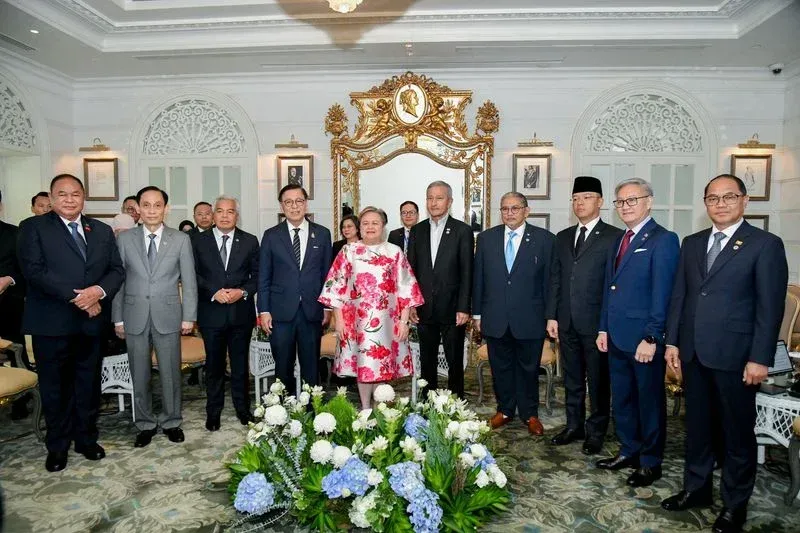
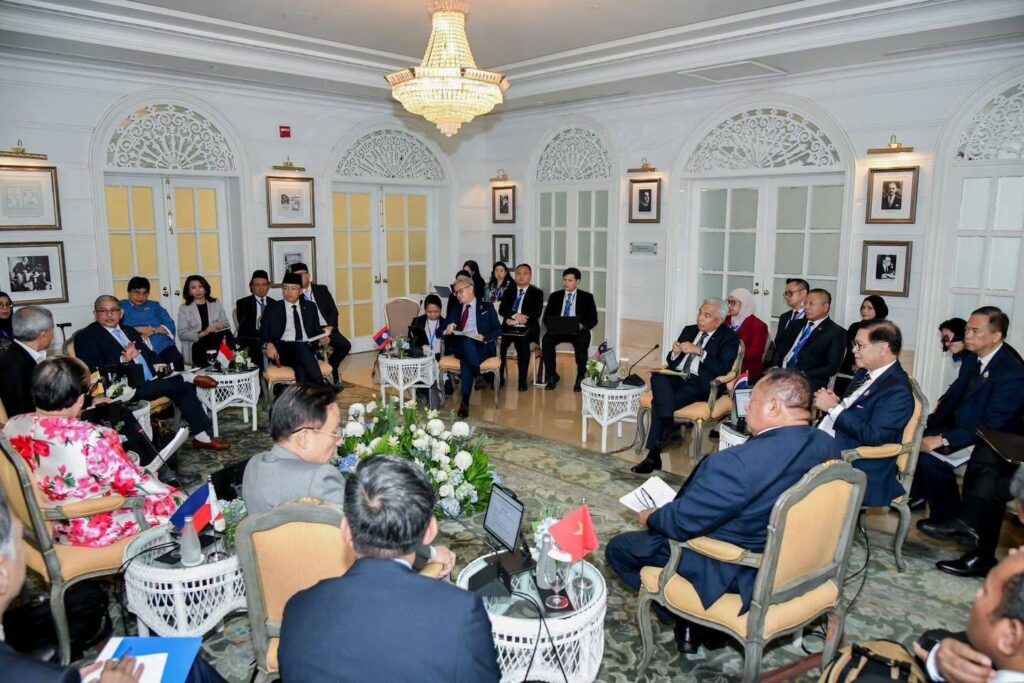
The aftermath of the July 12 meeting reveals the fragility of this gamble. While Thailand and the Philippines (the “engagement camp”) pushed for the meeting, the lack of consensus was glaring. Malaysia and Cambodia were notably absent or under-represented, signaling deep internal fractures. Singapore’s Foreign Minister, Vivian Balakrishnan, explicitly stated that ASEAN would not abandon the 5PC and demanded demonstrable progress on three specific fronts: ending violence, releasing political prisoners (including Aung San Suu Kyi), and ensuring humanitarian access.
The junta’s refusal to meet these conditions, coupled with its rejection of the 5PC, has created a diplomatic deadlock. Min Aung Hlaing is betting that ASEAN’s desire for regional stability and its fear of a total collapse of the bloc’s unity will eventually force it to concede. He is counting on the “engagement” faction (Thailand, Vietnam, Philippines) to eventually overpower the “principled” faction (Indonesia, Malaysia, Singapore, Brunei). However, the risk is that ASEAN, facing a united front of internal dissent and external pressure from the West, may choose to expel or further isolate the regime rather than capitulate to its demands, leaving Min Aung Hlaing diplomatically stranded.
The UN Credentials Battle: The China Factor
The fight for legitimacy extends to the United Nations, where the regime is aggressively campaigning to replace the current Ambassador, Kyaw Moe Tun, who represents the National Unity Government (NUG). The junta’s argument is that the “elected” government in Naypyitaw must be recognized, and the Credentials Committee’s continued recognition of the NLD/NUG is an illegitimate holdover from the pre-coup era.
This is where China’s influence becomes the critical variable. Beijing has explicitly pledged support for Myanmar’s “full, equal, and constructive participation” in international mechanisms. China’s backing provides the regime with a shield against Western pressure and a diplomatic lifeline in the UN Security Council. The logic is straightforward: if China, a permanent Security Council member, supports the regime’s credentials, the UN may be forced to accept the junta’s representative to avoid a veto or a prolonged stalemate.
However, the West and the Global South remain divided. The US, EU, and Australia continue to recognize Kyaw Moe Tun, arguing that the junta’s elections were fraudulent and that the regime lacks popular mandate. The Credentials Committee, dominated by Western and like-minded nations, is likely to resist the change, creating a parallel representation crisis where the UN is forced to choose between two “Myanmars.”
The outcome of this battle will hinge on geopolitical maneuvering. If China can rally enough support from the Non-Aligned Movement and ASEAN members to sway the Credentials Committee, the junta could secure a seat at the UN General Assembly, a massive propaganda victory. If not, the regime faces the humiliation of being denied a seat, reinforcing its status as a rogue state.
The Aung San Suu Kyi Card: A Bargaining Chip or a Liability?
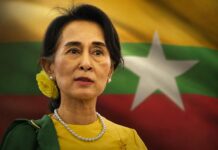
The role of Aung San Suu Kyi has evolved from a symbol of resistance to a strategic bargaining chip for Min Aung Hlaing. The junta’s refusal to release her or allow her to meet with ASEAN envoys is not just an act of defiance but a calculated move to preserve his leverage.
Experts suggest that Min Aung Hlaing views Suu Kyi’s continued detention as a necessary evil to maintain his regime’s narrative of “law and order.” Releasing her would undermine his claim to have “restored democracy” and could trigger a political earthquake that threatens his rule. By keeping her imprisoned, he forces ASEAN and the international community to choose between recognizing his regime and demanding her release.
The junta is likely hoping that ASEAN, weary of the crisis, will eventually trade her release for recognition. This is a dangerous gamble, as it treats a Nobel Peace Prize laureate and the symbol of Myanmar’s democracy as a mere pawn in a diplomatic game. If ASEAN falls for this, it would signal a moral collapse of the bloc’s principles. If it refuses, the junta may escalate its repression, further isolating itself.
Realpolitik Outlook: The Probability of Success
From a Realpolitik perspective, Min Aung Hlaing’s strategy represents a high-risk, high-reward maneuver. The junta is banking on the fragility of ASEAN’s unity, assuming that internal divisions between member states will eventually force a compromise that favors the regime. It further relies on the decisive backing of China to tip the scales in the United Nations and provide the necessary diplomatic cover, while betting that Western fatigue with the prolonged crisis will lead to a pragmatic shift toward engaging with the political reality on the ground.
However, the risks inherent in this approach are substantial. Should ASEAN capitulate to the junta’s ultimatum, it risks rendering itself irrelevant by abandoning its core principles of democracy and human rights. Furthermore, the National Unity Government and various ethnic armed organizations are gaining significant strength on the battlefield; a diplomatic victory for the junta could trigger a severe military escalation, turning the conflict into a protracted civil war that the regional bloc would be unable to contain. There is also the danger of total international isolation should the United Nations reject the junta’s credentials, leaving the regime with only China and Russia as allies while the rest of the world turns its back.
The most probable outcome appears to be a stalemate characterized by incremental concessions. ASEAN will likely maintain the Five-Point Consensus as its official framework while continuing to engage the regime on practical matters such as border security and trade. Simultaneously, the battle over UN credentials will drag on, with the junta securing limited recognition from China and its allies but failing to gain full membership or universal acceptance. Min Aung Hlaing may achieve a partial victory in the form of increased bilateral engagement with certain ASEAN members, yet he will ultimately fail to secure the full legitimacy he craves.
In the end, the junta’s gamble may well backfire. By rejecting the regional consensus and demanding unconditional recognition, Min Aung Hlaing has effectively boxed himself into a corner, making it impossible for ASEAN to save face by engaging him without preconditions. The result could be a deepening of the crisis, leaving the region and the world to watch a prolonged civil war while the junta flounders in a state of limbo—recognized by some, rejected by others, and increasingly isolated from the global community. The choice for the international community remains stark: engage with a regime built on blood and fraud or stand firm on principles and risk further instability. The coming months will determine which path ASEAN and the UN take, and whether Min Aung Hlaing’s gamble for legitimacy will succeed or crumble under the weight of his own contradictions.


Leave a Comments