



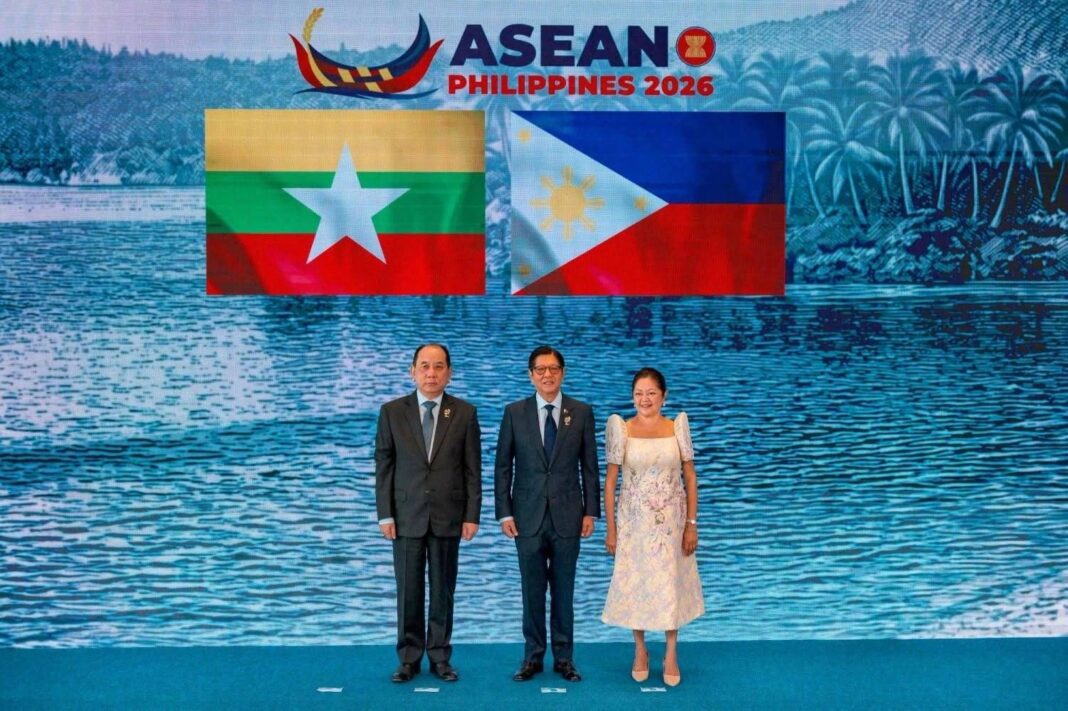
The recent diplomatic maneuvers by ASEAN, including the proposal for a permanent Special Envoy and the development of specific compliance benchmarks, represent a critical attempt to salvage the bloc’s credibility after five years of stagnation. However, a detailed assessment of the junta’s actual behavior against the Five-Point Consensus (5PC) reveals that these measures are unlikely to reverse the regime’s trajectory. The gap between ASEAN’s diplomatic expectations and the junta’s operational reality is not merely a communication breakdown; it is a fundamental strategic divergence where the junta views the 5PC as an existential threat rather than a roadmap to peace.
The 5PC Baseline: A Record of Systematic Non-Compliance
To understand why the new benchmarks may fail, one must first confront the junta’s stark record against the original five points. The consensus, adopted in April 2021, called for an immediate cessation of violence, inclusive dialogue, humanitarian access, a special envoy, and fact-finding visits. The junta’s performance on these points is a case study in rejection.
Regarding the “cessation of violence”, the regime has not only failed to halt offensives but has escalated them. Daily airstrikes and bombardments against civilian targets in the Dry Zone and ethnic states constitute clear war crimes, directly contradicting the first point. The junta’s “100-day peace initiative” is widely viewed as a tactical smokescreen to consolidate military gains rather than a genuine pause in hostilities.
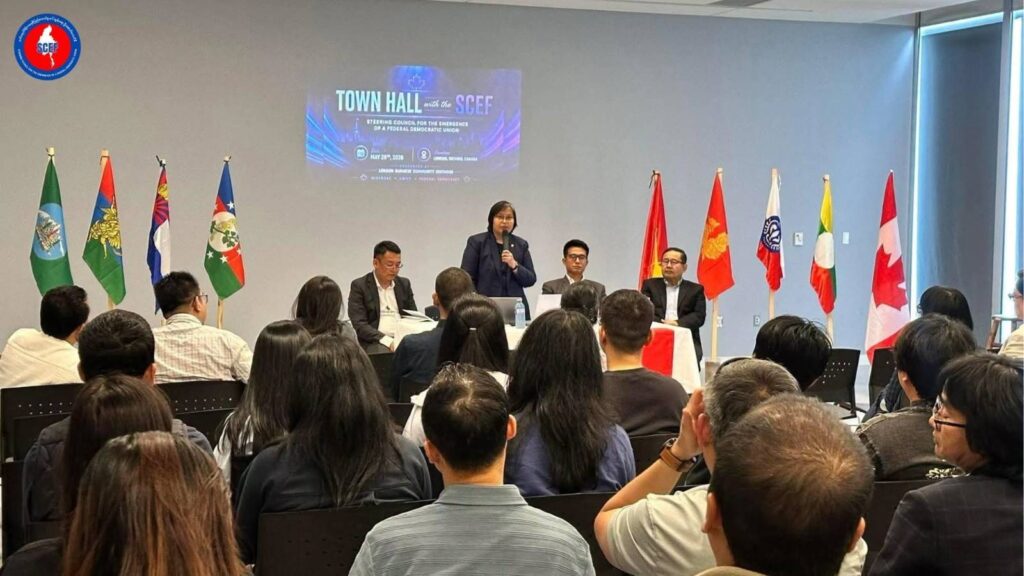
On “inclusive dialogue”, the junta has consistently refused to engage with the National Unity Government (NUG) and the Steering Council for the Emergence of a Federal Democratic Union (SCEF), the primary representatives of the democratic movement. Instead, they have attempted to construct a parallel, military-led dialogue with select Ethnic Armed Organizations (EAOs) that excludes the broader political spectrum. This selective engagement fails the “inclusiveness” criterion, as it ignores the very actors who hold the political legitimacy of the resistance.
“Humanitarian assistance” has been granted only under strict military control. The junta allows aid in areas it fully controls while systematically blocking access to conflict zones and anti-junta territories. This weaponization of aid violates the spirit of the 5PC, which calls for impartial delivery to all displaced populations.
The “Special Envoy” mechanism has been rendered ineffective by the junta’s refusal to grant unhindered access. While a rotating envoy has been appointed, the lack of a permanent mandate and the junta’s refusal to allow fact-finding visits have stymied any meaningful mediation. The proposal to create a permanent envoy with its own funding and office is a logical step, but without the junta’s cooperation, it risks becoming a bureaucratic entity with no ability to reach the ground.
Finally, “direct fact-finding visits” have never occurred. The junta’s denial of access to the Special Envoy and ASEAN officials has prevented any independent verification of the situation on the ground, leaving the bloc reliant on the regime’s own narrative.
The “Aung San Suu Kyi” Test: A Political Trap
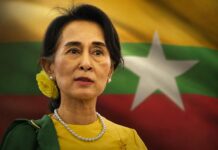
The recent suggestion by Thai and Philippine Foreign Ministers that the release of Aung San Suu Kyi (ASSK) could be viewed as a sign of willingness to adhere to the 5PC introduces a complex political variable. While her release would be a significant humanitarian gesture, it is unlikely to be sufficient to satisfy the broader requirements of the consensus. The junta may view such a move as a concession to gain international legitimacy without altering its core military strategy.
Furthermore, the proposal to allow the Philippine Foreign Minister to meet ASSK first, if the junta agrees, is going to be a diplomatic maneuver that the junta may exploit. By controlling the terms of such a meeting, the regime could project an image of cooperation while maintaining its grip on power. The resistance has rightly pointed out that the junta is not ready for peace talks as long as it continues to bomb civilian targets. Therefore, a single gesture, even a significant one, cannot substitute for the comprehensive cessation of violence and inclusive dialogue required by the 5PC.
The November Summit: A Deadline Without Teeth
ASEAN’s decision to assess the junta’s compliance at the November 2026 Summit and potentially bar them from high-level participation if benchmarks are not met is a high-stakes gamble. The junta’s recent rejection of the 5PC as not being a “unanimous consensus” and their insistence on a “Myanmar-led approach” signals that they are prepared to risk exclusion.
The junta’s strategy is to outlast the bloc’s patience. By framing the 5PC as invalid and asserting their sovereignty, they aim to force ASEAN into a choice between total isolation (which is politically difficult for some members) and normalization without conditions. The threat of exclusion from the Summit is a blunt instrument that the junta has already factored into its calculations. Given their reliance on bilateral relationships with China, India, and now Thailand, the loss of a seat at the ASEAN table may be a manageable cost rather than a decisive blow.
Conclusion: The Limits of Diplomatic Pressure
The creation of a permanent Special Envoy and the enforcement of benchmarks are necessary steps to professionalize ASEAN’s engagement, but they are insufficient to force the junta’s compliance. The regime’s survival strategy is predicated on military dominance and the rejection of political concessions. Without the threat of severe, coordinated economic sanctions or the threat of expulsion from the bloc (which remains unlikely due to internal divisions), the junta has little incentive to alter its course.
The gap between ASEAN’s rhetoric of “all-inclusiveness” and the reality of the junta’s obstructionism remains wide. The bloc’s ability to hold the line depends on its willingness to unite behind a unified strategy that prioritizes the principles of the 5PC over the national interests of individual member states. Until then, the junta will continue to play the diplomatic game, using the promise of dialogue to buy time while intensifying its military campaigns, leaving the people of Myanmar to bear the brunt of a conflict that shows no signs of abating. The November Summit will be a critical test, but without a fundamental shift in ASEAN’s resolve, it risks becoming another milestone in the long march toward the normalization of military rule.




Leave a Comments