





As over 300 ASEAN and international organizations dole out a joint statement asking ASEAN leaders not to endorse the Myanmar military junta or State Security and Peace Commission (SSPC), which formerly until recently was known as State Administration Council (SAC), questions have been asked whether ASEAN Five-Point Consensus (5PC) is in tune with the monitoring of some countries, including some ASEAN state, of the junta’s planned elections in December 2025.
Over 300 organizations from across the international and ASEAN regions have issued an urgent and unequivocal call to ASEAN governments ahead of the upcoming ASEAN Summit, to outright rejection of the Myanmar military junta’s planned sham election.
The wrapping up of demands can be read as follows:
“We specifically call on Malaysia, as the 2025 ASEAN Chair, and on Prime Minister Anwar Ibrahim, and urge all governments, institutions, and organizations of conscience to
1) Unequivocally reject the Myanmar junta’s sham election.
2) Refuse to send observers or provide any form of technical or political support.
3) Stand firmly in solidarity with the people of Myanmar and their legitimate democratic representatives.”
But let us look at the over view of the 47th ASEAN Summit first.
Overview of ASEAN Summit
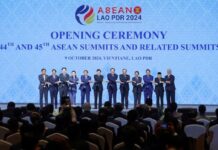
The 47th ASEAN Summit is currently underway in Kuala Lumpur, Malaysia, from October 26 to 28, 2025. During this summit, leaders are addressing various pressing issues, including a crucial review of the Five-Point Consensus (5PC) regarding Myanmar’s ongoing crisis.
The summit is chaired by Prime Minister Anwar Ibrahim and features both Plenary and Retreat sessions. Key discussions during the Plenary include ASEAN community-building and external relations, while the Retreat will focus specifically on the Myanmar situation. High-profile attendees include leaders from member states and invited guests, with a notable presence from countries like the United States, China, Japan, Brazil, South Korea, South Africa, India, Canada, Australia, New Zealand, Russia, EU Council President, UN General Secretary, World Bank Vice-President for East Asia and Pacific Region, Managing Director of IMF, and FIFA President.
The Five-Point Consensus
The Five-Point Consensus, established in 2021, serves as a road map for resolving Myanmar’s political and humanitarian crisis. It emphasizes:
- Cessation of violence.
- Dialogue among all parties.
- Unimpeded humanitarian assistance.
- Appointment of a special ASEAN envoy.
- Visit by ASEAN representatives to Myanmar.
During this summit, ASEAN leaders are expected to assess the progress made in implementing this consensus, acknowledging the ongoing challenges due to the military’s reluctance to engage meaningfully in dialogue or halt violence.
Current Context and Challenges
Despite ASEAN’s diplomatic efforts, implementation of the Five-Point Consensus (5PC) has largely stalled. Concerns have been raised over the military’s planned elections, set for December 28, 2025, which are viewed by many, including ASEAN representatives, as lacking legitimacy. The Malaysia Foreign Minister, Mohamad Hasan, reiterated the importance that any forthcoming elections must be fair, inclusive, and monitored by ASEAN observers.
Past discussions have emphasized the ongoing humanitarian crises and the need to ensure human rights are upheld amid the political turmoil in Myanmar.
On October 26, the 47th ASEAN decision and resolution called for inclusive political dialogue before the junta’s planned general elections in December. ASEAN Summit that is being held in Malaysia has released 28 reviews and resolutions on the implementation of the 5th ASEAN General Agreement on Myanmar on October 26.
The ASEAN Summit also reviewed and adopted the five common understandings or 5PC, that ASEAN has adopted since the military coup in Myanmar in 2021.
It reaffirmed that the five common understandings will be the mainstay of the resolution of the political crisis in Myanmar. It condemned the violence against civilians, attacks on public buildings and civilian infrastructure, and called on all parties involved in the attacks to immediately cease indiscriminate violence, protect civilians, and facilitate the delivery of humanitarian assistance.
The invitation to send observers to the December elections and ASEAN member states has not yet been answered, but it is noted. Until there is progress in the implementation of the Five Common Principles or 5PC, only non-political representatives from Myanmar will be allowed to attend ASEAN summits and foreign ministers’ meetings.
The resolution also urge all stakeholders to fully implement the Five Common Principles to achieve an inclusive and sustainable peace process. ASEAN will continue to operate the “Troika” trilateral dialogue mechanism and support informal dialogue.
Most importantly, ASEAN decision and resolution of 25 October 2025, rejected the junta’s planned elections and the Paragraph 26 writes: “Note the plan by Myanmar to hold General Elections in December 2025 and the invitation extended to ASEAN Member States to send election observers, and underscore the importance of free, fair, peaceful, transparent, inclusive, and credible general elections. We emphasise that the cessation of violence and inclusive political dialogue must precede elections.”
This made it clear that the junta’s election must first be free, fair, transparent, inclusive, and credible elections, which has none of the mentioned qualities. It also emphasized that cessation of violence and all-inclusive political dialogue must come first after which the elections can follow. In other words, it is a “no” to the junta’s elections, although the statement takes note of the junta’s offer for sending in the monitoring teams.
ASEAN has released a collective crucial statement to stop violence and political discussions involving all concerned should take place before the election.
Moreover, the ASEAN’s 28 review and decisions reiterated its position of “Myanmar’s non-political representation at the ASEAN Summits and ASEAN Foreign Ministers’ Meetings until there is meaningful progress in the implementation of 5PC.”
In other words, the military junta won’t be given a high-level participation status anytime soon, so long as the 5PC isn’t followed and implemented in words and deeds.

Other ASEAN Summit achievements
The 47th ASEAN Summit, held in Kuala Lumpur, Malaysia, has marked significant milestones and achievements for the ASEAN bloc, focusing on enhancing regional cooperation, security, and sustainable development.
Key Achievements Details
- Timor-Leste’s Admission Signed the Declaration on Timor-Leste’s Admission, making it the 11th member of ASEAN.
- Finland’s Accession Finland became an ASEAN dialogue partner by signing the Instrument of Accession to the Treaty of Amity and Cooperation (TAC).
- ASEAN Trade Agreements Signed the Second Protocol to Amend the ASEAN Trade in Goods Agreement (ATIGA) to foster economic integration.
- RCEP Summit Hosted the 5th ASEAN Regional Comprehensive Economic Partnership (RCEP) Summit, emphasizing regional economic collaboration.
- Security and Cooperation Initiatives Addressed issues of terrorism and cybersecurity, emphasizing the need for robust regional security measures.
Overview of Discussions
The summit aimed to strengthen inclusive regionalism and cooperation among ASEAN and its dialogue partners, including countries like the United States, China, Japan, and India. Key topics discussed included:
- Trade and Economic Cooperation: Enhancements in trade relationships and responses to global economic challenges.
- Security: Collective responses to rising threats from terrorism and geopolitical tensions, particularly between the US and China.
- Sustainable Development: Focus on achieving the Sustainable Development Goals (SDGs), with a particular emphasis on environmental sustainability.
Leadership and Participation
The summit’s proceedings showcased Malaysia’s commitment to proactive leadership within ASEAN, fostering dialogue among member states and dialogue partners. Notable leaders in attendance included:
- US President Donald Trump
- Prime Minister of India, who participated virtually
- Leaders from Australia, China, Japan, and various other nations
- This gathering not only reinforces ASEAN’s influence but also highlights its role in facilitating cooperation amidst global complexities.
Analysis
ASEAN has decided not to send a monitoring team to observe the military junta’s planned elections in Myanmar scheduled for December 28, 2025. This decision emerged during the recent 47th ASEAN Summit, where member states expressed deep concern over the ongoing conflict and highlighted a lack of substantive progress towards peace in Myanmar.
However, while some ASEAN leaders discussed the possibility of deploying observers, diplomatic sources confirmed there was no consensus among member states to send a mission. Instead, each country remains free to send observers individually, but this would not be under the ASEAN umbrella.
The elections have been widely condemned by human rights organizations and international observers, who label them as a “sham.” Concerns include ongoing violence, arbitrary arrests, and widespread repression executed by the junta, which undermines the prospect of free and fair elections.
Malaysian Prime Minister Anwar Ibrahim, chairing ASEAN, reiterated the need for an immediate ceasefire and urged dialogue as a prerequisite for any electoral process. But given the prevailing recent situation both the military junta and the ethnic-democratic opposition groups, including the NUG are not keen to talk to each other yet.
The legitimacy of the junta’s elections in the absence of ASEAN observers is likely to impact the junta’s efforts to gain international legitimacy for the upcoming elections, as they will now lack credible oversight to validate the electoral process.
The continued international scrutiny of the international community, including organizations like Human Rights Watch and Amnesty International, continues to call for increased scrutiny of the junta’s actions. Without monitoring from ASEAN, the junta faces greater isolation and criticism regarding its governance and treatment of dissent.
The situation in Myanmar remains critical as the humanitarian crisis deepens, with millions displaced and ongoing military conflicts. The international community, including ASEAN, continues to grapple with how best to respond to the crisis while adhering to their diplomatic commitments.
Moral implication vis a vis elections and ongoing armed conflict or civil war for ASEAN is one crucial point to ponder, according to some Burma watcher.
They said while it is hard to position itself as being against the junta-led elections, even though it is going to be a stage-managed, manipulated one to achieve its projected outcome, ASEAN has to posture itself as being open to it provided it if is free, fair, transparent, inclusive, and credible elections. Thus, its posturing of stopping the civil war and reaching a workable political atmosphere and addressing the humanitarian intervention for the population are essential, first and foremost, in order to be followed up with the credible elections accepted by all stakeholders, is the best ASEAN could project.
In sum, the ASEAN role during the Malaysian Chairmanship has become even-handed in tackling with the stakeholders from opposite sides meeting both adversaries, which is commendable. But whether the upcoming ASEAN Chair The Philippines will follow it up is something we have to wait and see.




Leave a Comments