



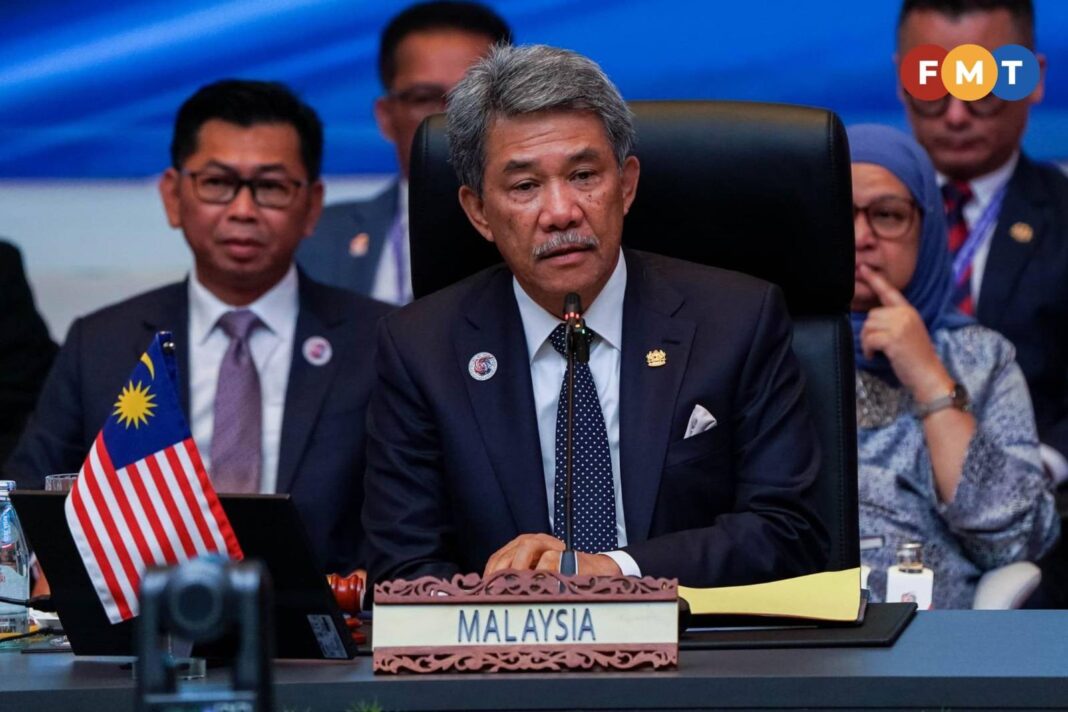
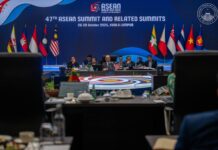
Free Malaysia Today of July 9 reported that Foreign Minister Mohamad Hasan has called on all parties in Myanmar to create a conducive environment for elections.
“We call on all stakeholders, particularly the State Administration Council (SAC), as the de facto party in power, to commit towards peace and the creation of a conducive environment for elections, in line with the aspirations of the people of Myanmar,” he said in his opening remarks at the 58th ASEAN Foreign Ministers’ Meeting on July 8.
However, in closing remarks on July 11, the Association of Southeast Asian Nations outlined three wishes from parties, including Myanmar’s government in exile and warring factions, amid renewed calls to revive a stalled peace plan, according to South China Morning Post.
Moreover, in contrast to his earlier remarks on SAC’s planned election, Malaysia’s Foreign Minister Mohamad Hasan said: “We are saying that [the election] is not a priority at the moment. What is the point of having a partial election?”
“Only part of Myanmar holds an election for the sake of telling the whole world that, look, we have an election so we are already a democratic government. That is not right.”
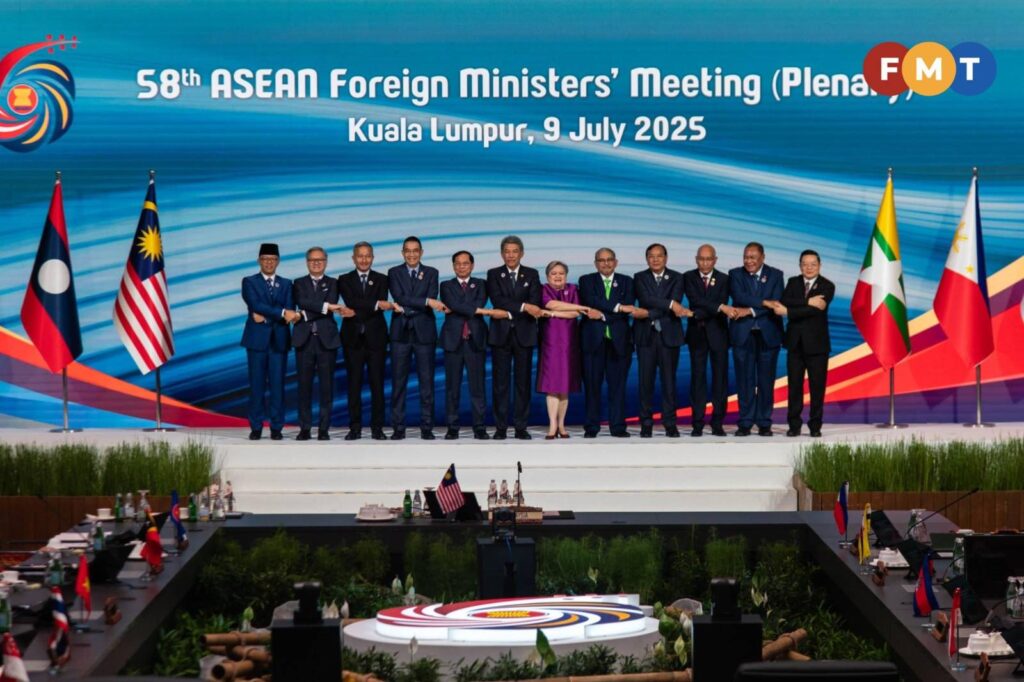
In a sweeping 160-point Joint Communique of the 58th ASEAN Foreign Ministers’ meeting Kuala Lumpur, 9 July 2025, ASEAN outlined its position on the Myanmar conflict, in part of the Paragraph 152 as follows:
“We expressed our deep concern over the escalation of conflicts and humanitarian situation in Myanmar, and encouraged progress on the implementation of the ASEAN Leaders’ Five-Point Consensus (5PC). We reaffirmed our united position that the 5PC remains our main reference to address the political crisis in Myanmar and further reaffirmed the relevant Leaders’ decisions. We denounced the continued acts of violence against civilians and public facilities and urged all parties involved to take concrete action to immediately halt indiscriminate violence, exercise utmost restraint, ensure the protection and safety of all civilians and civilian infrastructures, and create a conducive environment for the delivery of humanitarian assistance and inclusive national dialogue.”
Malaysian Foreign Minister Mohamad cited the three wishes as the “release of the political prisoners, ceasefire, and unhindered humanitarian aid”, and said the priority now was to implement the Five-Point Consensus – a peace plan agreed in 2021 after Myanmar’s military seized power in a coup, according to the South China Morning Post.
He revealed plans to travel to Naypyitaw in September or October to present the “wish list” to the junta as a representative of Malaysia as ASEAN chair.
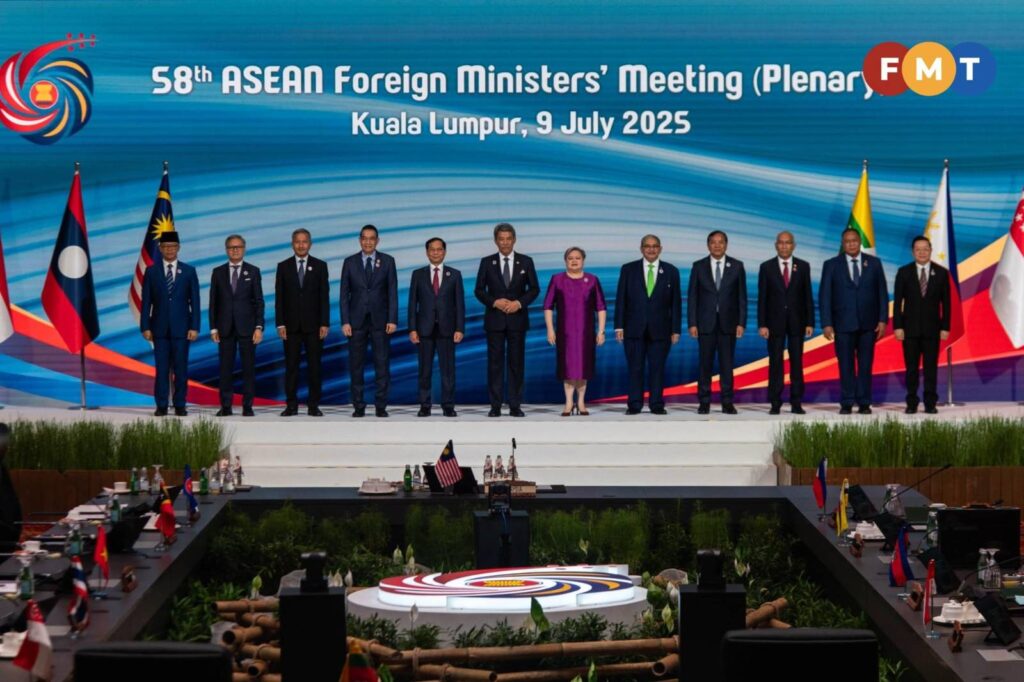
The bloc had gathered for the four-day Asean Foreign Ministers’ Meeting in Kuala Lumpur, which drew officials from across the region and major partners including the US, China, Russia, the UK, Canada, the EU, Australia, Japan, South Korea and India.
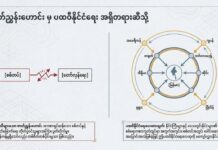
SAC’s Peace Forum 2025
Ten days ahead of the ASEAN Foreign Ministers’ Meeting, the SAC held Peace Forum 2025, a three-day event from June 25 to 27 organized by Myanmar’s military council, focusing on election preparations, political and socio-economic challenges, and strategies for inclusive reform. It has been criticized for excluding key stakeholders such as ethnic resistance organizations and political parties not aligned with the junta.
“Under the slogan “Towards a New Nation of Peace and Prosperity through the Integration of Peace, Elections and Development,” the so-called “Peace Forum 2025” focused on discussing preparations for elections, identifying solutions to address the country’s current political and socio-economic challenges, exploring the role of the international community in building a democratic and federal union post-election, and analyzing geopolitical conditions. The National Solidarity and Peace Negotiation Committee (NSPNC), established by the military regime, promoted the forum as “a new step towards peace amid the Myanmar’s political crisis” in its propaganda,” according to Burma News International (BNI)-Myanmar Peace Monitor’s Bi-Weekly News Review of July 11, 2025.
Clearly, it was the main thrust for the preparation of the upcoming general elections at the end of the year or early next year and much less to do with peace, as the SAC hasn’t bother even to include or invite those in the opposition who are against its rule.
LAN urged anti-junta forces to be aware of SAC planned election
On July 9, the Legal Aid Network’s (LAN) analysis of electoral politics from the perspective of the rule of law was released.
According to it, elections are a symbol of democracy and can be considered as grassroots participatory politics, which can help achieve legitimate rule.
Now, the military junta is also opposing these democratic principles and is trying to force the election, expecting it to be a way out of their political crisis and also under pressure from China.
The Legal Aid Network (LAN) points out that through these elections, they can gain legitimacy and, under the guise of a legitimate government, sell the country’s land and resources to foreign countries and companies to maintain their power.
In addition, the statement pointed out that the government could use the military forced conscription law more than now, recruit more soldiers than necessary, and make more brutal efforts to crush the resistance forces.
The statement also pointed out that the UN Ambassador U Kyaw Moe Htun could be removed, the People’s Defense Forces (PDFs) could be separated from the National Unity Government’s (NUG) control, and the official government could offer amnesty, political and administrative positions, and economic rights to woo them.
Therefore, the Legal Aid Network (LAN) urges the revolutionary forces and the people of all ethnic groups to take effective measures and fight against the upcoming elections by the military council, not just with simple protests, but also with common processes based on their political goals, not only in each region, but also in the entire Union.
It further points out the historical evidences of the stage-managed, manipulated elections in post-independence Burma or Myanmar in 1951 under the Anti-Fascist People’s Freedom League (AFPFL) government.
Accordingly, in the course of Myanmar’s history all sorts of political problems, including elections, were experienced. The first parliamentary general election, in 1951 June, was the beginning. The countrywide elections were not being able to be held. As such, Sir Ba Oo led with U E Maung of Election Commission (EC) held elections in selected areas, one region after another.
Reportedly, the EC conducted elections where AFPFL had advantages to win in three batches. If the AFPFL lost in a constituency, he was moved to another to compete until he finally win the election. Besides the Union Military Police (UMP), security forces and even Tatmadaw helped and assisted the AFPFL (Socialist Faction) to win the elections.
Now the SAC planned elections, either at the end of 2025 or early 2026, is copying the 1951 manipulated election style of AFPFL. It is quite sure to follow the footstep, only it maybe much worse.
The reasons are:
(a) In 1951 situation politically there were freedom, whereas the coup-maker SAC or Tatmadaw has total control of it.
(b) In 1951 elections were held because the government term expired, whereas the SAC is holding elections to prolong it military dictatorship system.
(c) The 1947 Constitution had freedom of expression, assembly, to form organizations and freedom to rally. But 2008 Military-drafted Constitution curtailed all those.
(d) In 1951 freedom of judiciary prevailed, whereas the SAC now controls the judiciary.
(e) In 1951 there was freedom of media, whereas the SAC has none.
(f) In 1951 Tatmadaw was under civilian government, whereas it now could do anything according to its will.
(g) In 1951 the government was not accused of major crimes against the people by the international community. But the SAC is just the opposite and being sued by international courts for its major crimes against the whole population, including the Rohingya.
Analysis
Given such development and having said that, let us go to the questions of whether the SAC legitimacy thrust will be viable and what outcome can be expected from Myanmar’s political discourse in the near future.
Regarding the issue of junta’s planned elections it is unlikely that it will achieve its legitimacy aspirations from UN, EU, ASEAN, and other international bodies.
The reasons behind would be SAC’s lack of democratic credentials; international criticism; ASEAN divided stance; and resistance of pro-democracy groups.
The lack of democratic credentials is mainly due to its crime against humanity, genocidal allegations of International Court of Justice (ICJ) initiated by Gambia and some countries like Argentina making use of “universal jurisdiction” issuing international arrest warrant of the military junta and its leader General Min Aung Hlaing. Meanwhile, multiple legal actions have been initiated in various countries, including Germany, Turkey and the Philippines, under the principle of universal jurisdiction, aiming to prosecute senior military officials for crimes against humanity, war crimes, and genocide.
On international criticism, the UN has repeatedly criticized the junta’s actions, with the Special Rapporteur on human rights in Myanmar stating that the junta’s claim to legitimacy is “illegitimate and a new, coordinated international response to the crisis is imperative”.
ASEAN’s divided stance also has an impact as ASEAN member states have differing views on engaging with the junta. While some countries like Brunei, Indonesia, Malaysia, the Philippines, and Singapore have reduced diplomatic engagement, others like Cambodia, Laos, Thailand, and Vietnam have chosen to engage with the SAC.
And finally, the resistance of pro-democracy and general population against the military junta. The NUG together with the other anti-junta ethnic-democratic alliance also rejected the SAC legitimacy claim, while the NUG is trying to project itself as Myanmar’s government which should be legitimacy, competing with the SAC in the UN and among international community. So far, the UN Credentials Committee hasn’t decided upon whether the SAC or NUG should be given legitimacy since the military coup in 2021.
Thus, it won’t be easy for the SAC to achieve legitimacy only with its stage-managed and manipulated elections to gain legitimacy from the international community, except endorsement from Russia, China, Belarus and perhaps North Korea, but much less from the UN.
Concerning how the country’s near future will pan out, there are three scenarios that may come to the fore. They are the junta gaining upper hand, opposition gains, and stalemate. But given the present result junta gaining upper hand militarily and politically is still impossible, given that it controls less than 40% of the country’s areas and the rest 60% is under the anti-junta forces. Although militarily the junta is making a come back with the help of the Russian and China, it is still a long way that it can reverse the trend like in pre-2021 situation.
The likely scenario will be more of a stalemate. A prolonged stalemate is a very likely possibility, with neither side able to achieve a decisive victory. This could lead to ongoing instability, humanitarian crises, and economic stagnation. And with it, institutional weakness may follow with the challenging prolonged conflict, creating an environment where governance becomes increasingly difficult.
The most likely outcome may be the potential fragmentation of the country, which is already in the making, if something drastic is not undertaken by either of the adversaries, or no decisive victory from either side forthcoming. It is quite possible that with multiple armed groups controlling different territories, there’s a risk of Myanmar fragmenting into smaller, autonomous regions may become more profound, making it difficult for any single entity to govern the country effectively.
In sum, either the two main adversary groups thrash out their differences on the negotiation table for the benefit of the whole population, before it is too late, or let it slide into Somalia-like situation, become China’s sort of colonial possession, or all stakeholders continue muddling through in the given political landscape without clear objectives or goals, whatsoever.



Leave a Comments