



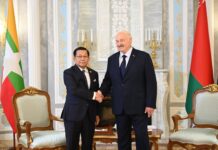
On August 6, 2026, Min Aung Hlaing, now styling himself as the elected civilian president of Myanmar, is scheduled to arrive in Thailand at the invitation of the Thai Prime Minister Anutin Charnvirakul. This visit follows a three-phased general election held between December 2025 and January 2026, a process widely viewed by the international community as manipulated to legitimize continued military rule. During his stay, the agenda is expected to cover environmental challenges affecting both nations, the crackdown on cyber-scam compounds, narcotics trafficking, and trade issues, alongside meetings with key figures in the Thai business sector.
The Illusion of Reform and the “Civilian” Facade
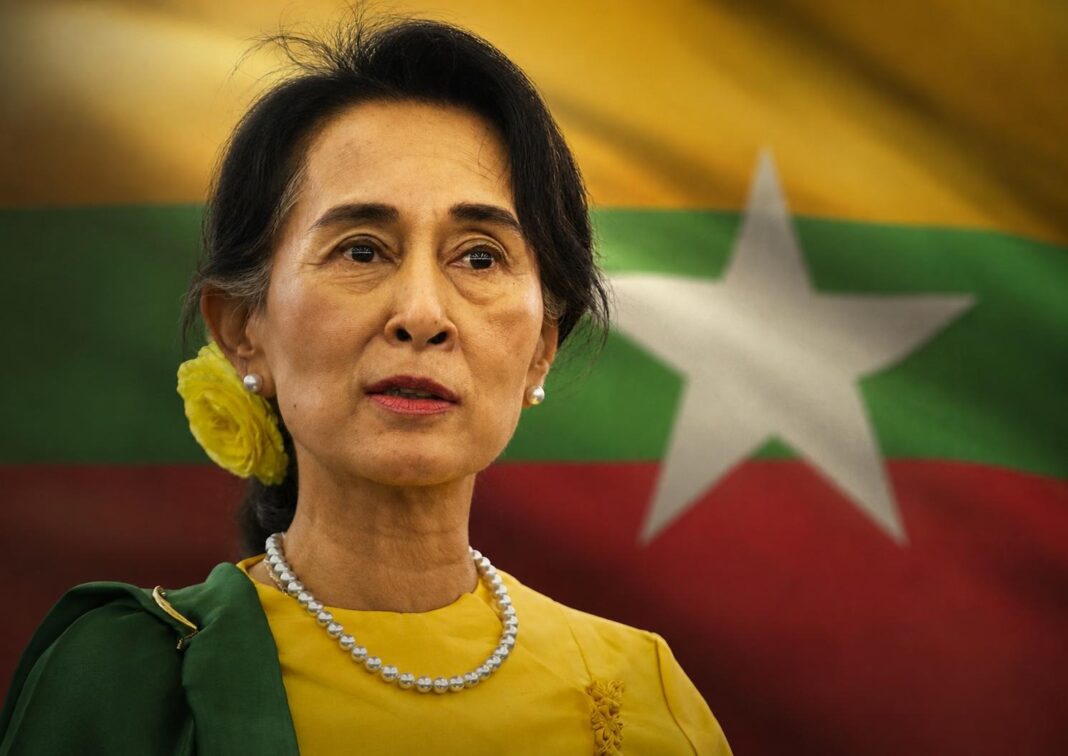
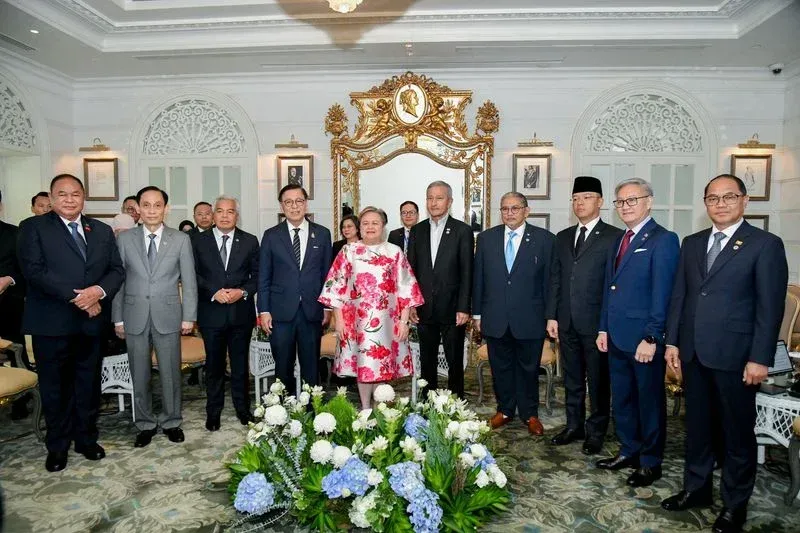
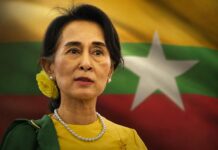
Amidst this diplomatic engagement, the Thai Prime Minister recently mentioned Aung San Suu Kyi during a visit to Jakarta, framing her potential release as a pathway to encourage Min Aung Hlaing to adhere to the ASEAN Five-Point Consensus. However, this diplomatic gesture appears to be a calculated maneuver rather than a genuine commitment to democratization. The reality on the ground suggests that the Thai leadership is utilizing the so-called “ASSK card” as a bargaining chip, while the military regime has no intention of releasing her or dismantling its oppressive system. Min Aung Hlaing has repeatedly made it clear, along with his proxy parliament, that they will not honor the Five-Point Consensus, arguing that it violates the principle of non-interference and lacks the consent of all ASEAN members.
The upcoming visit highlights a critical fracture within ASEAN. The military has successfully transitioned into a “civilian” facade, with Min Aung Hlaing stepping down as Commander-in-Chief to be elected president by a pro-military legislature dominated by the Union Solidarity and Development Party. This regime now demands its place in ASEAN without adhering to the consensus, creating a deep divide among member states. While some nations strictly insist on the implementation of the Five-Point Consensus as a precondition for high-level engagement, others, led by Thailand’s pragmatic approach, are moving toward accepting the new reality of the junta. This split leaves the alliance paralyzed, with the military exploiting the disunity to solidify its hold.
A Strategic Bargaining Chip, Not a Humanitarian Gesture
The core of this strategy lies in the military’s effective use of Aung San Suu Kyi as a permanent bargaining chip. Contrary to hopes that she might be released to signal goodwill, the junta views her continued detention as essential to their survival. As analyzed by the prominent Burmese writer and analyst Min Thayt, the military leadership has learned a harsh lesson from the era of President Thein Sein. During that period, the relaxation of restrictions and the temporary release of Aung San Suu Kyi allowed her and the National League for Democracy to regain political momentum, a move the military now regards as a catastrophic error. Consequently, the current regime has adopted a hardline stance, refusing to entertain any leniency or steps toward genuine democratization that could threaten their supremacy.
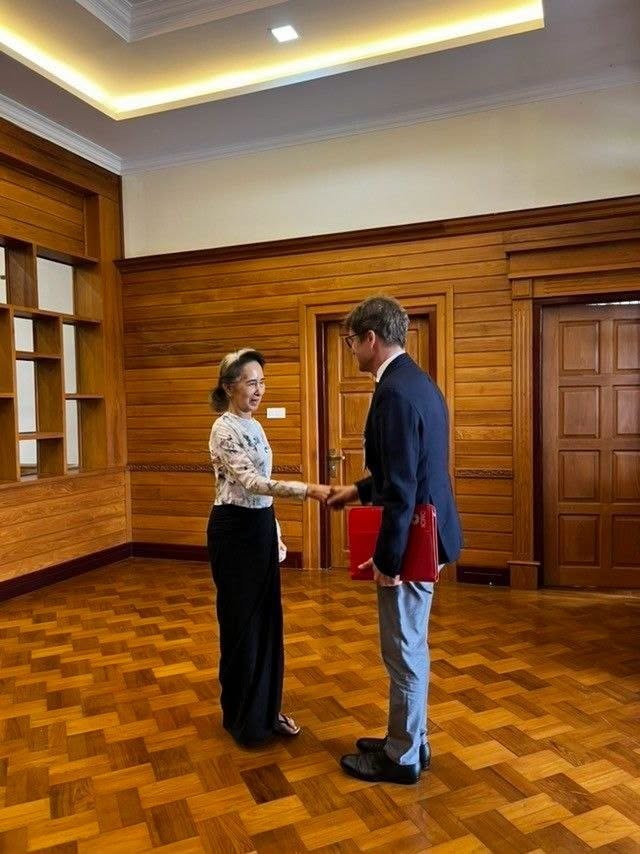
Min Thayt’s analysis reveals that the military treats Aung San Suu Kyi not merely as a prisoner but as a source of “strategic uncertainty.” By keeping her status ambiguous and controlling information about her well-being, the junta creates a psychological tool to manipulate both domestic and international audiences. They occasionally but rarely allow limited access, such as meetings with the International Committee of the Red Cross, after years of appeal to meet her, and release photos to quiet campaigns for her release, yet they ensure she remains under strict detention. This approach prevents her from becoming a unifying symbol for the opposition while simultaneously using the threat of her continued imprisonment to negotiate with foreign powers. The military fears that releasing her would be akin to giving a tiger its claws again, a risk they are no longer willing to take.
The Anatomy of a Stalemate
The result is a stalemate where the military’s primary objective is the preservation of its authoritarian system. They use the “ASSK card” to manage international pressure, sow division within the resistance movement, and maintain leverage in diplomatic negotiations. The strategy is designed to keep the opposition fragmented, exploiting the distrust between armed resistance groups and those seeking a political solution, as well as the skepticism among ethnic armed organizations regarding Aung San Suu Kyi’s Bamar-centric nationalism. By keeping her in a state of indefinite detention, the military ensures that she remains a pawn in their game rather than a free agent capable of challenging their authority.
As Min Aung Hlaing prepares to walk the halls of power in Bangkok, the international community is left with a stark choice. The diplomatic engagement with the “elected” president risks legitimizing a regime that has no intention of honoring its commitments. The “ASSK card” is not a promise of future freedom but a testament to the military’s resolve to maintain control at all costs. Unless ASEAN can find a unified way to address this deception and demand the unconditional release of political prisoners, the region risks deepening its entanglement with a junta that views democracy as an existential threat. The path forward requires more than diplomatic theater; it demands a recognition that the military’s “civilian” mask is merely a new strategy for an old game of dominance.

Leave a Comments