




Fractured Unity and the Rejection of the Five-Point Consensus
The current geopolitical landscape within ASEAN is undergoing a severe stress test, driven by the Myanmar junta’s brazen rejection of the Five-Point Consensus and its attempt to bypass ASEAN’s diplomatic mechanisms entirely. Min Aung Hlaing’s recent visit to Bangkok has not only legitimized his regime in the eyes of his allies but has also exposed deep fissures in regional unity. The junta’s Foreign Ministry declaration that a new ASEAN Special Envoy is no longer necessary marks a decisive break from the consensus-based approach that has defined the bloc’s handling of the crisis since the 2021 coup. By asserting that its newly formed, election-mandated government can resolve the conflict independently, Naypyitaw is effectively challenging ASEAN’s centrality and attempting to force the bloc into a binary choice: either accept the junta’s narrative of a settled political process or face a diplomatic rupture.
The Fault Lines Within ASEAN
The diplomatic fallout is already reshaping the internal dynamics of ASEAN, with member states aligning themselves along diverging fault lines that threaten to paralyze the organization. On one side of the divide stand the principled hardliners, led by Indonesia, Malaysia, Singapore, and Timor-Leste. These nations view the junta’s rejection of the Special Envoy and the Five-Point Consensus as a fundamental violation of ASEAN’s credibility. They are likely to insist on maintaining the exclusion of Min Aung Hlaing from high-level summits and will argue that any normalization of relations must be conditional on the release of political prisoners, including Aung San Suu Kyi, and the restoration of a genuine inclusive dialogue. For these countries, the integrity of the ASEAN community and the rule of law within the region are at stake, and they will resist any move that elevates the junta without tangible concessions.
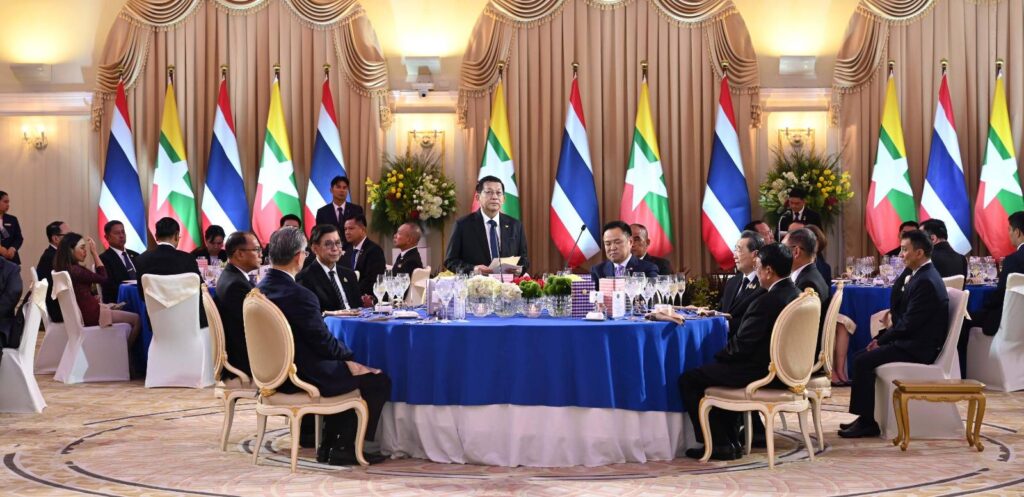
Opposing this group are the nations with closer strategic and economic ties to the junta, including Laos, Vietnam, and Cambodia, with Thailand occupying a complex and increasingly contentious middle ground. While Laos and Vietnam have historically prioritized sovereignty and non-interference, their support for the junta is often driven by a desire to maintain stability on their borders and prevent the spread of ethnic insurgency. Thailand’s position has become particularly fragile; while its leadership, particularly under Prime Minister Anutin Charnvirakul, has pursued a policy of calibrated re-engagement, this strategy is facing intense backlash from Thai civil society, students, and the media. The prevailing sentiment in Thailand is that the visit to Min Aung Hlaing offered the junta a stage for legitimacy without extracting real benefits for Thailand. If the Thai government continues to push for normalization without preconditions, it risks alienating its ASEAN partners and undermining the bloc’s collective stance, potentially leaving Thailand isolated within the organization.
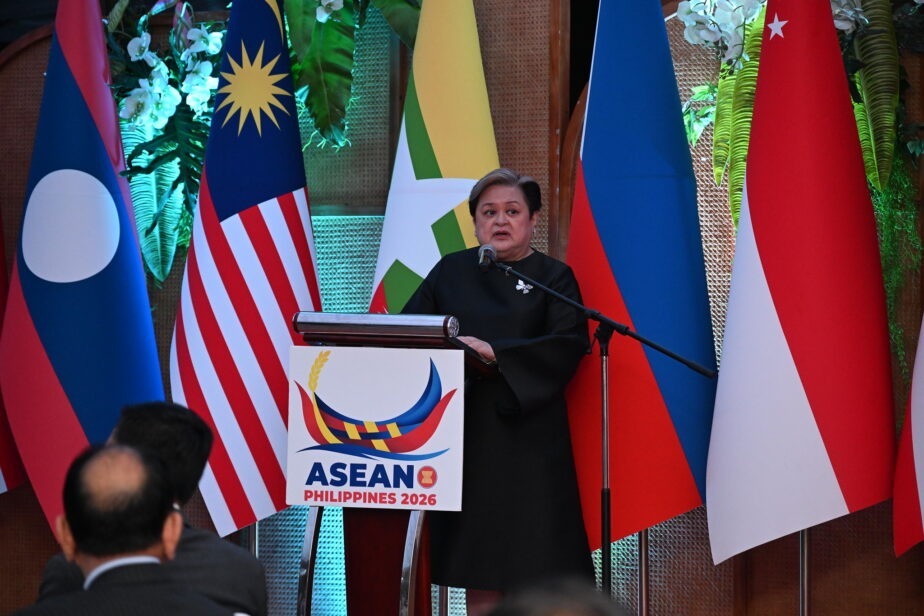
The neutral or undecided members of ASEAN, including the Philippines and potentially others like Brunei, find themselves in a precarious position. The Philippines, as the current ASEAN Chair, has attempted to navigate this crisis by issuing a statement that acknowledges the ICRC meeting with Aung San Suu Kyi while reaffirming the necessity of the Special Envoy. This balanced approach aims to keep the door for dialogue open without conceding on the core principles of the Five-Point Consensus. However, the junta’s rejection of the envoy’s mandate places the Philippines in a difficult spot, forcing it to manage a bloc that is increasingly divided on how to proceed. The risk is that ASEAN’s inability to present a unified front will allow the junta to exploit these divisions, engaging bilaterally with sympathetic states while ignoring the collective voice of the organization.
Forecasting a Fragmented Future
Looking at the near future, the trajectory of ASEAN is likely to be one of continued fragmentation and diplomatic stagnation unless a new consensus is forged. The bloc may face a scenario where it effectively becomes a hollow shell regarding Myanmar, with the junta operating outside the framework of ASEAN’s diplomatic norms while still retaining its seat at the table. This would severely damage ASEAN’s reputation as a mediator and a platform for regional security. The most probable outcome is a frozen conflict within ASEAN itself, where the bloc continues to talk about the crisis but is unable to implement any meaningful action. The Five-Point Consensus may effectively become a dead letter, with the junta ignoring its provisions and ASEAN lacking the will or mechanism to enforce them. This erosion of centrality could lead to a situation where external powers, particularly China, fill the diplomatic vacuum, conducting bilateral deals with Myanmar that further marginalize ASEAN’s role.
The Intensifying Conflict in Myanmar
The implications for the conflict within Myanmar itself are dire and are likely to intensify in the coming months as the diplomatic shield of ASEAN weakens. With ASEAN’s diplomatic leverage waning, the junta will feel emboldened to pursue its military strategy with fewer constraints. The focus on central Myanmar—specifically the Sagaing, Magway, and Mandalay regions—will likely escalate as the military seeks to crush the National Unity Government and People’s Defense Forces that draw their support from the Bamar majority heartland. The junta’s strategy appears to be one of attrition and fragmentation, aiming to push resistance groups into smaller, isolated pockets while securing control over key resource areas and trade corridors. The humanitarian situation is expected to deteriorate sharply, with increased displacement, food insecurity, and a brain drain as young people flee conscription and violence.
The rejection of the Special Envoy also removes a critical channel for potential de-escalation. Without a dedicated ASEAN mediator to facilitate dialogue between the junta, the resistance, and ethnic armed organizations, the conflict is likely to become more intractable. The junta’s claim that its new government can resolve the issues independently is a political maneuver designed to mask its inability to achieve a military victory. As the conflict drags on, the junta’s legitimacy will continue to erode domestically, even as it seeks to project stability abroad. The lack of a unified ASEAN response will signal to the junta that there are no significant diplomatic costs to continuing its repression, potentially leading to further violence and a deepening of the crisis.
Pathways to Reclaiming ASEAN’s Relevance
To overcome this challenge, ASEAN must urgently redefine its approach to the Myanmar crisis and address the broader issues of illicit trade, cyberscam networks, and human rights abuses that have long plagued the region. The first step is to reassert the primacy of the Five-Point Consensus as the only legitimate framework for resolving the conflict. ASEAN leaders, particularly the Philippines, must resist the pressure to normalize relations with the junta without preconditions and instead insist on a clear roadmap for compliance. This could involve a formal, collective declaration that the Special Envoy’s mandate remains active and that the junta’s rejection of it is a violation of ASEAN’s principles. Furthermore, ASEAN should explore ways to engage the National Unity Government and other resistance groups in the dialogue, even if indirectly, to ensure that any solution is inclusive and representative of all parties.
Secondly, ASEAN must address the internal divisions that are preventing a unified response. This requires a diplomatic effort to bring the more sympathetic states, including Thailand, Laos, and Vietnam, around to the hardline position, or at least to a compromise that does not undermine the collective stance. This could involve offering these countries assurances that their security concerns will be addressed through other channels, such as border management and counter-narcotics cooperation, without linking it to the political legitimacy of the junta. The goal is to prevent the bloc from being split into factions that pursue conflicting agendas.
Finally, ASEAN must be prepared to face the possibility that the junta will not comply, and to develop contingency plans for a future where Myanmar is effectively sidelined within the organization. This does not mean expulsion, which would violate the principle of non-interference, but rather a reconfiguration of Myanmar’s participation to exclude it from leadership roles and high-level decision-making while maintaining a humanitarian channel. By taking these steps, ASEAN can begin to rebuild its credibility and demonstrate that it remains a relevant and effective platform for regional security, even in the face of a determined junta. The window of opportunity to prevent a total collapse of ASEAN’s role in the Myanmar crisis is narrowing, and decisive, unified action is required to avoid a scenario where the bloc is rendered irrelevant by the very crisis it was meant to resolve.







Leave a Comments