




The Arakan Army has reached a defining inflection point. What began as an ethnic insurgency for autonomy has evolved into a state-building project with ambitions that could fundamentally restructure Myanmar’s political map. With full control of the Bangladesh border established by late 2024, a functional Arakan People’s Revolutionary Government in place, and military offensives extending into Chin, Kachin states, Magwe, Sagaing, Ayeyawaddy and Bago regions, the AA is no longer just a rebel group. It is a de facto sovereign power.
But the true story of the next decade is not just about the AA. It is about how the triangular tension between India, China, and Bangladesh is reshaping the AA’s destiny. The AA’s vision of an asymmetrical confederation cannot succeed in a vacuum. It depends entirely on a delicate balance of power among its neighbors. This is no longer just a civil war. It is a regional chess game where the Rohingya crisis is the ultimate lever.
The AA’s Grand Gamble: From Battlefield to Confederation Architect
The AA’s transition from a military force to a governing entity is unprecedented. By early 2025, reports confirmed the AA was already establishing local governments, collecting taxes, and running judicial systems in the townships it controls. The most telling sign of this evolution is the move to establish its own banking systems, creating a financial infrastructure independent of the junta’s kyat. This mirrors the United Wa State Army model, yet the AA faces a darker reality where its revenue streams remain increasingly intertwined with cross-border smuggling and drug trafficking.
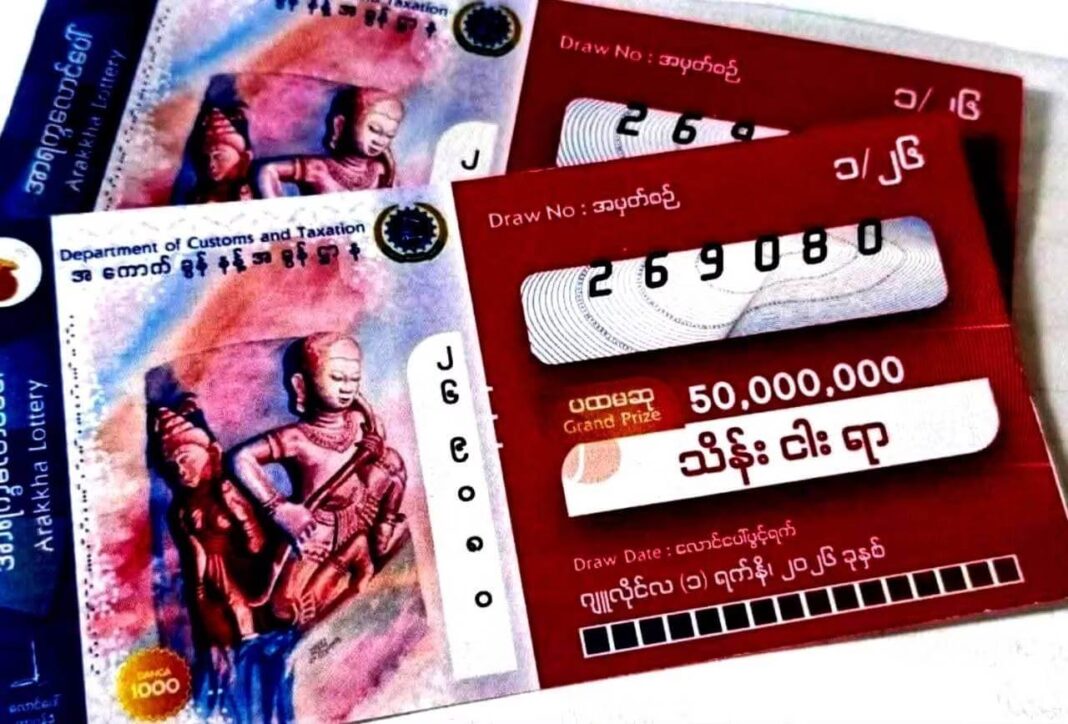
The AA’s launch of the Arakan Lottery, Known locally as Laong Pao, on July 1, 2026, marks a seismic shift in its economic strategy. This is not a minor fundraiser but a high-stakes state revenue engine. The first draw, held with traditional Rakhine cultural ceremonies, awarded a staggering 50 million kyats as the first prize to a resident of Kyauktaw. The second and third prizes were 30 million and 20 million kyats respectively, with dozens of additional prizes ranging from 5 million down to 500,000 kyats. These figures indicate a massive capital inflow, suggesting the AA has successfully tapped into a deep pool of local liquidity. By allocating half of the revenue to health, education, and social development, the AA is directly funding its welfare state, reducing reliance on external aid or illicit trade.
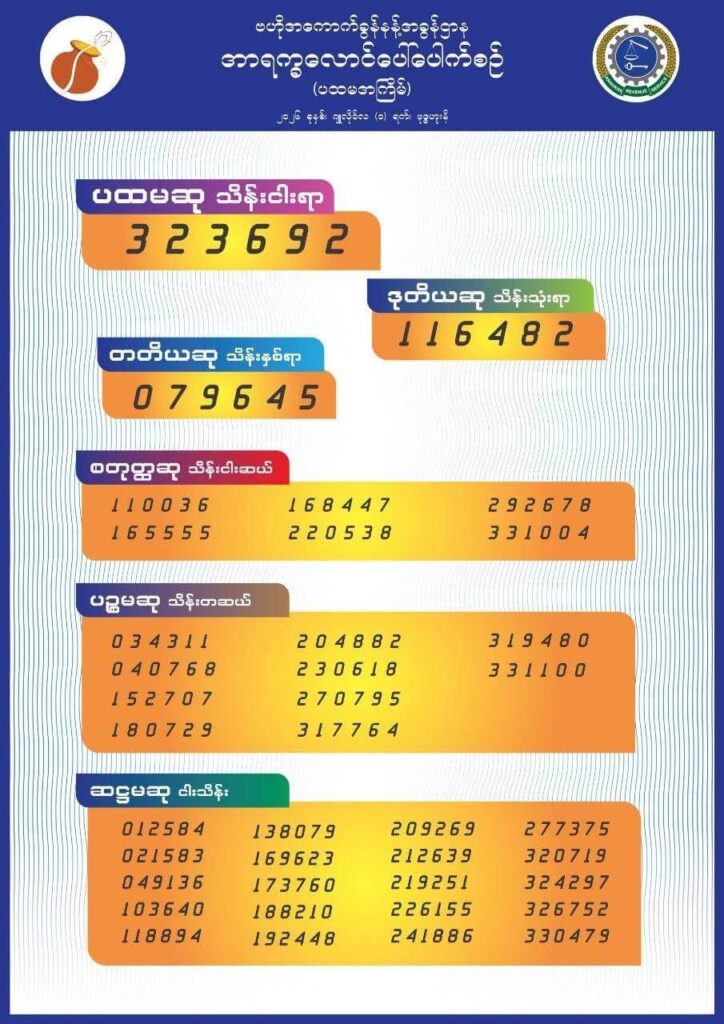
The AA’s strict enforcement of rules, requiring valid ID and household registration while threatening to withhold prizes from criminals, asserts its judicial sovereignty. The declaration that disputes will be settled in AA courts further cements its role as the sole legal authority in Rakhine. A lottery with such high stakes is a signal to the international community that the AA is a mature administration capable of managing large-scale public finance, not just a guerrilla force.
Complementing this financial move, the APRG is actively recruiting banking professionals to establish a local banking system. This is critical for reducing dependence on the junta, funding the war machine through formal channels, and signaling to neighbors that the AA is a credible governing partner.
The AA’s decision to coordinate offensives with the Steering Council for the Emergence of a Federal Democratic Union in central regions marks a strategic pivot. By pushing into Magwe, Sagaing, Ayeyarwady, and Bago, including fighting in Chin and Kachin states, the AA is proving it is not just a Rakhine force but a national revolutionary partner. This multi-front pressure creates a strategic stalemate for the junta, which is now squeezed between the AA in the west and the Nationwide People’s Defense Forces in the center.
Commander-in-Chief Twan Mrat Naing has consistently spoken of sovereignty and self-determination while avoiding explicit calls for a breakaway Rakhine state. Instead, the goal appears to be a confederated union where Rakhine retains near-total autonomy over its security, economy, and resources, while remaining nominally part of a larger, loose Myanmar. This approach offers diplomatic pragmatism, allowing the AA to negotiate control over critical infrastructure like the Kyaukphyu port without triggering a full-scale international embargo, and presents the group as a partner in peace rather than a secessionist threat.
The Geopolitical Chessboard: Unofficial Engagement in a Formal World
The AA’s rise has inserted Myanmar deeper into the strategic rivalry between India and China, with Bangladesh emerging as the critical swing state. However, a critical distinction defines the current landscape. India and Bangladesh have not yet established formal diplomatic relations with the AA. Instead, they are engaging strictly through unofficial, pragmatic channels. This gray zone diplomacy allows New Delhi and Dhaka to secure their interests without triggering a diplomatic crisis with the Myanmar junta or violating international norms.
China remains the AA’s largest supplier of weapons and a critical economic partner, particularly for the Belt and Road Initiative projects in Rakhine. Beijing is already engaging with the AA on infrastructure projects, effectively treating it as a local authority. China is likely the only neighbor with enough influence over the AA to potentially push for a Rohingya solution, warning the group that ethnic cleansing would destabilize the border and jeopardize their ports. However, if China pushes too hard on the Rohingya issue, it risks alienating the AA, which could then turn to India or the West, undermining China’s strategic foothold.
India’s strategy is defined by cautious pragmatism. While there is no formal embassy or exchange of ambassadors, New Delhi is deeply engaged with the AA through back-channel diplomacy. India is using its intelligence and diplomatic channels via Mizoram and the Northeast to engage the AA on the security of the Kaladan Multi-Modal Transit Transport Project and informal trade agreements. India cannot openly support the AA if it is accused of genocide, as that would alienate the Muslim world and Bangladesh. Yet, India also cannot afford a stable, China-dominated Rakhine. By keeping engagement unofficial, India maintains plausible deniability, allowing it to secure the Kaladan route and gather intelligence without formally recognizing the AA as a state.
Bangladesh is in a precarious position, hosting over 1 million Rohingya refugees, a burden that is becoming economically and socially unsustainable. Dhaka is engaging China and the AA through quiet, unofficial channels regarding the Rohingya issue. By sounding out China, Dhaka signals that it has no choice but to rely on Beijing if New Delhi and the West fail to deliver repatriation. Bangladesh holds a unique card in the land border. If Dhaka decides to close the border completely or allow the Rohingya to disappear into the jungle, it creates a humanitarian catastrophe that China cannot ignore. Bangladesh fears that if the AA takes full control of Rakhine and establishes a Buddhist-majority state without addressing Rohingya rights, it will trigger a permanent exodus. Therefore, Dhaka is effectively telling China that if they want the Kyaukphyu port to be safe, they must pressure the AA to allow safe repatriation or a political solution for the Rohingya.
The Critical Flaw: The Rohingya Factor
Despite its military and political successes, the AA’s confederal vision faces a monumental hurdle. The AA has been accused of severe human rights abuses, including massacres and forced displacement of Rohingya civilians in Maungdaw and Buthidaung. Reports from 2024 and 2025 detail targeted attacks, the use of drones against civilians, and the destruction of Rohingya villages. These actions have drawn condemnation from the UK, human rights organizations, and even some regional actors.
The interplay between India, China, and Bangladesh is now the primary force shaping the AA’s options. If China pushes the AA to be more inclusive on the Rohingya issue to protect its ports, it inadvertently helps the AA gain legitimacy. If India and Bangladesh can find a way to cooperate on a Rakhine Special Economic Zone that includes Rohingya repatriation, it gives the AA a diplomatic exit strategy where they can claim to be creating a zone for all ethnic groups facilitated by their neighbors. Conversely, if China and India compete too aggressively, or if Bangladesh feels betrayed and closes the border, the AA could be forced into a brutal civil war, dooming its confederal vision.
The Road Ahead
In the near term, the AA will likely solidify its control over Rakhine, establishing a functioning economy and administration. The military stalemate will continue, with the junta holding key urban centers while losing the countryside. India and Bangladesh will continue to engage the AA through back-channels, avoiding formal recognition to maintain strategic flexibility. The success of the lottery and the new banking system could boost the AA’s legitimacy, but it also risks attracting scrutiny from international bodies if the funds are linked to illicit activities.
As the junta’s power continues to erode in the middle term, the AA will push for a seat at the table in any federal negotiations. The confederal model will emerge as the primary demand, seeking high autonomy for Rakhine and control over its resources. If China, India, and Bangladesh can find a common ground, a Rakhine Special Economic Zone with guaranteed Rohingya rights could emerge, serving as a model for other ethnic states. If the AA’s governance proves stable and inclusive, India and Bangladesh may be forced to upgrade their unofficial ties to formal diplomatic recognition, marking a turning point in Myanmar’s history.
In the long term, the most likely outcome is a fragmented Myanmar where the central state is a hollow shell, and power is distributed among semi-autonomous states. Rakhine, under the AA, will likely be the most developed and stable of these entities. However, if the AA fails to address the Rohingya issue or becomes too dependent on illicit trade, the country could slide into a failed state scenario with competing warlords and foreign proxies.
Conclusion
The Arakan Army is playing a high-stakes game of chess with history. By refusing total independence and opting for a confederal model, it has positioned itself as the most pragmatic and potentially viable political force in Myanmar’s future. Its ability to build a state, coordinate national offensives, and navigate the US-China rivalry is remarkable.
But the true test lies in the India-China-Bangladesh triangle. If these three powers can find a way to cooperate on the Rohingya issue, the AA’s confederal model could become a template for other ethnic states in Myanmar. It would show that autonomy is possible without total independence, that minority rights can be protected through regional pressure, and that economic integration can override ethnic tensions. If the triangle fractures, the entire project could collapse into a multi-ethnic civil war with no clear winner.
The question for the future is simple yet profound. Can the AA convince Bangladesh and India that it is a partner in stability, not a threat? And can China be convinced that stability is more important than short-term control? The answer will determine not just the fate of Rakhine, but the future of Myanmar itself.








Leave a Comments