


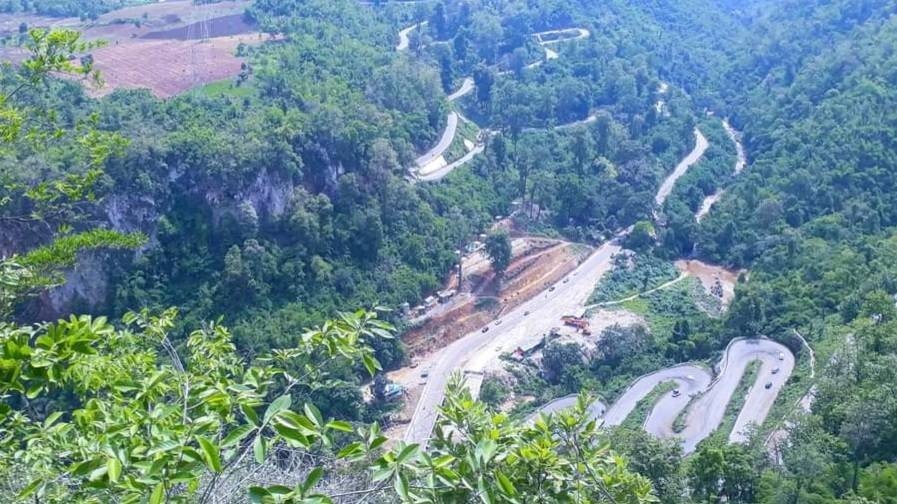
Merchants and drivers report that checkpoint fees and road-clearance bribes extorted at military regime checkpoints along the route from Nawnghkio in northern Shan State to Mandalay have skyrocketed to unprecedented levels.
Since April, the military regime has tightened restrictions on trade routes under its so-called “100-Day Plan.” In an effort to block goods entering from border areas, lower-level checkpoints have intensified extortion and inspections.
Drivers and merchants say controls are particularly severe at checkpoints in Kyaukme, Nawnghkio, Wetwun, and 16-Mile, where commercial cargo trucks face road-clearance fees ranging from 80 million to more than 100 million kyats (approximately US$18,000 to US$22,800).
“Nowadays, apart from food items, they won’t even let clothes or shoes pass. However, if you work with a broker and pay the road-clearance fees, the goods can get through. For a six-wheel truck, you sometimes have to pay between 80 million and 100 million kyats. The military provides security and allows the truck to pass,” a cargo driver from northern Shan State told SHAN.
As transportation costs have surged to astronomical levels, merchants can no longer rely on the direct route, forcing them to take difficult detours through the Mogok-Mattaya and Kyauk Gu-Sithar road sections.
“There are various routes, but no matter which way you go, you still have to pay checkpoint fees. In the past, we could dispatch more than 10 trucks a day, but now we can only send about two or three,” the driver added.
While the military regime claims its restrictions are intended to cut off the flow of goods to areas controlled by ethnic armed organizations, civilians are bearing the direct consequences.
“The restrictions don’t hurt the armed groups; they only hurt the public. Because goods are so difficult to transport, prices have doubled or tripled. People are practically facing starvation,” said a merchant from Muse.
There are currently between 15 and nearly 20 regime checkpoints along the Nawnghkio-Mandalay road, where extortion and inspections target not only cargo trucks but also small passenger vehicles.
While regime leader Min Aung Hlaing claimed at a 100-day milestone event that his administration aimed to boost domestic production and curb imports, locals say systemic corruption at checkpoints and trade blockades have brought commerce to a near standstill, deepening economic hardship across the region.

Leave a Comments