



The Rise of a Proto-State
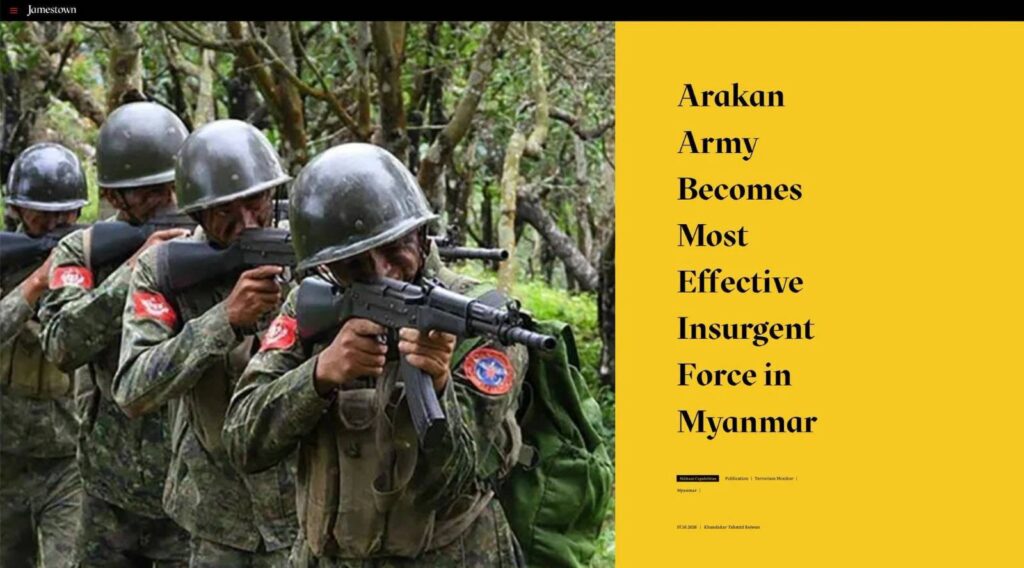
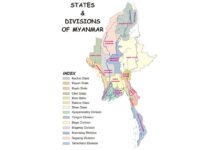
According to a recent study by The Jamestown Foundation, an independent Washington, D.C.-based think tank, the Arakan Army (AA) has emerged as the most powerful and influential rebel group in Myanmar’s decades-long civil war. The report, titled “Arakan Army Becomes Most Effective Insurgent Force in Myanmar” and published on July 16, 2026, details how the AA has seized control of the majority of townships in Rakhine State while actively expanding into neighboring regions to establish a strategic territorial buffer. The paper highlights that the group has successfully instituted pragmatic governance through functioning legal and social frameworks, while simultaneously cultivating strategic alliances to train and supply a nationwide network of armed resistance groups. Furthermore, by controlling critical foreign infrastructure projects, the AA has secured significant geopolitical leverage over both the People’s Republic of China and India, granting it a level of operational autonomy unmatched by other rebel armies. In this context of rising military and political dominance, advocacy for the total independence of Arakan has intensified. Rakhine patriots are increasingly lobbying for a separate political entity, arguing that the group is now entitled to secede from Myanmar to realize its historical sovereignty.
The Strategic Triangle: Sovereignty, Autonomy, and Compromise
The Arakan Army, through its political wing the United League of Arakan, finds itself at a pivotal juncture where military triumph clashes with diplomatic reality. While the core of the “Arakan Dream” has long been framed as a struggle for confederation or high-level autonomy within a federal Myanmar, the momentum of the civil war and the prospect of a junta collapse by late 2027 have reignited whispers of total independence. This shift presents a complex strategic triangle for the Rakhine people: the seductive but perilous path of full sovereignty, the pragmatic and politically viable route of confederation, or the historically rejected compromise of standard federalism.
The Allure and Peril of Total Independence
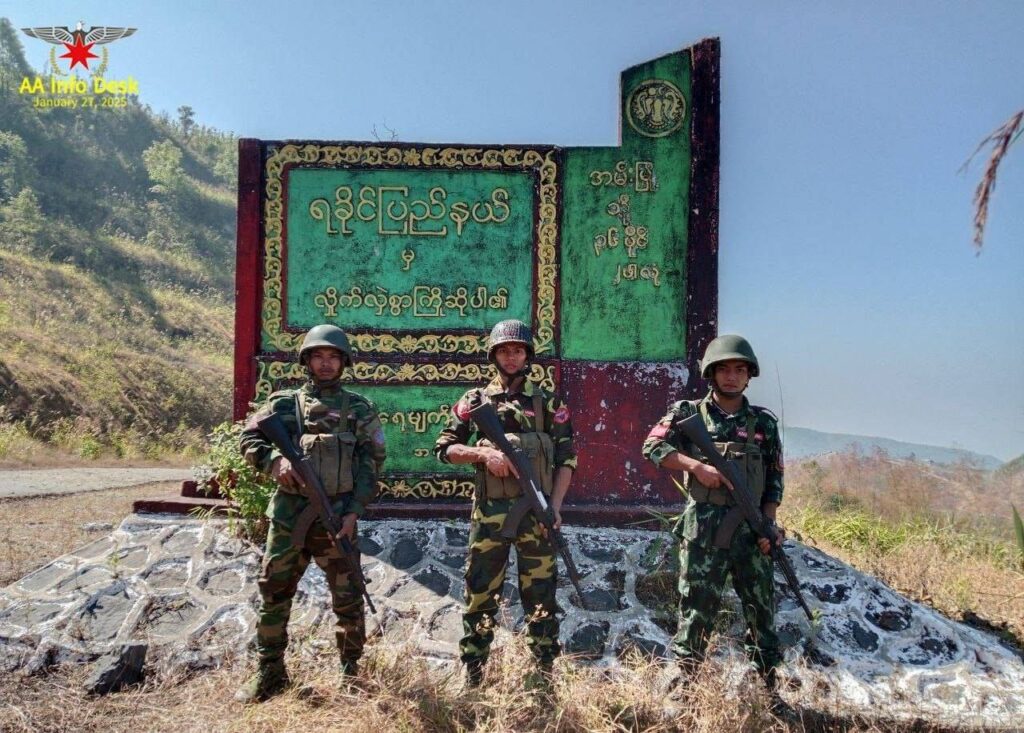
The argument for total independence rests on the historical narrative of the Mrauk U Kingdom and the belief that the current vacuum of power offers a unique window to declare a sovereign nation-state. Proponents within the hardline factions argue that the “Way of Rakhita” has built a de facto state with its own army, bureaucracy, and economic systems, making formal separation a logical conclusion. However, this path faces insurmountable obstacles in the modern geopolitical landscape. The international community, particularly regional powers like China and India, prioritizes the territorial integrity of Myanmar to ensure stability for trade routes and energy corridors. A unilateral declaration of independence would likely result in immediate diplomatic isolation, a blockade of resources, and exclusion from the United Nations, as the Security Council is unlikely to approve a secessionist state without a negotiated settlement. Without recognition, the new nation would struggle to function economically and could become a pariah state, vulnerable to renewed conflict without the backing of the international order.
The Pragmatic Pivot: Confederation as the Middle Path
In contrast, the confederation model represents the strategic sweet spot that aligns with the AA’s current official stance and the practical realities of governance. This approach envisions a loose union where Arakan retains total control over its internal affairs, including taxation, judiciary, and security, while sharing only minimal functions like foreign affairs or a unified defense posture with a central Myanmar body. This model mirrors the autonomy enjoyed by the United Wa State Army, offering the AA the “state-like” control they crave without the diplomatic suicide of secession. It allows the ULA/AA to claim they have achieved the restoration of their historical sovereignty while maintaining a legal framework that keeps them engaged with the broader political process. The primary challenge here remains the trust deficit; convincing a fractured Myanmar central government and the National Unity Government to grant such a high degree of autonomy requires a level of political compromise that has historically been elusive. Yet, as the AA consolidates its military dominance, it gains the leverage necessary to negotiate these terms, making confederation the most feasible path to durable self-rule.
The Rejection of Standard Federalism
The third option, standard federalism, remains the preferred choice for the National Unity Government and many other ethnic groups, but it is increasingly untenable for the Arakan Army. The AA leadership has explicitly dismissed federalism as “under-priced,” viewing it as a continuation of Bamar domination that fails to address their deep-seated grievances of historical betrayal and marginalization. For the Rakhine people, who have long suffered under centralized control, accepting a standard federal arrangement would feel like a surrender of the very goals they have fought for. While this path offers the greatest chance of national unity and broad international support, it fails to satisfy the core aspirations of the AA and its base, making it a political dead end for the Rakhine movement in its current form.
Conclusion: A State Within a State
Ultimately, the most viable and beneficial outcome for the ULA/AA and the Rakhine people lies in a pragmatic evolution of the confederation model. This path allows the AA to cement its control over territory and resources, effectively creating a state within a state, while avoiding the isolation and economic collapse that would accompany a unilateral declaration of independence. The “Arakan Dream” does not need to be an all-or-nothing choice between total sovereignty and federal subjugation. By leveraging their military strength to negotiate a confederal status, the AA can secure the autonomy, dignity, and self-determination that define their vision, ensuring that the “Way of Rakhita” leads to a stable and recognized future rather than a lonely and unrecognized one. The true test will be whether the movement can balance its nationalist fervor with the diplomatic pragmatism required to turn their proto-state into a recognized political reality.






Leave a Comments