




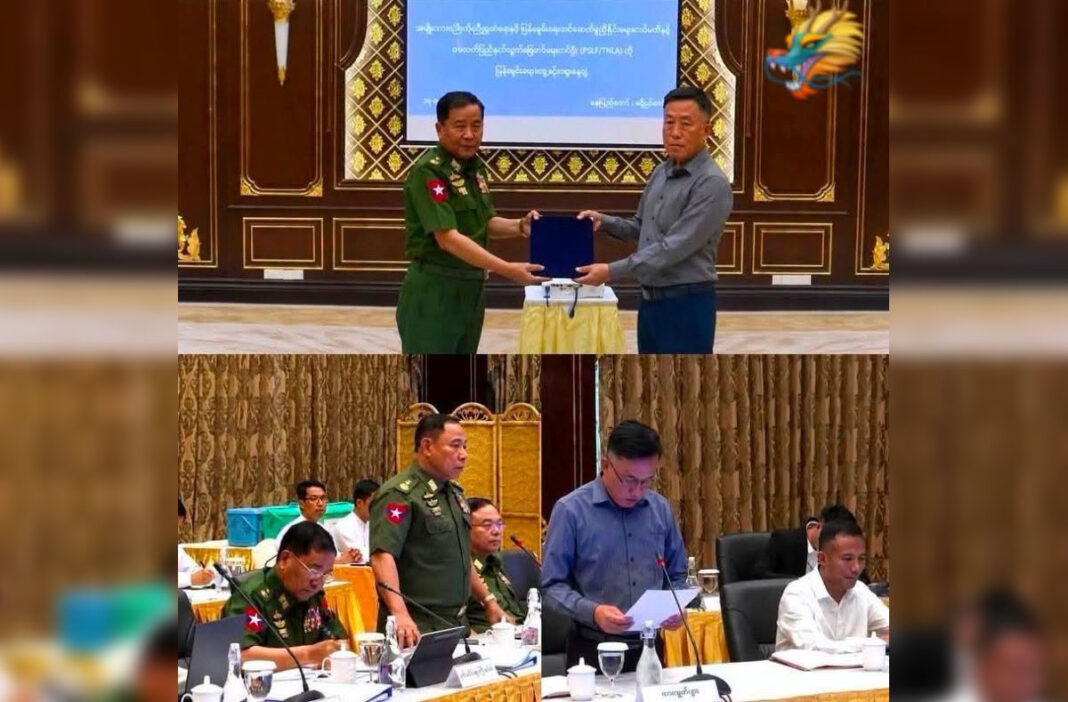
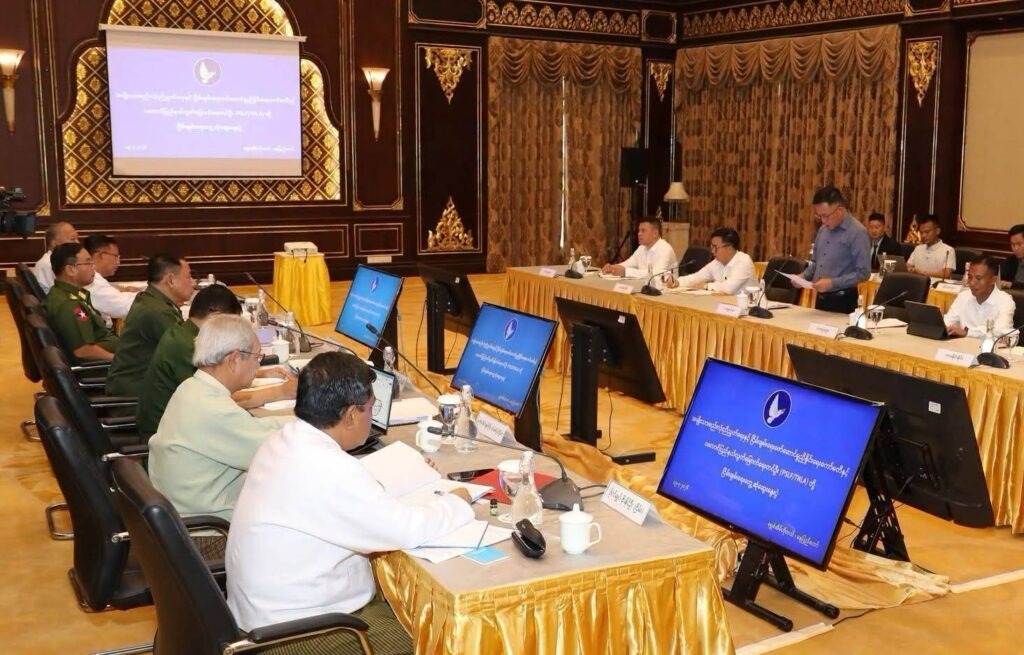
On July 19, 2026, a significant diplomatic exchange occurred in Naypyitaw between the Ta’ang National Liberation Army (TNLA) and the National Solidarity and Peacemaking Negotiation Committee (NSPNC), the military junta’s primary peace arm. During this meeting, the TNLA formally requested that the territories currently under its control be designated as a fully recognized “Ta’ang State.” In response, the NSPNC indicated that such a transformation could be effected through the existing mechanisms of the Myanmar military-drafted 2008 Constitution.
This response, while seemingly offering a legal pathway, masks a profound structural trap. The 2008 Constitution is engineered with such stringent requirements that the creation of a new ethnic state is practically impossible without the military’s explicit, voluntary consent—a scenario that contradicts the junta’s fundamental interest in maintaining the status quo. To understand the impossibility of this request under current law, one must examine the four-stage constitutional gauntlet that stands between the TNLA’s ambition and realization.
The Legislative Gauntlet of the 2008 Constitution
The process begins with the submission of a draft constitutional amendment to the Pyidaungsu Hluttaw, the Union Parliament. To even enter the legislative agenda, this bill must secure signatures from 20 percent of all parliamentary representatives. If this initial threshold is not met, the proposal is effectively dead on arrival, never reaching the floor for debate. This first hurdle alone ensures that only the most politically viable or military-sanctioned amendments can proceed.
Assuming the bill clears the submission threshold, it enters the second and most critical stage: the vote for approval. The constitution mandates a 75 percent supermajority of all representatives to pass the amendment. Here, the military’s absolute control becomes the insurmountable barrier. The Tatmadaw holds a constitutionally guaranteed 25 percent of all parliamentary seats, appointed rather than elected. To achieve the required 75 percent, the military must vote in favor, or at minimum abstain, while every single civilian representative must vote yes. In practice, if the military simply votes “no,” the proposal is killed instantly. The 25 percent quota acts as an absolute veto, rendering the creation of a new state legally impossible unless the military explicitly desires it.
The Regional and National Hurdles
Even if the impossible were to happen and the Union Parliament approved the bill, the third stage presents a formidable political challenge: securing the consent of the Shan State Parliament and Government. The proposed “Ta’ang State” has no historical precedent as an independent entity; its territory lies entirely within the current boundaries of Shan State. Creating a new state requires the agreement of the existing state from which land is being seceded. Given the complex history, overlapping claims, and political tensions between Ta’ang and Shan groups, negotiating this consent is a diplomatic minefield that the military and Shan state authorities are unlikely to clear.
The fourth and final legal step is a national referendum. According to Article 436(a) of the Constitution, in addition to the parliamentary vote, the amendment must be approved by more than 50 percent of all eligible voters nationwide. This requirement means that a localized demand for a small ethnic state must win a majority vote across the entire country of Myanmar. Given the demographic distribution and the political fragmentation of the nation, achieving a national majority for a specific, localized statehood demand is statistically improbable. A proposal that seeks to carve out a new state would likely be rejected by the majority of voters who do not reside in the affected region.
Only after surviving these four rigorous stages would the document be submitted to the President for a signature. However, given that the President is effectively vetted by the military under the 2008 framework, the final step is merely a formality if the earlier steps are cleared. The entire process is designed to ensure that no constitutional change occurs against the will of the military, making the creation of a Ta’ang State under this framework a legal dead end.
From Battlefield to Diplomatic Stalemate
The TNLA’s pivot to political negotiation must be viewed against the backdrop of recent military realities. On October 27, 2023, the TNLA, alongside its sister alliances the MNDAA (Kokang) and AA (Arakan Army), launched “Operation 1027”. This offensive inflicted unprecedented casualties on the junta and expanded TNLA control over a dozen townships in northern Shan State.
However, the momentum was checked by geopolitical realities. On the second anniversary of the operation, due to intense pressure and intervention from China, the TNLA declared a ceasefire and returned several key towns to the military. This shift from battlefield dominance to diplomatic engagement on July 19, 2026, reflects the TNLA’s pragmatic acknowledgment that military victory alone cannot secure international or legal recognition. The request for statehood through the 2008 Constitution appears to be an attempt to legitimize their de facto control, but the junta’s suggestion to use the existing law is a diplomatic deflection.
The Verdict: A Legal Impossibility
The NSPNC’s suggestion to use the 2008 Constitution is, in effect, a polite rejection. By pointing to a process that requires the military’s own self-sabotage (voting against its 25% veto power), the junta signals that legal statehood for the Ta’ang is not on the table. For the TNLA, the dream of a “Ta’ang State” under the 2008 Constitution is a legal impossibility.
The only viable path to statehood lies outside this framework—through a revolutionary “bottom-up” approach that abolishes the 2008 Constitution entirely and establishes a new federal union. However, as seen in the recent ceasefire, the TNLA’s autonomy remains heavily constrained by China’s geopolitical interests and the complex, multi-ethnic reality of northern Shan State. Until the constitutional architecture of Myanmar is fundamentally rewritten, the TNLA will remain a powerful de facto authority, but the de jure status of a state remains an elusive aspiration.









Leave a Comments