


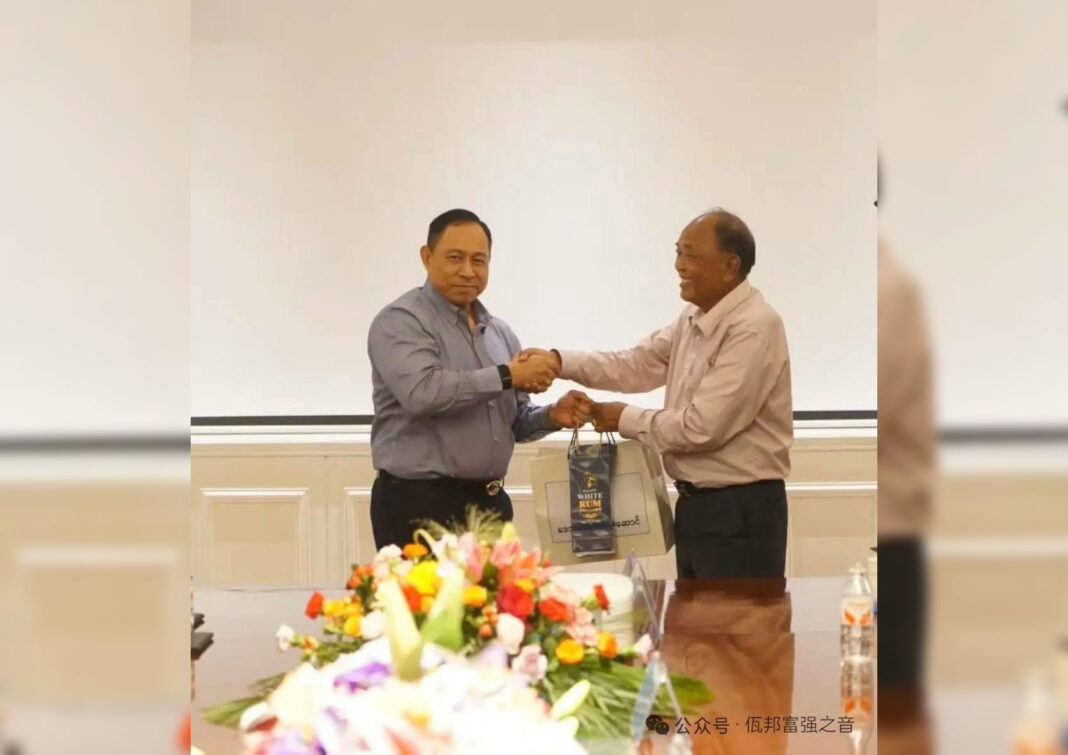
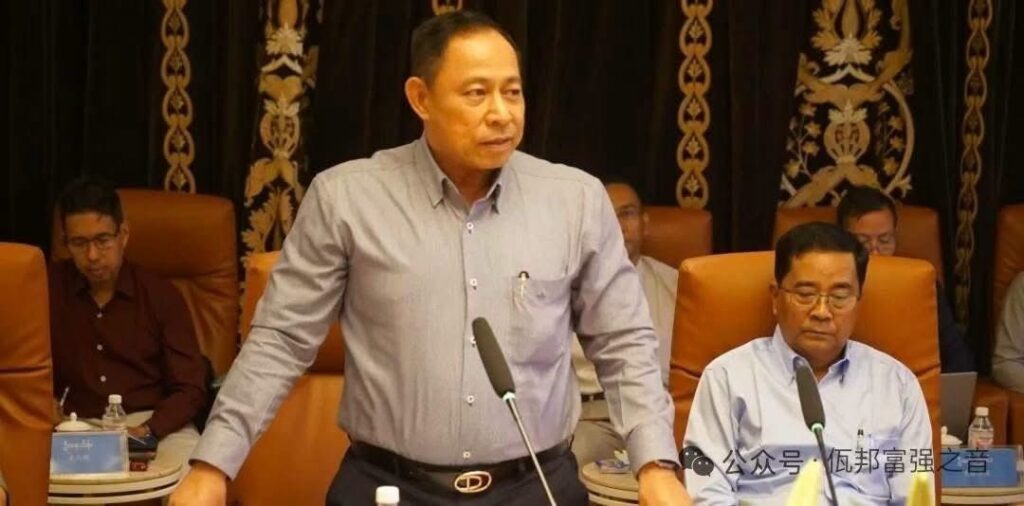
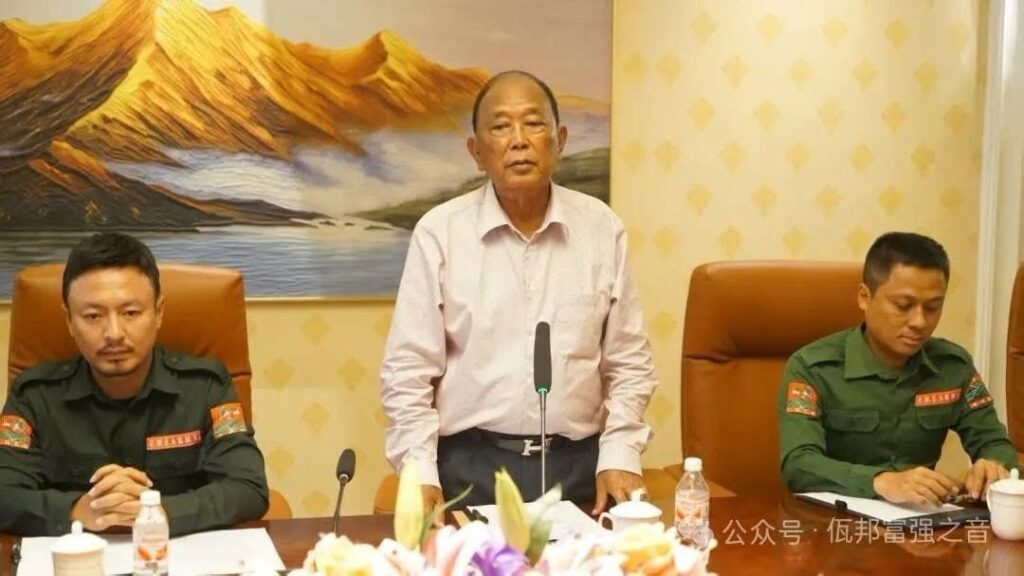
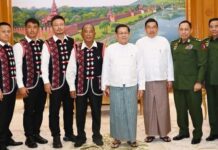
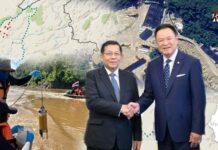
In mid-June, a high-level delegation led by Lt-Gen Yar Pyae, Chairman of the National Solidarity and Peacemaking Negotiation Committee (NSPNC), traveled to Shan State to conduct peace talks with two major armed groups along the China border. On June 17, the delegation met with the National Democratic Alliance Army (NDAA) in Mongla. During this session, Lt-Gen Yar Pyae presented the new government’s peace invitation and outlined the roadmap for the upcoming peace process. The meeting yielded a notably warm response from NDAA Chairman U Htein Lin, who expressed “great joy and pride” regarding President Min Aung Hlaing’s assumption of office. The NDAA leadership explicitly praised the President’s focus on peace, national reconciliation, education, and economic development, declaring their readiness to cooperate actively to safeguard state sovereignty and promote regional stability. Following the high-level talks, NDAA Vice-Chairman U San Pae provided updates on ongoing development activities in the area.
The following day, June 18, Lt-Gen Yar Pyae’s delegation proceeded to Panghsang to hold talks with the United Wa State Party (UWSP) and its military wing, the UWSA. The NSPNC Chairman discussed the proposed formation of three peace committees and the future trajectory of the peace process. In response, UWSP Vice-Chairman U Kyauk Kaw Ann reaffirmed the organization’s steadfast commitment to the non-disintegration of the Union and national solidarity. He emphasized the group’s desire to further advance the peace process under the leadership of the new President and Union Government, aiming to resolve differences through political dialogue, improve public livelihoods, and drive regional development.
These interactions highlight a sharp contrast in the responses of different armed groups. While the Arakan Army (AA) and Kachin Independence Army (KIA) have rejected the junta’s legitimacy and demanded inclusive negotiations with the National Unity Government (NUG), the NDAA and UWSA have welcomed the junta’s overtures. Their positive reception and willingness to engage in bilateral talks under the new administration’s framework effectively validate the junta’s claim to legitimacy, potentially isolating the resistance forces and securing the northern border for the military. However, this selective engagement only underscores the fundamental flaws of the broader “100 Days Peace Initiative.”
The Mirage of Credibility
The military junta’s “100 Days Peace Initiative,” set to conclude on July 31, is fundamentally undermined by a catastrophic lack of trust. At the helm of this strategy stands Min Aung Hlaing, a figure whom the resistance coalition—including the Steering Council for the Emergence of a Federal Democratic Union (SCEF), the National Unity Government (NUG), its armed wing the People’s Defense Forces (PDF), and the four major Ethnic Armed Organizations (EAOs)—view as the primary architect of the 2021 coup and the subsequent devastation. Consequently, the resistance has maintained a consistent stance that genuine peace is impossible while Min Aung Hlaing retains power. The initiative is widely perceived not as a sincere offer of reconciliation, but as a calculated delay tactic designed to buy time. This skepticism is rooted in a long history of broken ceasefires, where the military has repeatedly signed agreements only to shatter them when they served their military interests, such as during the 2023 offensives and Operation 1027.
The Failure of Divide and Rule
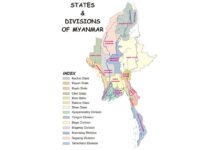
The junta’s specific strategy to fracture the resistance through a “divide and rule” approach appears to be backfiring rather than succeeding. Instead of isolating the Arakan Army (AA) or luring the Kachin Independence Army (KIA) into separate deals, the Junta’s exclusionary tactics are likely strengthening the bonds between these groups. The KIA has firmly rejected the notion of bilateral talks, insisting that any dialogue must be all-inclusive and involve the NUG and the broader resistance alliance. Similarly, the deliberate exclusion of the AA has not weakened their resolve; instead, the Arakan Army has intensified its multi-front operations in the Ayeyawaddy, Magway, and Sagaing regions, as well as in Kachin and Chin states, proving that military pressure is not breaking their morale. Rather than driving wedges between the ethnic and democratic forces, the Junta’s actions are forcing the AA, KIA, and other groups to coordinate more closely within the SCEF and other alliances, effectively solidifying their united front against the military.
The Disconnect Between Rhetoric and Reality
A stark contradiction exists between the junta’s political rhetoric of peace and the military reality on the ground. While the NSPNC, led by its Chairman Lt-Gen Yar Pyae, engages in diplomatic overtures, the military is simultaneously launching aggressive offensives in Rakhine, Chin, and Sagaing. The “100 Days” proposal is increasingly viewed as a cover to regroup troops and redeploy forces for a major assault on the Arakan Army, rather than a genuine attempt to de-escalate. Furthermore, the initiative demands that ethnic groups accept a “watered-down” version of federalism or lay down their arms without addressing the core political demands of the resistance: dismantling the 2008 Constitution, stripping the military of its political power, and establishing a true federal democracy. Without these fundamental concessions, the peace talks are destined to remain a hollow exercise.
The Limits of External Influence
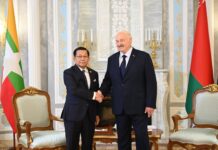
The role of international actors, particularly China, also limits the potential success of this initiative. While China supports the peace talks to ensure border stability, their primary interest lies in maintaining order rather than resolving the political roots of the conflict. China is unlikely to pressure the Junta into making genuine political concessions that could destabilize the region or threaten China’s strategic interests. While Beijing can encourage dialogue, they cannot force the military to share power or compel the resistance to accept a military-led government. This external constraint means the initiative lacks the necessary leverage to bridge the widening gap between the junta’s demands and the resistance’s aspirations.
The Inevitable Conclusion
Ultimately, the 100-day timeline is too short to resolve decades of conflict, especially given the active warfare on multiple fronts. The initiative is likely a symbolic gesture intended to create an appearance of progress for domestic and international audiences. By the time the July 31 deadline arrives, it is highly probable that the Junta will claim “partial success” in securing the northern border through temporary truces with groups like the UWSA and Mongla. These groups have maintained bilateral ceasefire arrangements with the military junta since 1989, following the disintegration of the Communist Party of Burma (CPB), yet they have notably refused to sign the Nationwide Ceasefire Agreement (NCA) of October 2015 under the Thein Sein regime. This historical precedent highlights that the Junta is merely reactivating old, limited arrangements while ignoring the broader political crisis. The conflict is expected to intensify in August as the military redirects its full force against the AA and other resistance movements. Unless there is a fundamental shift in the military’s political stance—a scenario currently deemed impossible—the 100 Days Peace Initiative will fail to achieve its stated goals, serving only as a tactical pause in a much larger war.
The Path Forward
At the end of the day, the military-oligarchy and its clique must come to terms with reality and abandon their eternal doctrine of military supremacy. To achieve peaceful cohabitation, ethnic rights of self-determination, minority rights, equality, and true democracy, they must earnestly address the aspirations of the people and facilitate a transformation of society into a genuine federal democratic union. Stubbornly clinging to the doctrine of military supremacy will only guarantee the disintegration of the country, leading to certain fragmentation or the transformation of Myanmar into a failed state.


Leave a Comments