



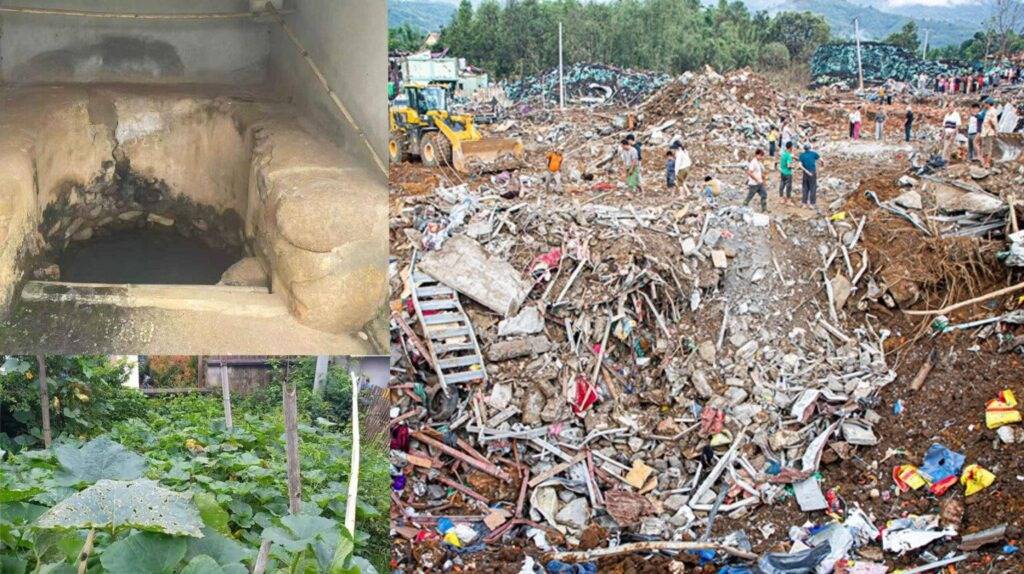
Residents of Kawng Tap Village are facing a growing environmental crisis in the aftermath of the May 31 warehouse explosion, fearing that toxic chemical residue from the blast may have contaminated local water sources and agricultural land.
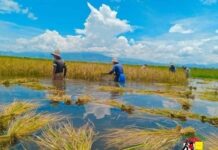
The explosion, which occurred at a storage facility operated by the Ta’ang National Liberation Army (TNLA) and used to store mining explosives, blanketed the surrounding area with fine chemical dust and soot. Villagers say the unidentified residue has settled on crops and may have seeped into wells and streams that communities rely on for drinking water and irrigation.
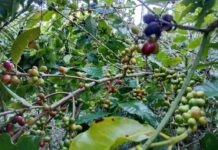
“Immediately after the explosion, we couldn’t even return to check our farms,” a local woman told SHAN. “When we finally did, we found a fine white powder covering the leaves of our vegetables. There is no one here to test whether the residue is toxic. We have been soaking the vegetables in saltwater and washing them thoroughly before we dare cook them.”
Concerns over possible contamination extend to local water sources. Humanitarian volunteers have warned residents to take precautions, although the absence of professional environmental testing has left many questions unanswered.
“Residents are still using wells and streams near the blast site,” a volunteer said. “We are deeply concerned about the safety of water and food that may have been contaminated by explosive residue. We are urging people to boil their drinking water and thoroughly soak produce in saltwater before consumption.”
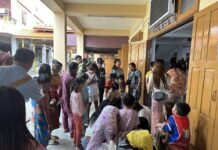
The environmental concerns come as recovery efforts continue to face significant challenges. More than 600 people were displaced by the explosion, which affected approximately 15 villages and urban wards. Survivors say the assistance provided so far falls short of what is needed to rebuild their lives.
While humanitarian organizations have distributed emergency aid, including food and plastic tarpaulins, residents say financial support for reconstruction remains inadequate. Many households reportedly received only 500,000 kyats in assistance, an amount they say is insufficient to cover basic rebuilding costs.
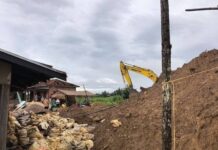
“Every family has different needs, but everyone is struggling financially,” a local resident said. “Many homes were completely destroyed, making reconstruction extremely difficult. People have been unable to return to work, and because our village is not wealthy, those without savings have no means to begin rebuilding.”
According to local rescue teams, the final death toll from the explosion has exceeded 70, with more than 100 people injured.
As the immediate shock of the disaster subsides, affected communities face a long-term struggle to secure safe water, uncontaminated food, and the resources needed to rebuild their homes and livelihoods amid growing fears that the surrounding environment may remain hazardous.




Leave a Comments