



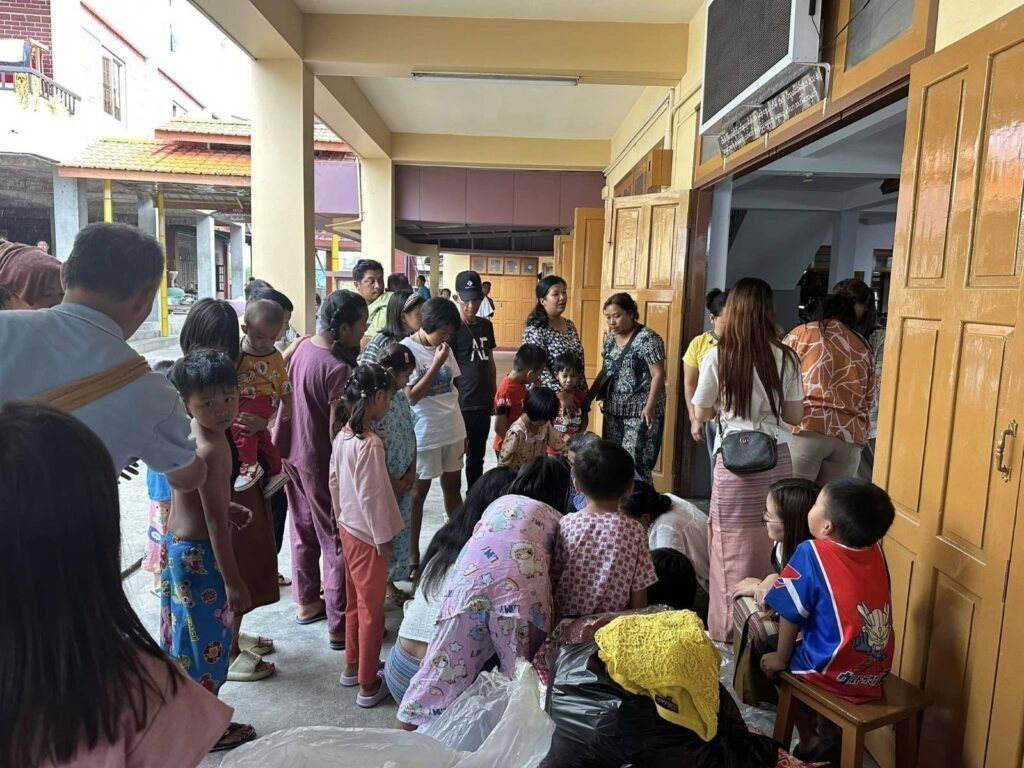
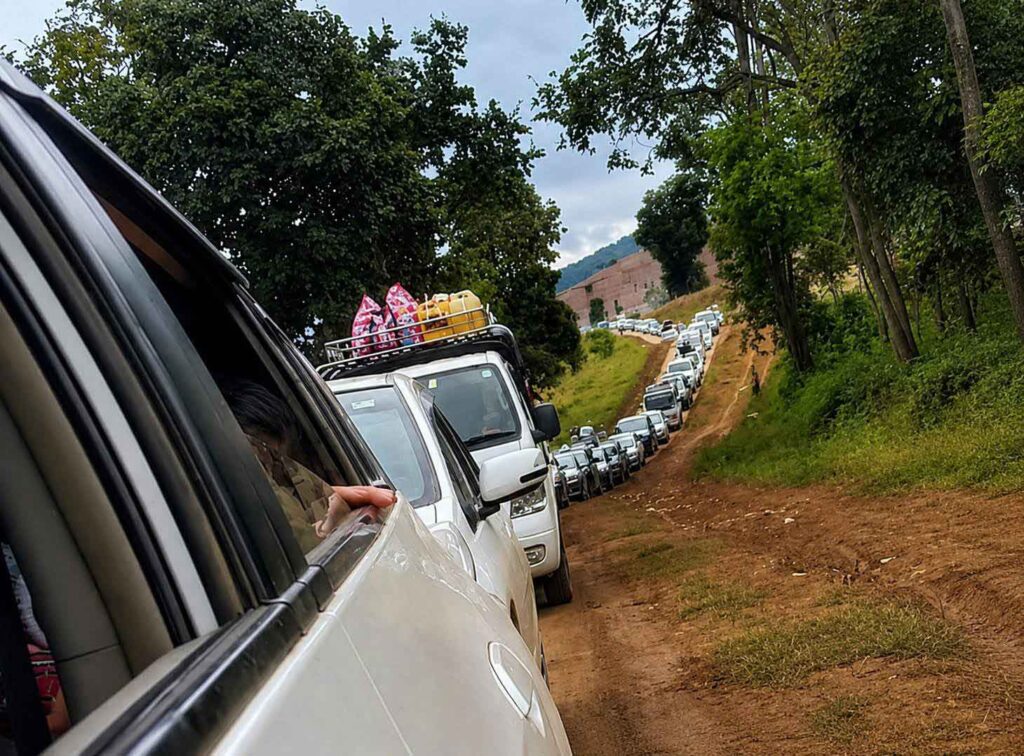
Karenni civilians who fled the fighting that erupted in November 2023 and sought refuge in Taunggyi Township are facing a renewed crisis. Displaced residents say the military junta is using threats of property confiscation alongside systemic extortion to pressure them into returning to their homes in Karenni State, where many insist conditions remain too dangerous.
Following the outbreak of intense fighting in late 2023, thousands of residents from Mong Pai (Mobye), Pai Khun (Pekhon), and Demoso fled to Taunggyi in search of safety. Although the number of internally displaced persons (IDPs) in the township has declined since the initial wave of displacement, those who remain describe a persistent cycle of intimidation and exploitation.
“They are forcing us to return,” one displaced woman told SHAN. “Even if we go back, they cannot guarantee our safety, and our homes no longer exist. They tell us to stay in monasteries or schools. People are only returning because they are afraid their land will be confiscated, but the living conditions there are not suitable at all.”
In addition to the threat posed by uncleared landmines in their home villages, many IDPs believe the junta’s repatriation campaign is intended to use civilians as human shields or to create a false impression that the region has returned to normal.
For those who refuse to return, life in Taunggyi has become an ongoing struggle. Displaced families say they face discriminatory fees and systematic extortion by local administrators, who treat the remaining IDP population as a source of revenue.
One of the most significant burdens is the cost of accessing basic infrastructure. IDPs living in villages including Naung Kar, Tadar Mee Laung, Don Khara, and Nyo Mee say local authorities have demanded up to 3 million Kyats for an electricity connection.
“They told us it would cost 3 million Kyats to get electricity,” the displaced woman said. “If local residents apply, it only costs around 100,000 Kyats. We cannot afford it, so we rely on solar power. When the batteries run out, we have to use candles.”
For families struggling to meet their daily food needs, 3 million Kyats represents nearly six months of basic living expenses.
The financial pressure is compounded by administrative harassment. IDPs are required to register as “guests” with ward or village administrators every month, a bureaucratic requirement that carries a mandatory fee of 30,000 Kyats each time. Those who fail to comply often face additional scrutiny.
“They isolate the IDPs. Even in the wards and villages where we live, we are treated differently,” a 50-year-old displaced man said. “The ward offices and administrators require us to register as guests every month, and we have to pay 30,000 Kyats each time. Sometimes, they even come to collect so-called ‘military service’ levies.”
Employment opportunities remain limited, and those who do find work often face wage discrimination. According to the displaced man, IDP laborers are routinely paid far less than local workers for the same jobs.
“I take whatever odd jobs I can find. My wages are only half of what local workers earn. While others might receive 20,000 Kyats, we IDPs are paid only 10,000,” he said.
Despite threats of land confiscation, exorbitant electricity fees, and persistent administrative harassment, many families remain in Taunggyi because returning to homes destroyed by war is simply not an option.
Nearly three years after the conflict began, these families remain trapped in displacement, paying an increasingly heavy price simply for the right to stay where they have sought refuge.




Leave a Comments