




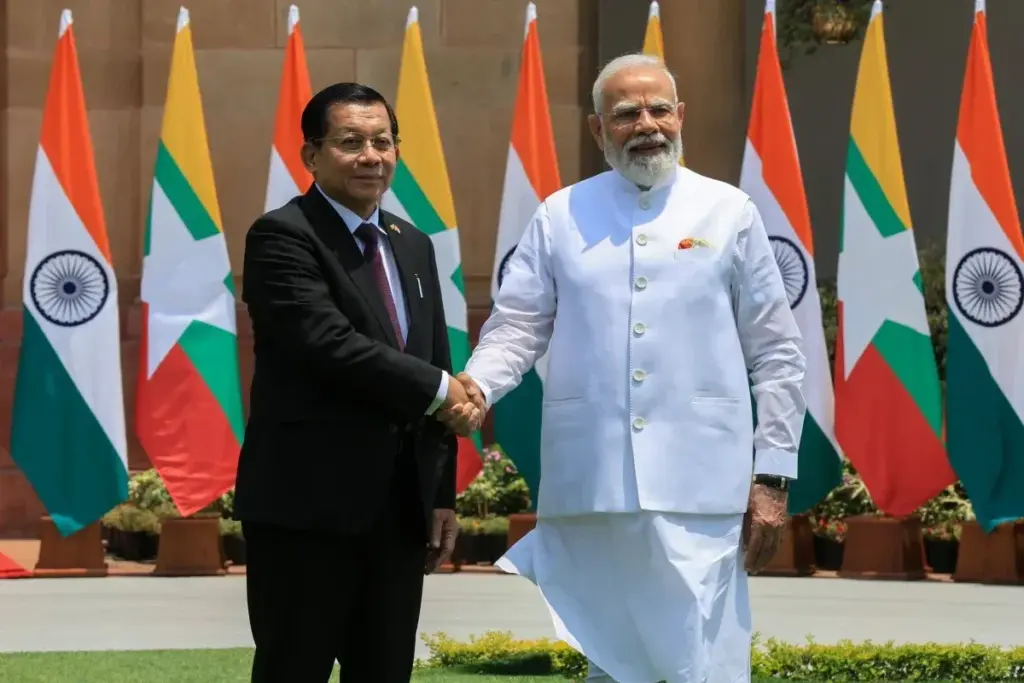
In a move that has sent ripples through the diplomatic community, India recently rolled out the red carpet for Min Aung Hlaing, the military leader of Myanmar, welcoming him to New Delhi as the country’s “President.” For a nation that prides itself on being the world’s largest democracy, the choice to host a leader accused of war crimes and crimes against humanity feels jarring. Critics have asked: “Why would India legitimize a tyrant?”
The answer lies not in moral confusion, but in cold, hard geopolitics. India is playing a dangerous game of chess, trying to balance its democratic values against the urgent need to secure its borders and counter China’s growing dominance in Southeast Asia. But as the civil war in Myanmar deepens and the military junta’s grip on power slips, India’s strategy is facing a reality check that could render its efforts futile.
The Logic of “Pragmatism”
India’s foreign ministry has made its stance clear: engagement is better than isolation. The logic is straightforward. If India turns its back on the military regime in Naypyidaw, it creates a vacuum. And in geopolitics, vacuums are filled by others. In this case, that “other” is China.
China has already woven itself into the fabric of Myanmar’s economy and security. It controls oil and gas pipelines, funds infrastructure, and maintains influence over both the military and various ethnic rebel groups. India fears that if it disengages, Myanmar will become a Chinese satellite state, encircling India’s sensitive northeastern border and cutting off its connectivity projects like the Kaladan corridor.
By welcoming Min Aung Hlaing, India hopes to break the junta’s total reliance on Beijing. It wants to be seen as a reliable partner, offering trade, security cooperation, and a diplomatic lifeline. The goal is to ensure that Myanmar remains a neutral buffer, not a Chinese proxy.

The Illusion of Control
However, there is a major flaw in this plan. While India is engaging with the military in the capital, the reality on the ground is that the military no longer controls much of the country—especially the border regions that matter most to India.
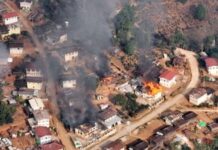
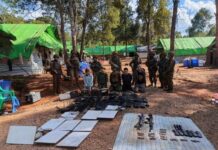
The Myanmar military is currently fighting for its survival against a coalition of ethnic armed groups and pro-democracy forces. In many border areas, the junta’s writ does not run. Instead, local militias and resistance groups hold the power. When Min Aung Hlaing promises India that his territory won’t be used to host Indian rebels, he is making a promise he may not be able to keep.
This creates a paradox: India is betting its security on a government that is losing its grip on the very land it needs to police. If the junta cannot control the border, then the security agreements signed in New Delhi are merely pieces of paper.
The “Dual-Track” Dilemma
Recognizing this fragility, India is trying to walk a tightrope. While it formally recognizes the junta, there are whispers of informal, backchannel communications with the opposition, including the National Unity Government (NUG) and various ethnic groups. This allows India to hedge its bets. If the junta falls, India hopes to have a line open to the next power.
Meanwhile, the opposition has been actively courting international support on the global stage. The Steering Council for the Emergence of a Federal Democratic Union (SCEF), of which the NUG is a member, has been diligently engaging with the UN, ASEAN, Western democracies, and key neighbors. While no detailed public travel schedule for SCEF leaders has been released, their diplomatic footprint is growing.
Just recently, on June 3, a delegation from the SCEF met with the Canadian government and members of parliament in Ottawa. Robert Oliphant, Parliamentary Secretary to the Minister of Foreign Affairs, affirmed Canada’s strong support for the people of Myanmar, stressing the urgent need to end hostilities and ensure unhindered humanitarian access. The delegation outlined their goals, shared updates on the ground, and explored further cooperation with MPs Garnett Genuis and Adam Chambers of the Parliamentary Friends of Democratic Burma. They also met with civil society organizations to address humanitarian aid and federal issues.
These international efforts highlight a shifting landscape where the opposition is gaining traction, even as India maintains its formal ties with the junta. But this “dual-track” approach is fraught with risk. If India is caught openly supporting the opposition, the junta may retaliate by cutting off security cooperation or pushing closer to China. Conversely, if India ignores the opposition entirely, it risks being left with no influence when the civil war inevitably reshapes the country.
Will the Gamble Pay Off?
The likelihood of India achieving its goals is uncertain at best.
Countering China: India can offer the junta a diplomatic alternative, but it cannot match China’s economic muscle. Beijing will likely remain the dominant player, and India’s influence will remain secondary.
Border Security: Without control of the border regions, the junta cannot guarantee safety for India. The threat of cross-border insurgency and instability will likely persist, regardless of diplomatic niceties.
Economic Access: The promise of rare earth minerals and trade is enticing, but the ongoing war makes large-scale investment risky. Resources may remain locked away in conflict zones.
The Verdict
India’s decision to legitimize the Myanmar junta is a defensive move, born of necessity rather than choice. It is an attempt to prevent a worse outcome: total Chinese hegemony. But in trying to secure its interests, India risks alienating the very people who might eventually win the conflict—the pro-democracy forces.
The junta’s “quasi-civilian” regime is fragile, and its promises are shaky. By betting on a losing horse, India may find itself stranded on the wrong side of history. The red carpet welcome for Min Aung Hlaing might look like a diplomatic victory today, but it could prove to be a costly miscalculation tomorrow.
In the end, India’s strategy is a high-stakes gamble. It hopes that engagement will stabilize the region, but the reality of Myanmar’s fragmented civil war suggests that no amount of diplomacy can fix a country that is falling apart. Until the dust settles, India’s goals in Myanmar will likely remain out of reach.






Leave a Comments