


Reviving the Cambodia Model to End the Civil War and Build a Federal Union
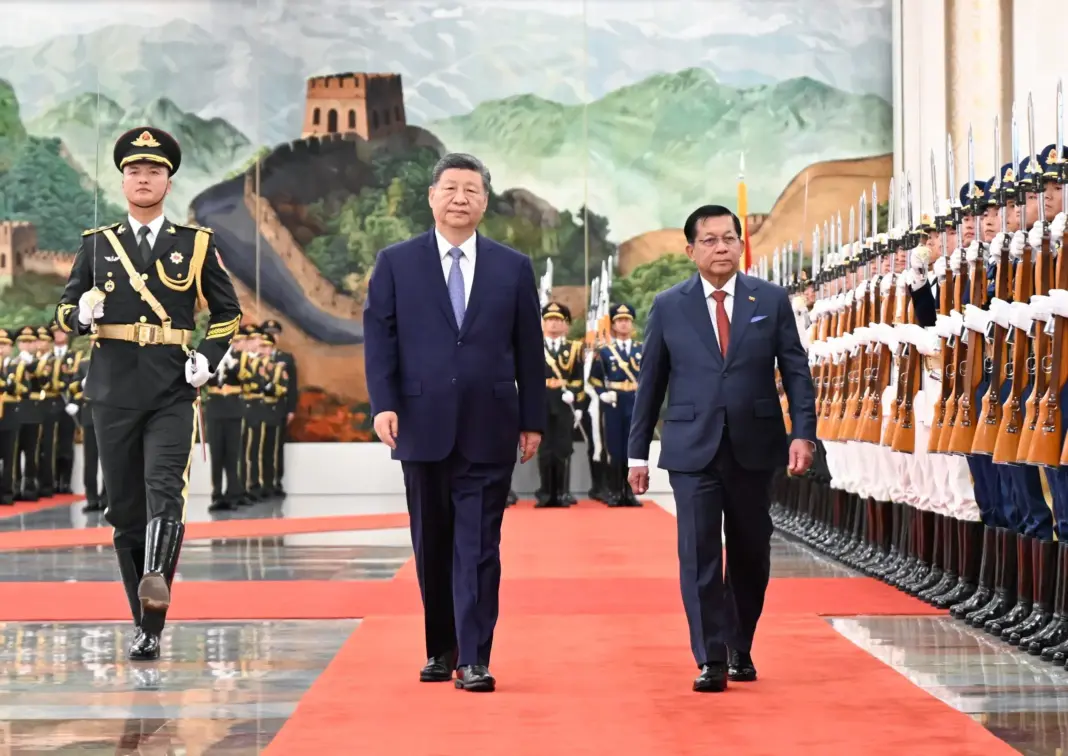
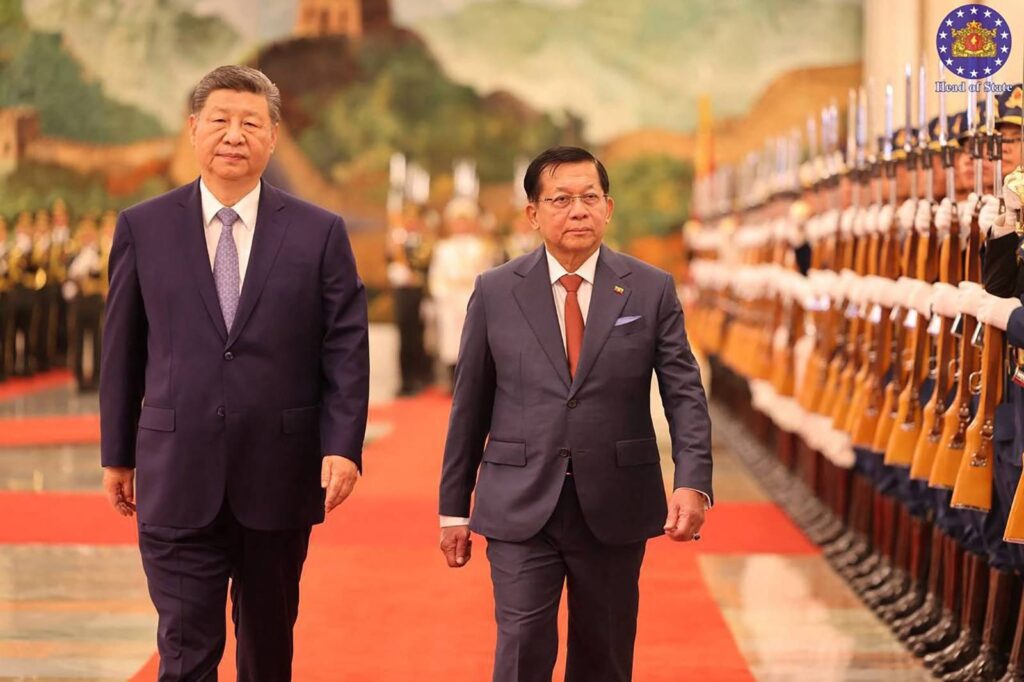
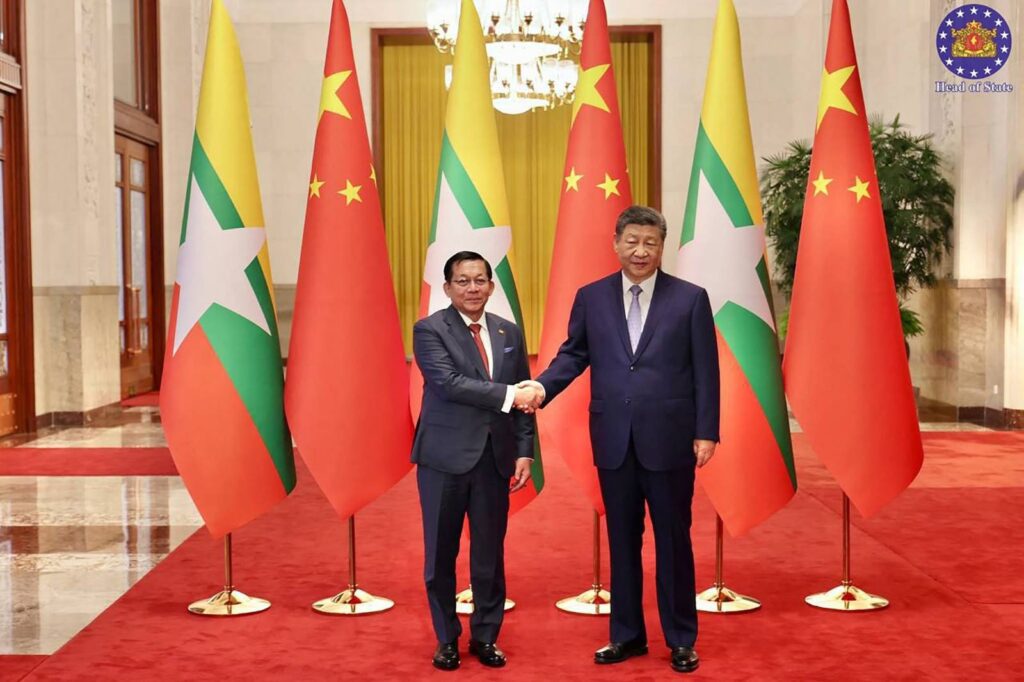
The recent state visit of Myanmar’s President Min Aung Hlaing to Beijing in June 2026, marked by the full diplomatic honors of a “red carpet” welcome, has starkly illuminated the geopolitical reality of the region. China’s engagement with the military regime is not driven by a desire for democratic reform or human rights, but by a cold calculus of strategic necessity. Beijing’s primary objective is the security and uninterrupted operation of the China-Myanmar Economic Corridor (CMEC), a vast infrastructure network including deep-sea ports, railways, and pipelines that offers China a direct route to the Indian Ocean, bypassing the strategic chokepoint of the Malacca Strait.
During the visit, President Xi Jinping extracted explicit commitments from Min Aung Hlaing to guarantee the safety of these projects, secure the volatile border regions of Kachin and Shan states for rare earth mining, and eradicate online scam networks that target Chinese citizens. In exchange, Beijing provided the junta with a rare stamp of diplomatic legitimacy, treating the former coup leader as a full partner despite his record of war crimes and the illegitimacy of his recent sham elections. This transactional approach underscores a fundamental reality: as long as China views the military as the sole bulwark against state collapse, it will continue to prop up a regime that is increasingly isolated from the will of its own people.
The current trajectory, where the junta relies on Chinese patronage to survive while the resistance movement fractures under the weight of a prolonged war, is unsustainable. The only viable alternative to this endless cycle of violence is a comprehensive, internationally mediated peace process. Drawing inspiration from the successful United Nations Transitional Authority in Cambodia (UNTAC) of the early 1990s, a new framework is required that prioritizes an immediate cessation of hostilities followed by an inclusive political dialogue. The Cambodia model demonstrated that even deeply entrenched conflicts could be resolved through a robust UN mandate that disarmed factions, administered a transitional period, and organized free elections.
For Myanmar, this would entail the appointment of a UN Special Envoy with a binding Security Council mandate to oversee a Comprehensive Ceasefire Agreement. Unlike the current ASEAN Five-Point Consensus, which the junta has largely ignored, a UN-led mission would carry the weight of international law and the capacity to deploy neutral observers to monitor compliance on the ground. The immediate priority, as recently emphasized by figures such as East Timor’s President José Manuel Ramos-Horta , must be a humanitarian ceasefire that stops the bleeding, allowing aid to reach displaced populations and creating the necessary breathing room for political negotiations.
This proposed mediation process would bring all major stakeholders to the table under a unified framework.
The Steering Council for the Emergence of a Federal Democratic Union (SCEF), which has recently unified the National Unity Government (NUG) with major Ethnic Armed Organizations (EAOs) like the Kachin Independence Organization, Karenni National Progressive Party, the Karen National Union and Chin National Front, represents the most coherent political voice for the Myanmar people. A UN-facilitated conference would recognize the SCEF as the legitimate representative of the democratic opposition, while also engaging the military junta, not as a victor, but as a party to be held accountable and integrated into a new power-sharing arrangement. The goal of these talks would be to negotiate a new federal constitution that guarantees ethnic rights, civilian supremacy over the military, and a fair distribution of resources. This approach moves beyond the false choice between military dictatorship and chaotic anarchy, offering a third path: a federal democratic union that reflects the diverse aspirations of Myanmar’s people.
For this framework to succeed, specific actions and restraints are required from the three primary actors involved: the military junta, the people’s resistance forces, and the People’s Republic of China.
The Myanmar military clique, currently led by Min Aung Hlaing, must fundamentally alter its strategy. The junta should immediately declare a unilateral ceasefire and halt all airstrikes on civilian populations, a prerequisite for any credible peace talk. It must release all political prisoners, including Aung San Suu Kyi, as a gesture of good faith, and commit to a genuine dialogue where it accepts the SCEF and NUG as equal partners rather than adversaries to be crushed. Crucially, the military must accept the presence of UN observers to verify its compliance with the ceasefire. Conversely, the junta must cease its reliance on foreign mercenaries from Russia and Iran, stop using food and medicine as weapons of war, and abandon any attempts to legitimize its rule through fraudulent elections or “reconciliation” deals that exclude key stakeholders. Continued aggression and the refusal to engage in good faith will only deepen its isolation and ensure its eventual defeat.
The people’s aspirations, represented by the SCEF, the NUG, and their allied political parties, must also demonstrate strategic maturity. The resistance should leverage its recent unification to present a single, coherent diplomatic front to the international community, avoiding the fragmentation that has historically weakened its position. It must prioritize the protection of civilians and the delivery of humanitarian aid in liberated areas to maintain its moral high ground and international support. While holding firm on the core principles of federalism and democracy, the resistance must be prepared to engage in good-faith negotiations, understanding that a federal union requires compromise on the specifics of power-sharing and resource distribution. It should actively invite UN and neutral regional mediators to facilitate talks, ensuring that any agreement is backed by international guarantees. However, the resistance must avoid demanding the unconditional surrender of the junta before talks begin, as this could derail the process, and must strictly refrain from any actions that harm civilians or violate international humanitarian law, which would undermine its legitimacy.
Finally, the role of China is pivotal and requires a significant shift in policy. Beijing must recognize that its current strategy of propping up a failing military regime is ultimately detrimental to its long-term economic interests. A prolonged civil war disrupts the very supply chains and infrastructure projects China seeks to protect. Therefore, China should use its immense leverage to pressure the junta into accepting a UN-mediated ceasefire and inclusive political dialogue. It should support the SCEF’s federal vision as the only viable path to long-term stability, which is far more beneficial than a chaotic, war-torn neighbor. China must guarantee the security of CMEC projects through neutral, UN-monitored mechanisms rather than relying solely on the military’s protection. Conversely, Beijing must stop supplying arms to the junta, cease providing diplomatic cover for war crimes at the United Nations Security Council, and avoid using Myanmar’s instability to expand its strategic dominance at the expense of its sovereignty. Continuing to ignore the legitimate representatives of the Myanmar people will only fuel further resentment and instability in the region.
In conclusion, the path to peace in Myanmar is clear but requires a tripartite shift in behavior. The military must choose between war and a negotiated settlement, the resistance must present a unified and flexible federal vision, and China must pivot from short-term stability to long-term political solutions. Without this concerted effort, the cycle of violence will continue, costing thousands more lives and destabilizing the entire Southeast Asian region. A UN-led mediation, inspired by the success of the Cambodia peace process, offers the only realistic hope for a just and sustainable future for the people of Myanmar. The time for half-measures and strategic ambiguity has passed; decisive action is now required to break the deadlock and build a nation where democracy, federalism, and human rights can finally flourish. The red carpet of diplomatic recognition for a war criminal must be replaced by the blue helmet of a peacekeeping mandate, guiding Myanmar toward the federal union its people have long demanded.


Leave a Comments