



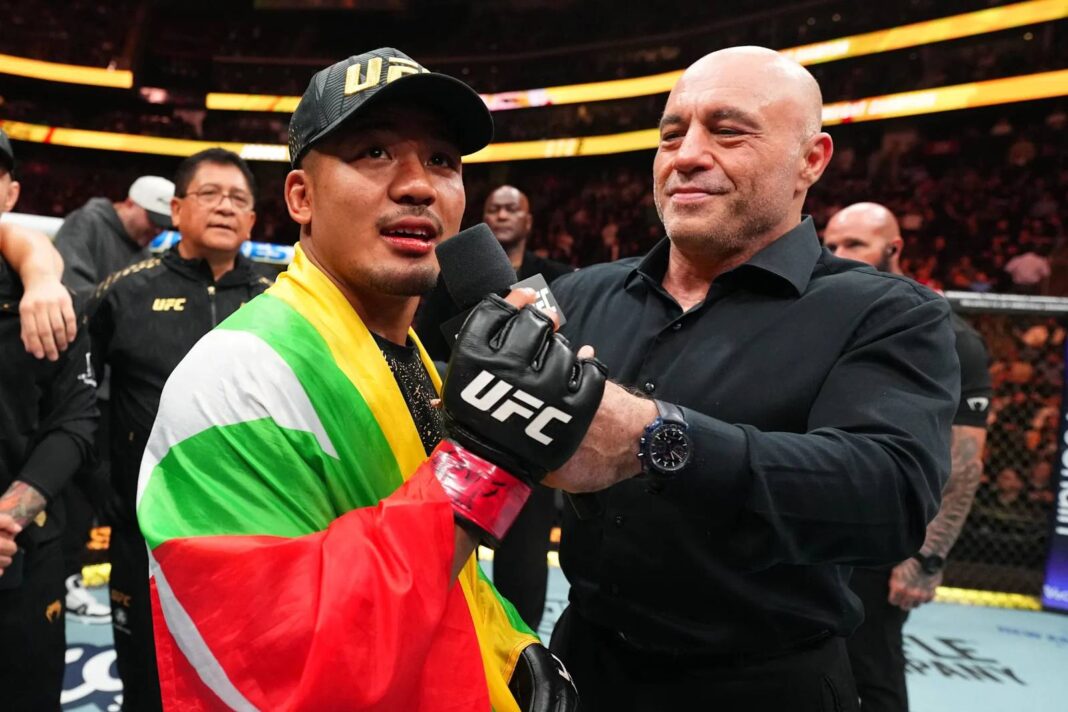
In the high-stakes world of mixed martial arts, a victory is usually measured in seconds, rounds, or a single knockout. But on the night of May 10, 2026, when Joshua Van secured his first title defense against Tatsuro Taira at UFC 328, the stakes were far higher than a belt or a paycheck. For the 24-year-old “The Fearless,” the fight was a declaration. It was a mirror held up to a nation in crisis, reflecting a truth that the military junta in Naypyidaw has tried desperately to bury: the spirit of the people of Myanmar cannot be broken.
Van’s rise to become the UFC Flyweight Champion is more than a sports story. It is a narrative of resistance that resonates deeply with Generation Z in Myanmar and the global diaspora. As the first Asian-born male champion in UFC history and the first born in the 2000s, Van has inadvertently become the ultimate symbol for the anti-junta movement. His journey from the hills of Hakha to the bright lights of Houston offers a blueprint for hope, discipline, and the relentless pursuit of a Federal Democratic Union.
The Weight of a Flag
To understand the power of Van’s success, one must first understand the context of his identity. Born in Hakha, the capital of Chin State, Van is a child of a region that has long suffered under the centralization and oppression of the military. The Chin people, like many ethnic groups in Myanmar, have fought for decades for recognition, autonomy, and a seat at the table in a federal system.
When Van first stepped into the UFC, he faced a bureaucratic wall. Officials, unsure of Myanmar’s political status under the junta’s rule, initially denied his request to carry the national flag during his walkouts. For years, he fought a battle on two fronts: one inside the octagon against opponents, and one outside it against a system that sought to erase his identity.
His persistence in demanding to represent the Chin people—and eventually the broader spirit of Myanmar—was a quiet but loud political act. It signaled that the identity of his people was not something the military could confiscate or negate. Every time he raises the flag today, he is not just celebrating a win; he is validating the existence of a Myanmar that is diverse, federal, and free. For the youth watching back home, this is a powerful lesson: identity is power, and it cannot be taken away by force.

“The Fearless” as a Metaphor for the Spring Revolution
The junta’s rule relies on fear. They rely on the silence of the population and the paralysis of a generation taught that resistance leads to death. Joshua Van’s fighting style and his public persona shatter that narrative. Known for his “obsessive” training ethic—often hitting the gym three times a day, seven days a week—Van embodies a philosophy that stagnation is not an option.
“I lost, but I get back up and keep going,” Van has said. “We are still fighting… and we will fight until we get the victory.”
These words are not just about boxing or wrestling; they are the rallying cry of the Spring Revolution. Since the 2021 coup, the people of Myanmar have faced unimaginable losses. Cities have been bombed, friends have been killed, and the economy has crumbled. Yet, like Van, the resistance has refused to stay down. The Civil Disobedience Movement (CDM), the People’s Defense Forces (PDF), and the National Unity Government (NUG) are all part of a “get back up” mentality that is now being mirrored on a global stage.
For Generation Z, who have grown up in the shadow of this conflict, Van’s success offers a crucial psychological shift. It moves the narrative from one of victimhood to one of agency. If a boy from Hakha can stand in the center of the world’s most popular fight organization and dominate the best in the world, then the youth of Myanmar can dominate the struggle for their own future. Van proves that resilience is a skill, one that can be trained, honed, and weaponized against tyranny.
A Beacon of Hope for the Next Generation
Van has explicitly stated his desire to be a “beacon of hope” for the younger generation in Myanmar. In a country where the future often looks dark, his story provides a light. He wants the youth to know that “good things still exist” despite the civil war.
This message is vital for a generation that has seen its dreams deferred. Many young people in Myanmar have been forced to flee, join the armed struggle, or live in constant fear. Van’s journey—from a refugee child in Malaysia to a champion in Texas—shows that displacement is not the end of the story. It is a starting point.
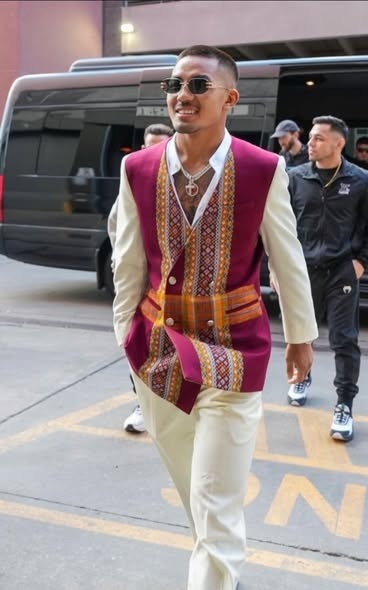
His commitment to his roots is equally inspiring. Despite being “raised by Houston,” Van carries a profound love for Hakha. He used his UFC earnings to buy his mother a house, fulfilling a promise made during their displacement. This act of loyalty and gratitude reinforces the idea that the struggle for Myanmar is not just about politics; it is about family, community, and the promise of a better home.
For the diaspora, Van is a bridge. He connects those who left with those who stayed. He reminds the global community that the people of Myanmar are not just victims of a war; they are a vibrant, resilient culture with a champion who can compete with the best.
The Path to a Federal Democratic Union
The ultimate goal of the resistance is the establishment of a Federal Democratic Union—a system where all ethnic states have autonomy and the military’s political power is dismantled. Van’s story aligns perfectly with this vision.
The military junta promotes a singular, homogenized version of Myanmar that erases ethnic diversity. Van, by contrast, thrives on his specific identity as a Chin man. He does not hide his roots; he amplifies them. In doing so, he validates the core principle of federalism: that diversity is a strength, not a weakness.
His success on the global stage also serves as a form of non-violent resistance. While the fight on the ground continues, Van’s visibility ensures that the world does not forget. “The world will never forget Joshua Van and the people of Myanmar,” he has said. This global awareness is a strategic asset. It puts pressure on international powers to support the democratic cause and isolates the junta diplomatically.
The Fight Continues
As Joshua Van prepares for his next challenge, likely a rematch with former champion Alexandre Pantoja, the fight for Myanmar continues. The road to a Federal Democratic Union will not be easy. It will require the same “obsessive” dedication that Van brings to the gym. It will require the same courage to face down fear and the same willingness to get back up after a fall.
But the message is clear: We are still fighting.
Van’s victory at UFC 328 is a reminder that the spirit of the Myanmar people is unbreakable. It is a call to action for Generation Z to channel their pride into their struggle, to see their identity as a source of strength, and to believe that victory is possible.
To the people of Myanmar, from the hills of Chin State to the streets of Yangon: Joshua Van is living proof that the future is not written by the junta. It is written by those who refuse to stay down. The fight is hard, the odds are long, but the spirit of “The Fearless” is with you. Keep getting back up. Keep fighting. And know that the world is watching.
In the end, the octagon and the barricades are not so different. Both require courage. Both require discipline. And both demand the belief that tomorrow can be better than today. Joshua Van has shown us the way. Now, it is up to the people of Myanmar to follow.







Leave a Comments