


As Myanmar enters another uncertain political transition, questions remain over whether dialogue can still play a role in ending the country’s prolonged conflict.
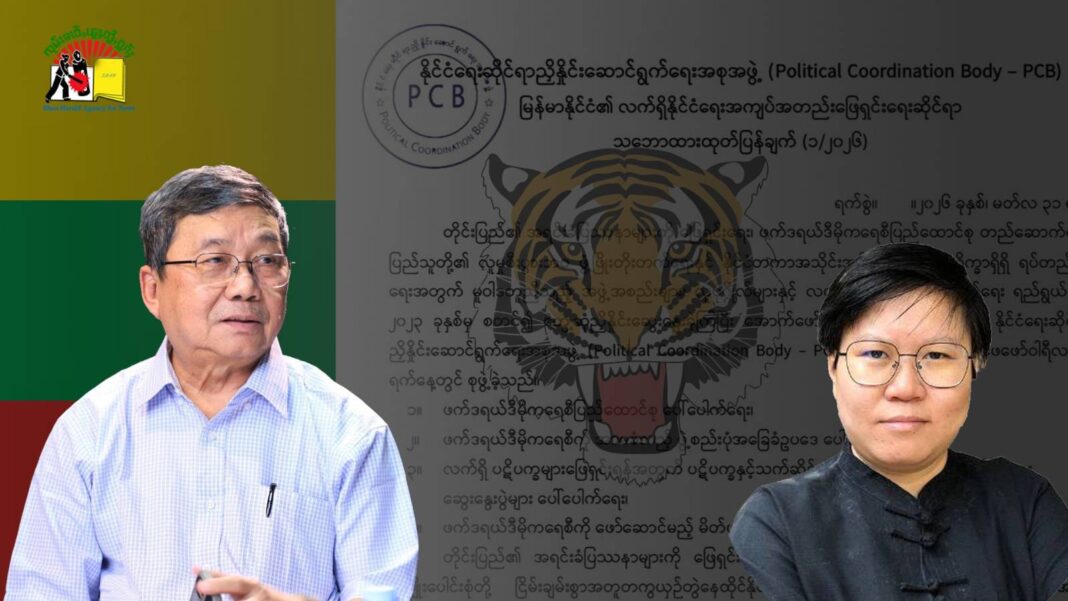
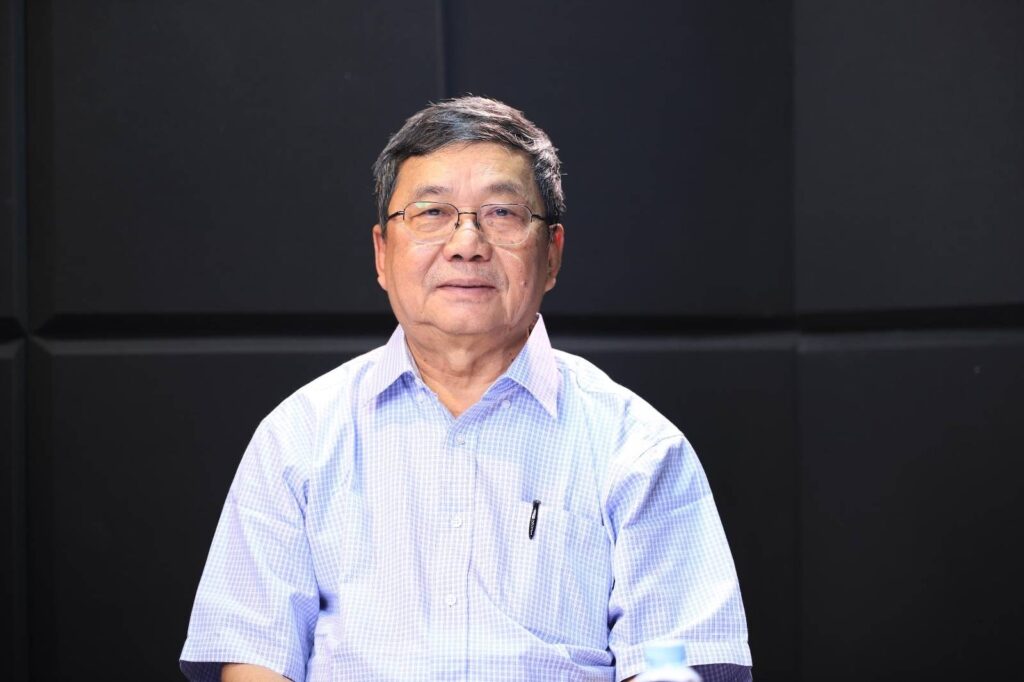
Nang Seng Nom, Burmese Desk Editor at the Shan Herald Agency for News (SHAN), interviewed Sai Nyunt Lwin, chairman of the Shan Nationalities League for Democracy (SNLD), on the recently issued nine-point proposal by the Political Coordination Body (PCB), the challenges of inclusive political dialogue, and why he believes armed struggle alone cannot resolve Myanmar’s crisis.
Nang Seng Nom:
To begin, many people are interested in the timing of the PCB’s nine-point proposal, especially as it coincides with the emergence of a new government. Was this deliberate? What are your thoughts?
Sai Nyunt Lwin:
Following the coup, between 2021 and 2023, politicians who remained inside the country—particularly in Yangon and Mandalay—began meeting informally in tea shops and private homes.
Eventually, we met in Ngwe Saung and issued a seven-point statement, which faced considerable criticism at the time. Two years later, we reconvened and formed the Political Coordination Body (PCB). The main reason is that Myanmar is in a failed state—education, healthcare, and the economy are all collapsing.
We came together to discuss how to salvage the situation, or at least how to halt the downward spiral. We agreed on these nine points, which we believe are the most appropriate for the current context. We have presented them to the public as essential steps toward national reconciliation, development, and stability.
Nang Seng Nom:
Among the nine points are calls to release political prisoners, including Daw Aung San Suu Kyi and U Win Myint; to end the forced conscription of youth; and to ensure inclusive political dialogue. How do you think the new government will respond?
Sai Nyunt Lwin:
It appears the upcoming government will likely consist of many familiar faces. However, if it is to be considered a ‘new’ civilian government, it cannot continue as before. Under the previous military-led structure, governance operated by orders. Now, they will have to function under the 2008 Constitution, which they are bound to follow.
I hope the new government will have the goodwill to extinguish the fires of war and end the daily bloodshed. It is our own people—our own children—who are dying on all sides. We hope they intend to de-escalate the conflict.
However, things have rarely turned out as we hoped. Yet, here we are, hoping once again.
Nang Seng Nom:
A civilian government and parliament also emerged in 2010. What differences do you anticipate with this transition?
Sai Nyunt Lwin:
The 2010 civilian government had until 2015 to demonstrate its performance, both good and bad. This one has not even begun. At this stage, all we can say is that we are hoping. But because our hopes have been disappointed so many times, we are cautious not to expect too much.
Nang Seng Nom:
Regarding inclusive political dialogue, how would you like to see it take shape?
Sai Nyunt Lwin:
Frankly, many dialogues are already taking place—forums in Naypyidaw, meetings in Chiang Mai and Bangkok, and discussions in liberated areas. But most of these involve people speaking only with those they already agree with.
For a genuine solution, those on opposing sides of the conflict must meet. The armed conflict is widespread, and the level of hostility is immense. This must be reduced. The country is in deep pain. Ultimately, armed struggle is a means to a political end. Once that end becomes achievable, the fighting can stop. In the end, everyone will have to talk.
Nang Seng Nom:
Some revolutionary groups argue that political dialogue is a tactic to divide the movement. How do you respond?
Sai Nyunt Lwin:
A revolution cannot be won by gunfire alone. It must have a political dimension. We have always emphasized the need for a politically driven revolution. Engaging in war without a clear political objective is meaningless.
While we may not be able to do what revolutionaries are doing on the ground, they must also consider the political dimension. Every armed revolution eventually ends at the negotiating table. I do not want that to be forgotten.
Nang Seng Nom:
Myanmar’s civil war has lasted more than 70 years. Armed groups are increasing, and conflict areas are expanding. For political dialogue to happen, the war zones must shrink. How can that be achieved?
Sai Nyunt Lwin:
War zones have expanded because politics has not been conducted with genuine goodwill. I entered politics in 1972, and we have been active as a party since 1988. After nearly 40 years, the situation has only worsened. Sometimes I feel our involvement has coincided with this decline, and I feel both ashamed and saddened.
For a long time, political awareness was suppressed. But today is the digital age, and young people can learn things we never could. I believe change is possible. Young people must study history and politics deeply. Military force alone cannot resolve this crisis. We have seen how impoverished the country has become under military rule. This must change.
Nang Seng Nom:
In neighboring Thailand, coups occur frequently, yet full-scale revolution rarely follows. What explains the difference?
Sai Nyunt Lwin:
Thailand does not have the same level of ethnic conflict. Myanmar was built on ethnic divisions from the beginning, and that is where much of the tension lies.
In fact, Myanmar has more natural resources than Thailand—gold, hydropower, and more. Our problem is mismanagement and internal conflict. In Thailand, a coup does not usually dismantle the administrative system. In Myanmar, each coup destroys the entire system and attempts to rebuild it from scratch. That is a key difference.
Nang Seng Nom:
Finally, what lessons from the past should guide the future?
Sai Nyunt Lwin:
We must reflect on ourselves and be honest with others. We must correct our mistakes and address our weaknesses. It is a difficult path, but we have no choice. If we fail, the future of our children will be lost.
Too often, our first instinct is to fight when conflict arises. In Thailand, even during coups, the civil service and administrative systems remain intact. They rely more on political processes. In Myanmar, since 1988, we have seen openings for democracy emerge and then close again. We can no longer afford to waste time. If this continues, there will be no winners—only loss for all.
Regarding the Civil Disobedience Movement (CDM), the military seeks to punish CDM participants, while some within the NUG want to punish those who did not join. If this continues, no one serving the country will be safe. We need reconciliation. CDM was a principled stand, not an act of destruction. Those in power must create a path for these young people to return to their roles with dignity. Otherwise, the situation will worsen. One day, the people will write their own history.
To those in Thailand: I hope you return not only with money, but with knowledge. If you bring skills back to Shan State, it will make a difference. People leave for opportunity, but if peace returns and governance improves, Shan State can once again become a land of opportunity. While many have no choice but to leave, life in Thailand is not a stable long-term solution for most young people.
Nang Seng Nom:
Thank you very much for your time.
*This interview was conducted in Burmese and translated into English by Eugene.



Leave a Comments