



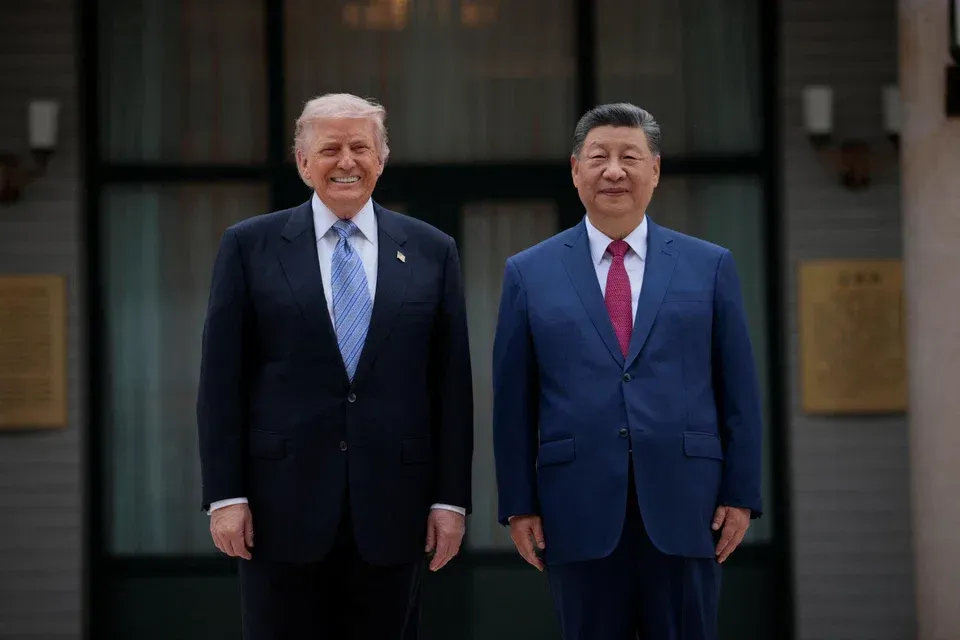
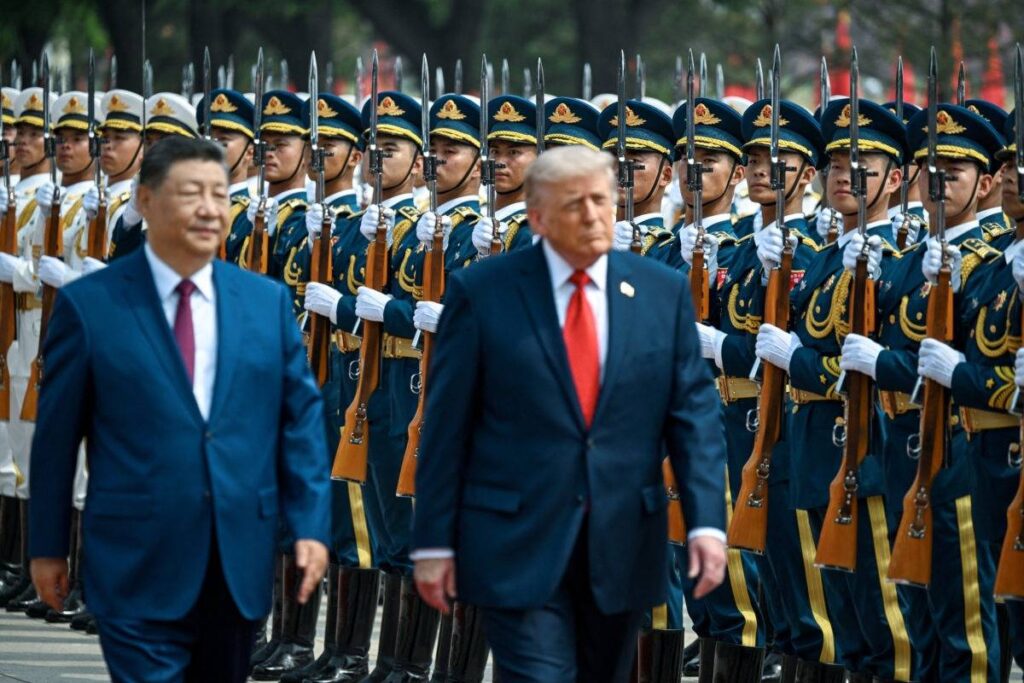
When President Trump and President Xi met in Beijing this week, the world held its breath. Would the summit end in a handshake or a shouting match? Would Taiwan be the flashpoint that ignited a new war?
The answer, revealed in the stark, almost jarring contrast between the two official statements released on May 15, is far more mundane—and far more dangerous. It was neither a war nor a peace treaty. It was a transactional pause, a carefully choreographed “Rose Garden Truce” where both leaders traded public victories for private concessions, leaving the world’s most dangerous flashpoints untouched.
The proof lies not in what they said, but in what they didn’t.
The Two Truths: A Tale of Two Statements
The diplomatic playbook of 2026 is a masterclass in “competing realities.” The Chinese statement paints a picture of a “historic” breakthrough, claiming the two leaders “properly addressed” each other’s core concerns—a diplomatic code phrase that Beijing interprets as a U.S. concession on Taiwan.
The U.S. statement, by contrast, is blunt, transactional, and suspiciously silent on the very issue that terrified the world. It focuses on “market access,” “agricultural purchases,” and a specific pledge that the Strait of Hormuz must remain open.
This divergence isn’t a mistake. It’s the deal.
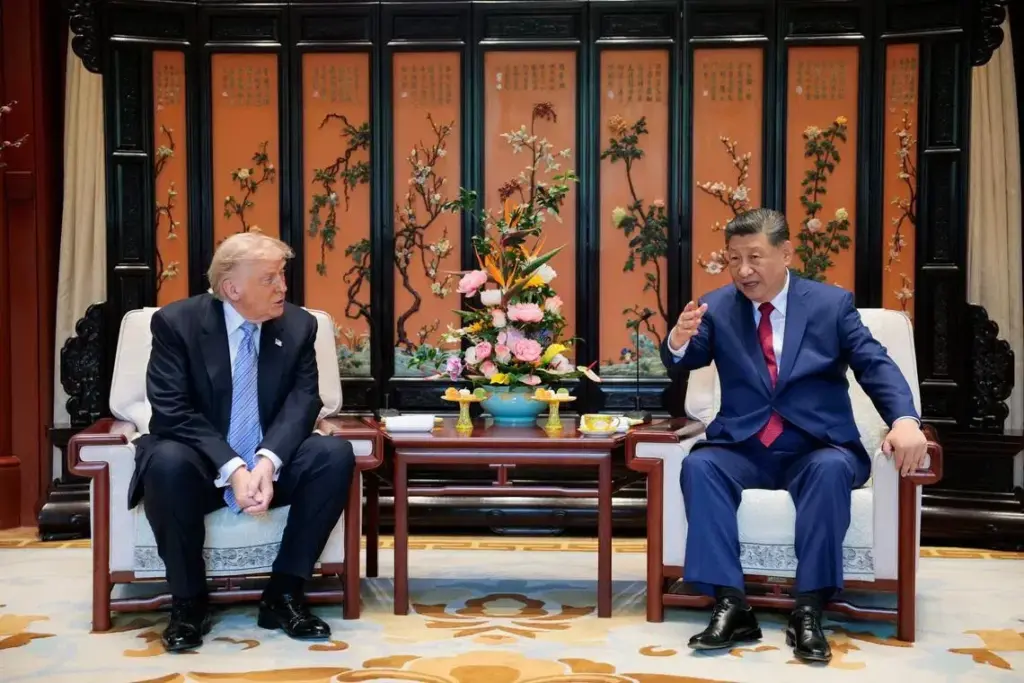
The Silent Concession on Taiwan
The most critical finding of the summit is the absence of Taiwan from the U.S. statement.
While Xi’s statement claims the two sides “properly addressed” concerns, the White House released a text that completely omits the island, its defense, or U.S. arms sales. This silence is not an oversight; it is a strategic surrender.
By refusing to explicitly mention Taiwan, the Trump administration avoided a public confrontation that could have derailed the trade talks. In effect, they agreed to pause the arms sales without ever saying the words. Xi gets the public credit for “addressing” the issue; Trump gets the private benefit of avoiding a war while maintaining the option to resume sales later.
This is the “Rose Garden” trap: The U.S. President can stand in the White House Rose Garden and claim he “didn’t concede,” while the world watches China quietly cement its control over the island. The silence is the concession.
The “Oil for Peace” Bargain
If Taiwan was the silent concession, oil was the loud headline.
The U.S. statement is remarkably specific:
“The two sides agreed that the Strait of Hormuz must remain open… President Xi also made clear China’s opposition to the militarization of the Strait… and expressed interest in purchasing more American oil.”
This is the Trump win. He now has a public, written agreement that China will support the free flow of energy and buy American oil. This is a direct line to the American voter: “I got China to agree to keep gas prices down.”
But look closer. Xi’s agreement to “oppose militarization” is vague. He didn’t promise to stop Iran from closing the Strait; he just said he opposes it. And his “interest in purchasing more oil” is a promise to buy, not to enforce peace.
The deal is simple: Trump gets the headline on energy prices; Xi gets a vague pledge that doesn’t bind China to action. If the Strait closes, Trump can blame Iran. If it stays open, he takes the credit. It’s a win-win for Trump’s narrative, regardless of the outcome.
The “Three-Way” Myth and the Missing Pact
Trump claimed during the summit that he had secured a “three-way pact” with China and Iran to prevent a nuclear weapon. The U.S. statement, however, only says: “Both countries agreed that Iran can never have a nuclear weapon.”
There is no mention of a binding pact, no timeline, and no enforcement mechanism. This suggests the “three-way deal” was likely a Trump invention—a way to spin a vague agreement into a headline-grabbing victory. Xi, meanwhile, got a vague “agreement” that he can interpret loosely later, perhaps by continuing to trade with Iran while publicly claiming to oppose nukes.
The Blind Spot: Myanmar and Human Rights
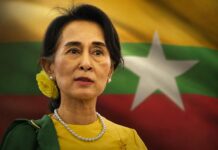
Perhaps the most damning silence is the complete omission of Myanmar.
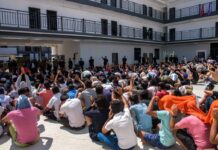
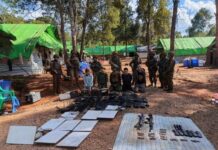
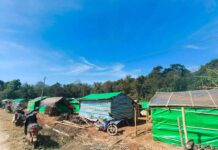
Neither statement mentions the junta, the cyber-scams, or the humanitarian crisis. The U.S. and China have effectively agreed that economic stability is more important than justice. The billions in cyber-scam profits, the thousands of dead, and the suffering of the people are off the table.
This is the true cost of the summit: The world’s most vulnerable are sacrificed for the sake of a trade truce.
The Verdict: A Fragile Peace
So, who won?
- Trump gets a public victory on oil and a private pause on Taiwan. He can sell this as a “win” to his base.
- Xi gets a diplomatic coup (the U.S. “addressed” Taiwan) and sanctions relief (no new penalties on Myanmar banks).
- The World gets a fragile peace that ignores the root causes of conflict.
The “Rose Garden Truce” is a beautiful facade. It looks like peace, but it’s just a temporary pause. The cracks are already showing: Iran is still aggressive, Taiwan is still vulnerable, and Myanmar is still suffering.
Trump and Xi bought time. But in doing so, they left the world’s most dangerous problems unsolved.


Leave a Comments