




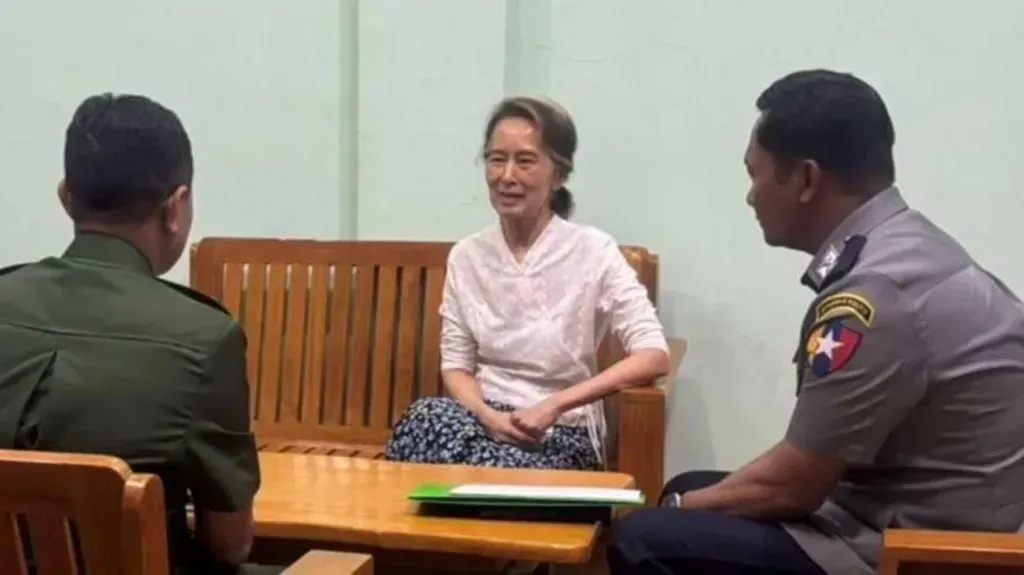
Min Aung Hlaing’s decision to transfer Aung San Suu Kyi from a prison cell to a minister’s residence is not an act of mercy; it is a masterclass in cynical statecraft. By relocating her to an undisclosed official residence, the junta achieves a dangerous dual objective: projecting a “softer” image to the international community while ensuring she remains utterly inaccessible and neutralized. To the military leadership, Suu Kyi is not merely a political prisoner; she is a symbolic threat capable of shattering the regime’s fragile isolation. Her confinement in a “gilded cage” allows the junta to claim she is in “good health” without granting the independent verification that could spark mass mobilization.
In the near term, expect this calculated ambiguity to harden into permanent policy. House detention serves as a perfect middle ground: it avoids the martyrdom of a public execution or high-profile trial while retaining the legal pretexts of her existing convictions to justify continued custody. International pressure from the UN, the US, Japan, the EU, and ASEAN, while diplomatically costly, remains insufficient to force a breakthrough. Without coordinated sanctions that directly threaten the military’s economic lifelines, the junta can easily absorb rhetorical criticism. ASEAN’s consensus on releasing political prisoners, though morally weighty, lacks the binding teeth to compel action, leaving the regime free to offer “humanitarian” gestures—such as supervised family visits or scripted medical checks—that are easily reversed.
A Shift in ASEAN’s Stance
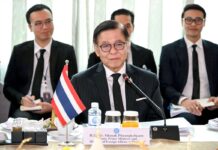
However, the geopolitical landscape is shifting. As of early May 2026, ASEAN has pivoted from cautious diplomacy to direct public advocacy for Suu Kyi’s release, aligning its stance more closely with the UN, the US, and Japan. Under the 2026 Philippine Chairmanship, the bloc has adopted more assertive rhetoric, explicitly naming Suu Kyi in official statements while attempting to balance this pressure with its traditional “ASEAN Way” of engagement.
This marks a significant departure from the immediate aftermath of the coup, when ASEAN avoided naming specific detainees. The current trajectory is defined by two critical developments:
Explicit Demands: In April 2026, the Philippines, serving as ASEAN Chair, issued a formal statement “encouraging the release of the remaining prisoners… including Daw Aung San Suu Kyi.”
Strategic Leverage: While ASEAN officially welcomed the April 17, 2026, amnesty—which freed 4,000 prisoners, including former President Win Myint and several ASEAN nationals—it framed the event as a “positive step” rather than a conclusion. The bloc is now using this momentum to demand Suu Kyi’s release as the next critical requirement for an “inclusive national dialogue.”
The Beijing Factor and the Path Forward
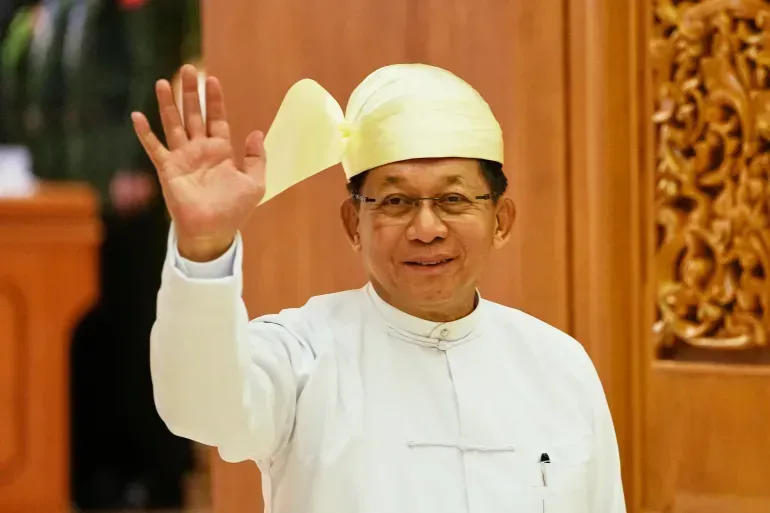
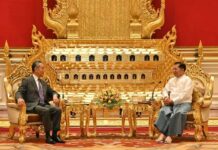
The decisive variable remains Beijing. China prioritizes stability and strategic access over human rights, viewing Suu Kyi’s release as a potential destabilizer rather than a moral imperative. As long as Beijing signals that only modest, reversible concessions are acceptable, the junta will see no reason to risk a full release. The result is a predictable stalemate: continued effective detention wrapped in the optics of humane treatment, punctuated by staged access for foreign observers.
Breaking this deadlock requires more than statements of concern; it demands a unified coalition willing to target the junta’s core economic and political interests. Domestic dynamics will further dictate the tempo: a surge in coordinated resistance could trigger harsher isolation, while a consolidation of military control reduces any incentive for concessions. For now, Suu Kyi remains the ultimate bargaining chip—a symbol the regime can neither fully silence nor safely release, trapped in a stalemate that serves the military’s survival above all else.






Leave a Comments