




ASEAN—the Association of Southeast Asian Nations—is often described as a success story of regional cooperation. It brings together eleven countries with vastly different cultures, economies, and political systems. Yet, when crises like the civil war in Myanmar or the tensions in the South China Sea arise, ASEAN often appears weak, divided, and unable to act decisively. Why is this? And can it do better?
A Group of Diverse Nations
ASEAN includes democracies like Indonesia and the Philippines, one-party states like Vietnam and Laos, and military-influenced governments like Thailand and Myanmar. Some members are wealthy and developed, like Singapore, while others are still emerging, like Cambodia and Myanmar.
This diversity is both a strength and a challenge. It shows that very different countries can work together. But it also means that ASEAN struggles to agree on strong actions, especially when those actions might interfere in another country’s internal affairs. The group’s founding principle—“non-interference”—was meant to keep peace among members, but it also protects authoritarian leaders from criticism.
The Myanmar Crisis: A Test of Unity
Since the 2021 military coup in Myanmar, the situation has worsened dramatically. The military, led by Min Aung Hlaing, has killed thousands, arrested political leaders, and launched brutal attacks on civilians. In response, a broad resistance movement—including the National Unity Government (NUG) and ethnic armed groups—has fought back.
ASEAN’s response, called the “Five-Point Consensus”, promised peace, dialogue, and humanitarian aid. But nearly five years later, none of these promises have been fulfilled. The military has ignored the plan, and ASEAN has taken no real action to enforce it.
Some members, like Malaysia, Singapore, and Timor-Leste, want stronger steps, including recognizing the NUG and supporting justice efforts. But others—Cambodia, Laos, and Thailand—prefer to avoid confrontation, often aligning with China, which supports the Myanmar military.
As a result, ASEAN has become more of a talking shop than a problem-solving body. Its only real move—excluding junta leaders from meetings—has had little impact. The crisis continues, and the region’s credibility suffers.
The South China Sea: Disputes Without Solutions
The South China Sea is another major challenge. It is a busy waterway used by ships from around the world and rich in fish and energy resources. But several countries—including China, Philippines, Vietnam, Malaysia, and Brunei—claim parts of it.
China claims almost the entire sea through its “nine-dash line,” a claim rejected by an international court in 2016. Despite this, China has built military bases on artificial islands and increased its naval presence.
ASEAN has been trying for years to negotiate a **Code of Conduct** with China to prevent conflict. But progress is slow. Why? Because ASEAN members have different interests. Some, like the Philippines and Vietnam, want strong rules that follow international law. Others, like Cambodia and Laos, often side with China and block tough language.
This division weakens ASEAN’s voice. While the group talks about peace and stability, China continues to expand its control. Without unity, ASEAN cannot stand up to powerful external actors.
Why Is ASEAN So Limited?
Several factors explain ASEAN’s weakness:
- Consensus Rule: Every decision must be agreed upon by all ten members. This means even one country can block action.
- Non-Interference Principle: Members do not criticize each other’s internal affairs. This protects dictators and prevents strong responses to human rights abuses.
- No Enforcement Power: ASEAN has no army, no sanctions, and no way to punish members who break rules.
- Differing Alliances: Some members are close to the United States, others to China. This splits the group during crises.
- “Asian Values” Mindset: Some leaders argue that stability and economic growth matter more than democracy and individual rights. This idea, promoted by past leaders like Mahathir Mohamad of Malaysia, makes it harder to push for liberal reforms.
Can ASEAN Change?
Despite its flaws, ASEAN has achieved important things. It has kept peace among its members for decades, boosted trade through regional agreements, and created platforms for dialogue. But to remain relevant, it must adapt.
Possible steps include:
- Recognizing real governments, like Myanmar’s NUG, instead of dealing only with military rulers.
- Allowing stronger actions by a group of willing members, even if not all agree.
- Supporting international justice efforts, such as legal cases against junta leaders.
- Speeding up talks on a fair and binding South China Sea agreement.
The future may see a “coalition of the willing” within ASEAN—democratic and reform-minded countries working together on shared goals, even if the full group cannot agree.
Conclusion: A Work in Progress
ASEAN is not a failure, but it is far from perfect. It reflects the complex reality of Southeast Asia—diverse, dynamic, and often divided. On issues like trade and disaster response, it works well. But on hard political crises, it often falls short.
To truly deliver for its 670 million people, ASEAN must move beyond empty statements and symbolic gestures. It must find the courage to stand for peace, justice, and human dignity—even when it’s difficult. The alternative is to become a forum that talks much but changes little.
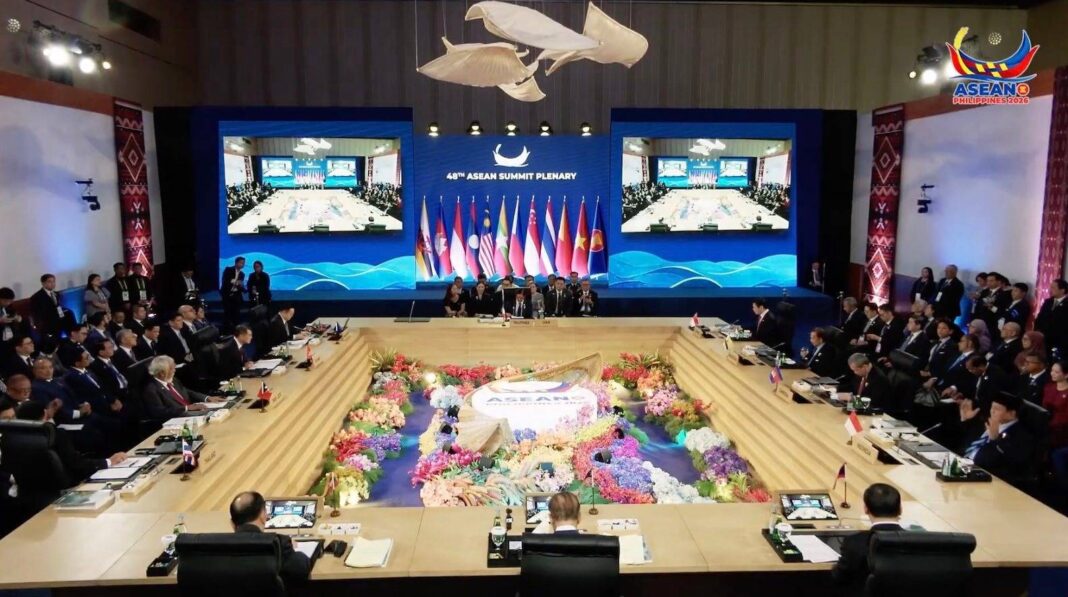
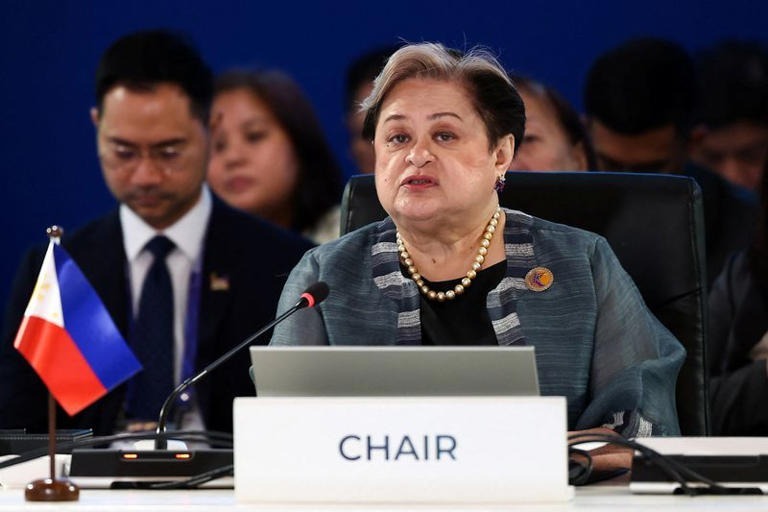
The Chair’s Statement of the 48th ASEAN Summit, issued on May 8–9, 2026, in Cebu, Philippines, reaffirms ASEAN’s commitment to unity, regional resilience, and peaceful conflict resolution amid global uncertainties.

Key points include:

· Myanmar Crisis: Leaders expressed deep frustration over the lack of progress in implementing the Five-Point Consensus. President Ferdinand Marcos Jr. stated that five years after its adoption, peace remains elusive. The bloc continues to exclude Myanmar’s military leaders from high-level meetings and does not recognize the junta’s planned elections. There is growing recognition that the situation requires a new approach, though no formal changes to the 5PC were announced.

· South China Sea: The Philippines, as chair, pushed for a legally binding ASEAN-China Code of Conduct (COC). President Marcos emphasized that establishing the COC must precede deeper economic cooperation with China. The summit also endorsed the proposal to create an  ASEAN Maritime Centre, to be hosted in the Philippines, to enhance regional maritime coordination.

· Regional Unity: Amid the Middle East conflict and its global ripple effects, ASEAN leaders stressed the need for solidarity, energy security, food stability, and protection of ASEAN nationals. The summit was scaled down due to global economic pressures, but members affirmed their commitment to collective action.

· Cambodia-Thailand Dispute: ASEAN urged both countries to **resolve their border disputes peacefully** in line with international law, following a trilateral meeting initiated by the Philippines.

· Other Priorities: Discussions focused on strengthening intra-ASEAN trade, renewable energy, supply chain resilience, and advancing the **BIMP-EAGA Vision 2035 for regional development.

In sum, the 48th Summit highlighted ASEAN’s diplomatic cohesion on economic and technical issues, but underscored its continued paralysis on political crises like Myanmar, where consensus and enforcement remain out of reach.






Leave a Comments