



Why unity, clear objectives, and synchronized action are essential to defeat the junta and restore democracy.
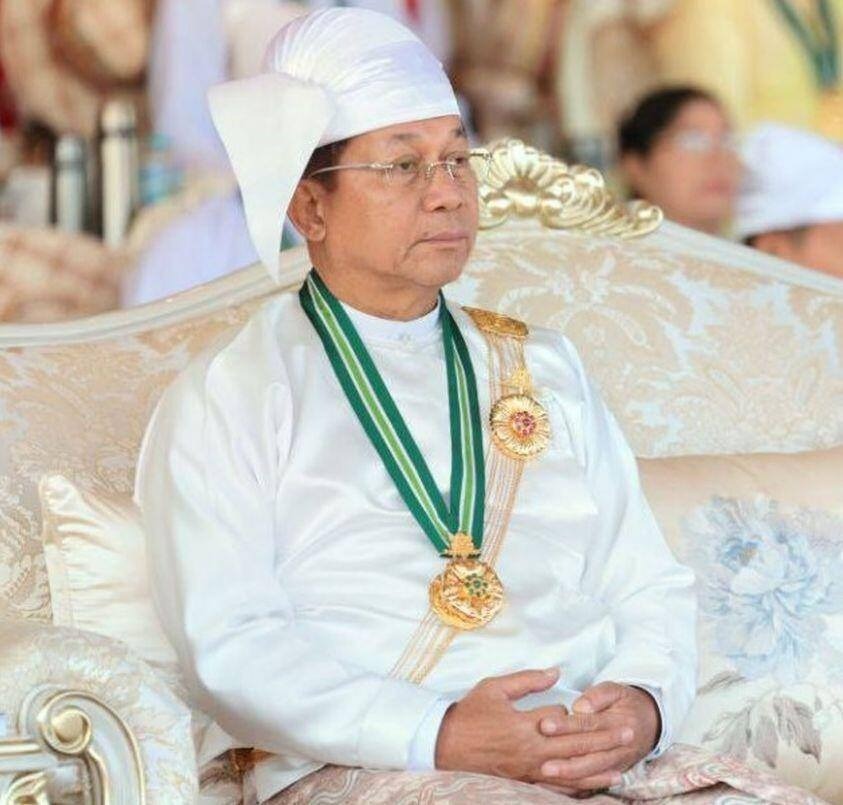
On March 30, General Min Aung Hlaing is set to implement the final phase of his plan to assume the presidency, with the possibility of bringing the military chief of staff under his control. In preparation for this outcome, he has systematically advanced the junta’s agenda.
Measures taken include a staged, three phase election in which the Union Solidarity and Development Party (USDP) secured an overwhelming majority amid widespread manipulation; the convening of parliamentary sessions culminating in a vote to elect Min Aung Hlaing as president; and a propaganda spectacle purporting to show roughly five hundred insurgents surrendering — a claim the anti junta armed groups rightly dismissed as exaggerated and fraudulent.
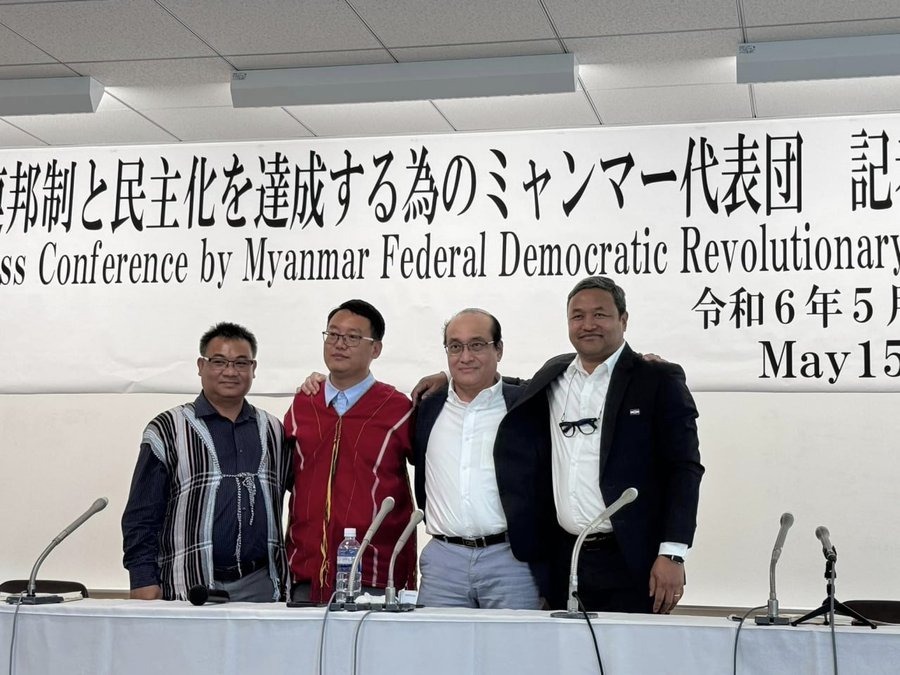
Meanwhile, the anti junta ethnic democratic coalition — including Kachin Independence Army, Karenni National Progressive Party, Karen National Union, Chin National Front (K3C), National Unity Government/ People’s Defense Force (NUG/PDF) and the Arakan Army (AA) — continues to work toward a shared strategy to reinvigorate the movement and realize the people’s goals of ending military rule and establishing a federal democratic union. Those two aims remain the core pillars of the Spring Revolution and the rallying point for most citizens and anti junta stakeholders.
For now, the balance of power appears to be tilting toward the junta, though it remains unlikely that the military can entirely defeat or annihilate the anti junta alliance.
Chipping away at two rallying cornerstones
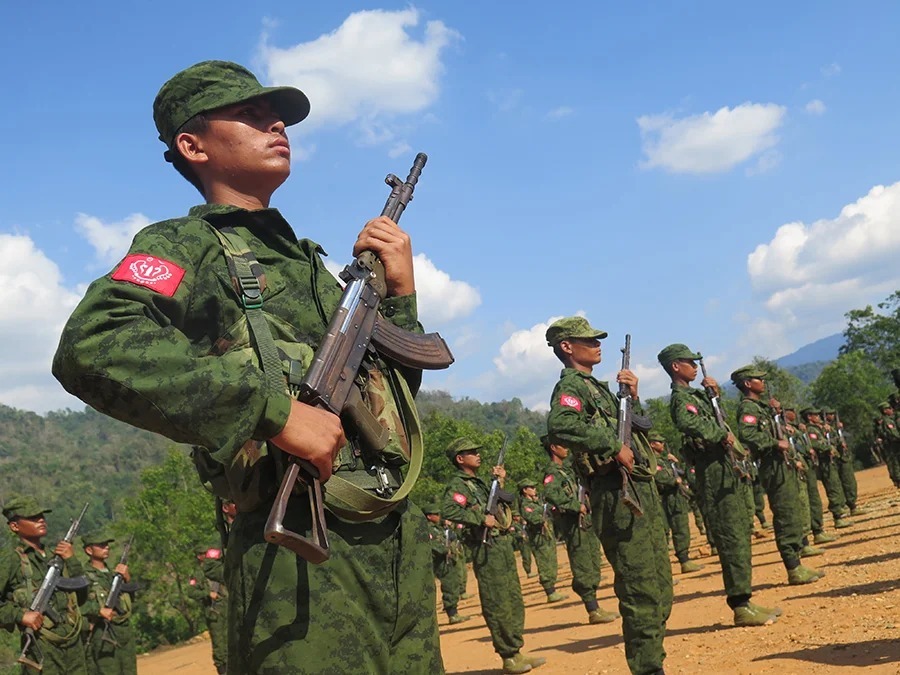
Two scenarios stand out as the undeniable occurrences in chipping away the two cornerstones rallying point. One is the northern Shan State’s ethnic armed organizations (EAOs) narrow ethnonationalism, coupled with might is right territorial expansionism urge and the other, the unchecked regional power neighboring country China’s interference in Myanmar’s politics, exerting its national interest agenda with its own script and directive on the stakeholders in Myanmar political arena.
According to recent report of March 27 in Myanmar Now: “The five years of armed resistance successes, when viewed in general terms, were marked by the strength of unity. These successes were achieved through five main stages: (1) the initial urban guerrilla warfare and building of the revolution army, (2) the collapse of the coup d’état army due to the ability to conduct joint military operations, (3) the acquisition of controlled areas and territory building, (4) the establishment of an administrative mechanism among the people in the liberated areas, and (5) the gathering of resources to strengthen the resistance forces.”
“These stages occurred simultaneously or in a series of stages rather than in stages, and all five stages were based on military rather than political objectives, so they were disproportionately focused on the first goal of the revolution, the overthrow of the military dictatorship. As the revolution progressed, the leading groups, the NUG, ethnic resistance organizations (EROs), and PDF groups from across the region, developed different views on the second goal, the establishment of a federal democratic system, and This situation is creating a huge vacuum in the role of political leadership of the revolution.”
In process, in the aftermath of 1027 Operation first and second stage, the Myanmar National Democratic Alliance Army (MNDAA) and Ta’ang National Liberation Army (TNLA) had not only occupied the entire Kokang and Ta’ang regions, but also had expanded their territory beyond their own borders. This posed a question that challenged the leaders of MNDAA and TNLA in northern Shan State.
“Would they fight for the goal of achieving self-rule by liberating only the areas where their people (ethnic groups) were based ? Or would they fight for the end of the military dictatorship that the entire people desired?,” writes Myanmar Now opinion piece.
“For the first question, it was time to stop the offensive. For the second question, these leaders were well aware that the journey ahead would require a lot of manpower and resources. At that time, accepting the mediation of the Chinese government would allow them to rest their war-weary troops, rebuild their military strength, and recover much of the financial resources that had been depleted by the cost of the war,” speculates Myanmar Now of the possible EROs’ going along with the truce brokered by China.
But in reality, it isn’t that simple, as the MNDAA and TNLA yielding to China’s pressures were because of intimidation and pressures, such as holding MNDAA’s leader hostage during his medical treatment in China and pressuring to withdraw from Lashio and signed ceasefire; using five-cuts sanctions on MNDAA territories and so on.
In the same vein, TNLA was being pressured to do the same so that it has to give Mogok and Mongmit back to the junta and eventually withdrawn from Nonghkio , Kyaukme, Hsipaw and so on.
And on top of that it shouldn’t be forgotten that the greed of wanting to expand their territorial reach in non-Ta’ang and non-Kokang areas at the expense of the local multi-ethnic peoples, which are met with animosity and resistance due to TNLA and MNDAA assimilation or acculturation scheme imposed on them.
In short, this is a recipe for inter-ethnic conflict rather than the forging unity in diversity within the mold of federal union.
Chinese interference of nipping the revolutionary-bud in northern Shan State
The Operation 1027 in Northern Shan was defeated by Chinese government intervention, writes Myanmar Now.
The armed rebellion reached its highest point with the “Operation 1027”. The collapse of the coup army’s front lines in Northern Shan caused disbelief in the minds of the people, and hopes of a real victory for the army reached their highest point. However, all these hopes did not last long.
Since late 2024, the Chinese government has begun to pressure the United Wa State Army (UWSA), the main source of arms supply for the Northern Brothers, to cut off its support for the Northern Brothers. At the same time, the Chinese government has been mediating between the Northern Three Brotherhood Alliance (3BHA) and the military to reach the “Haigeng Ceasefire Agreement” in Kunming, Yunnan Province. This was the beginning of the Chinese government’s attempt to break the MNDAA and TNLA, which were the main forces in northern Shan. The Arakan Army (AA) did not sign the Haigeng Agreement and is still fighting on the Rakhine front today.
When the first part of the Haigeng Agreement collapsed and the second part of the “1027 Operation” was launched, the Chinese government changed its strategy to separate the three northern factions into separate groups. This strategy broke the unity of the three factions, and the leaders of the three factions were defenseless.
In particular, the Chinese government detained the MNDAA leader Peng Deren while he was in Yunnan Province for medical treatment and forced the military to sign a ceasefire. The MNDAA was forced or defeated and in April 2025 by China’s intervention, when the military captured 12 neighborhoods in Lashio, including the Northeastern Regional Command, without firing a single bullet.
Recent development
According to Myanmar Now, the military has conducted a three stage counteroffensive during the past five years.
In the first stage it reached a ceasefire with the MNDAA and regained Lashio and parts of the Northeastern Military Command. In the second stage it launched a counteroffensive against the TNLA, capturing Nawnghkio, Kyaukme and Hsipaw, and recovering Mogok and Momeik/Mongmit through ceasefire arrangements. In the third stage it pushed into Mandalay Division and retook towns that had been held by Mandalay PDF units aligned with the NUG.
The main reason for these gains was disunity among armed forces in northern Shan State, which weakened their collective resistance and left them vulnerable to pressure from the Chinese government. The defeats resulting from that breakdown of unity have not fully played out and further reversals remain possible.
Since the retake of Lashio there have been unconfirmed reports that the military has demanded the handover of the MNDAA held town of Hsenwi. Beijing has also pressed for reopening the Muse–Mandalay trade route. The military and Chinese government have used a combination of military pressure and negotiation; the MNDAA and the TNLA have resisted those efforts.
The MNDAA has retained control of Hsenwi, renamed it “Mupan,” and benefited from increased Chinese investment and apparent protection. If Hsenwi were relinquished, the military could then threaten Chin Shwe Haw, another Sino Burma border trade town.
Tensions escalated further when the MNDAA attacked Kutkai — the largest trading town on the China–Myanmar border between Muse and Hsenwi — and seized a TNLA camp, an event that highlighted the breakdown of the MNDAA–TNLA alliance. A Chinese delegation that had been based in Lashio for months and negotiating with the military appears to be pursuing a strategy that uses the MNDAA to facilitate reopening the Muse–Mandalay route.
Timing has been decisive. China is reasserting its interests in Myanmar as the junta moves toward forming a new government after its staged elections. With Chinese backing, the MNDAA may seek to control the largest territory in northern Shan State and emerge as the region’s dominant armed group. Beijing’s gradual efforts to consolidate influence in northern Shan increase pressure on other actors; meanwhile the junta is likely to continue efforts to recapture territory held by northern Shan groups.
In short, although the northern Shan armed groups joined the resistance to end military rule, competing goals and fragmentation have eroded their gains and yielded military setbacks.
Nonetheless, the broader resistance has not collapsed. Under the leadership of the Kachin Independence Army (KIA) and the Arakan Army (AA), NUG affiliated PDF forces continue to fight across the country. In fronts such as Kachin, Rakhine and Chin, revolutionary forces remain strong, and the junta has not regained control of those areas.
Analysis
The military junta has continued to execute its pre planned strategy, while the anti junta alliance—five years into the struggle—has still not produced a clear, unified strategy that can be publicly declared, inaugurated, and implemented to persuade the international community of its legitimacy. Although the alliance claims to represent the people of Myanmar and seeks recognition at the United Nations, it has fallen short of that goal.
While the NUG has made some progress, it has not achieved sufficient domestic unity within the anti junta coalition to demonstrate cohesion and solidarity on the international stage. In short, the alliance has not yet become a credible alternative political entity capable of replacing the military dictatorship.
The alliance faces many challenges. Immediate priorities include:
- China’s uninvited interference in Myanmar’s politics, especially in northern Shan and Rakhine states.
- Energizing the K3C–NUG–AA resistance alliance and strengthening both military and political coordination.
- Shifting Karenni forces from a defensive posture back to a sustainable offensive capability.
- Reversing recent NUG/PDF setbacks in the Mandalay Region.
- Presenting the alliance effectively in the international arena.
- Establishing a common political leadership for the alliance.
Agreeing on common constitutional guidelines to form a wartime revolutionary government.
Deterring China’s interference is the toughest challenge. As a rising regional power with strategic projects like the BRI and CMEC tied to its national interests, China treats Myanmar as within its sphere of influence and prefers a united state over a fragmented, failed one. Thus, Beijing has supported the junta—if only to preserve a single, central authority—even when the junta’s actions have been imperfectly aligned with Chinese preferences. When the junta appeared threatened after Operation 1027 and the push toward Mandalay, China took steps to prevent its collapse. Beijing seems to prefer a weakened but unified junta to a fragmented Myanmar, and it is wary of a democratic Bamar majority movement gaining unchecked power.
Consequently, the anti junta alliance needs more than battlefield victories to change China’s stance; Beijing is likely to continue propping up the junta to some degree until it deems that support futile. However, China’s position is not immutable—its approach to groups like the AA may shift if the junta becomes unsustainable. There are reports that AA leaders were recently invited to talks in China focused on Kyaukpyu and related projects, suggesting possible recalibration.
Revitalizing the alliance will require a two pronged approach: tighter military coordination and a shared political agenda grounded in a federal democratic vision. This remains an evolving process.
On the military front, the Karenni resistance has suffered significant losses from concentrated junta offensives but continues to conduct operations, including recent localized attacks that inflicted casualties and seized weapons. These clashes indicate continued resistance but also highlight critical shortages in artillery, heavy weapons, and ammunition—shortfalls that must be addressed through alternative supply channels or stronger alliances.
Similarly, NUG/PDF forces have lost ground in the Mandalay Region. Reports from March 2026 note the fall of Takaung—liberated since August 2024—and the subsequent retreat of TNLA, Mandalay PDF, and allied NUG forces from areas they largely controlled in 2024. The junta has redeployed forces from northern Shan into Mandalay and Sagaing, taking advantage of gaps where EROs are not engaged; these dynamics underscore the alliance’s firepower limitations despite substantial manpower.
To present itself effectively internationally, the alliance must prioritize two core political tasks: forming a common collective leadership and agreeing on constitutional guidelines for a wartime revolutionary government. There is broad recognition that unified political leadership and a widely accepted federal democratic constitution are essential.
Since 2024–25, the NUG and NUCC have held consultations, issued joint positions, and engaged multiple EAOs/EROs and civil society, including coordinated meetings during Malaysia’s 2025 ASEAN engagements. Reporting from 2025–26 indicates ongoing talks to broaden unity structures—discussions with major EAOs/EROs about a joint “Federal Council” or unified leadership are continuing but remain fluid, with uneven participation. Major sticking points include inclusive drafting and representation (full EAO/ERO buy in), security sector arrangements and command integration, resource and revenue sharing, state boundaries and autonomy, transitional justice and vetting, and electoral/amendment procedures. To date, no agreed schedule or single consolidated constitution draft has been publicly adopted.
In sum, the alliance must act faster to consolidate political leadership and finalize constitutional norms. Coordinated action by K3C, NUG, AA, and other partners to unify their strategy—politically and militarily—remains essential to realize the goals of the Spring Revolution before the opportunity closes.



Leave a Comments