




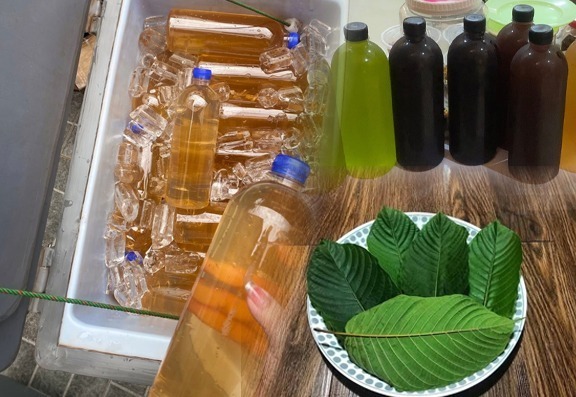
The use and open sale of kratom-based drinks among young people is reportedly increasing across Shan State, with residents saying authorities have taken little action to regulate the growing trend despite mounting health concerns.
Before Myanmar’s 2021 military coup, kratom consumption was largely concentrated in eastern Shan State towns along the Thai border, including Tachileik, Mong Hsat, and Mong Ton. Residents now say the substance has spread widely into southern and northern parts of the state.
Locals report that kratom drinks are now openly sold and consumed in towns including Mong Hsu, Wan Hai, Namsang, Panglong, Laihka, Tangyan, Mongyai, and Lashio.
“I travel frequently between northern and southern Shan State, and kratom shops are everywhere now,” a young man from Mongyai told SHAN. “In the past, there were only a few, but now you can see two or three shops openly selling it along the main roads.”
Residents say kratom drinks have become especially popular among teenagers and young adults, including young women, who often consume them socially in groups.
According to local sources, the drinks are commonly mixed with soft drinks, alcohol, or beer. In some towns, including Tangyan, vendors reportedly sell flavored pre-mixed versions aimed at younger consumers.
A bottle of kratom drink currently sells for between 25,000 and 30,000 kyats, according to residents and traders.
Most of the supply reportedly originates from areas along the Thai border near Tachileik, where kratom leaves are purchased in bulk before being transported to other parts of Shan State for processing and sale.
The legal status of kratom in Myanmar remains unclear. Residents and local observers say enforcement has become inconsistent following changes to narcotics classifications in recent years.
Kratom, a plant containing the psychoactive compound mitragynine, has been the subject of growing regional debate over both its medicinal potential and health risks.
Research cited by local observers, including studies from Chulalongkorn University, suggests that kratom may help relieve pain and reduce opioid withdrawal symptoms. However, health experts also warn of risks including rapid heartbeat, dizziness, vomiting, and dangerous reactions when combined with alcohol or other substances.
Medical researchers further caution that kratom should not be consumed by children, pregnant women, or individuals with liver or kidney conditions.
Despite the growing use of kratom among minors, residents in several townships told SHAN they have seen little intervention from local authorities.
Some community members fear that worsening economic hardship and political instability have contributed to rising substance use among young people, particularly in areas with limited educational and employment opportunities.
Residents and health advocates say the increasing normalization of kratom consumption among youth could create long-term public health and social challenges across Shan State if left unaddressed.











Leave a Comments