




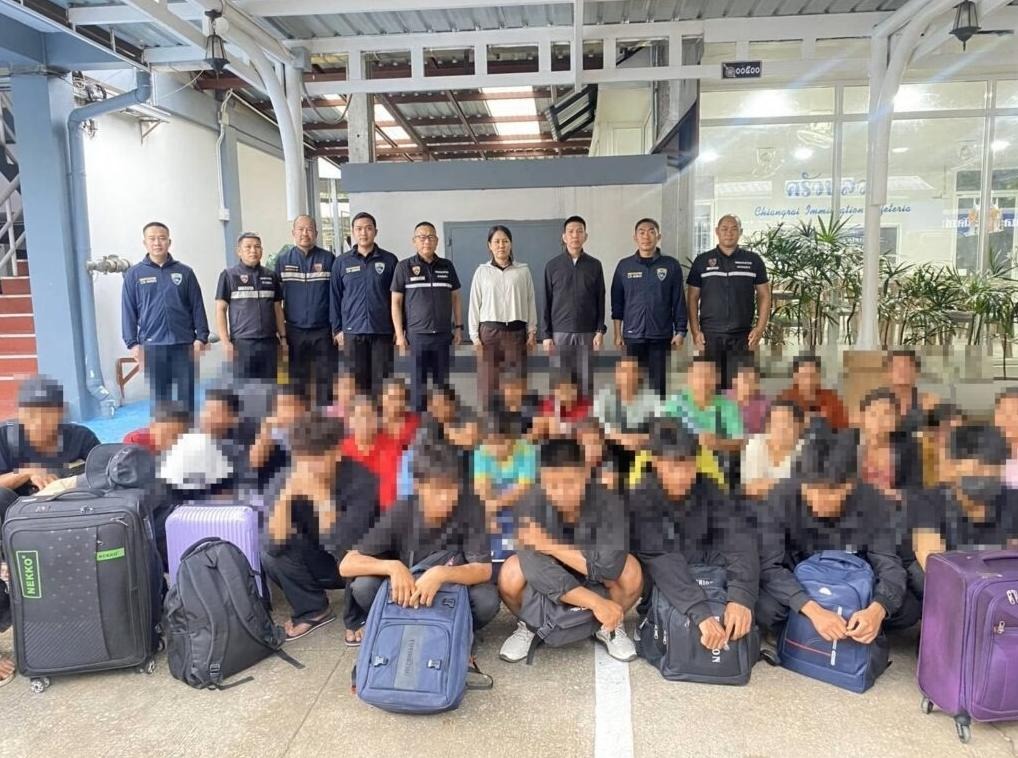
Thai immigration authorities have arrested 36 Myanmar nationals at a house in Chiang Rai Province that was allegedly being used as a transit point for undocumented migrants awaiting transport deeper into Thailand, according to Thai media reports.
The arrests took place on May 11 in the Pa O Don Chai (Thai: ป่าอ้อดอนชัย) area of Chiang Rai Province during a raid led by Thai immigration officers, local outlet Chiang Mai News reported.
Authorities detained 36 Myanmar nationals — 17 men and 19 women — inside the residence.
According to Thai officials, the operation followed an earlier crackdown on May 7, when immigration officers in Phitsanulok intercepted a human smuggling network transporting 149 undocumented migrants linked to Chiang Rai.
Investigators later identified the house in Pa O Don Chai as a temporary holding site allegedly used by brokers and smuggling networks before migrants were transported further into central Thailand.
Statements obtained from those detained indicated that each person had reportedly paid brokers between 5,000 and 10,000 Thai baht for transportation and assistance entering Thailand.
Most of the migrants reportedly crossed the border through informal jungle routes along the Thai-Myanmar frontier.
Thai authorities also stated that several individuals possessed legal border passes but were found outside the areas permitted under Thai immigration regulations.
Following the arrests, the group was transferred to the Chiang Rai Immigration Office in Mae Sai for identification and legal processing.
Thai authorities reportedly placed all 36 individuals on immigration watchlists and blacklists before deporting them back to Myanmar through the No. 1 Thai-Myanmar Friendship Bridge in Mae Sai.
The arrests come amid intensified crackdowns by Thai authorities on undocumented migration and human smuggling networks operating along the Thai-Myanmar border.
Economic hardship, armed conflict, forced recruitment, and instability inside Myanmar continue to drive many people to seek work opportunities in Thailand through both formal and informal routes.
Local observers say tighter border enforcement has also increased migrants’ dependence on brokers and smuggling networks, often leaving them vulnerable to arrest, exploitation, debt, and human trafficking.





Leave a Comments