

The second phase of the military regime’s election concluded on January 12, 2026, with the third and final phase scheduled for January 25. While the regime says results will only be formally confirmed after Phase 3, developments on the ground have reinforced widespread expectations that the Union Solidarity and Development Party (USDP) will ultimately form the government, regardless of public participation.
Across Shan State, Phase 2 was marked by technical malfunctions, heavy militarization, intimidation, and forced voting, casting serious doubt on the credibility of the process.
Phase 2 voting took place across multiple townships in Shan State:
- Southern Shan State: Kunhing, Ywangan, Hsihseng, Kalaw, Lawksawk, Mong Pan, Mawk Mai, Mong Kung, Laikha
- Eastern Shan State: Mong Khet (မိူင်းၶၢၵ်ႇ), Mong Ton, Mong Hpyak, Mong Peng, Mong Yawng, and Mong Yang
- Northern Shan State: Mongyai and Tangyan
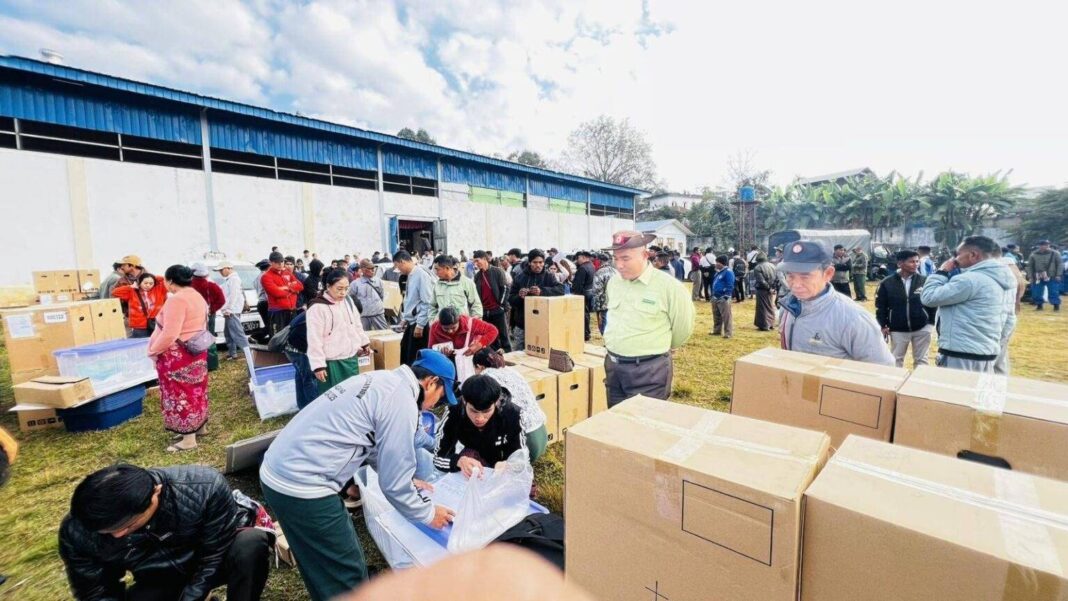
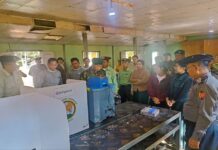
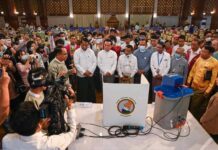
Reports from several townships indicate that Myanmar Electronic Voting Machines (MEVMs) malfunctioned during voting.
In Mawk Mai and Mong Hpyak, machines failed to print confirmation slips after votes were cast, forcing polling stations to suspend voting until replacement machines arrived. In Kunhing, voting was significantly delayed as many elderly voters struggled to understand how to operate the electronic system. Residents said most of those who turned up to vote were older citizens, resulting in confusion and long delays throughout the day.
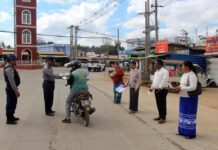
In Lawksawk and Ywangan townships, voters cast ballots under the close supervision of heavily armed soldiers. In Ywangan, where People’s Defense Force (PDF) activity has been reported, the military deployed fully armed personnel around polling stations.
Residents said such a visible military presence directly contradicts standard election procedures, which prohibit armed forces from operating near polling stations. Locals emphasized that turnout in these areas was driven not by political choice, but by fear of retaliation.
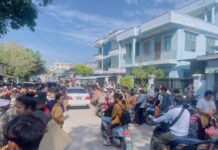
In Mong Yawng Township, eastern Shan State, pressure on residents was particularly severe. Local administrators operating under the regime reportedly warned that those who failed to vote would face fines, removal from household registration lists, and travel restrictions. Each household was also required to pay 5,000 kyats.
“Everyone is being forced to vote,” said a Mong Yawng resident. “The administrator of Nar Mun Mai village issued various threats, saying that if we don’t vote, they will collect money, strike us from the household lists, and prohibit us from traveling. On top of that, every household had to pay a mandatory fee of 5,000 kyats. They said if we don’t vote, we will be fined even more.”
Administrators also ordered residents living outside the township to return home to vote, threatening to remove their names from official household registries if they failed to comply.
“Those who are far away were also told to come back,” the resident added. “They were threatened with removal from the household list if they didn’t. People are busy, and everyone already knows the election results. This is just harassment.”
According to the local election sub-commission, Mong Yawng Township has 21,736 eligible voters across 40 polling stations in three wards and 21 village tracts.
In Kalaw Township, public voting reportedly showed similar levels of support for the USDP, the Danu Party, and the Pa-O National Organization (PNO). However, the USDP secured a decisive victory through advance voting and ballots cast by military personnel—a pattern repeated across multiple townships.
Overall, the USDP won the majority of seats in Shan State during Phase 2. Among ethnic parties, the Shan Nationalities Democratic Party (SNDP/White Tiger) secured seats in Laihka and Mong Kung, while the PNO won in Hsihseng.
Observers say Phase 2 has further demonstrated that the election is outcome-driven rather than participatory, with results shaped by advance voting, coercion, and administrative pressure rather than public will.
As Phase 3 approaches, many residents and analysts believe the final stage will merely formalize a result that has long been decided, reinforcing widespread perceptions that the military regime’s election is a procedural exercise designed to legitimize continued control, not to reflect the choice of the people.

Leave a Comments