

The military has uncovered several drugs production facilities in Hsipaw and Mongyai townships, though none have been identified or arrested so far, according to the Shan Herald Agency for News (SHAN) January 16 report.
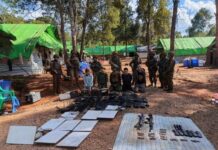
Since January 8, the military commission has seized drugs and three manufacturing sites and equipment in both townships.
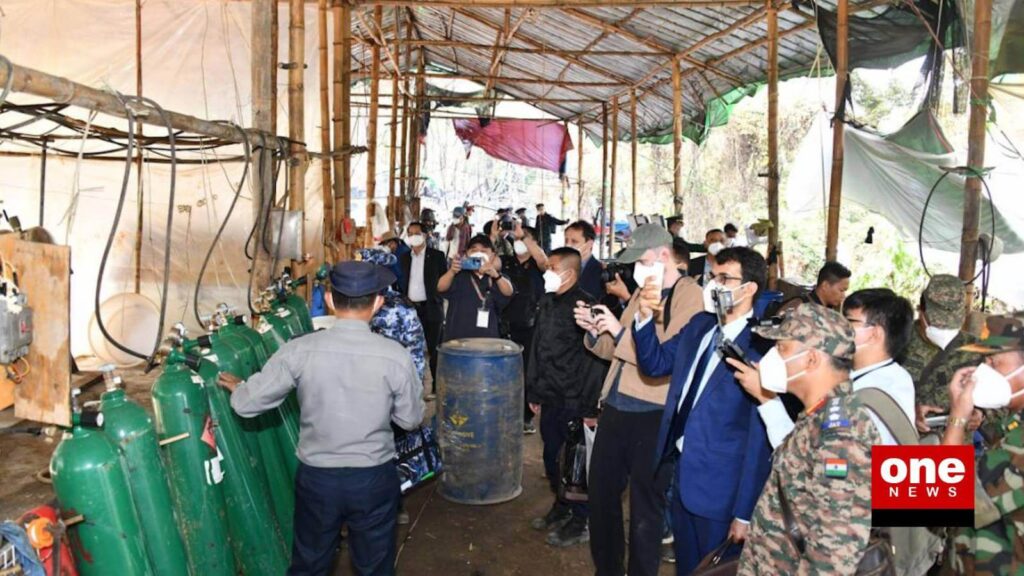
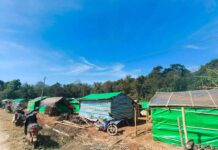
Following an airstrike on January 9 at the border between Hsipaw and Mongyai, officials reported finding at least four drug production sites, along with acid containers, gas cans, paper containers of chemicals, and glass jars.
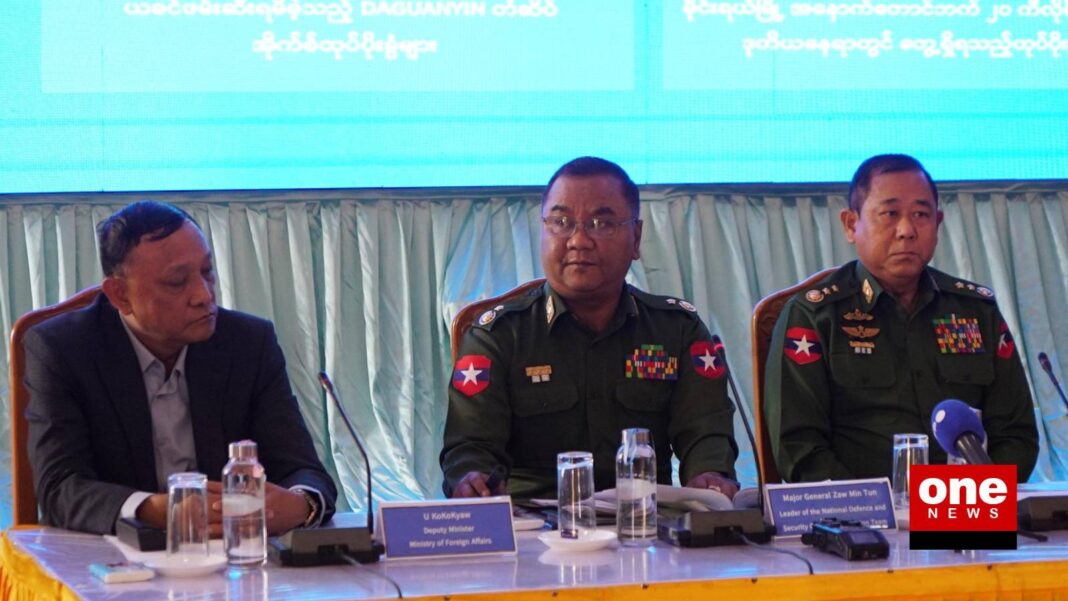
According to spokesman Maj. Gen. Zaw Min Tun, the operations are run by greedy individuals working with local ethnic armed groups to produce drugs, commit online fraud, and distribute them, but no arrests have been made yet.
A local man from Hsipaw remarked that the scale of the operation is surprising and ongoing, and someone will eventually be held responsible.
“It’s impossible that the military junta only knows now an operation this big. I don’t know how it will turn out, but it’s interesting. And it’s not over yet, it seems like someone will have to be found guilty,” a local man from Hsipaw told Shan Herald.
“The military tension is not that high. The military and the Shan army are close to each other on the ground, and it’s like they’re preparing for war. It’s not like there’s going to be a major war. It’s also a bit strange that they didn’t say who did it when they came to see it,” the man from Hsipaw Township added.
On January 15, more drug-making equipment was seized in Mongyai Township, with the military continuing to clear remaining sites. Another resident from Hsipaw noted that while tensions between the military and Shan State Progress Party/Shan State Army (SSPP/SSA) are present, a major war seems unlikely, though it’s odd no one has been named.
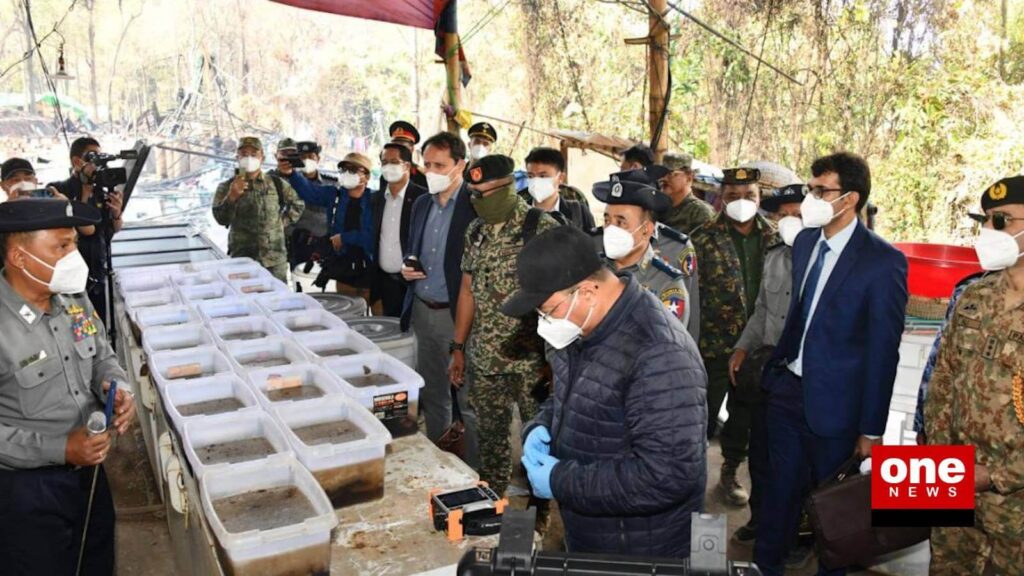
Maj. Gen. Zaw Min Tun also stated the seized drug sites in SSPP/SSA areas are fully under its control, of which the SSPP denied its involvement in a statement following the accusation.
However, local sources claimed that Kokang residents under SSPP protection were operating the production facilities, though this allegation remains unverified, suggesting that both MNDAA and SSPP could be involved.
Major General Zaw Min Htun highlighted that the drug production sites seized in the Shan State Progressive Party/Shan State Army (SSPP/SSA) areas in Hsipaw and Mong Ya townships were due to the full cooperation and exchange of intelligence information with China.
Subsequently, the armed groups are mainly using drug production and trafficking as a way to earn money, and the sea route is used by the Arakan Army (AA); the Karen National Union (KNU), Karen National Liberation Army-Peace Council (KNLA), People’s Defense Force (PDF) groups used Thailand route; and the PDF and Chin National Front (CNF) groups the Indian route; said the military junta spokesman said.
The three drug manufacturing sites seized in Hsipaw and Mongyai townships are the main drug manufacturing sites, with a total value of 1620 billion Kyats, accounting for more than 33 percent of the total drugs seized in 2025, the military junta spokesman said.
According to a recent report from Shwe Phee Myae, the drug production facilities seized by the military council are under the control of the SSPP, Maj. Gen. Zaw Min Htun, the council’s spokesman, told the media on January 14.
He explained that these facilities are located in areas from which the military council withdrew troops in 2015, following an agreement with the SSPP. He added that some ethnic armed groups and drug producers have taken advantage of this situation to set up drug factories in collaboration with others. While he did not name the groups involved, he stated that strict action will be taken against them.
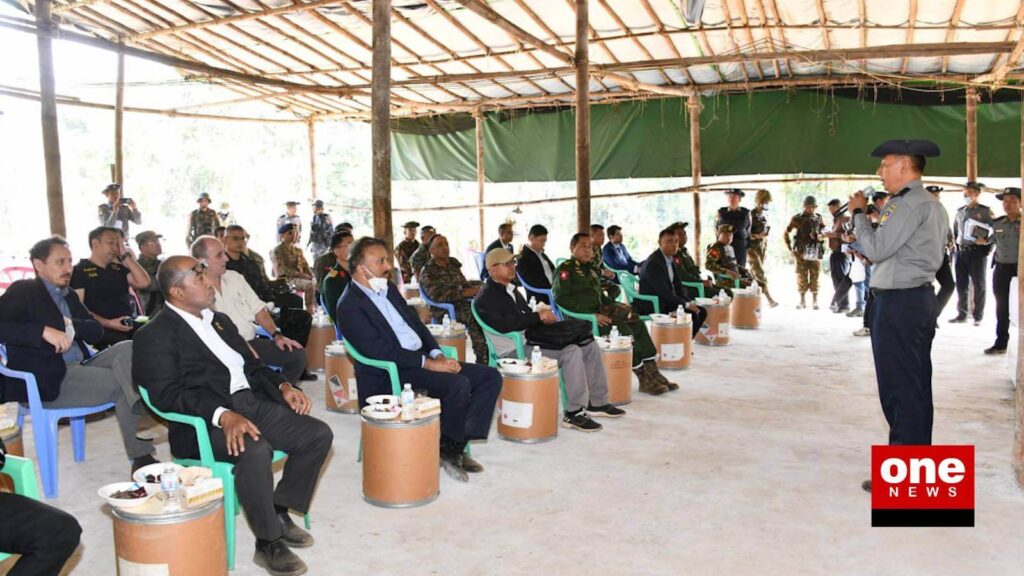
On January 14, the State Security and Peace Commission (SSPC), formerly known as State Administrative Council (SAC), invited diplomats, military attachés, and drug control agencies from China and Thailand.
Junta’s Routine Allegations
For decades, the military junta has accused various ethnic armed organizations (EAOs) of drug production and trafficking, yet its own role in the trade has long been questioned.
It often turned a blind eye as its militias and the BGF funded their troops this way. In many cases, the junta either permitted the drug trade involving certain EAOs or had a direct stake in it, as frequently reported in the media.
It’s an open secret that military commanders in Shan State and beyond have enriched themselves through ceasefire EAOs, their militias, and the BGF by engaging in both legal and illegal border trade, including drug trafficking.
The latest scam center operation is no exception, with the junta now trying to distance itself and present a façade of innocence as a law-enforcing authority.
AA Leader Tun Myat Naing on Drugs Trafficking Allegations
In an interview with The Irrawaddy on October 2, 2025, AA leader Tun Myat Naing (TMN) responded to the drugs trafficking allegations as follows.
TMN, addresses accusations against the Arakan Army (AA) regarding drug trafficking, asserting that these claims are part of a long-standing strategy to discredit them. TMN argues that repeated false accusations create a perception of guilt, irrespective of the truth.
He expresses frustration at the audacity of the junta, suggesting they are well aware of the actual sources of the drugs and implying that the AA could leverage significant financial resources if they were truly involved in the drug trade. TMN points out that these accusations are not only made through media channels but also involve international efforts, like letters to Interpol.
He highlights his observations that the previous control of the area by the junta means they know the drug trade routes, raising questions about how drugs are transported from Northern Shan State to Yangon. TMN emphasizes that the truth can be ascertained simply by engaging with local communities in Northern Shan State.
He suggests that the junta’s allegations are aimed at undermining the AA’s legitimacy, positioning the accusations as a tactic for political gain rather than factual assertions. Ultimately, he insists that while the AA is aware of the situation, the junta’s knowledge far exceeds theirs, reflecting a deliberate attempt to frame the AA as drug dealers.
The core point of TMN’s rebuttal may be summed up word for word as his answer to the issue: “And they don’t just accuse us in the media but also send letters to Interpol to arrest our people. Following our territorial gains, they fabricate additional narratives to disrupt our diplomatic communication and undermine our legitimacy. They are framing us as mere drug dealers. They have always portrayed us in that way, and they have become used to it. It is their strategy to attack us.”
The strategy used on AA is also used on EAOs that are actively fighting against the military junta.
Kokang and Karen BGF/KNA
The military junta’s role in drug trafficking and cyber scam operations, alongside EAOs, militias, and the BGF, is widely known and reported, especially in northern Shan State’s Kokang Self-Administered Zone and the Karen-Thai border areas involving the Bo Chit Thu-led Karen Border Guard Force/Karen National Army (BGF/KNA), Democratic Karen Benevolent Army (DKBA), and KNLA-PC.
The junta’s connections with ethnic leaders and armed groups raise serious questions about accountability, complicity, and governance in these illegal activities.
Historically, it has partnered with local leaders, such as those in Kokang, to control drug production and trafficking routes, benefiting both sides—military forces gain funding and support, while local leaders receive protection and legitimacy. These arrangements often maintain stability by turning a blind eye to crimes that serve the junta’s interests.
Recent arrests and sentencing of former Kokang leaders in China reveal the fragility of these alliances, possibly driven by external pressure or attempts to appear more legitimate. The shifting relationships underscore the junta’s balancing act, with similar patterns seen in its dealings with the Karen BGF/KNA, DKBA, and KNLA-PC, where cyber scams and other illicit operations flourish under the military’s quiet approval or assistance, highlighting the use of collusion to maintain power.
Analysis
The recent seizure of drugs and production facilities seems aimed at portraying the junta as innocent while boosting its much-desired legitimacy on the international stage.
Junta’s Spokesman Zaw Min Tun told the media the operation was based on intelligence from their Chinese counterparts, expressing enthusiasm and pride in showing close cooperation to combat illicit drug production and trafficking. However, some may see it as simply following orders from China.
Commenting on the matter, a Shwe Phee Myay editorial questioned whether the arrests were for political gain ahead of elections, an attempt to mislead China into linking Operation 1027 to drugs, or a move to achieve two goals at once.
Either way, the uncomfortable reality is that the junta’s credibility as a responsible authority in addressing drug trade and scam operations remains doubtful, given its decades-long entanglement in such activities.

Leave a Comments