
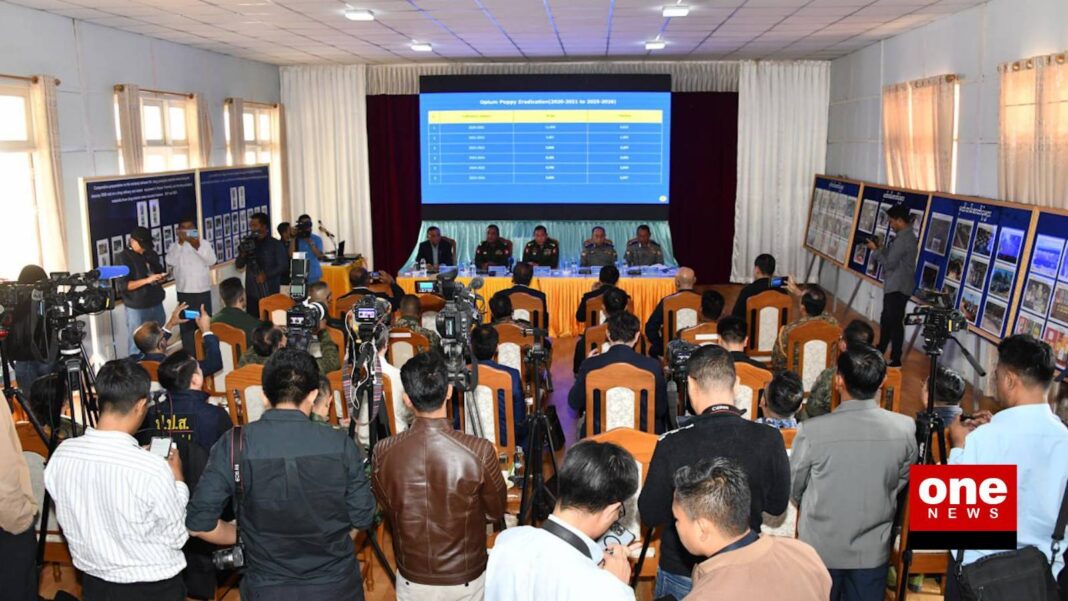
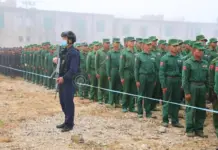
The military regime has carried out more than a week of raids targeting alleged drug production sites and online scam operations in Hsipaw and Mongyai townships in northern Shan State, yet has so far failed to identify or arrest any suspects.
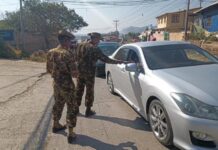
According to military sources, junta troops began sustained search operations on January 8 in areas around Nam Lan village in Hsipaw Township and across parts of Mongyai Township. Following a junta airstrike on January 9 along the Hsipaw–Mongyai border, at least four alleged drug manufacturing sites were discovered.
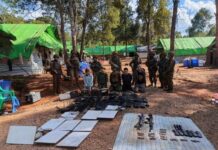
In official statements, the military claimed it seized large quantities of drug-production equipment, including acid drums, gas tanks, chemical barrels, and glass distillation apparatus. Despite describing the locations as major production hubs, authorities have not named any individuals or organizations allegedly responsible.
“It is impossible that the junta only discovered operations of this scale now,” a male resident of Hsipaw told SHAN. “I don’t know what they plan to do next, but it feels unfinished. At some point, they will need to present a suspect.”
On January 15, the military announced further seizures of drug-related equipment in Mongyai Township, saying clearance operations were continuing amid suspicions that additional production sites remain undiscovered.
“Although military tensions are not particularly intense, both junta forces and the Shan State Progress Party/Shan State Army (SSPP/SSA) are operating close to each other on the ground and appear to be on alert,” the Hsipaw resident said. “What is unusual is that despite these inspections, no specific culprit has been identified.”
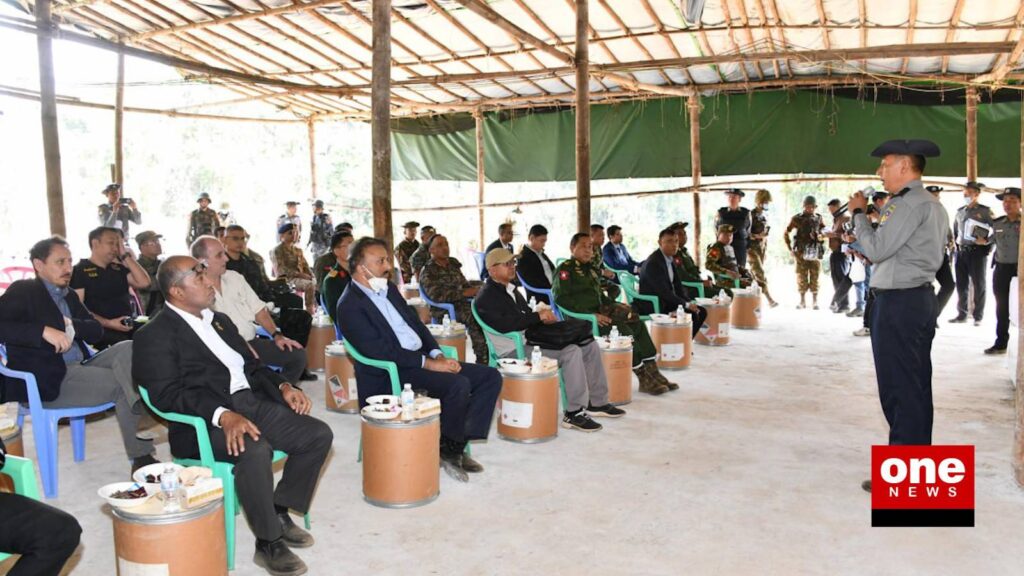
Residents report that while large-scale clashes have not occurred, the close proximity of multiple armed forces has kept the area on edge. Locals say the absence of any named perpetrators during the raids has raised questions about the true intent of the operation.
Junta spokesperson Major General Zaw Min Tun claimed the discoveries were made possible through full intelligence-sharing cooperation with China and alleged that “unscrupulous greedy individuals” were working with ethnic armed organizations to produce narcotics and operate online scam businesses.
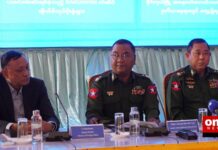
On January 14, the military transported foreign diplomats, military attachés, representatives from Chinese and Thai drug control agencies, and officials from the United Nations Office on Drugs and Crime (UNODC) by helicopter to inspect the seized sites. A press conference was later held at Anisakan Airport in Pyin Oo Lwin, where the junta declared the operation a major success.
Major General Zaw Min Tun said the seized materials were worth an estimated 1.62 trillion kyats and accounted for more than 33 percent of all drugs seized nationwide in 2025. He added that three of the sites in Hsipaw and Mongyai were considered primary production hubs.
During the briefing, the junta also accused multiple armed groups of financing their activities through drug production and trafficking, alleging that the Arakan Army (AA) controls maritime routes, the Karen National Union (KNU), Karen National Liberation Army (KNLA), and People’s Defence Forces (PDF) manage trafficking routes toward Thailand, while the PDF and Chin National Front (CNF) operate routes toward India.
Despite these sweeping allegations and the high-profile presentation to international observers, no arrests have been announced—leaving residents questioning whether the raids are intended to dismantle drug networks or serve broader political and military objectives.

Leave a Comments