


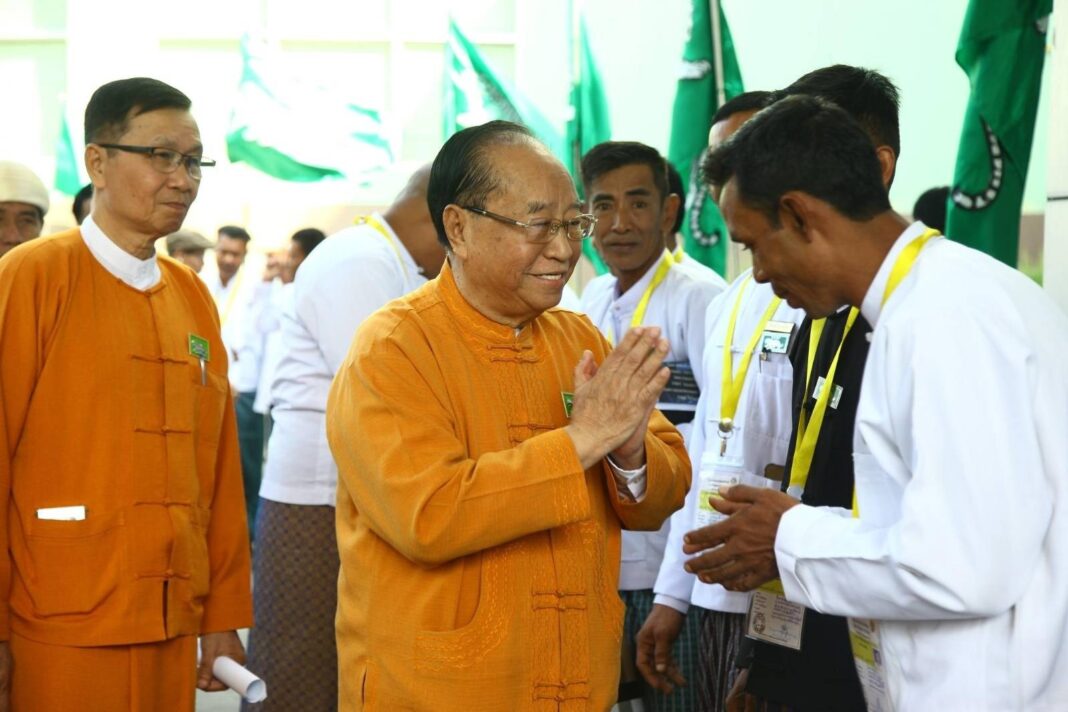
Leaders from three political parties, including the Shan Nationalities Democratic Party (SNDP), also known as the White Tiger Party, sent a letter to regime leader Senior General Min Aung Hlaing in early January, raising concerns over a lack of freedom and fairness in the handling of advance votes during Phase 1 of the junta-organized election.
The SNDP, which fielded 584 candidates nationwide, secured only one Pyithu Hluttaw seat in Lang Kho (Langkhur) Township during Phase 1. The party has also won an uncontested Pyithu Hluttaw seat in Mong Nai Township, which is scheduled to vote in Phase 3 of the election.
On January 5, the Union Election Commission (UEC) responded to the parties’ complaints, stating that political party representatives would be allowed to accompany election officials during the collection of advance votes in Phases 2 and 3.
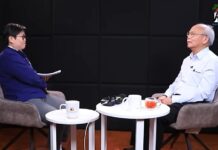
SHAN reporter Sai Khwan Murng spoke with Sai Aik Pao, chairman of the SNDP, about the letter sent to Min Aung Hlaing, concerns surrounding advance voting, and the overall election process.
Q: We understand that the SNDP submitted a letter to Senior General Min Aung Hlaing on January 2 regarding the USDP’s victory through advance votes in Phase 1. Could you explain the content of that letter?
Sai Aik Pao:
The letter focused on the issue of advance votes. We had no way of knowing who actually cast those votes. According to election law, a list of advance voters should be publicly posted at polling stations, but we never saw such lists. Moreover, our candidates were neither present nor informed when advance votes were collected. There was no transparency. We simply requested that the process be conducted transparently in Phases 2 and 3.
Q: Was the letter sent only to Senior General Min Aung Hlaing, or was the UEC also informed? Have you received any response?
Sai Aik Pao:
The letter was addressed to Senior General Min Aung Hlaing and the chairman of the UEC, with copies sent to the chairpersons of State and Regional Election Commissions. We did not receive a formal written response. However, they have begun inviting our party representatives to observe the collection of advance votes.
For example, in Mong Peng Township in eastern Shan State, our representatives were initially not invited. After we contacted UEC member U Khin Maung Oo, he immediately reached out to the Shan State UEC chairman. Following that, they began calling our candidates to observe. That can be seen as a step toward greater transparency.
Q: With Phase 1 completed and Phases 2 and 3 approaching, how would you describe the current situation regarding advance votes? Do you suspect electoral malpractice?
Sai Aik Pao:
There is more transparency now because they are contacting us. Since Phases 2 and 3 have not yet taken place, it would not be appropriate to draw conclusions at this stage. However, allowing our candidates to observe the advance voting process is a positive development.
Q: In Muse Township during Phase 1, the SNDP was leading after public ballots were counted, but the result changed once advance votes were added. What is your response to that outcome?
Sai Aik Pao:
You can judge that for yourself. Out of 18 polling stations, the SNDP won 17. The result only changed after advance votes from the final station were included. That situation could reasonably be considered incorrect or unfair. We are considering filing a formal objection.
The difficulty is the cost. Traveling from Muse to Naypyidaw is expensive, and submitting an objection requires a deposit of one million kyats. When transportation and legal fees are added, the total could reach between five and ten million kyats. Given our limited financial resources, we are still debating whether it is worth pursuing.
Q: The SNDP won Pyithu Hluttaw seats in Lang Kho and Mong Nai in Shan State. How optimistic are you about Phases 2 and 3?
Sai Aik Pao:
I remain hopeful. These areas have large Shan populations. In Phase 1, places like Taunggyi and Hopong have fewer Shan residents. To be honest, we should have won in Tachileik. We were initially leading, but it is difficult there. Militias are present, and they will obviously vote for the USDP because they operate under military command.
Q: As one of six parties contesting seats nationwide, how do you assess the SNDP’s overall position?
Sai Aik Pao:
We used to believe that if the process were transparent, we could secure the second-highest number of seats. Now, that seems unlikely. I don’t even want to discuss it anymore. Talking about it doesn’t change anything, so I prefer to remain quiet.
Q: What do you expect the post-election Parliament (Hluttaw) to look like?
Sai Aik Pao:
That will depend on the final results. However, the USDP already has enough seats to form a government. Even before the election concludes, when you combine their seats with the 166 military appointees, they already hold a governing majority.
Q: If a new government is formed, how does the SNDP plan to respond? Would you join a coalition or remain in opposition?
Sai Aik Pao:
That will depend on the final results and the overall situation. I can’t decide in advance. What matters most is serving the interests of the people. The public’s benefit must come first.
Q: Is there anything else you would like to add?
Sai Aik Pao:
No. I’m exhausted from talking about it.



Leave a Comments