




As political parties campaign for votes in Myanmar’s junta-organized election, critical environmental issues remain conspicuously absent from their platforms. Since the military coup, communities across the country have endured not only armed conflict and displacement but also accelerating environmental degradation. Yet few parties have addressed these crises in their campaign messaging.
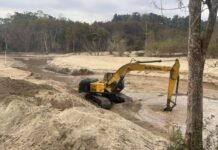
Environmental experts in Myanmar and Thailand have raised urgent concerns over conditions in Mong Hsat Township, Eastern Shan State, where toxic runoff from gold and rare-earth mining has contaminated the Nam Kok River. The pollution threatens drinking water, agriculture, and public health for more than one million people living along the river’s course in both Myanmar and northern Thailand.
Despite the severity of the situation, residents say environmental protection has been largely ignored during election campaigns.
Manifestos Without the Environment
A total of 57 political parties—six national and 51 state or regional—are set to contest the so-called election. Their published manifestos outline policies on governance, education, health, and the economy, but offer little or no concrete commitment to environmental protection, pollution control, biodiversity conservation, or reform of weak environmental laws.
On December 4, during a meeting at the Mong Hsat Indoor Stadium, Lin Zaw Htun, Chairman of the Union Solidarity and Development Party (USDP) for Eastern Shan State, met with residents and committee members. According to locals, the discussion focused on promoting “Union Spirit” and mastering the Burmese language, with no specific mention of environmental protection.
“They mention the environment briefly, but there’s nothing concrete that gives us hope,” said one Mong Hsat resident who attended the event.
In Mong Hsat Township, the USDP, the Shan and Ethnic Democratic Party (SNDP), and the National Unity Party (NUP) are contesting the election.
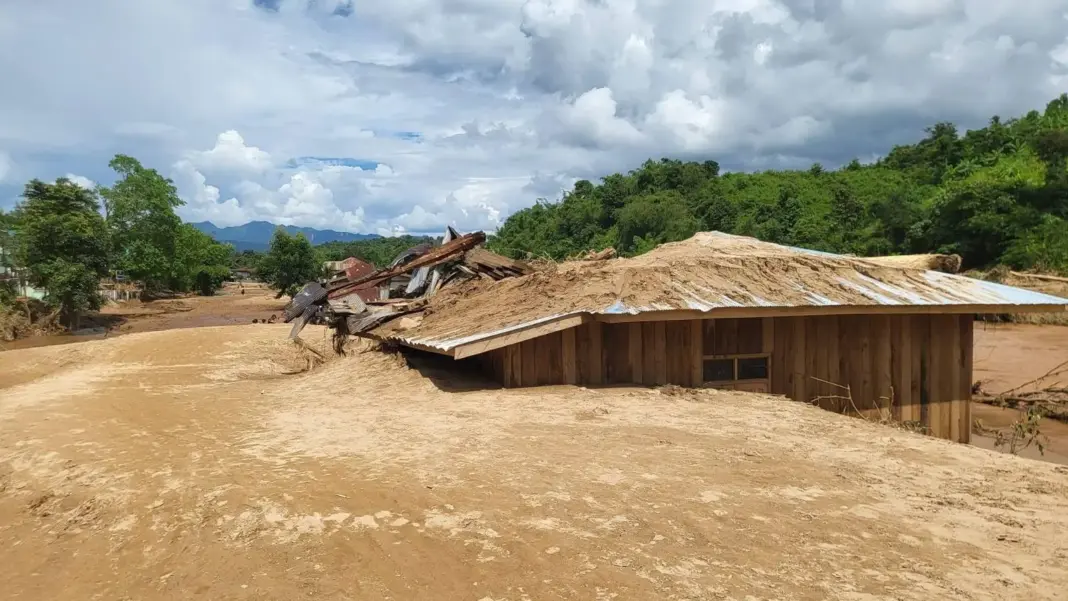
For residents living with recurring floods and polluted waterways, campaign promises have lost credibility. Many say environmental issues are raised during election periods only to be forgotten afterward.
“No matter which party it is, they talk during the campaign, but when disasters happen, no one comes,” said Sai Kham (a pseudonym), a Mong Hsat resident who experiences flooding almost every year. “That’s why people no longer trust these promises.”
Others echoed similar sentiments, saying they have learned to rely on themselves rather than political parties. “If they help, it’s good. If not, we solve our problems on our own,” said Sai Harn (a pseudonym), a resident of Mongton Township.
Mong Hsat is among the 102 townships included in the first phase of voting, scheduled to begin on December 28. Although several parties are contesting seats there, public interest remains low.
Pollution With Cross-Border Consequences
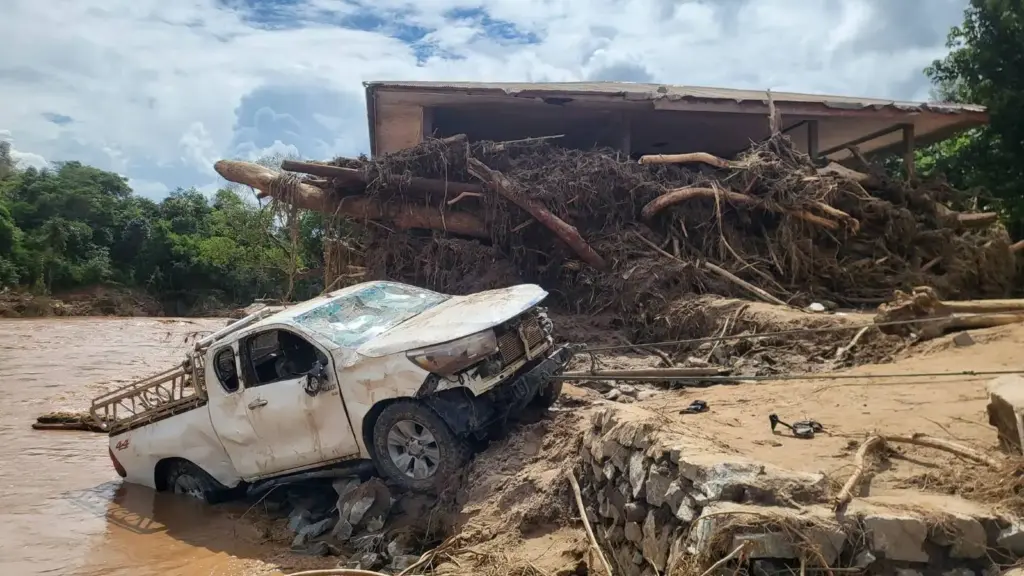
Since April 2025, Thai authorities have conducted biweekly water tests of the Nam Kok River. The results show arsenic and lead levels consistently exceeding safety standards. Originating in Mong Hsat, the river flows through Chiang Rai and Chiang Mai before joining the Mekong River, raising concerns well beyond Myanmar’s borders.
In May 2025, the Shan Human Rights Foundation (SHRF) reported that mining operations in the upper reaches of the river—areas controlled by the United Wa State Army (UWSA)—have caused water pollution, flooding, and environmental damage.
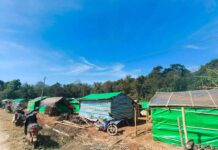
By October, SHRF identified China Investment Mining, a Chinese state-backed company, as a major operator in the Mong Yun area of Mong Hsat Township, noting the expansion of two rare-earth mining sites near the river.
According to SHRF, the companies are using “in-situ leaching,” a method that involves injecting chemicals into the ground to extract minerals. SHRF spokesperson Sai Hor Hseng said this practice has contributed to flooding and farmland damage due to contaminated sediment.
He said that without conditions for free political participation, it is difficult for any election outcome to lead to meaningful environmental protection.
“When elections lack fairness and public trust, it becomes harder for elected representatives to act in the public interest, including on environmental issues,” he said.
Sai Hor Hseng added that the election appears aimed at securing political legitimacy rather than addressing long-standing social and environmental problems.
Noted* This feature was written by Sai Harn Lin for the Burmese edition of the Shan Herald Agency for News and translated into English by Eugene.






Leave a Comments