


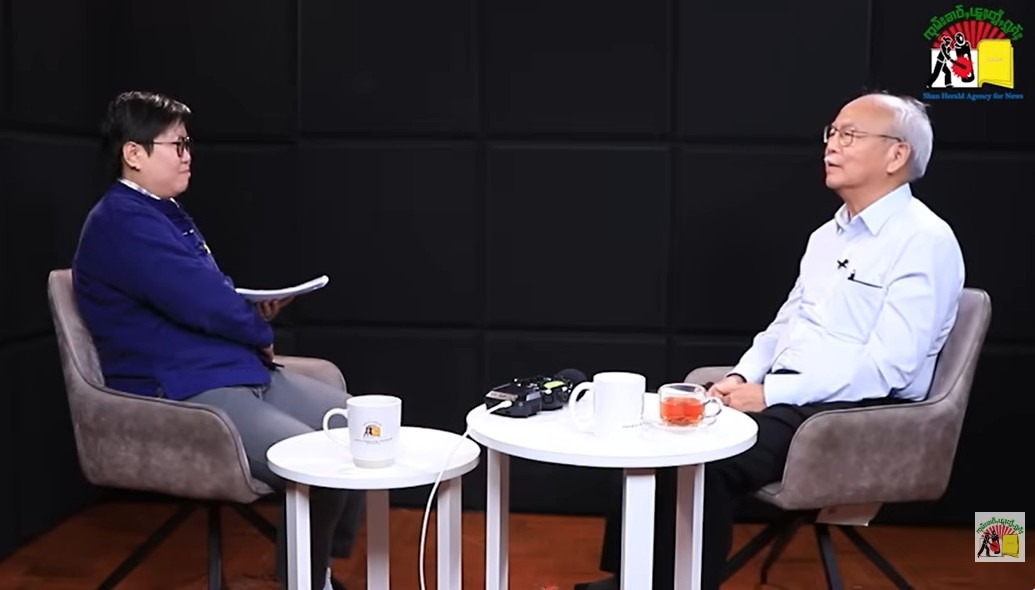
Shan Herald Agency for News (SHAN) is honored to speak with Sao Harn Yawnghwe, Executive Director of the Euro-Burma Office (EBO), a development and democracy consultancy based in Brussels. He is widely known as the youngest son of Myanmar’s first President Sao Shwe Thaik and Sao Nang Hearn Kham, founder of the Shan State Army (SSA), and has long been connected to Myanmar’s political struggle. Sao Harn also played a key role in the country’s peace negotiations during President U Thein Sein’s administration.
In this conversation, he discusses why Myanmar’s political and military crises persist, why peace efforts have repeatedly failed, and why the path toward reconciliation remains stalled.
Nang Seng Nom (NSN): Thank you very much for joining us on December 1st, Sao Harn. With the junta’s election scheduled for December 28, many wonder whether it represents an exit strategy for the military, now operating as the State Security and Peace Commission. Given Myanmar’s long cycle of elections followed by coups, could this election lead to political change? How do you see it?
Sao Harn Yawnghwe (SHY): There are two ways to look at it. Some people believe the military wants an exit—that it is trying to step away from politics. But the real question is: What kind of exit? Is it an exit that leads to civilian rule? Or is it simply an exit from the crisis of non-recognition they currently face?
If we look at the situation realistically, this election is not an exit toward democracy.
First, the military does not control the entire country. Any election held without full territorial control cannot reflect the will of the whole population.
Second, in the 2020 election, besides the USDP, three major parties—the NLD, SNLD, and ANP—won 80–90% of the popular vote. None of these parties can participate in this election. So how can the outcome represent the people’s will?
This is why I believe the military’s real objective is not democratic transition but regaining legitimacy and reinstating the 2008 Constitution. If the international community accepts the election, the military will secure long-term political involvement.
NSN: So the military is not moving toward democracy; they intend to remain in power?
SHY: Yes. Under the 2008 Constitution, their political role is permanent. This election is a mechanism to preserve that structure.
Shan State’s Fragmented Conflict
NSN: Many argue that Myanmar’s political crisis cannot be solved without resolving the complex issues in Shan State. Yet Shan State’s situation has only become more fragmented, with more armed groups and a lack of unity among the Shan armies themselves. As someone deeply involved in peace and Shan unity efforts, why are these issues still unresolved?
SHY: Because the approach has been fundamentally wrong. Since General Khin Nyunt’s era, the government has encouraged armed groups to settle differences militarily rather than politically. He even told the Wa to “fight and take Shan State if you want it.”
This fostered a culture where force, not dialogue, became the norm.
We saw this again last year when Ta’ang and Kokang forces seized territories they wanted. Even earlier, the SSPP and RCSS fought each other. Although fighting between them has recently decreased, the underlying approach has not changed.
NSN: What would correct this approach?
SHY: First, the fighting must stop; no peace is possible while battles continue. Then meaningful dialogue must follow, with public participation. Decisions about territory and administration cannot be left only to armed groups; the public bears the consequences and must have a voice.
Why the NCA Failed and What Could Replace It
NSN: The NCA was never a full peace agreement. It was only an agreement to start political dialogue. After the coup, when meetings and dialogue became impossible, the NCA could no longer function. Without dialogue, peace cannot be achieved.
To find a path better than the NCA, the most important issue is the end goal. All the revolutionary groups say the military must leave politics completely and that the 2008 Constitution cannot be used anymore. But the military wants the opposite; they want to keep the 2008 Constitution and stay in politics. With such opposing goals, there is no ground for dialogue right now. Dialogue only works when at least some views align.
At the same time, the military is increasing its fighting and bombing of civilians. In this environment, it is extremely difficult to move toward peace.
After the election, they might offer dialogue to gain international recognition. But if their goal is simply to continue ruling under the same system, the other side will not accept it. That is why the situation is stuck, and why a better path cannot be created unless the basic political goals shift.
The Human Cost and the Risks Ahead
NSN: Myanmar’s crisis reflects a global decline in democracy, but the public suffers the most. What message would you give the military?
SHY: The military exists to protect the people from external threats, not to fight its own citizens. They must reflect deeply on what they have become.
NSN: Conflict continues everywhere, and it seems that armed struggle is the only path left. How bad could the situation become if this continues?
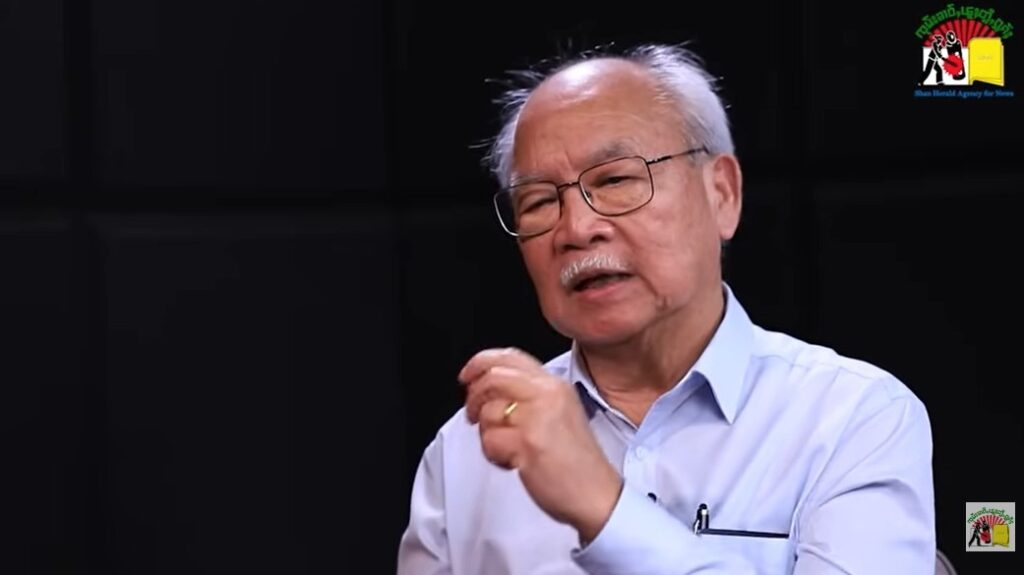
SHY: Very bad. Using force alone to solve political problems is the wrong path. It will only escalate.
Neither side will win decisively. One side may gain an advantage temporarily, then lose it. Only civilians will suffer.
A prolonged civil war could even invite foreign intervention. Neighboring countries will not wait forever. If Myanmar cannot resolve its own conflict, others may try—and that would be far worse.
I urge both sides, especially the military, to recognize that endless fighting risks the loss of the country itself.
Personal Reflection and the Search for a New Path
NSN: You personally experienced war, displacement, and loss. Yet you still engaged in dialogue with the military. Did you hold resentment? What motivated you?
SHY: If I acted out of resentment, the cycle of revenge would never stop. Because of my faith, I leave judgment to God. My responsibility was to work for stability if dialogue could help.
At that time, dialogue had a real effect. The context was different from today; talks could actually be implemented.
NSN: Amid today’s escalating conflict, how can a new path to peace be created?
SHY: A new path requires aligned goals, and we are not there yet. Revolutionary groups understand that political issues must eventually be solved politically. It is unclear whether the military understands this.
If the military is sincere, it must first stop bombing civilians and declare a unilateral ceasefire. Without that, no one will believe claims of wanting peace.
Breaking the Cycle
NSN: Myanmar seems trapped in a cycle—peace talks, some reform, an election, then another coup. How can the country escape this?
SHY: If we look only at Myanmar, it feels hopeless. But many countries have gone through similar turmoil and eventually found a path forward. Sometimes opportunities arise unexpectedly. We must be prepared when that moment comes; otherwise, it will slip away.
NSN: You have worked behind the scenes for years. How do you hope to see Myanmar evolve in your lifetime?
SHY: I don’t know if things will improve in my lifetime. But I hope the younger generation will carry on and find the solution.
NSN: Is there anything else you would like to say to the audience?
SHY: People are suffering deeply. The public sees nothing good in the military, and that may be true. But I believe there are good people within the military. To them, I say this: If you truly care for the country, you must act. Do not let Myanmar fall further behind its neighbors. If this crisis continues, it will not only destroy the public—it will destroy the nation.
NSN: Thank you very much, Sao Harn, for your time and insights.
SHY: Thank you.



Leave a Comments