




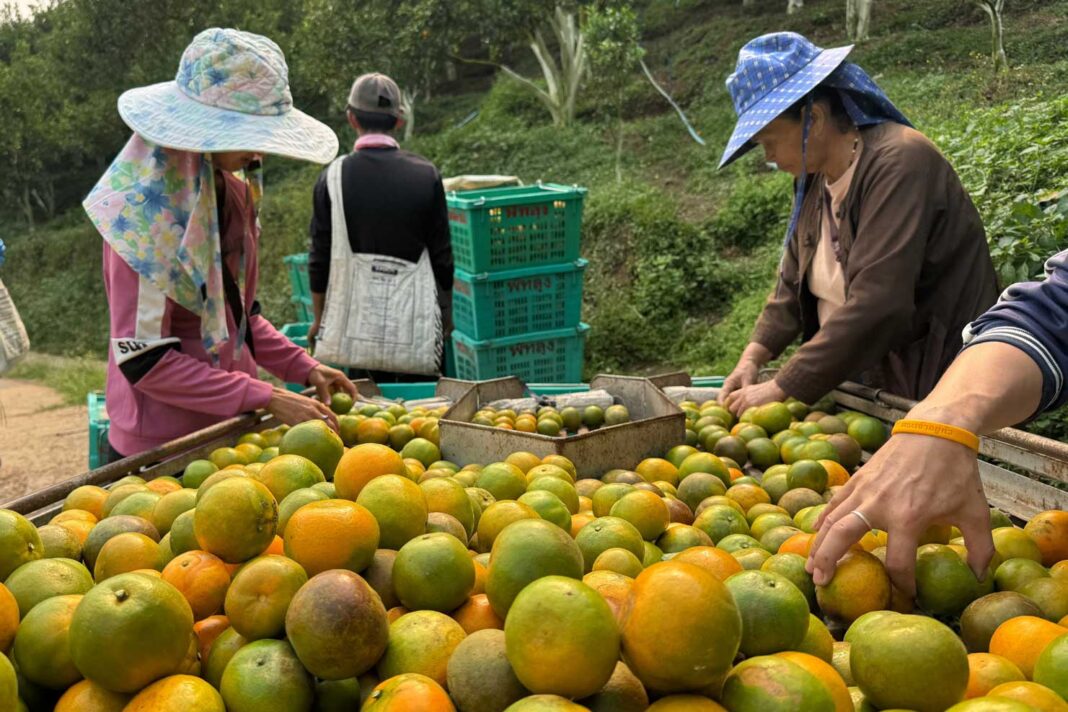
War refugees from Myanmar’s Shan State now labor in Thailand’s orange orchards, where they face toxic pesticide exposure, meager wages, and no legal protection.
A sharp chemical tang hangs in the humid air of northern Thailand’s orange groves.
For most visitors, one breath of this pesticide-laden atmosphere would be enough to bring on nausea or dizziness. But for hundreds of migrant workers from neighboring Myanmar, it’s the air they breathe every day.
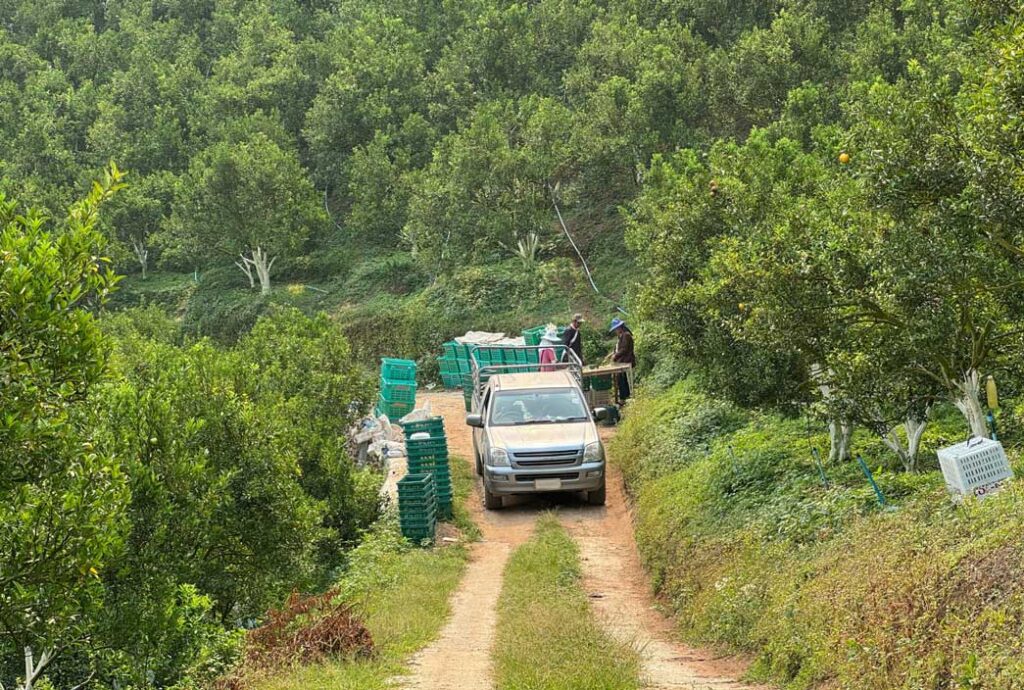
Along the misty hillsides of Fang District – about 150 kilometers north of Thailand’s northern Chiang Mai province and just 75 kilometers from Myanmar’s conflict-ridden Shan State – these workers live and labour in precarious conditions.
Among them is 15-year-old Nang Awm*, who fled her hometown of Namlan in northern Shan State earlier this year, trading the violence of home for the quiet hazards of the orchard.
Alongside her older sister Nang Yu*, Nang Awm harvests oranges on steep, pesticide-slick hillsides where wages are low and safety is an afterthought.
“I’ve been here for five or six months,” she told her story during her lunch break. “I earn 100 baht (about $US 30) a day. But if I don’t pick, I don’t get paid.”
Nang Awm is of school age, but like many others in the country, ongoing conflicts and political turmoil since Myanmar’s 2021 military coup have distanced her from the classroom and brought her into the workforce.
In her case, it was forced military recruitment by the Shan State Progress Party/Shan State Army (SSPP/SSA) that brought her to Thailand.
“You can’t stay at home. If there are no boys, they start taking girls,” she says.
“It’s very exhausting working here. The pesticide smell is one thing, and then the orange trees are planted on steep hills. If you’re not careful, you could slip and fall.”
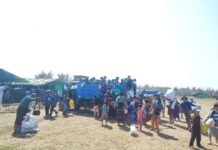
There are dozens of families like Nang Awm and her sister in the orange farms that are dotted in and around Fang, according to the investigation by Shan Herald News, which shared its findings with Mekong Eye.
Each farm employs about four migrant families and while a precise number of such farms in the district is hard to come by, a 2023 research paper estimated that there are more than 750 mandarin orchards alone in the area.
Most of the oranges are then sent to Talatt Thai, the wholesale market in Pathum Thani, a town to the north of the capital Bangkok.
From there, they are sent to the rest of Thailand. According to the migrant workers who work on these farms, wealthy owners of trading companies and representatives of companies that export the oranges to other countries sometimes come to the farm to buy directly from them.
Since February 2021, escalating conflict in Shan State has displaced thousands of civilians, pushing many, especially young people and women, across the border into northern Thailand.
Fleeing forced conscription, airstrikes, and economic collapse, these migrants often end up in exploitative agricultural jobs with little to no legal protection and earning below Thailand’s minimum wage.
Lacking legal documents, access to healthcare, or awareness of their rights, these workers face chronic poverty, health risks, and insecurity.
Toxic work, meager pay
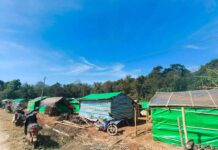
Workers in the wide, hilly groves must cover their noses and mouths with masks to avoid inhaling the harsh pesticide smells. The intense smell of pesticide pervades the surrounding area, including sleeping quarters and children’s play areas, small makeshift huts near the fields.
The workers carry bags on their sides and metal cutters in hand to harvest ripe oranges.
Despite their contribution to Thailand’s agricultural exports, migrant workers in Fang’s orchards earn far below the country’s legal minimum wage. The government raised regional minimum wages in 2025 to between 337 and 400 baht per day, around $10 and $12.
But interviews with workers show that most receive between 100 and 220 baht ($3 and 7$), far short of what’s needed to survive. An egg now sells for 5 baht (15 cents); pork can cost 180 baht ($5.5) per kilogram. For many, one day’s wage won’t buy a family meal.
“Even those who’ve worked here for years get only 200 baht ($6),” says Sai Su*, a long-time migrant from Shan State who arrived in Thailand during the Myanmar military’s brutal “Four Cuts” counterinsurgency campaign in the late 1990s.
“When there’s no work, there’s no food,” says Sai Su, who works in a different orchard from Nang Awm and her sister. “Sometimes we borrow from the boss, but that debt just keeps growing.”
Work is less reliable than ever. Since the pandemic, international fruit demand has dropped, dragging down orange prices. “When there’s too much fruit, the price falls to just 5 or 10 baht (15 or 30 cents) a kilo,” explains Khun Wan*, an orchard owner in Fang.
To compensate, many orchardists have increased the use of chemical fertilisers and pesticides to boost yield and appearance. Others have abandoned citrus altogether, switching to crops like durians.
Workers say they spray emamectin benzoate every four days, without gloves, goggles, or proper masks or use the same masks repeatedly, despite the Thai Ministry of Health’s official recommendation that workers should wear protective clothing when handling disinfectants.
“When the employer tells us to spray, we just have to do it. I know it’s dangerous, but since it’s part of the job, I can’t say no,” said Sai Su.
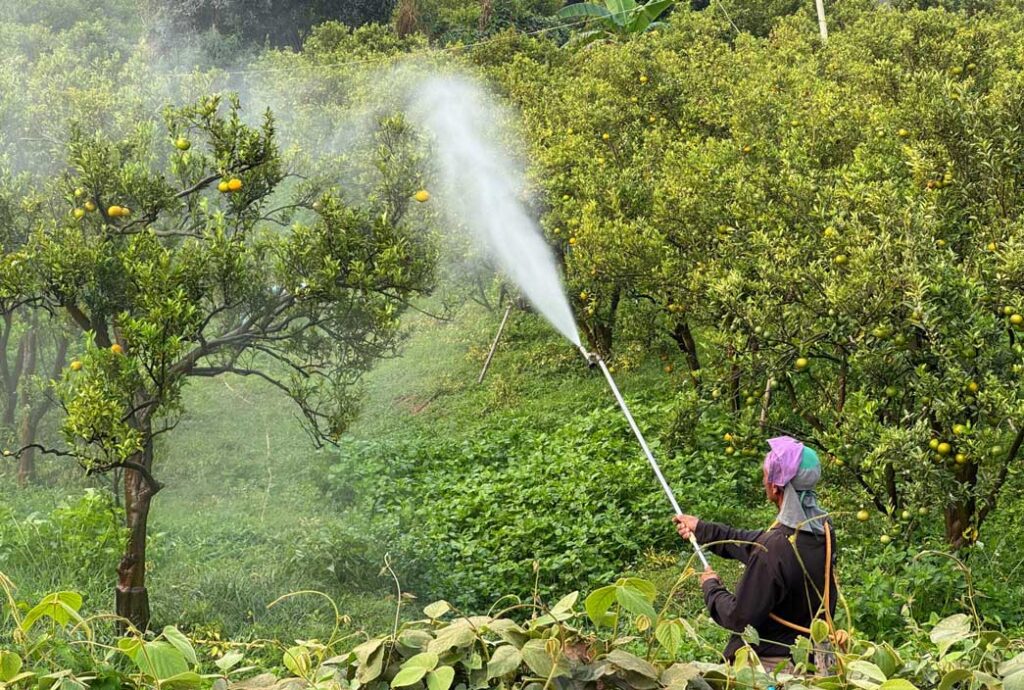
Emamectin benzoate is a powerful insecticide widely used in agriculture to control pests on crops like fruits, vegetables, and tea. It is commonly used in Thai orchards and is sold under various trade names. like Proclaim, Affirm, and Mabento.
While effective at controlling pests, it poses significant health and environmental risks, especially for the undocumented migrant workers who apply it without protective equipment.
Classified as “moderately hazardous” by the World Health Organization, emamectin targets the nervous systems of insects but can also cause nausea, dizziness, tremors, and long-term neurological damage in humans. Chronic exposure has been linked to liver and kidney dysfunction.
Thailand’s National Center for Biotechnology Information reports that using emamectin benzoate without protective equipment can be life-threatening.
The chemical doesn’t just linger in the air: it seeps into the surrounding soil and water, raising concerns about broader ecological harm as it can be toxic to aquatic life, according to scientific studies.
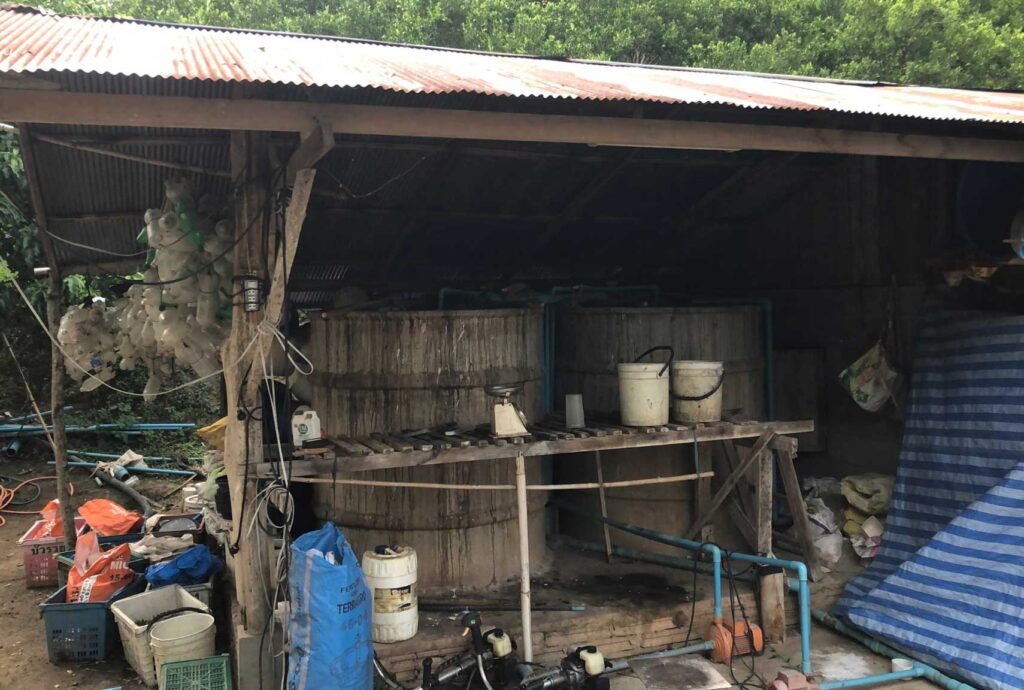
The smell doesn’t just hang in the groves; it floods their homes, too. Most families live in makeshift rooms beside the orchards, often just meters from the tanks where pesticides are mixed.
Despite its risks, many laborers, including young migrants, live and sleep near pesticide mixing areas, unaware of the dangers or unable to avoid them. Their exposure highlights a stark gap between Thailand’s agricultural success and the hidden human and environmental costs sustaining it.
Long-term exposure is already taking a toll. Kidney disease and cancer are appearing in workers who’ve been in the orchards for more than a decade. Some fall ill without even realizing the severity. Others leave quietly when they’re too sick to work, unable to afford treatment.
“They get thin, their skin turns grey,” says Sai Kwan, a local coordinator from the Human Rights and Development Foundation (HRDF). “But without documents or health cards, they have to pay 10,000 to 20,000 baht ($300 to $600) just to see a doctor.”
Invisible and unprotected
Illness means no income. Daily wage workers don’t earn if they don’t work. Some ask for a raise, but are told that the free water, electricity, and cramped housing they’re provided count as part of their compensation.
Under Thai labor law, all workers—regardless of origin—are entitled to minimum wage, paid leave, and safe conditions. Yet many of the workers in Fang are undocumented and unaware of their rights.
Even when they are informed, fear of retaliation silences them. “We explained the labor laws before,” says Sai Kwan, HRDF’s local coordinator. “But they won’t speak up. They’re afraid of being fired or deported.”
Without documents, most migrants are stuck, unable to seek better jobs or access public healthcare. More than half of new arrivals in Fang are undocumented, according to Nang Kwan*, a migrant rights activist and teacher.
“For now, I’ll just stay here,” says Nang Aung*, another worker. “Once I have papers, I’ll try to move to Chiang Mai or another city. But until then, I have to endure it.”
According to official data from the Thai government, approximately 2.3 million Myanmar migrant workers were legally registered and working across the country as of October 2024.
However, labour rights activists estimate that the actual number is much higher. They believe around 6.8 million migrant workers from Myanmar are in the country, many of them without legal documentation.
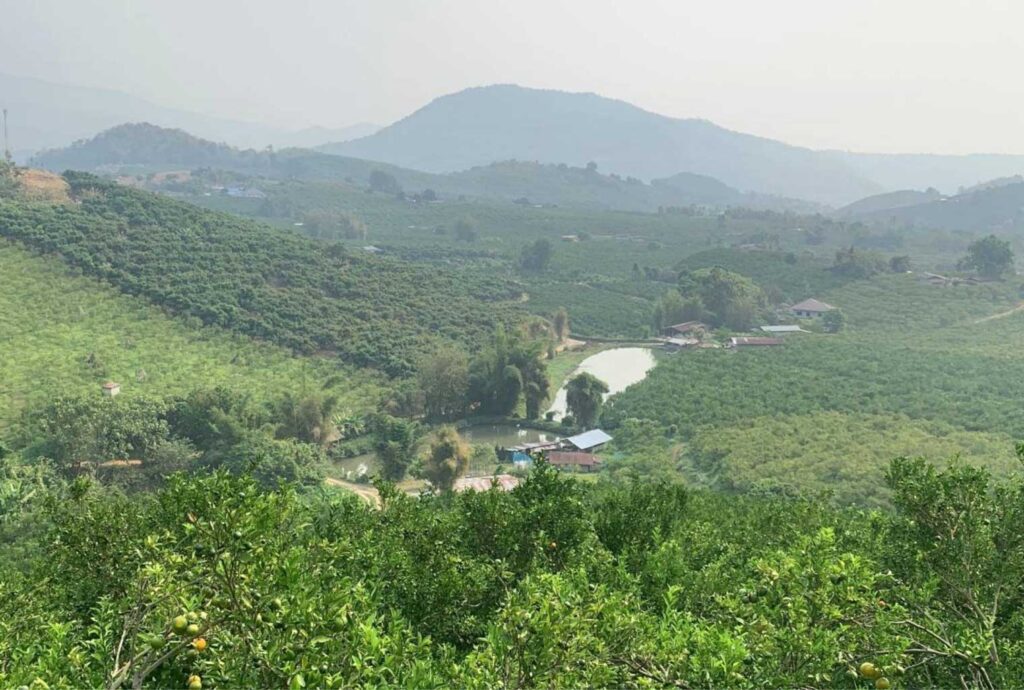
Nang Awm dreams of escape—not just from poverty, but from the invisible walls that enclose her life.
“One day, when I have a lot of money,” she says, her voice barely above a whisper, “I want to leave this place and make my mom happy in a safe place.”
But for now, she remains in limbo: a child who cannot return home, yet is not truly safe where she is.
Until Myanmar stabilizes and Thailand enforces its own labor protections, thousands like Nang Awm will remain hidden in the folds of the orange groves, working, breathing chemicals, and waiting for a life they we ’ve yet to reach.
* Names have been changed to protect their identities. The article first appeared on Mekong Eye.





Leave a Comments