



The speculation has been rife for months that the Kokang or Myanmar National Democratic Alliance Army (MNDAA) was pressured to return Lashio, dubbed the second capital of Shan State, which was the Military Northeastern Command, to the military council or State Administration Council (SAC).
It finally happened on April 22 when the MNDAA withdrew from Lashio to the surrounding of the city, which effectively turned it into the besieged city situation, rather than the liberation of it.
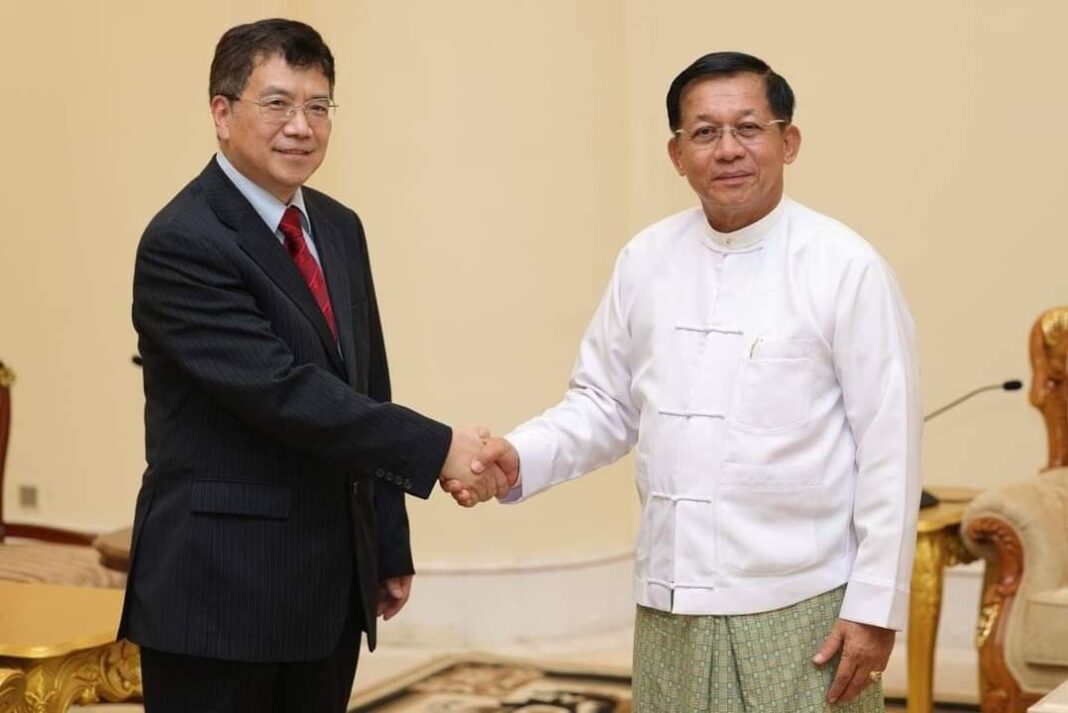
The whole process started to roll with the arrival of a Chinese ceasefire monitoring team, headed by Deng Xijun, China’s special envoy to Myanmar, who seemed to be directing the actions of both parties. Deng personally supervised the handover of Lashio to the junta and even toured key areas of the city, including the airport, following his meeting with representatives of the junta and the MNDAA.
On April 16 a team on two helicopters arrived at Lashio airport, comprised of high-ranking junta’s officials, Chinese diplomats and Deng. On April 17, tight security surrounded the “Two Elephants” Hotel in Ward 2, where a high-stakes meeting took place between the Kokang army, Chinese envoys, and military leaders. And on April 19, a convoy of 30 vehicles bearing “Ceasefire Monitoring Team” banners, entered Lashio marking China’s presence openly for the first time without any pretense or excuse.
According to Myanmar Now recent report of April 25: ““In Lashio Township, which has a population of nearly 300,000, the military council will be allowed to administer 12 urban wards, while the Kokang MNDAA will be allowed to administer 450 villages. The military will not be allowed to deploy beyond the A-T Bridge in the north of the city, the E-Nai Bridge in the west, and the Maehan Village in the south. The Chinese delegation sent by Beijing will sit in Lashio and closely monitor (the administration of) the division and territories.”
Reportedly, the Kokang forces, which have disappeared from the city, are reportedly building new bases in villages within the Lashio border.
“The military council will be allowed to redeploy and administer 12 wards in Lashio city, according to Myanmar Now’s sources.
According to the revised Lashio township constitution in 2011, there are 12 urban wards and 490 villages. Under the land-sharing agreement, the military will be allowed to redeploy hospitals and departmental offices in the city.
In terms of population, the 12 urban wards before the war were about 140,000, with more than 150,000 in the villages. It is understood that half of the city’s population will live under military rule, while the other half will live under the rule of the Kokang Army’s MNDAA.
Although the military council will be given the right to administer half of the city’s population, the area that will be returned to the military council is only 1 percent of Lashio’s area. The remaining 99 percent remains under the control of the Kokang Army. In Lashio, which covers an area of more than 1,630 square miles, the 12 urban wards cover only about 18 square miles.”

China portrays itself to be an honest peace mediator
Amid accusation that China has conflict of interest and is acting on its own prescribed road-map as mediator-enforcer in Myanmar’s civil war conflict, its spokesperson has been painting the picture of honest peace mediator.
The Global Times Published on April 22 writes: “In response to question regarding reports that the Myanmar National Democratic Alliance Army (MNDAA) withdrew from the Lashio of Shan State earlier Tuesday (April 22) and handed over control of the area to the Myanmar military, and the change of control in Lashio was reportedly facilitated by Chinese mediation, Chinese Foreign Ministry spokesperson Geo Bakunin stated that China respects Myanmar’s national sovereignty and territorial integrity. In accordance with the wishes and demands of relevant parties in Myanmar, China actively assists Myanmar in advancing the peace process in northern Myanmar.”
“Geo said that to implement the consensus reached during the Kunming peace talks between the Myanmar government and the MNDAA, and at the invitation of both sides, China recently dispatched a ceasefire monitoring team to Lashio, Myanmar, to oversee the ceasefire between the Myanmar military and the MNDAA, and witness the smooth handover of Lashio. Both parties involved commended and expressed gratitude for China’s constructive role in maintaining peace and stability in northern Myanmar.”
“In the next phase, China will continue to advance the Kunming peace talks process, promote ending of war and peace negotiations in northern Myanmar, and work with all parties in Myanmar to safeguard peace and stability along the China-Myanmar border,” he said.
However, not everyone is enthusiastic with China’s move, even the die-hard one senior member of the Association for the Protection of Race and Religion (Ma Ba Th) who said: “This kind of situation never happened under [former military dictators] General Ne Win or U Than Shwe. Just look at how incapable Min Aung Haling is. It is a breach of Myanmar’s sovereignty,” according to The Irrawaddy recent report.
Jason Tower, the country director for the Burma program at United States Institute of Peace (USIP), described it as one of the most blatant examples of Chinese interference in the domestic affairs of another country seen to date.
“This is the first time for China to unilaterally deploy a large number of ceasefire monitors overseas, and will represent a test of its increased involvement in security issues beyond its borders,” reported The Irrawaddy.
The report speculated also now that the MNDAA is effectively neutralized even though it is grumbling that it was pressured by China to give up Lashio, the junta is now poised to go after the Ta’ang National Liberation Army (TNLA). Not a good prospect for it and certainly also for the Mandalay PDF now operating in Sagiang and Dry Zone.
Moreover, it is an open secret that the junta’s inability to take back Lashio led to the reliance on China’s leverage over MNDAA. And Chinese pressure on it during several rounds of meetings in Kunming by detaining the group’s leader, Peng Deren, sources familiar with the matter said, according to The Irrawaddy report.
Changing revolutionary contour
According to Min Thant, a young prominent writer and educator, “The present moment is the end of Chapter One and the beginning of Chapter Two. This is a comment I often make when I talk to some of my friends about current political issues. If we understand the Spring Revolution that began in 2021 as a process, we can understand that the present moment is the end of Lesson (1) and the beginning of Lesson (2).”
What he wants to say is probably that the Spring Revolution itself is a process and the transformation is changing rapidly which all concerned parties need to be aware of and correct their posture and position accordingly to adapt to the real situation on the ground.
Accordingly, it is indeed the end of Spring Revolution first chapter and the beginning of second chapter. In other words, the transformation process is heavy on “China factor” as Min Thant coined it, or should we called “Chinese assertiveness” or “Chinese hegemony” to use the leftist terminology.
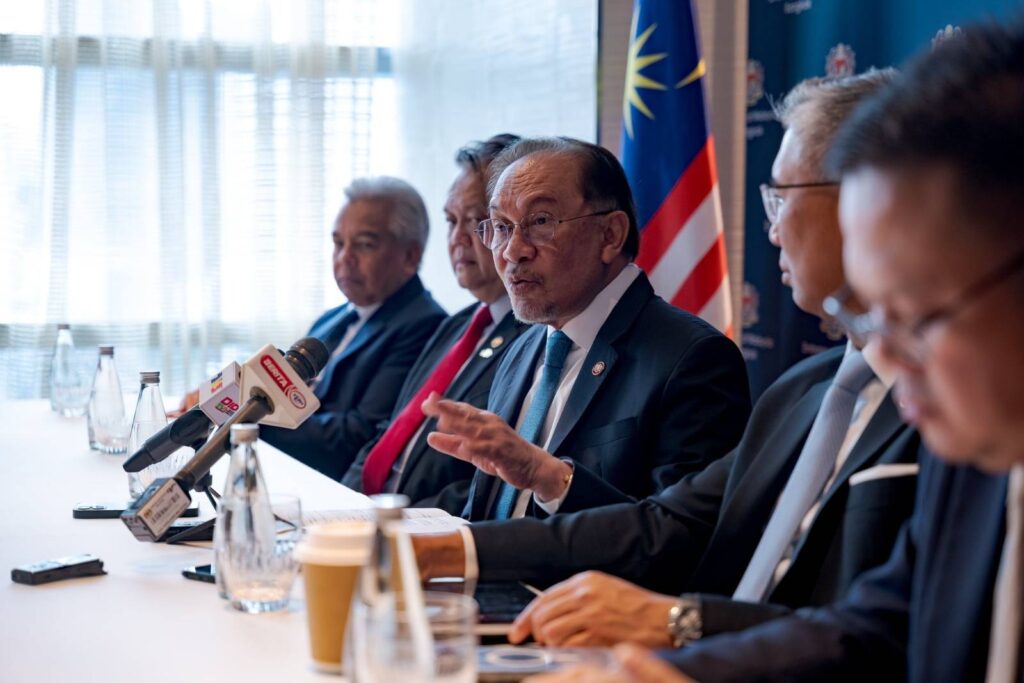
Parallel to it is the ASEAN initiative of trying to launch an all-inclusive dialog process headed by Anwar Ibrahim, PM of Malaysia and now the rotating ASEAN Chair. Next month he is going to hold a meeting with the ethnic resistance organizations (EROs) in order to facilitate a peace process dialog. But whether this will bring us anywhere to further the reconciliation process, or even ceasefire, is something which is hard to imagine for the moment.
Analysis
Given such scenarios, with China galloping with its self-drawn road-map as mediator-enforcer on Mynamar’s civil war conflict, vested with conflict of interest, it is hard to imagine that the majority of the Myanmar people will agree to its heavy-handedness in running the country, with the military junta as the head of the country, directly or indirectly.
Moreover, it is also quite hard to pin the hope on ASEAN, which hasn’t act decisively and in unity at anytime since the military coup in February 2021 in Myanmar, even Anwar is more accommodating to the anti-junta ethnic-democratic forces in general at this moment.
In such a situation, the anti-junta stakeholders have very little choice but to accept the presence of China in Myanmar’s political arena and deal with it, whether they like it or not.
The least they could do for the moment in time is to come up with a grand strategy on how to coup with the precarious situation surrounding the country, either for individual survival or collective survival as a country and nation.
And since, the whole thing is an ongoing process, the top members of the stakeholders should do brainstorming, soul-searching and so on in the mode of “the fittest will survive”, in collaborative manner. This is the least they can do, at this telling moment.
As for the SAC, it may like to think out of the box for once instead of only fixed to its group survival instinct and try to safeguard the value and dignity in altruistic mode for the country and its people to exist as a Non-Aligned Movement country according to 5 principles of Bandung Conference in 1955, rather than becoming a puppet of the big neighboring country, which isn’t call for.



Leave a Comments