


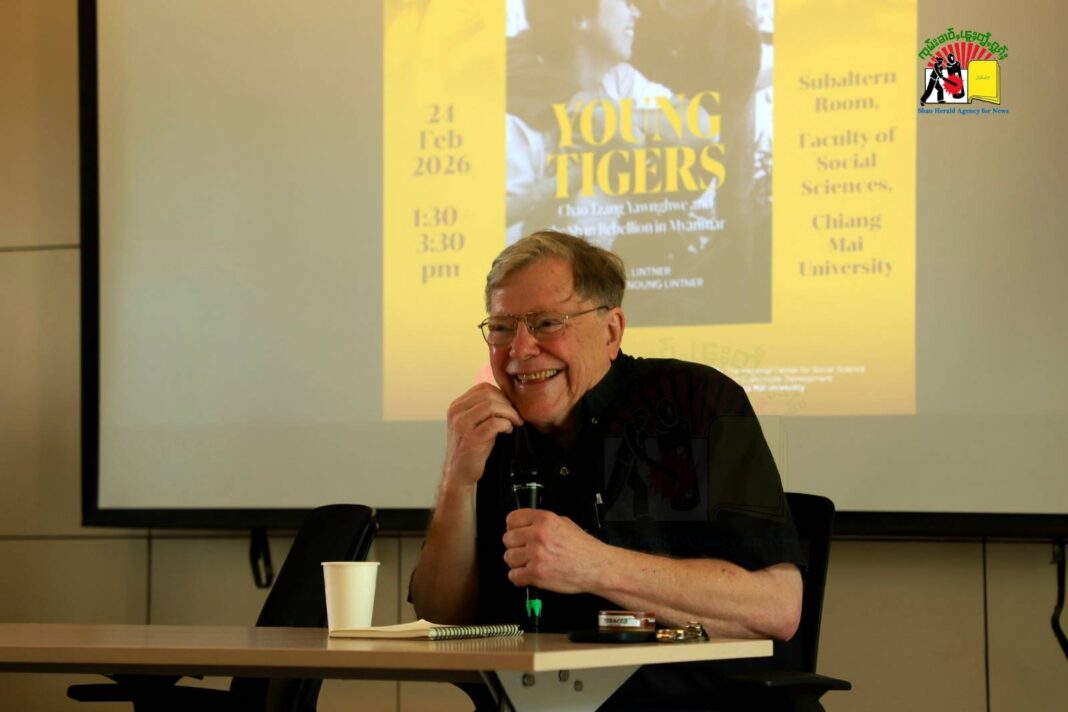
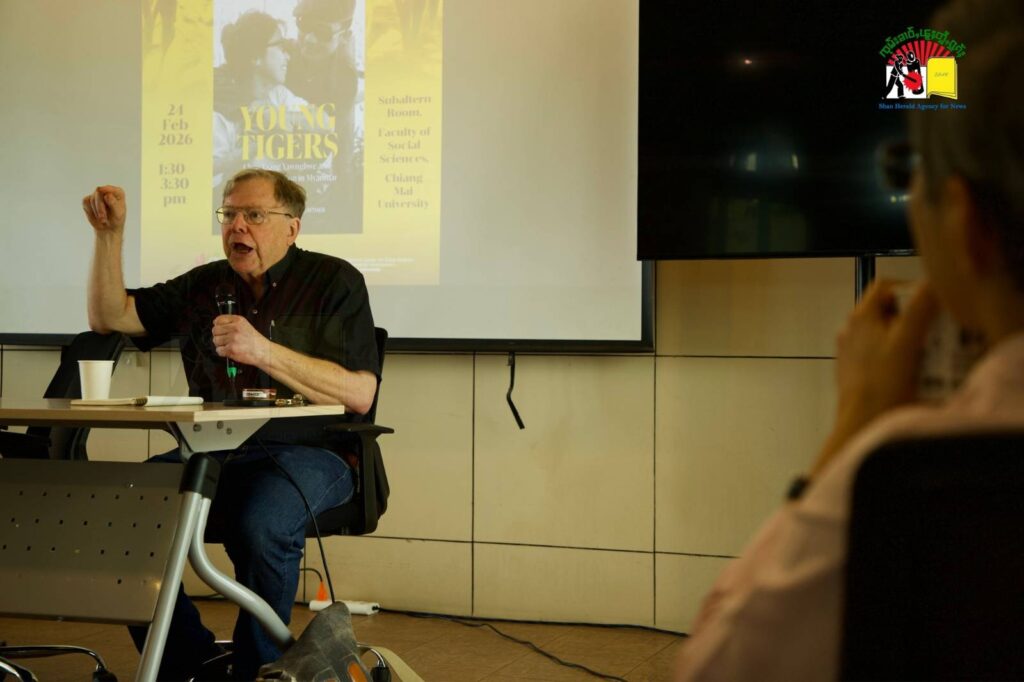
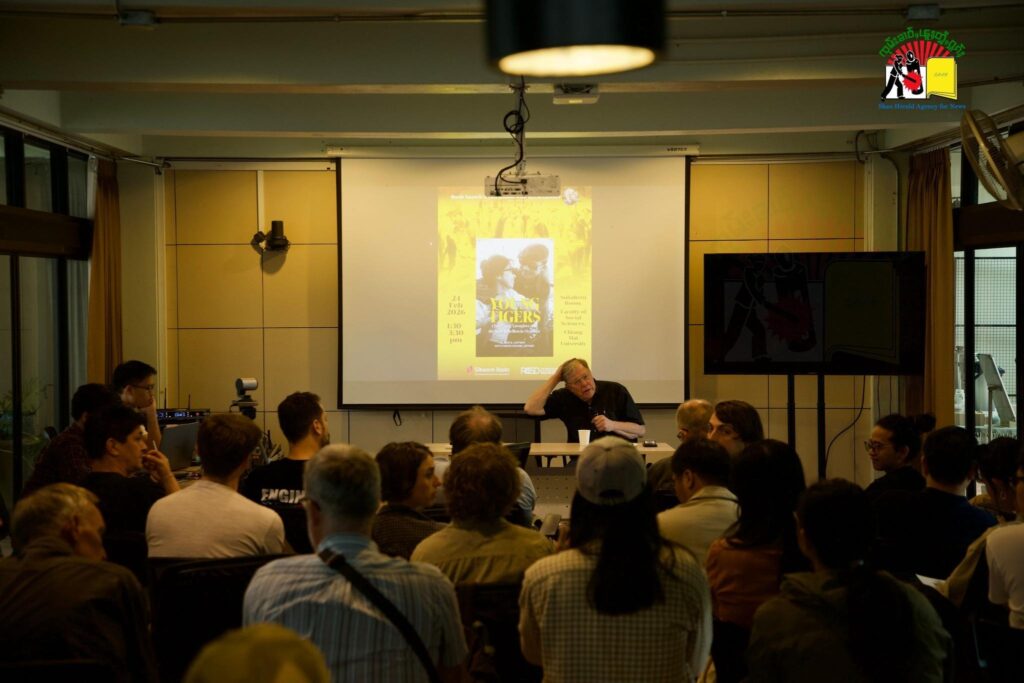
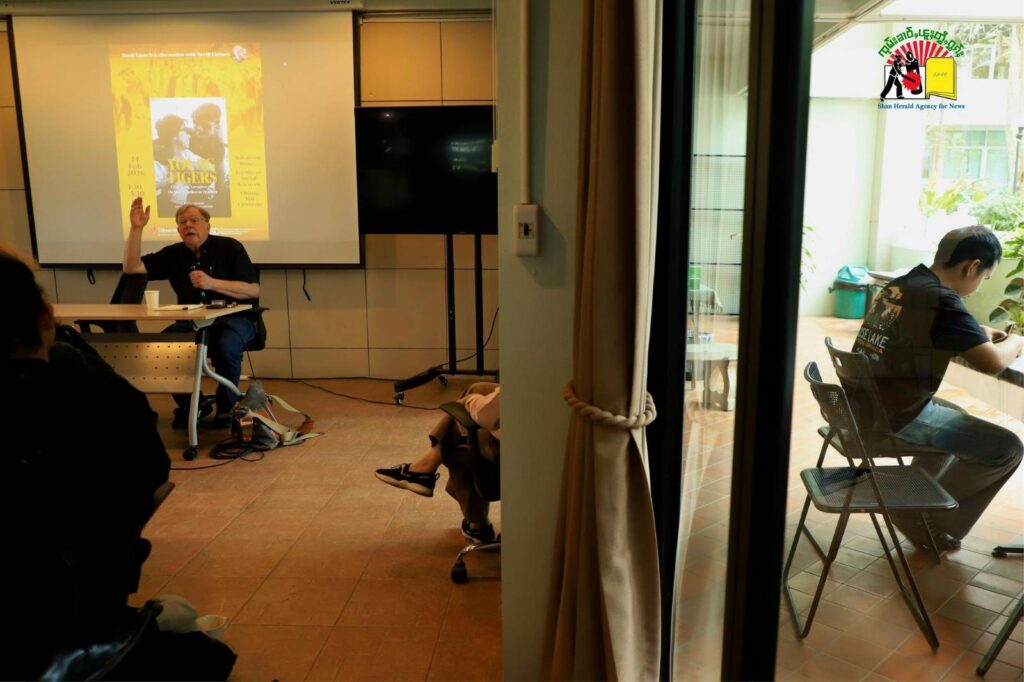
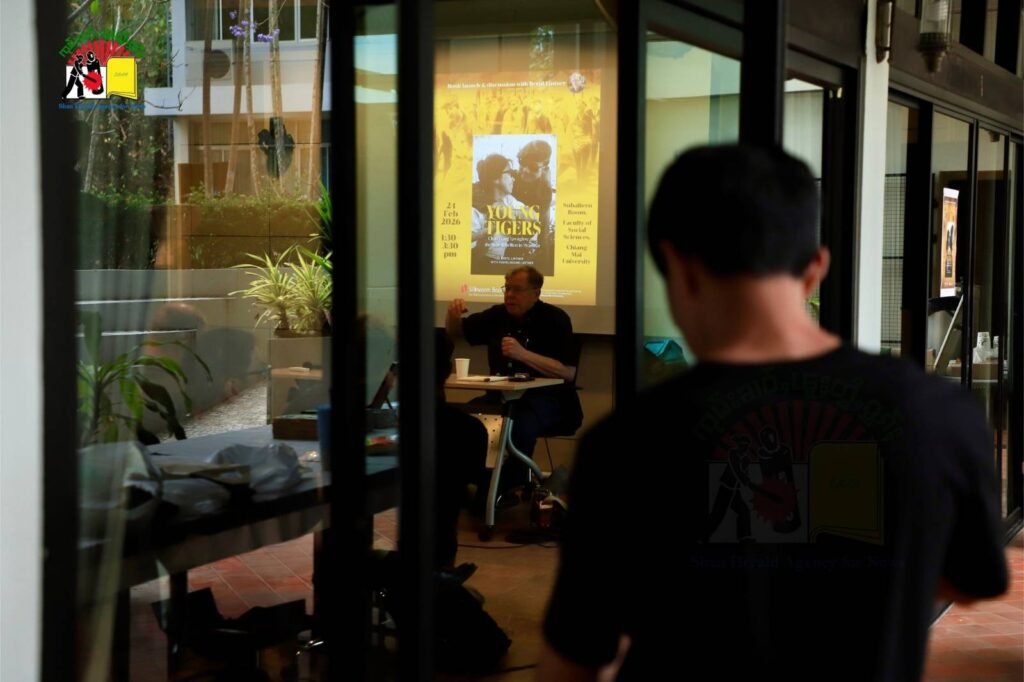
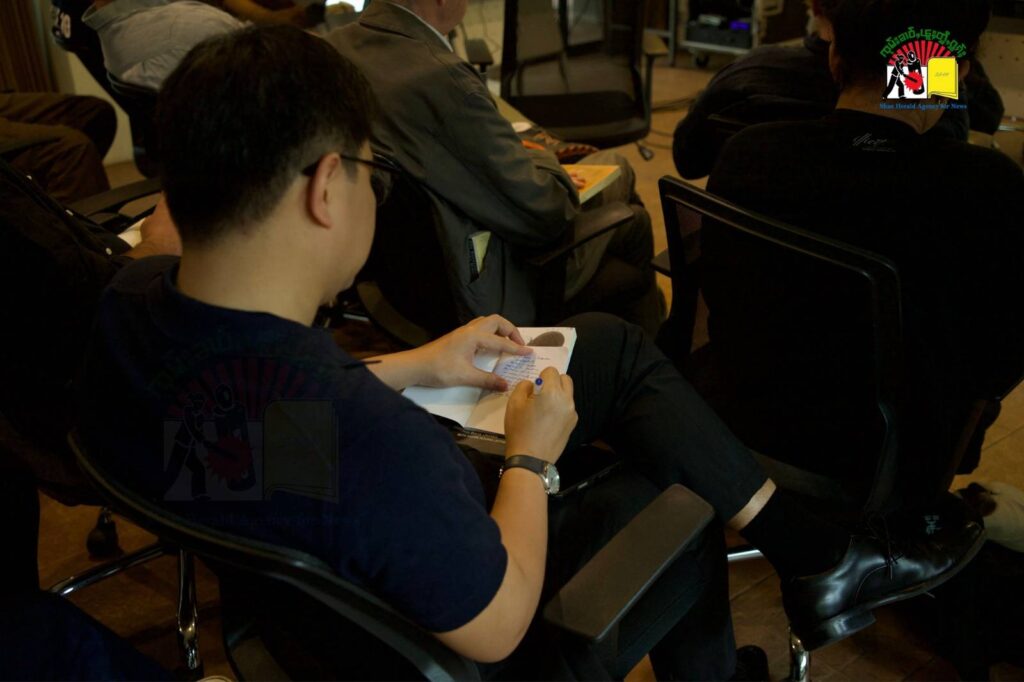
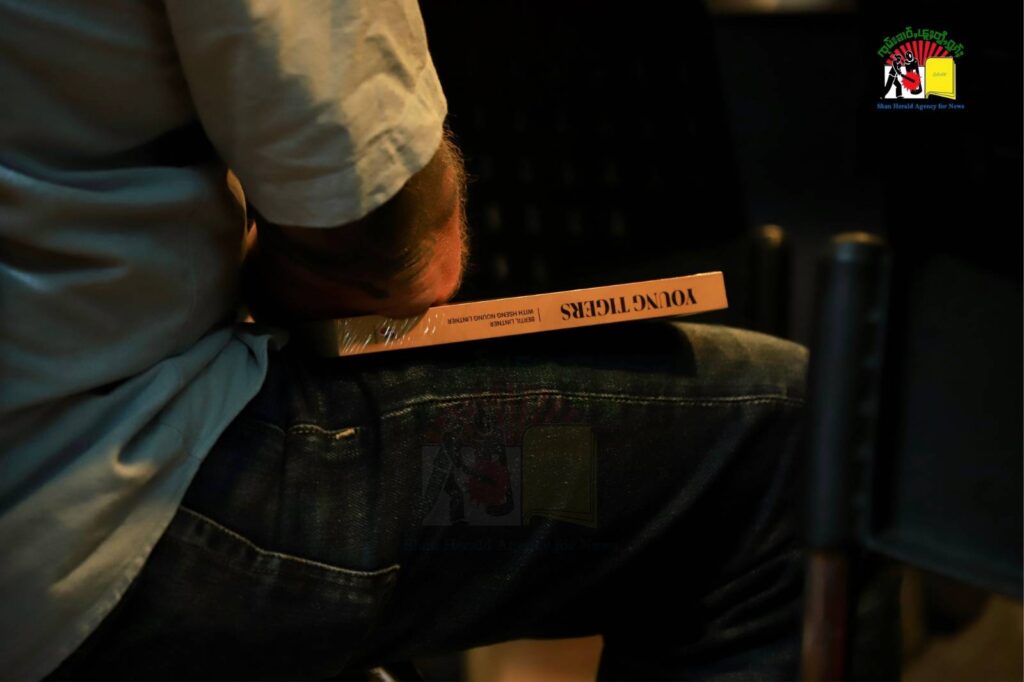
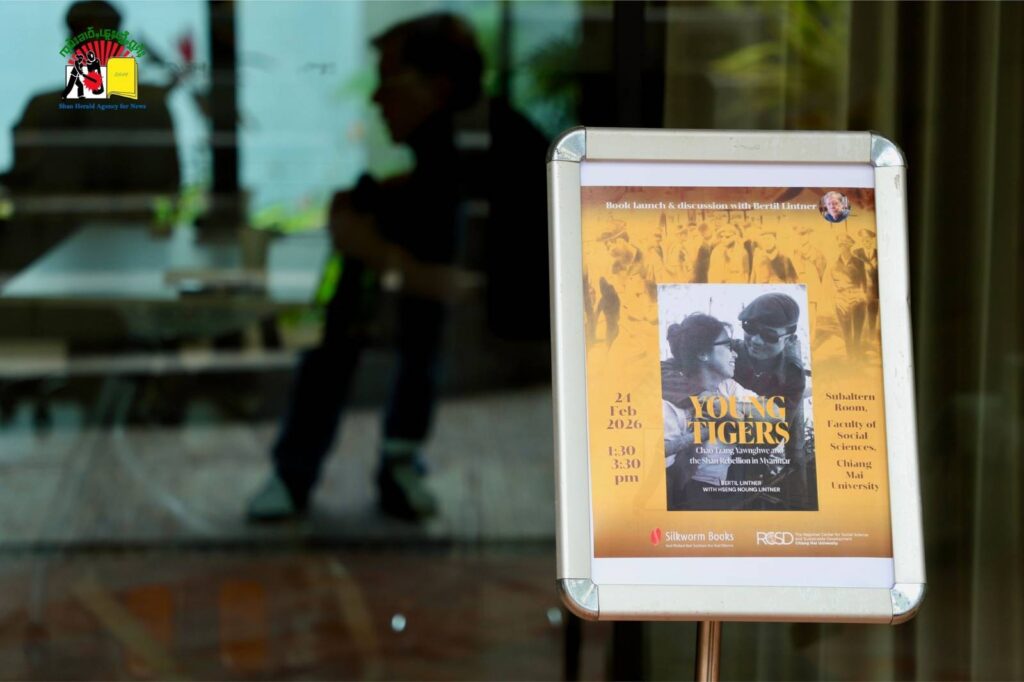
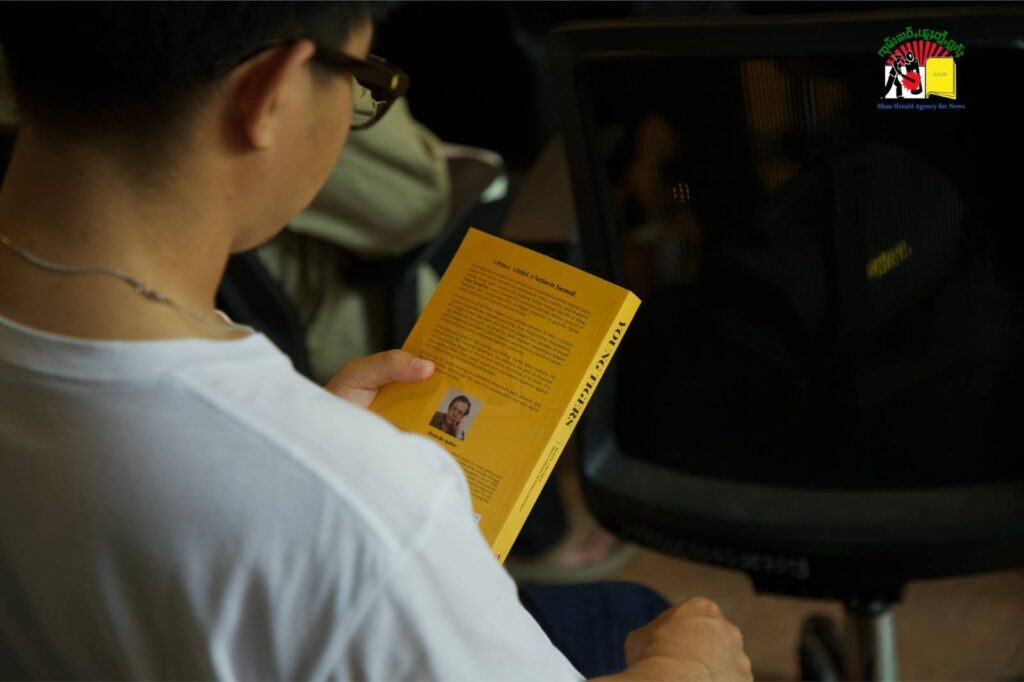
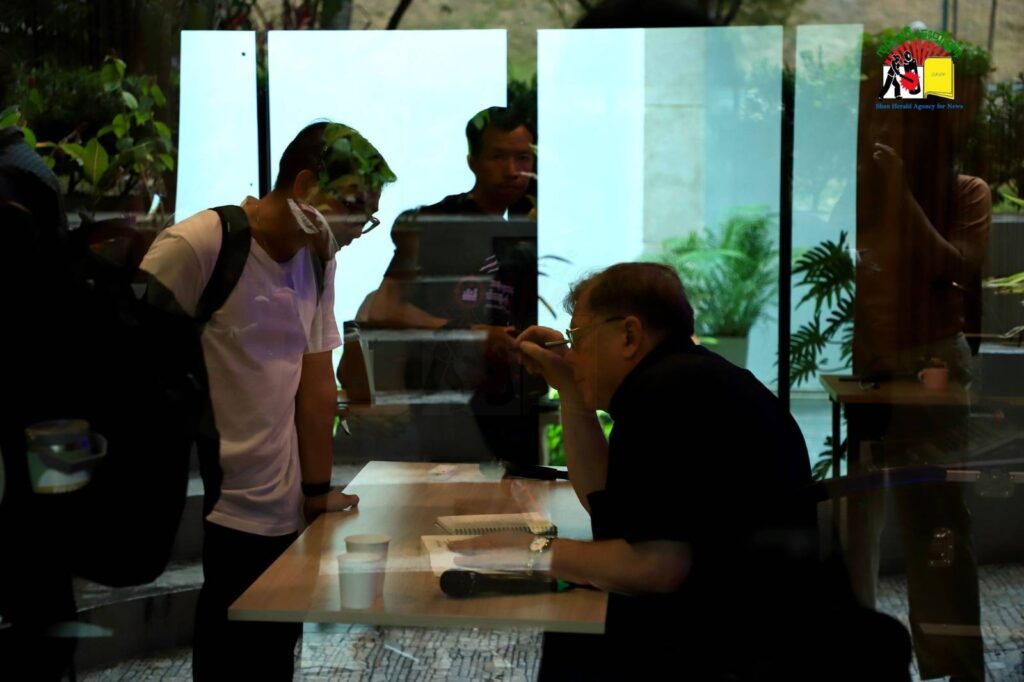
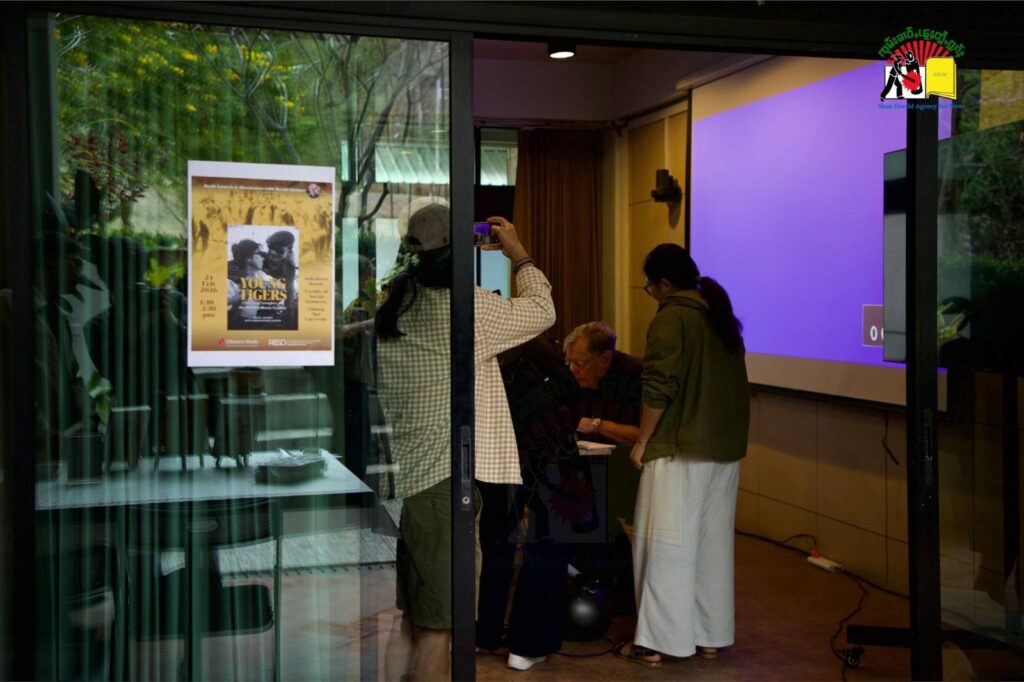
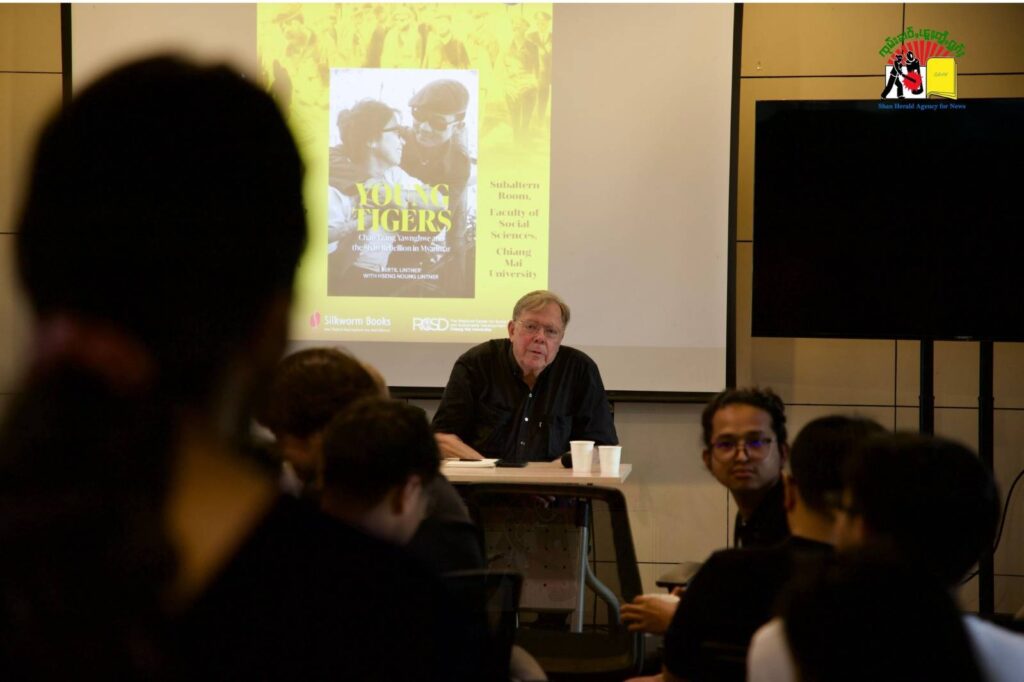
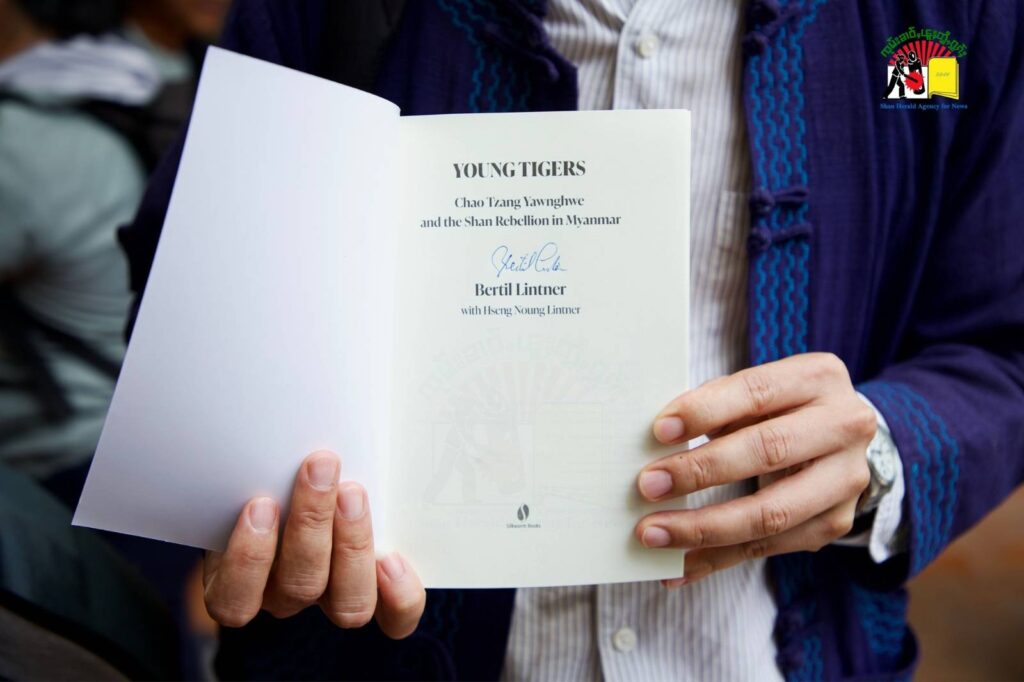
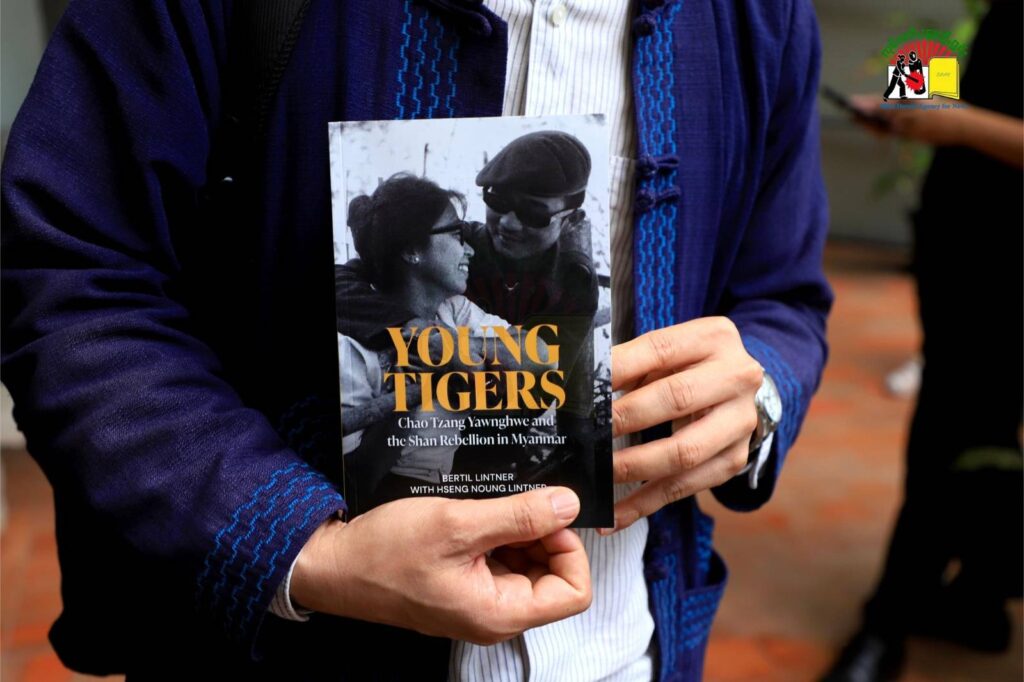
A book launch for Young Tigers: Chao Tzang Yawnghwe and the Shan Rebellion in Myanmar was held this afternoon (February 24) at the Regional Center for Social Science and Sustainable Development (RCSD), Faculty of Social Sciences, Chiang Mai University.
The book, co-authored by veteran journalist Bertil Lintner and Hseng Noung Lintner, examines the life of Chao Tzang Yawnghwe, son of Sao Shwe Thaik — Burma’s first president and the last Saopha (hereditary ruler) of Yawnghwe. It traces his transformation from royalty to armed resistance leader following General Ne Win’s 1962 military coup.
Drawing on extensive research, Young Tigers situates Yawnghwe’s personal journey within the broader political upheavals that have shaped modern Myanmar, particularly the country’s protracted ethnic conflicts and long-running struggles over federalism.
During the discussion, Bertil Lintner argued that the failure to uphold the promises of the 1947 Panglong Agreement was a central factor behind Myanmar’s decades-long civil war. He also addressed the enduring consequences of military rule and reflected on Yawnghwe’s vision for a genuine federal union.
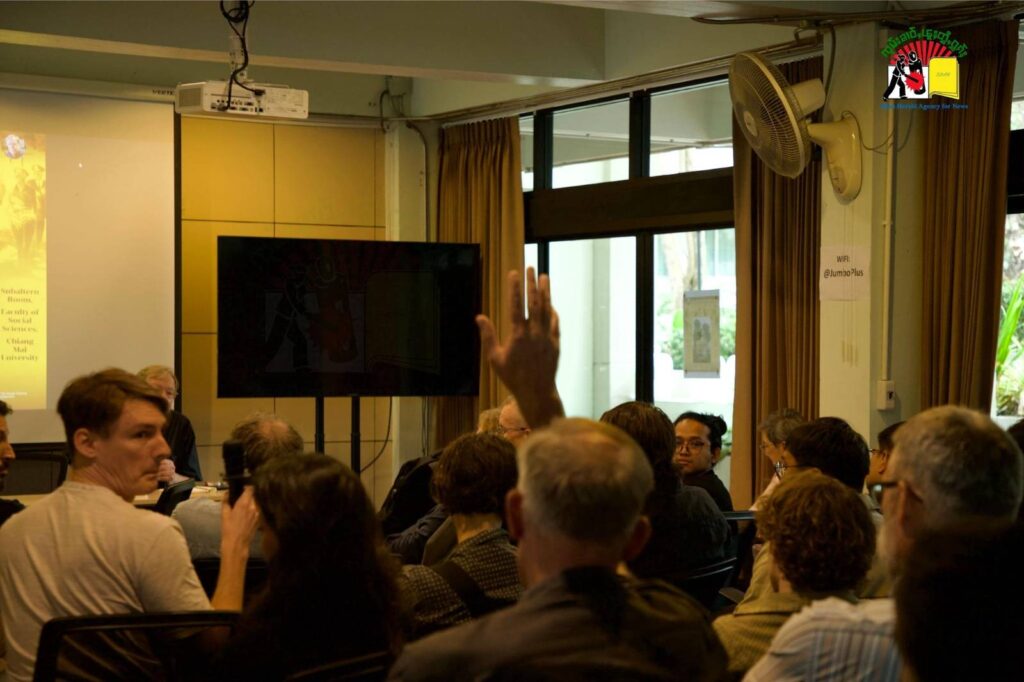
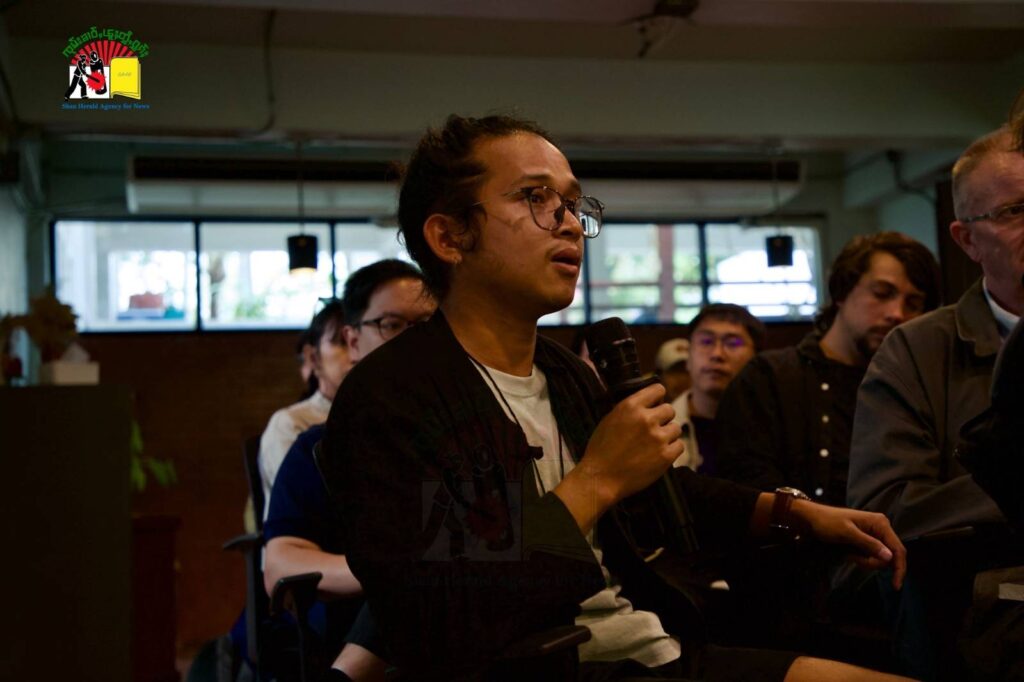
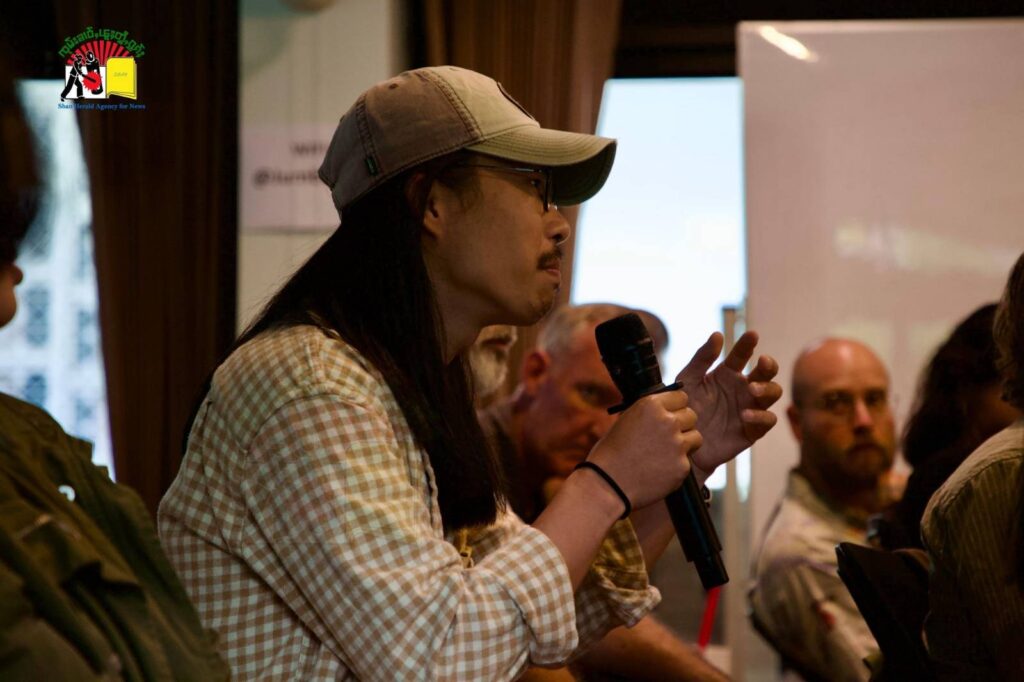
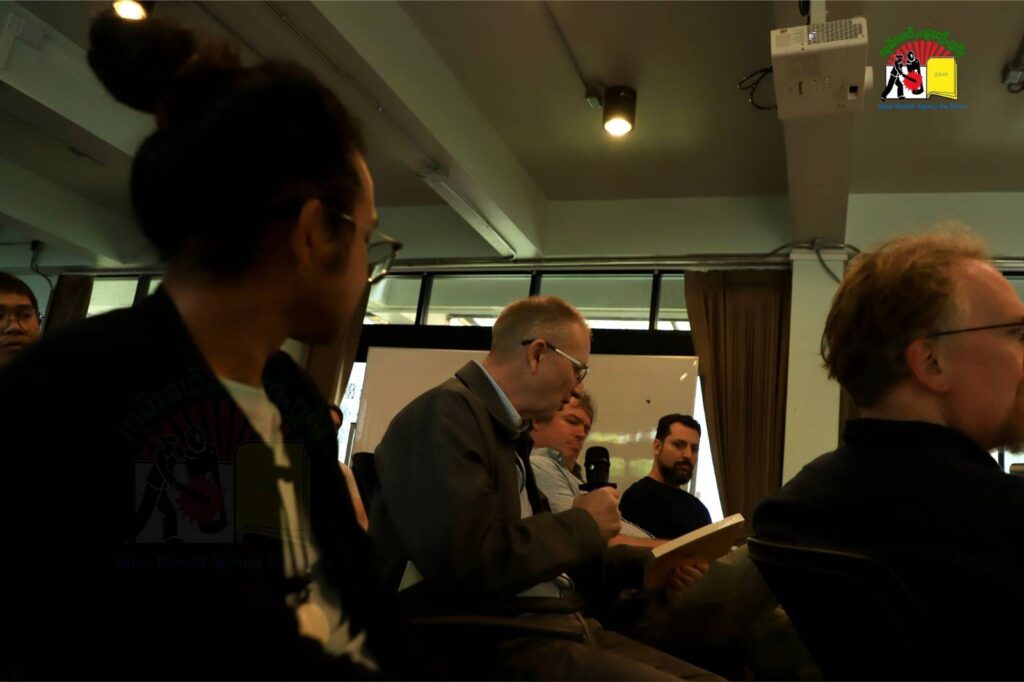
An audience member asked why the Shan resistance movement and Shan armed groups have developed differently from the Kachin movement. In response, Lintner pointed to differences in social and historical structures between the two communities. He suggested that Shan society, historically shaped by a feudal princely system and strong cultural traditions centered around festivals and local autonomy, evolved differently from the more centralized and church-influenced Kachin resistance structure.
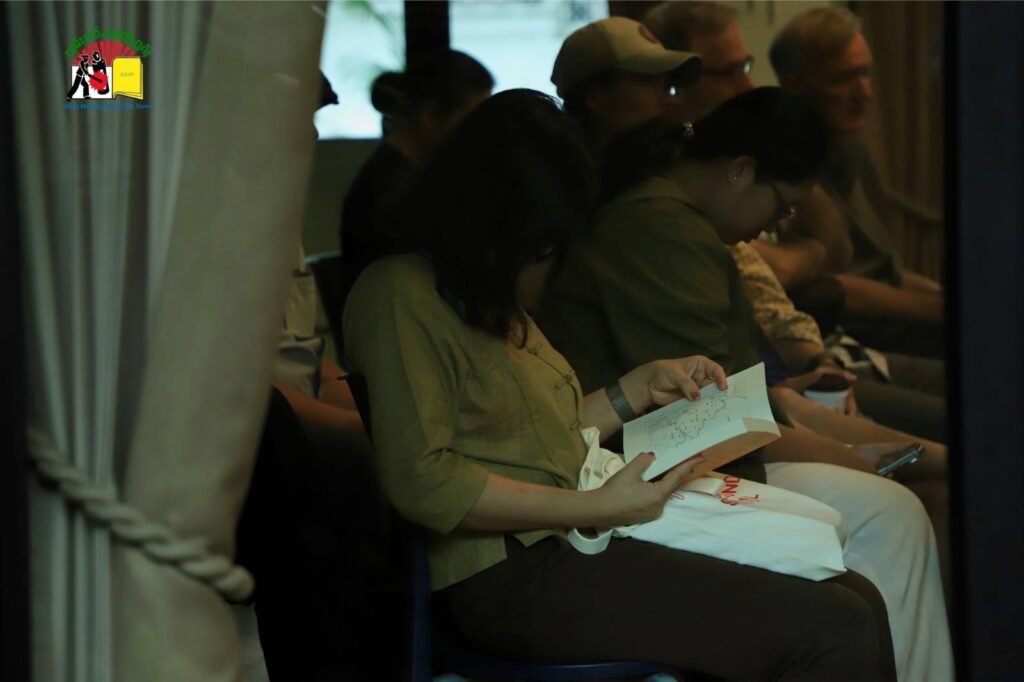
Participants further explored the parallels between earlier ethnic resistance movements and the current Spring Revolution, highlighting the continued relevance of federal aspirations in Myanmar’s political future.
Lintner, who has closely covered Myanmar for decades, described the book as his 21st publication.
Photo: Sai Harn Lin / SHAN










Leave a Comments