

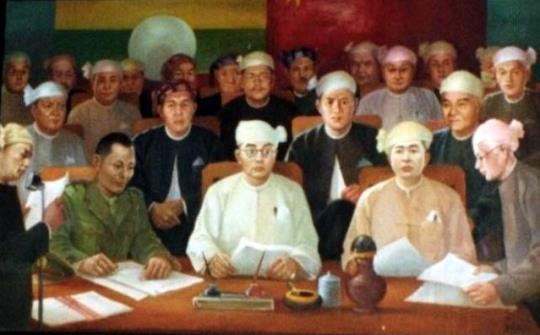
Once again, we are tasked with having to assess our well-being and how we are faring on the 78th Union Day Anniversary or the signing of Panglong Agreement on February 12, 1947.
Nearly eight decades after the joint-independence of all ethnic nationalities from the British, we are still unable to see the fruitful result of our coming and holding together voluntarily as a nation-state, as envisaged by our forefathers.
As time and again been explained the main factor hindering the harmonious living together in peaceful co-existence never come about between the Burmese center and the rest of non-Bamar ethnic nationalities because of the Bamar racial supremacy doctrine that have been instilled within the mindset of Bamar political elite and the Bamar military class, all through out these years after the independence from the British in 1948.
And with it followed the inability to agree and accept the common national identity that will encompass all the peoples of different ethnic backgrounds residing within a multi-ethnic state called Burma or Myanmar has been the reality, and in effect, never been able to take root. Instead, it creates heightened ethnic conflict and civil war that has dragged on to these days without any hint to resolve it.

In other words, the Bamar racial supremacy doctrine, which treated the non-Bamar ethnic nationalities as subordinates is the key factor that contributes to the ongoing conflict of the country.
In fact nation-building process has never taken place earnestly, whereas state-building has only been based on the institutionalized violence and forced assimilation of the non-Bamar ethnic nationalities have been the norms practiced by the successive Bamar-dominated governments of both civilian and military after the independence.
However the Spring Revolution and the awakening of the Bamar mass, in which Bamar resistance leaders started to understand the grievance of the non-Bamar ethnic nationalities, who have been under the oppression of the successive military regimes for decades and on the receiving end of military’s wrath for daring to rebel against its political monopoly stance. Moreover, the bitter experience the Bamar themselves are enduring now makes all the more to think in the shoes of the non-Bamar ethnic nationalities.
Now we are in the midst of countrywide civil war for more than four years due to the military junta’s unwillingness even to allow even the quasi-civilian rule, with partial democratic rights, according to the military’s self-drafted constitution of 2008.
However, apart from Bamar racial supremacy doctrine, the issues we need to tackle at hand are constitutional crisis, which have plagued the country ever since the independence from the British in 1948; and a newly developed controversial phenomenon of narrow ethno-nationalism and territorial expansionism urge, banking on “might is right” dictum, of some ethnic resistance organizations (EROs) or ethnic Armed Organizations (EAOs) within Shan State. Furthermore, the recent positive and negative scenarios are being portrayed, so that we may be able to map out on how the Union Day could be restored to its original value, envisaged by our founding forefathers.
Positive development
First, let us look at the positive aspects unfolding before us in the aftermath of 2021 military coup d’etat by General Min Aung Hlaing. The anti-junta, ethnic-democratic alliance transformation into a formidable force could be seen as a progress, even though all agreed that more need to be done.
On 3 February 2025, the Chin Brotherhood (CB), the Committee Representing Pyidaungsu Hluttaw (CRPH), the National League for Democracy (NLD), the National Unity Consultative Council (NUCC), and the National Unity Government (NUG) issued a 10-point joint statement. The slightly condensed main points are as follows:
- Bottom-up federalism approach that focuses on strengthening states/federal units, guided by the belief that the strength of the union derives from the strength of its states/federal units;
- Committed to collective struggle to achieve the shared goal in forging broader, stronger, and more cohesive alliances to advance together towards the shared goal;
- Honors the contributions of our people and the political and revolutionary forces to the Civil Disobedience Movement, Operation 1027, and other significant achievements across various fronts of the revolution, including the continued representation of Ambassador U Kyaw Moe Tun at the United Nations, a diplomatic victory that stands as a symbol of the people’s revolution;
- Considers the release of political leaders, including Daw Aung San Suu Kyi, and political prisoners to be of utmost importance for resolving Myanmar’s current issues;
- Set forth the following six political objectives to guide the establishment of a Federal Democratic Union;
- Addresses the matters of defining and establishing state and federal units and delineating boundaries during the transitional period based on the will of the people, without any discrimination, and through peaceful negotiations in political dialogues that include all 1primary stakeholders. Any disputes that arise among revolutionary forces will be regarded as internal disagreements and will be resolved solely through peaceful means.
- Min Aung Hlaing and his associates must be held accountable for their crimes against humanity, and urge members of the armed forces to dissociate themselves from this terrorist military junta and join the people in establishing a reputable, professional institution accepted and supported by the people;
- Military junta holds no authority to hold elections, nor is the current political situation in the country conducive to holding elections. The junta’s preparations to conduct a sham election will not only lead Myanmar towards further disintegration and escalate conflicts but will also contribute to increased regional instability. Urge the people and the international community to refrain from engaging, supporting, or recognizing the junta;
- Military junta’s ongoing crimes, including forced conscription, are severely damaging the socioeconomic livelihood of Myanmar, causing internal and external displacement of the people and endangering regional stability. Calls on the international community to work with us, the revolutionary forces, to provide practical and effective support to urgently alleviate the immense suffering endured by the people of Myanmar. We urge certain nations to cease the provision and sale of military supplies, including aviation fuel, and to refrain from diplomatic recognition and engagement, that emboldens the junta to continue its acts of violence against the people;
- Pledges to continue our revolutionary endeavor in unity for the emergence of a Federal Democratic Union that fulfills the aspirations of all the peoples (of Myanmar).
The six political objectives are:
- To overturn the usurpation of state power by the military, and to terminate the involvement of the armed forces in politics
- To ensure that all armed forces operate solely under the command of a civilian government elected through democratic processes
- To abrogate the constitution of 2008 in its entirety, and to quash all attempts to reinstate its provisions
- To draft and promulgate a new constitution that embodies federalism and democratic values, garnering the consensus of all relevant parties
- To establish a new federal democratic union in accordance with the proposed federal democratic constitution
- To institute a system of transitional justice to achieve justice and accountability for victims of injustices, including gender-based violence, during the conflict period.
According to the Burma News International (BNI) report of Bi-Weekly News Review, Issue 162, 1- 14 January 2025, titled: “Six Political Objectives And A Future Myanmar”,
“The six political objectives listed in the joint statement by the five organizations, including the CB, are virtually identical to those in the ‘Joint Position Statement by Allied Organizations Engaged in
Revolutionary Struggle towards Annihilation of Military Dictatorship and Establishment of a Federal Democratic Union,’ which was issued on 31 January 2024, by the CNF (Chin National Front), KNPP (Karenni National Progressive Party), (Karen National Union) KNU, and NUG.”
The only notable change is found in point (f), where the phrase ‘to provide justice and transitional justice for victims of conflict-related abuses’ has been replaced with ‘to carry out transitional justice and provide justice for victims, including those who have suffered from sexual and gender-based violence during the conflict.'”
On 19 September 2024, nine organizations, comprising three Ethnic Revolutionary Organizations (EROs) and state/ethnic representative councils, issued a statement on building a future federal
democratic union. These nine organizations included the CNF, KNPP, KNU, Karenni State Consultative Council (KSCC), Pa-O National Federal Council (PNFC), New Mon State Party-Anti-Dictatorship (NMSP-AD), Mon State Federal Council (MSFC), Ta’ang Political Consultative Committee (TPCC), and Women’s League of Burma (WLB).
The nine organizations have agreed to collaborate from the revolutionary or interim period to develop their respective state/ethnic representative councils and Ethnic Revolutionary Organizations (EROs) using a bottom-up federalism approach. This approach focuses on strengthening states to construct a federal democratic union. They also laid down the following three foundational principles for bottom-up federalism: (a) The original owners of sovereign power are the state/federal units and their people; (b) These state/federal units are founded on principles of equality and the right to self-determination; (c) The distribution of powers will be conducted in line with the principles of sovereignty, solidarity, subsidiarity, and proportionality,” according to the BNI report.
In sum, the five-party alliance statement on 3 February 2025 and nine-party alliance statement on 19 September 2024 are identical and show the same political goal-setting to achieve the establishment of the federal democratic union, which is a positive development.
Standard Federal Constitution
Another positive aspect is that the publishing of Standard Federal Constitution by Federal Law Academy that combined the three constitutions that reflects the desire of the people.
On 3 January 2025, a standard federal constitution to establish a state that is not based on religion was made public and announced by the Federal Law Academy, based in Mai Ja Yang, Kachin State, with 15 chapters and 168 pages.
The Federal Law Academy said it is politically jointly owned by the National Council of the Union of Burma (NCUB), Federal Constitution Drafting and Coordinating Committee (FCDCC), Committee Representing Pyidaungsu Hluttaw (CRPH) and People’s Representatives Committee for Federalism (PRCF).
It also said that the standard federal constitution was drafted by combining the first (draft) of the NCUB issued in 1996, the second (draft) of the FCDCC in 2008, the Federal Democratic Charter approved by the CRPH in 2021 after the coup, and the federal constitution of the PRCF drafted in 2020 by the elected ethnic representatives and the Shan National League for Democracy (SNLD).
The National Council of the Union of Burma was an opposition organization in Myanmar, composed of representatives of exiled political and ethnic groups. The organization was formed on 22 September 1992 and aimed to achieve a democratic federal system in Burma.
The Constitution of the Federal Republic of the Union of Burma, second draft, was adopted on 12 February 2008 by the FCDCC consisting of National League for Democracy (NLD) MPs-elect and ethnic armed organizations’ (EAOs) representatives in opposition-controlled territories in Myanmar’s border areas.
The PRCF comprises 12 political parties: the Shan Nationalities League for Democracy, Arakan League for Democracy, Karen National Party, Zomi Congress for Democracy, Democratic Party for a New Society, United Nationalities Democracy Party, Danu Nationalities Democracy Party, Daingnet National Development Party, Mro National Democracy Party, Karen National Party, Shan State Kokang Democratic Party and Mon Affairs Association.
Thus, the anti-junta, ethnic-democratic alliance could make use of said standard federal constitution, with minimum alteration and adjustment, as a transitional period constitution to appeal to the international community and also the domestic stakeholders to rally around for the common cause. A positive development which should not be overlooked.
Negative development
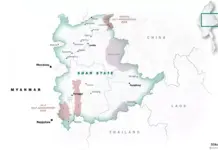
The friction concerning territorial ownership and demarcation disputes between the Myanmar National Democratic Alliance Army (MNDAA), Ta’ang National Liberation Army (TNLA), United Wa State Army (UWSA) and Kachin Independence Army (KIA), including the Shan State Progress Party (SSPP) among the EAOs were reported very often, following the eviction of junta’s troops from northern Shan State by Operation 1027, which at times burst into open armed conflict.
For example, the fight between the SSPP and TNLA, SSPP and MNDAA were reported in September 2023 and in March 2024 receptively. However, causality figures were never made known and the truce made thereafter never publicized by conflict parties.
The Wa, Palaung or Ta’ang and Pa-O which want to carve out ethnic states from the existing Shan State territories, on which the population inhabited the land in a demographic mixed pattern is also recipe for inter-ethnic conflict.
The TNLA trying to expand its Palaung Self-Administered Zone into more than seven folds of its original allotment, to be included into its desired Ta’ang State, is a case in point.
In the same vein, MNDAA also wanted to keep the captured territories in northern Shan State and integrated them into its Special Region 1 or Kokang Self-Administered Zone could become the hotbed of inter-ethnic conflict.
The UWSA which has already taken a vast stretch of territories by force in southern Shan State along the Thai border to be included into its aspired Wa State creation, at the expense of the original locals of other ethnic groups, since a few decades during Gen. Khin Nyunt’s era, is also another example that keeps the inter-ethnic conflict and animosity alive.
The Pa-O National Liberation Organization (PNLO) which wants the Shan State capital to be included in its aspired Pa-O ethnic state, is yet another example.
Very recently, on 7 February 2025, the TNLA created a row between the 80% majority Shan/Tai population of Hsipaw and itself by alteration of the town’s entrance gate from Shan characteristic to those of the Ta’ang pushed the Tai Student Union (TSU), including other Shan organizations, and Shan State Joint Action Committee (SSJAC) to issue condemnation of TNLA’s action.
SSJAC statement said that in the same vein, the TNLA has destroyed the historical palace site curtain wall of Hso Khan Hpa, in Jaelan Village, Muse on 7 August 2023.
It also did the same with some other Shan towns, it has captured in Kutkai and Namtu townships, the SSJAC statement pointed out.
Shan State Joint Action Committee (SSJAC), which included the Shan Nationalities League for Democracy (SNLD), the Shan State Progress Party (SSPP), and the Hseng Kiao’s People Militia, was founded by the late Khun Tun Oo, undisputed leader of the SNLD.
In response to the condemnation, TNLA spokesperson Lway Ye Oo said that the municipality has acted on its own without TNLA leadership consent. Reportedly, it is understood that Hsipaw entrance gate would be restored back to its original look.
To sum up, while there is nothing wrong in trying to make use of the ethnic rights of self-determination, narrow ethno-nationalism and territorial expansion urge are negative aspects and hinderness in trying to build a federal democratic union, adhering to the norms of “unity in diversity”.
Perspective
Looking at the recent development in conjunction with the four years revolutionary experience, it is fair to conclude that optimistic and positive views are dominant than pessimistic negative outlook.
Politically and militarily, the anti-junta, ethnic-democratic alliance are gaining ground and momentum, with more than half of the country’s areas being under their control, which the junta also admitted.
What the anti-junta forces need to do is to maximize the positive developments and minimize the negative ones. For example trying to expand the alliance-building to include more EROs that are still not yet part of the struggle. Moreover, agreeing on a federal democratic union constitution for the purpose of consolidating the alliance, spelling out clearly the political commitment and goal-setting. And above all to show the international community and domestic audience that it is a reliable alternative player that can replace the tyrannical military dictatorship system, that should be endorsed and vested legitimacy to rule.
Last but not least, awareness-building of anti-racial supremacy doctrine and anti-narrow ethno-nationalism mindset have to be instilled among stakeholders and their basis, so that all anti-junta, ethnic-democratic forces will be on the same wavelength in striving to realize the people’s aspirations of federal democratic union.
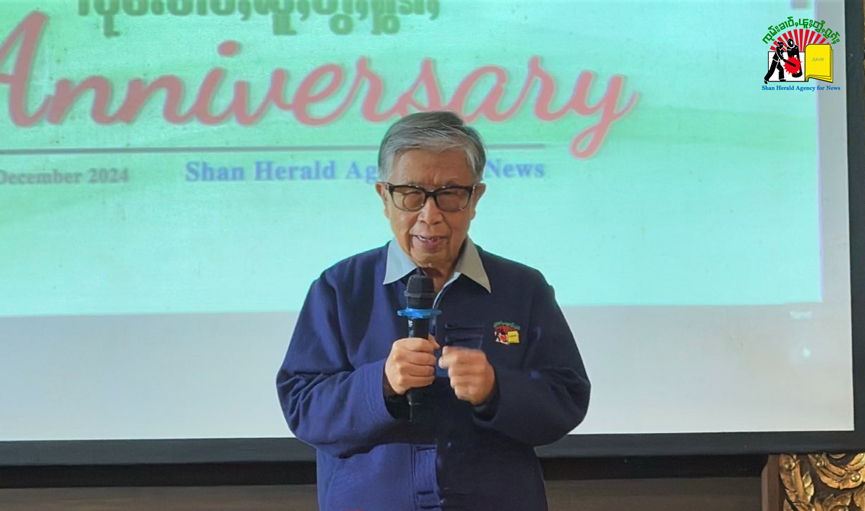
In conclusion, if we want to restore back the real value and meaning of the Union Day, we may have to adhere to the commitment of Panglong Agreement of 1947 literally and spiritually, as it is the only recipe that will fulfill our aspirations, as Sao Khuensai Jaiyen founder of the SHAN correctly wrote recently.

Leave a Comments