



Once again, on the occasion of 78th Shan National Day we are tasked with the duty to assess our political landscape and how the different stakeholders are pursuing their political agendas to further their aspirations.
Here we should dwell on common multi-ethnic Shan State people’s national interest, which supposed to be represented by the majority Shan or Tai ethnic group, and individual ethnic sub-groups, such as the Wa, Palaung or Ta’ang, Kokang, Pa-O, Danu and so on that inhabited the Shan State.
But before we do that it will be in order to first go back to the historical backdrop of Shan State nation-building in 1947, just before the signing of Panglong Agreement on 12th February 1947, dubbed Union Day, which led to the joint-independence of all ethnic nationalities that formed the Union of Burma on 4th January1948.
Historical backdrop of Shan Nation-building
Shan National Day was promulgated on 7 February 1947, which demonstrated the unity of Shan princes and the people’s representatives of the Federated Shan States and declared, followed by the resolutions of “Shan National Anthem”, “Shan National Flag” and the formation of “Shan State Council” on the 11th and 15th of February, 1947 respectively.
It is important to take into account that the documentation and birth of the Shan nation is signed by a Palaung Twangpeng Saohpa or Sawbwa Khun Pan Sing, who was President of the Council of Shan State Saohpa, on the 11th February 1947.
The Panglong Conference that followed on 12th February 1947 produced the Panglong Agreement between the Bamar or Burmese State (Ministerial Burma) represented by Gen Aung San and the ethnic nationalities Chin, Shan and Kachin to form a union on equal basis.
It is not an exaggeration to state that without Panglong Agreement or Accord, signifying the intent and willingness of the free peoples and nations of what could be termed British Indochina, there would have not been born the Union of Burma.

Shattered nation-building process
Firstly, there is no denying that our forefathers’ aim and vision during pre-Panglong Agreement in 1947 of a prosperous and harmonious multi-ethnic Shan State as a nation within the Union of Burma has not materialized and in fact deteriorated to the extent of faltering.
In addition to the successive Bamar-dominated civilian and military governments’ Bamar supremacy doctrine that have crippled the Shan nation-building process, we now have a rise of ethno-nationalism and ethnocentrism within the Shan State. In plain words, some of the ethnic groups within the Shan State, such as Wa, Palaung, Kokang and Pa-O don’t want to accept our combined forefathers’ vision of Shan nation and common Shan national identity anymore.
As we can see each day, there is a continuous friction and outright inter-ethnic conflict among brethren of different ethnic groups, in trying to mold their different, respective neatly demarcated ethnic states, carving out of the Shan State.
While there is nothing wrong in wanting to upgrade their ethnic groups status into becoming nations, there are lots of pitfalls that come with it in trying to do so.
The main problem is that in Shan State ethnic groups intermingled with each other from time immemorial and have a mixed demographic pattern all along, while there may be some concentration of ethnic enclaves across Shan State. In fact, Shan State is through and through, a multi-ethnic state. This is the real existing reality at hand.
The main question here to ask is if the ethnic groups of Shan State want to compete and fight each other without end in territorial expansion and dispute in the process of trying to carve out different ethnic states, or are we open to the vision of our forefathers’ common national identity of 1947, as a nation?
The answer to the question is sadly a resounding “no” at the moment as can be seen by the contemporary political development unfolding before our eyes.
Now let us look at the recent situation in Shan State.
Present political situation
In the aftermath of Operation 1027 from 27th October 2023 to the present, the Ta’ang National Liberation Army (TNLA) and Myanmar National Democratic Alliance Army (MNDAA) or Kokang have shown their true nature of narrow ethno-nationalism and territorial expansionism, at the expense of the other ethnic groups. This tendency also encompass the Wa and the Pa-O in southern Shan State. The Danu resistance against military junta is also gaining momentum and we shouldn’t be surprised if it also asked for an ethnic state-level administration like the Palaung and Wa, although the Kokang people haven’t exactly said anything along this line at this moment.
Generally, all the seven-member political alliance Federal Political Negotiation and Consultative Committee (FPNCC) are stationed in Shan State, except for the Arakan Army (AA), which has a token of few hundreds troops in northern Shan State, under the Three Brotherhood Alliance (3BHA).
The FPNCC members are the United Wa State Army (UWSA), the Arakan Army (AA), the Kachin Independence Army (KIA), the MNDAA, the National Democratic Alliance Army (NDAA), the Shan State Progress Party/Shan State Army (SSPP/SSA), and the TNLA.
The 3BHA is made up of the AA, TNLA and MNDAA. Ironically, the TNLA and MNDAA have demarcation territorial disputes and often at loggerhead because of that. This issue also is more complicated by the fact that the KIA is also long been present in Kutkai and Namphakka areas, on which the TNLA and MNDAA also claimed ownership, in the aftermath of the Operation 1027, when they were able to dislodge the junta troops and claimed possession.
On top of that there are two Shan armies, the Restoration Council of Shan State (RCSS) in the south and Shan State Progress Party (SSPP) in the north basically. But as the SSPP is pushing into the central and southern of Shan State, with the help of the UWSA which is its unspoken military ally, the two Shan armies have been in confrontation mode ever since the RCSS was pushed out from northern Shan State in 2021.
In 2015 the RCSS intruded into areas claimed by the SSPP and TNLA in northern Shan State, but in 2021 it was pushed back with overwhelming firepower by their combined forces, aided by the United Wa State Army (UWSA). It is believed that China also wanted the RCSS out of northern Shan State and gave indirect orders to expel its troops from that territory.
Apart from the established ethnic armed organizations (EAOs) there are new local People’s Defense Force (PDF) some under the NUG and some fighting the junta independently, within Shan State.
Recently, battalion 1005 Southern Shan State PDF (SSPDF) and battalion 1008 Southern Shan State Revolutionary Youth (SSRY) withdrew from the NUG Ministry of Defense (MOD), which have been working under it for three years due to inadequate armament received and joining the outfits that are able to furnish them with, according to U Ye Mon, the MOD minister. He further said some also didn’t want to move out of the present operational territories according to the order and opted to withdraw from the MOD command.
In January 2024, Burma News International (BNI) reported the Southern Shan State Local Revolution Union (SSLR) announcement that it will join with the Pa-O National Liberation Army (PNLO) in dismantling administrative mechanisms of the coup regime throughout the southern region of Shan State.
There may still be some Shan local resistance individuals joining various outfits to fight the military junta, but they shouldn’t be numerous.
Generally, the aspirations of the EAOs can be categorized as those that want ethnic state-level administration status and those which want to achieve self-administered zone.
The UWSA, TNLA and PNLO belong to the first category, while the MNDAA, NDAA belong to the second category. The Danu aspiration is unclear at the moment even though it already has a self-administered zone status.
The role of SNLD
The Shan Nationalities League for Democracy’s (SNLD) role in Shan politics all throughout until the military coup in February 2021 has been most important, as it represents the majority voice of Shan/Tai people in Shan State and elsewhere. It is also one of the most well known non-Bamar ethnic party, which came out 2nd after NLD in 1990 elections and 3rd in 2015 elections.
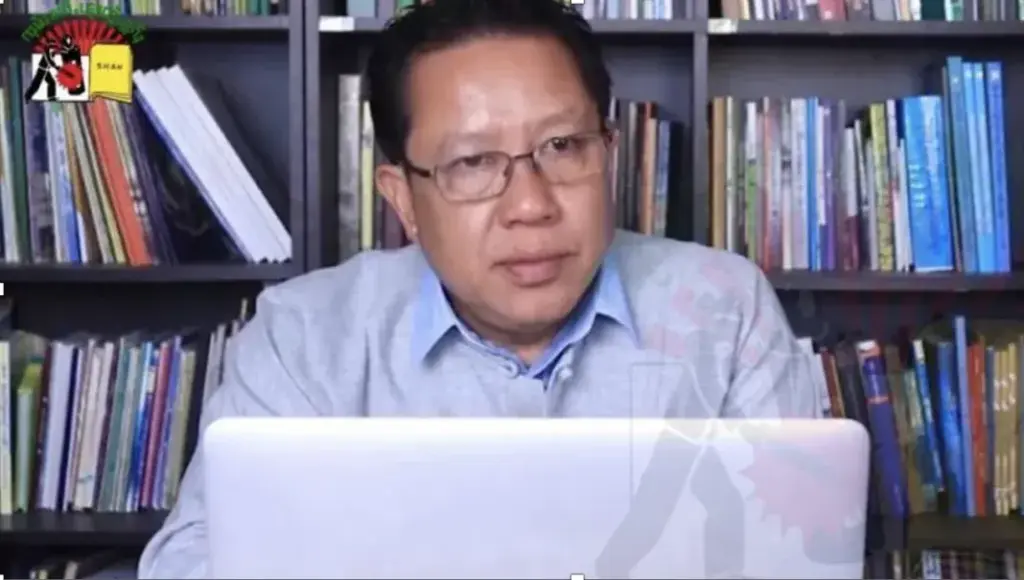
“(T)he SNLD has never confined itself to Shan politics alone and instead has always pursued nation-building goals by engaging in the collective struggles of the entire country. This is the SNLD’s commitment to Myanmar,” Institute for Security and Policy (ISP)-Myanmar report on 21st March 2023.
“The SNLD serves as a good example of a political party that displays political maturity by staying committed to its principles of truthfulness, on union-building and maintain strong relationships with its allies, rather than seeking individual end-goals or reacting to setbacks in a disgruntled manner. Sai Lek, General Secretary of the SNLD, told of the same spirit in an interview with VOA: “We are preparing our way together with our existing alliance, with our future alliances, with individuals, and with organizations, towards a federal democratic system””, added the ISP-Myanmar report in the conclusion.
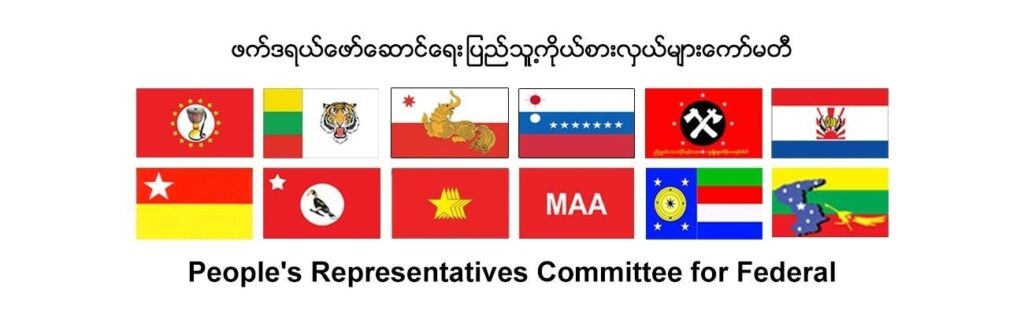
True to its commitment and conviction, SNLD spearheaded the drafting of a federal democratic union constitution as part of the People’s Representatives Committee for Federalization (PRCF) and announced publicly on the 77th anniversary of the Union Day, the 12th February 2023. The PRCF is a coalition of 12 political parties formed to oppose the military coup. The draft constitution is based on the eight-state principle, PRCF spokesperson Sai Kyaw Nyunt, Joint Secretary-General 1 of the SNLD, told VOA, on February 12, 2024.
Ethnic sub-group stakeholders’ demand
As can be seen there are numerous stakeholders in Shan State with a few of them demanding ethnic states, in par with the recent existing 7 states, which are the Kachin, Shan, Karenni, Karen, Mon, Arakan, and Chin.
In other words, the Wa, Palaung, Pa-O want to carve out ethnic states from the existing Shan State territories, on which the population inhabited the land in a demographic mixed pattern, as is the case in any multi-ethnic state.
Thus, the demand although there’s nothing wrong seen through the lens of the rights of self-determination, implementation of it in a neatly demarcated new ethnic states, as desired by them, will be a tall order and certainly a big challenge. Because we have already seen the TNLA trying to expand its Palaung Self-Administered Zone into more than seven folds of its original allotment, to be included into its desired Ta’ang State. It has been doing everything using population transfer to populate the areas claimed with Palaung or Ta’ang people, where in most places it has less than 10% of the population count, according to the International Crisis Group (ICG) report of 2023.
In the same vein, the UWSA has already taken a vast stretch of territories by force in southern Shan State along the Thai border to be included into its aspired Wa State creation, at the expense of the original locals of other ethnic groups, since a few decades during Gen. Khin Nyunt’s era.
The PNLO wants the Shan State capital to be included in its aspired Pa-O ethnic state.
Now the MNDAA wanted more of the Hsenwi and Kutkai areas to be in its Kokang Self-Administered Zone, although it hasn’t demanded for a separate ethnic state status like the others.
Is there a solution?
However, all these demands can be negotiated when the country is free from military domination of the political landscape and a federal democratic union is established, according to agreed criteria and constitutional norms. “Might is right” dictum will have no place in trying to redraw the political map, creation of new federal constituent units and so on down to the level of local administration.
Moreover, we shouldn’t forget that sovereignty is owned by the people and no armed organization can dictate on how the future political mapping of the country should be done.
First, to be frank, the ethnic state demands will have to wait until the basis of federal democratic union is in place or established, with the military junta out of political landscape.
Second, we should ponder whether consociational democracy fits our situation, coupled with drastic decentralization all the way to the level of local administration, so that nobody is left unrepresented.
This brings us to the point on how we should bridge understanding and forge unity among all the ethnic groups within the multi-ethnic Shan State.
Consociationalism
“Whereas examples of consociational democracies can be found all over the world, they developed in Europe in particular. Thus, Switzerland has been characterized as a consociational democracy since 1943, Belgium after World War I, Austria from 1945 to 1966, and the Netherlands from 1917 to 1967. Czechoslovakia was a consociational democracy from 1989 until its partition in 1993. Where consociationalism has ended, it often did so not because of its failure but because of its success: it worked so well that it was no longer needed,” writes Sabina Saurugger in Brittanica.
Some scholars actually consider the European Union as a consociational democracy.
“Lijphart distinguished in the 1960s four characteristics that should be present in order to qualify for the label of consociationalism. First there must be a government by coalition, as well as a second element of segmental autonomy, such as federal arrangements that allow for autonomy in policy fields (i.e., education policy for which responsibility lays with the German Länder, or states). Third, proportionality must prevail in the electoral system but also with regard to civil service appointments and the allocation of public funds. Finally, consociationalism also foresees a minority veto for the protection of vital minority interests,” according to Sabina Saurugger.
Arend d’Angremond Lijphart is a Dutch-American political scientist specializing in comparative politics, elections and voting systems, democratic institutions, and ethnicity and politics. He is well known for consociationalism and consensus democracy.
In this regard, to quote, U Khin Maung Win who studies federal constitutions, from his interview with the VOA Burmese Section on 18th January 2025: “People shouldn’t just think state-level administration is the only way to achieve ethnic equality. Because consociational democracy can also be instrumental to resolve such issues.”
He said the lowest local-level administration is termed as either municipality, communality or municipality. He emphasized the point that two countries, Switzerland and Germany, have some 2,000 to 11,000 municipalities respectively. In the former an average population for a municipality is 4,400, while the latter has 7,500.
This means, through such decentralization and devolution of power, even a population of 4,000 to 7,000 municipalities may be politically represented adequately, so to speak.
Thus, he said if we apply this model to our country everyone will be part of one or the other
communal or local unit and no one will be left out unrepresented. He stressed that not every ethnic group will be able to get a state-level administration, so consociational democracy can be a way to think about as a solution to remedy the aspirations of ethnic equality.
Moreover, the empowerment of the local units will give them the right to govern themselves in a lot of space, such as culture, healthcare, taxation, road repair and infrastructure, hospital building and so on, Khin Maung Win added to make his point.
Future perspective
Looking at the jigsaw puzzles, we need to ponder on how we could link the nation-building process to federal democracy at state-level and also federal union-level. But since we are mainly concerned with Shan State, we may dwell on forging the common national identity for Shan State as a way to resolve inter-ethnic conflict and a sense of belonging together under the motto of “unity in diversity”.
Theoretically, we could take into account the approach of consociational democracy as a tool to create a common national-civic identity, if we could agree upon a coalition government or collective governing; segmental autonomy; proportionality; and minority veto; as suggested by Lijphart.
Even the name “Shan State” as a federal constituent unit could be changed or altered according to the consent of the multi-ethnic peoples inhabiting the Shan State, if it is going to make everybody happy. Furthermore, all ethnic groups, big or small, may be able to protect, uphold their cultural and ethnic identities, while belonging to a common national-civic identity that all could identify with, say like the Swiss people of Switzerland or European citizens of European Union.
With some broad vision and innovative thinking we may be able to tread the path of nation-building coupled with state-building again, as envisioned by our forefathers, with some theoretical adjustment. We only need to look forward, be progressive enough to brush away narrow ethno-nationalism, territorial expansionism urge, embrace political dialog as a basis, and make use of consociational democracy approach, to be like Switzerland and Germany, if not European Union.



Leave a Comments